Category: Eco Prints

06 Dec

Scarf Red Catalpa leaves Silk borders

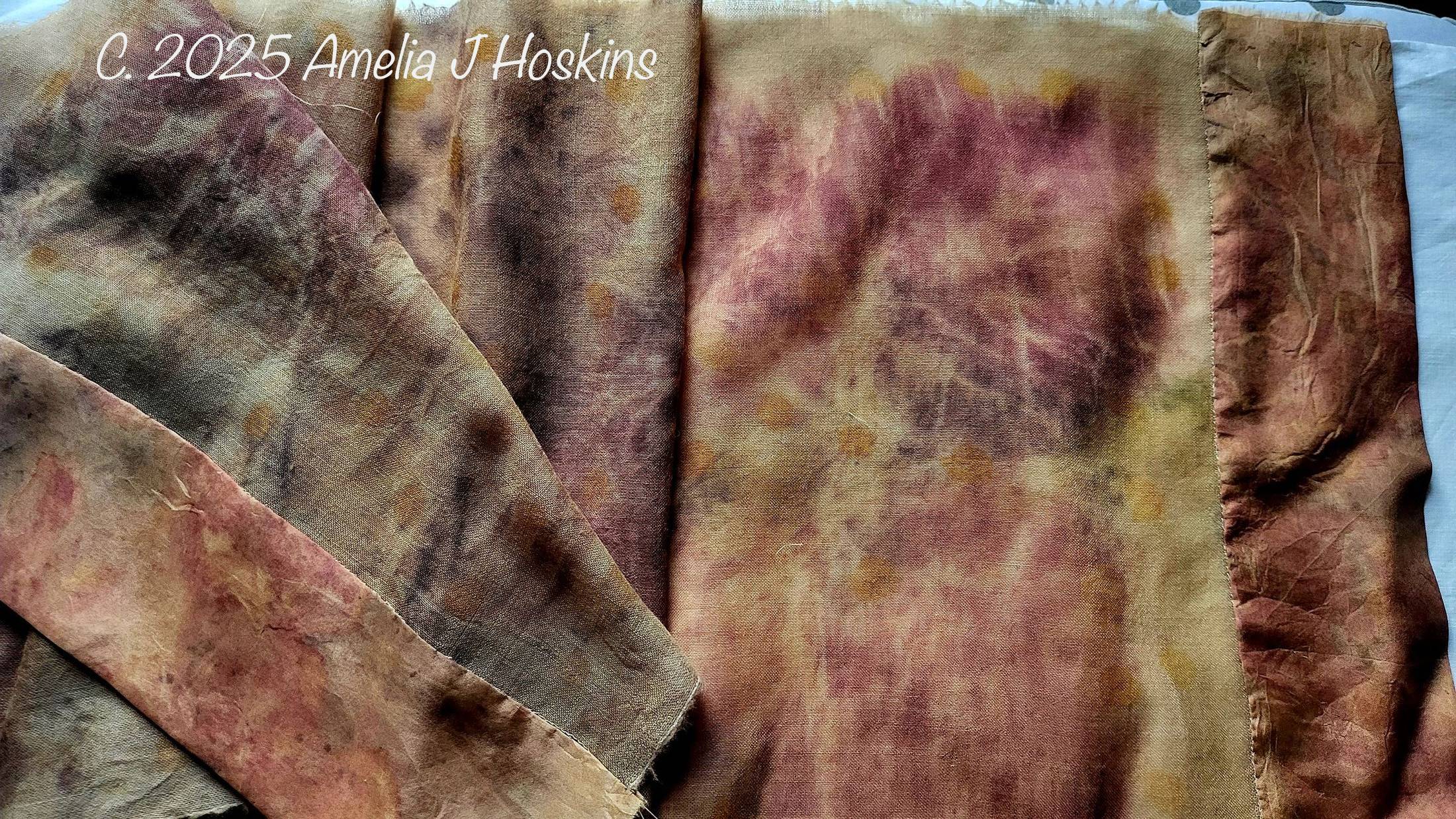
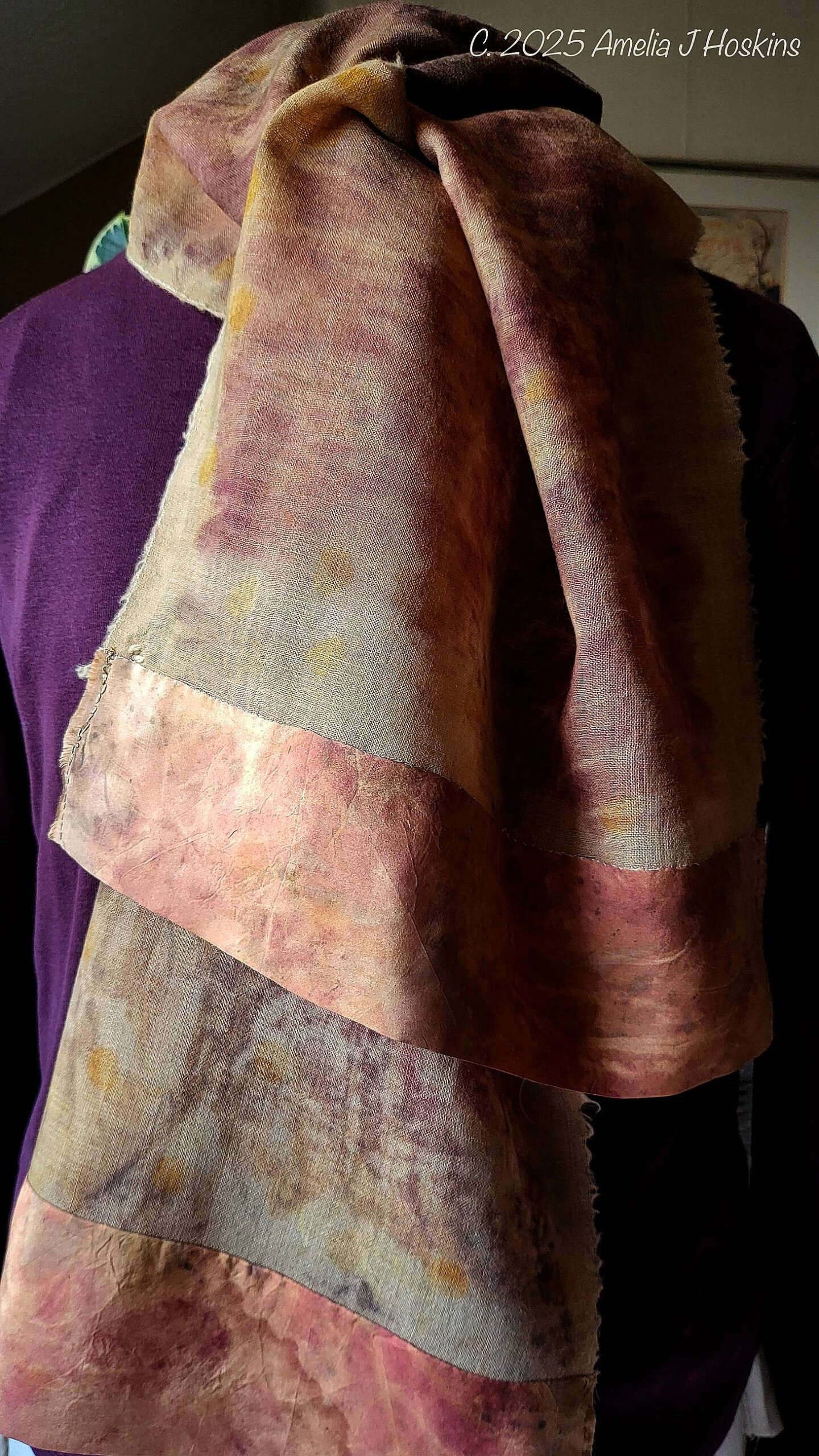
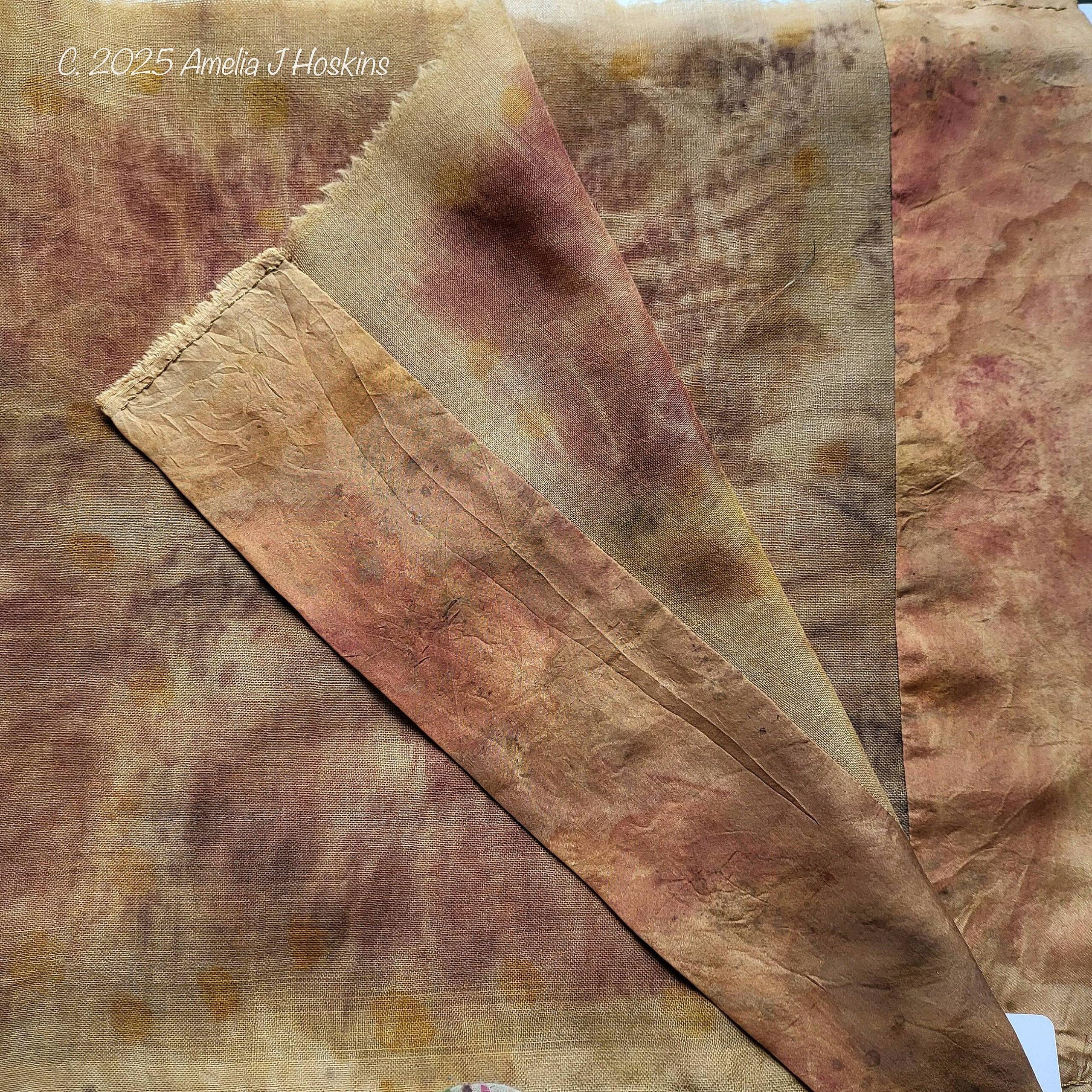
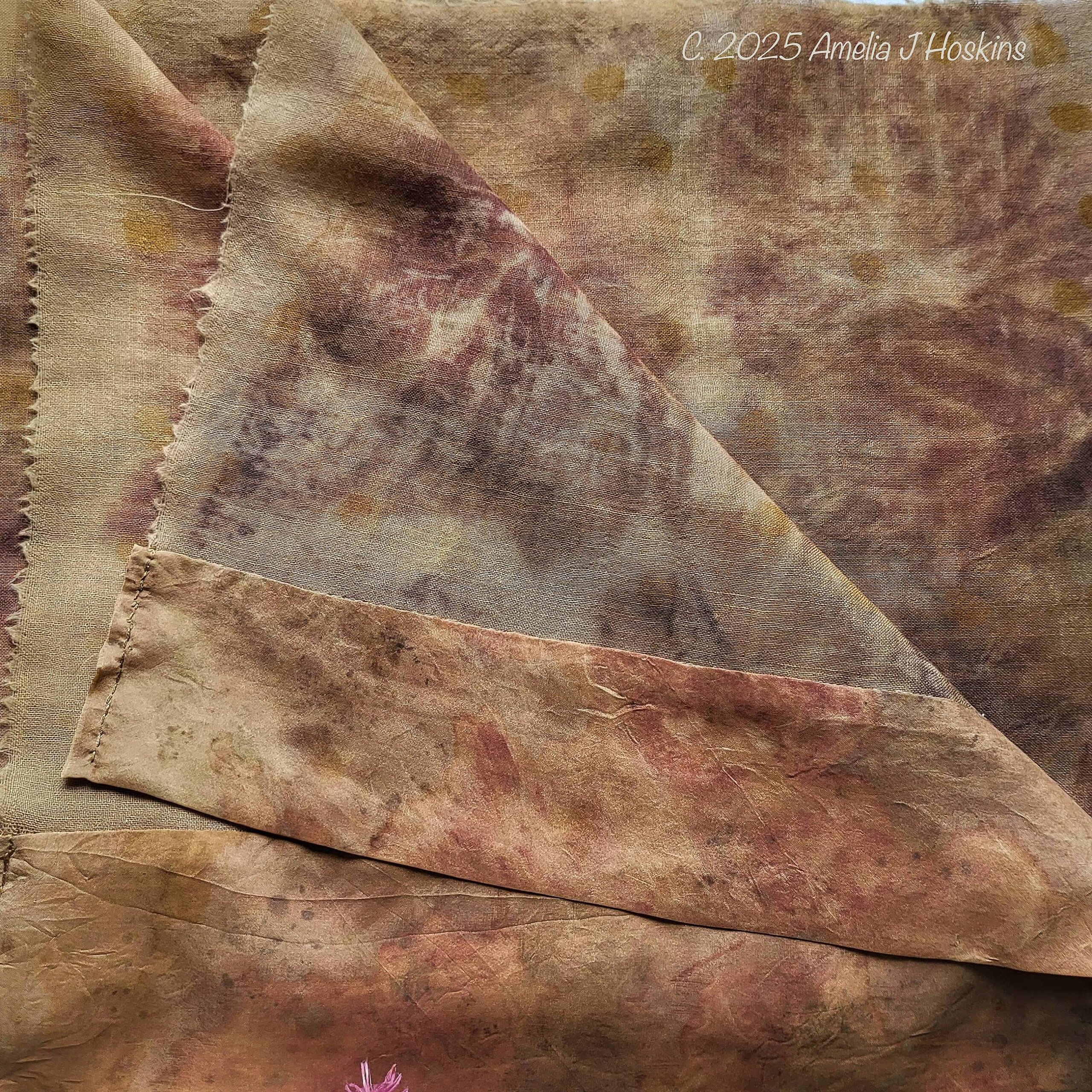
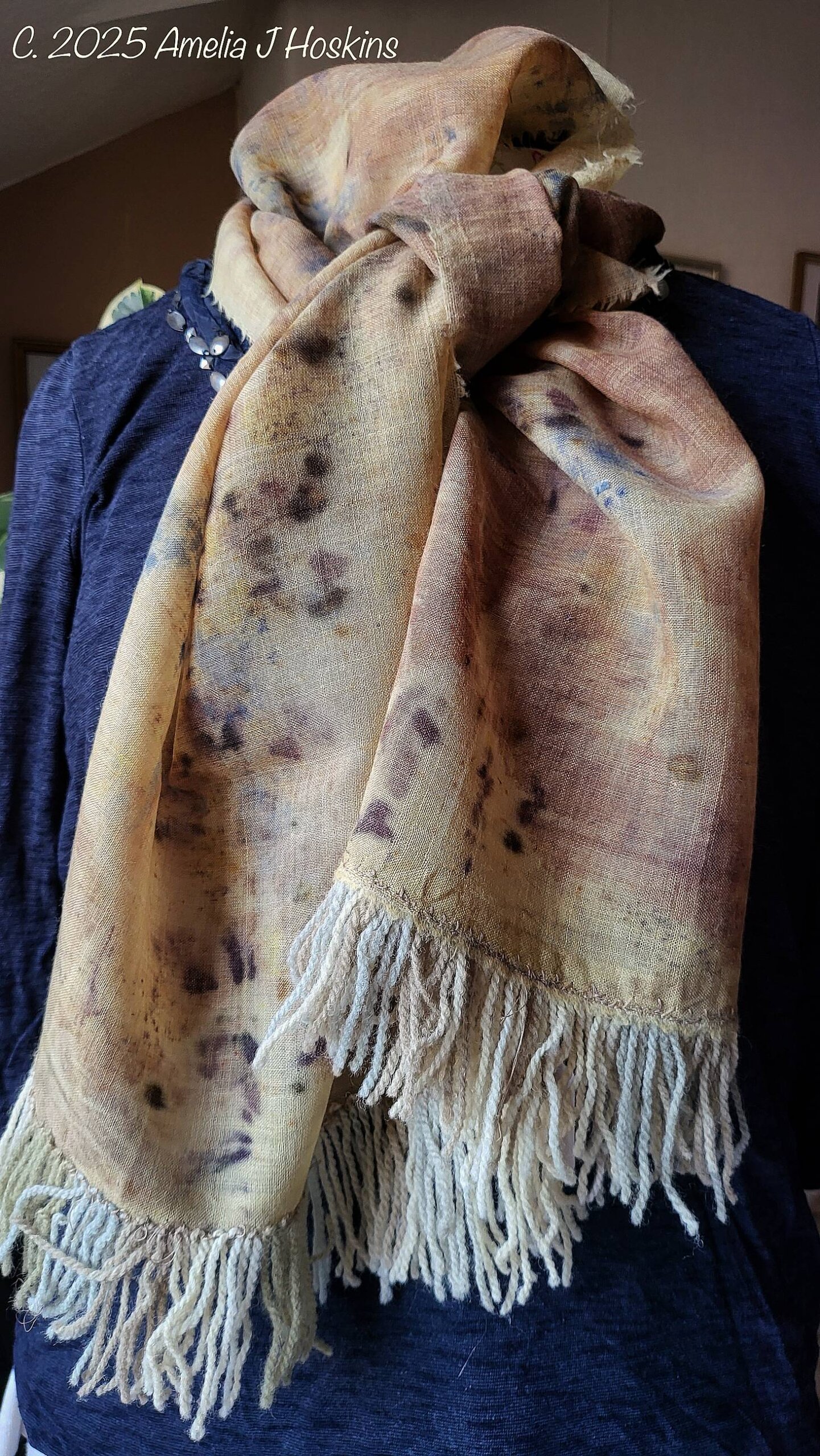
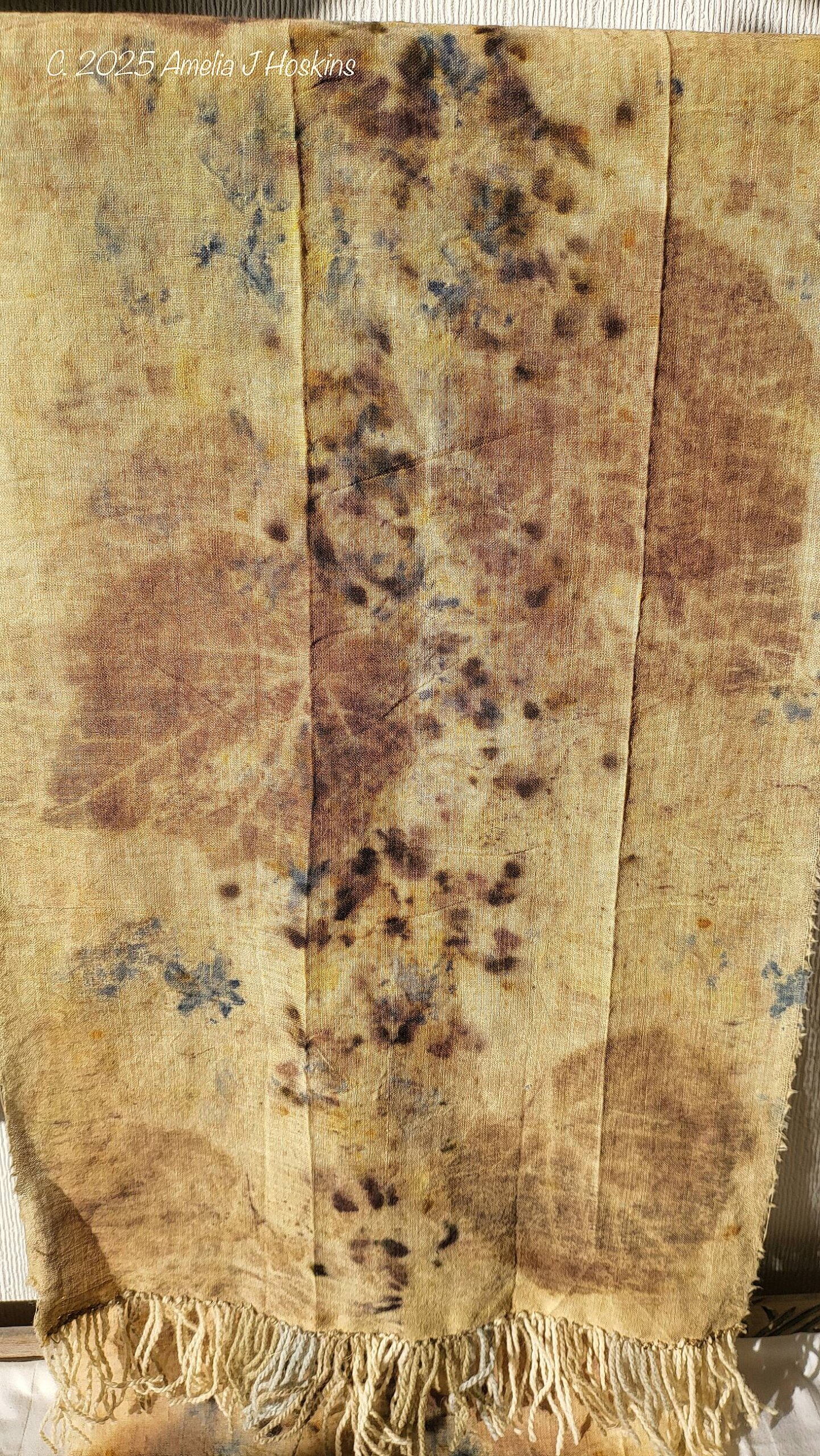
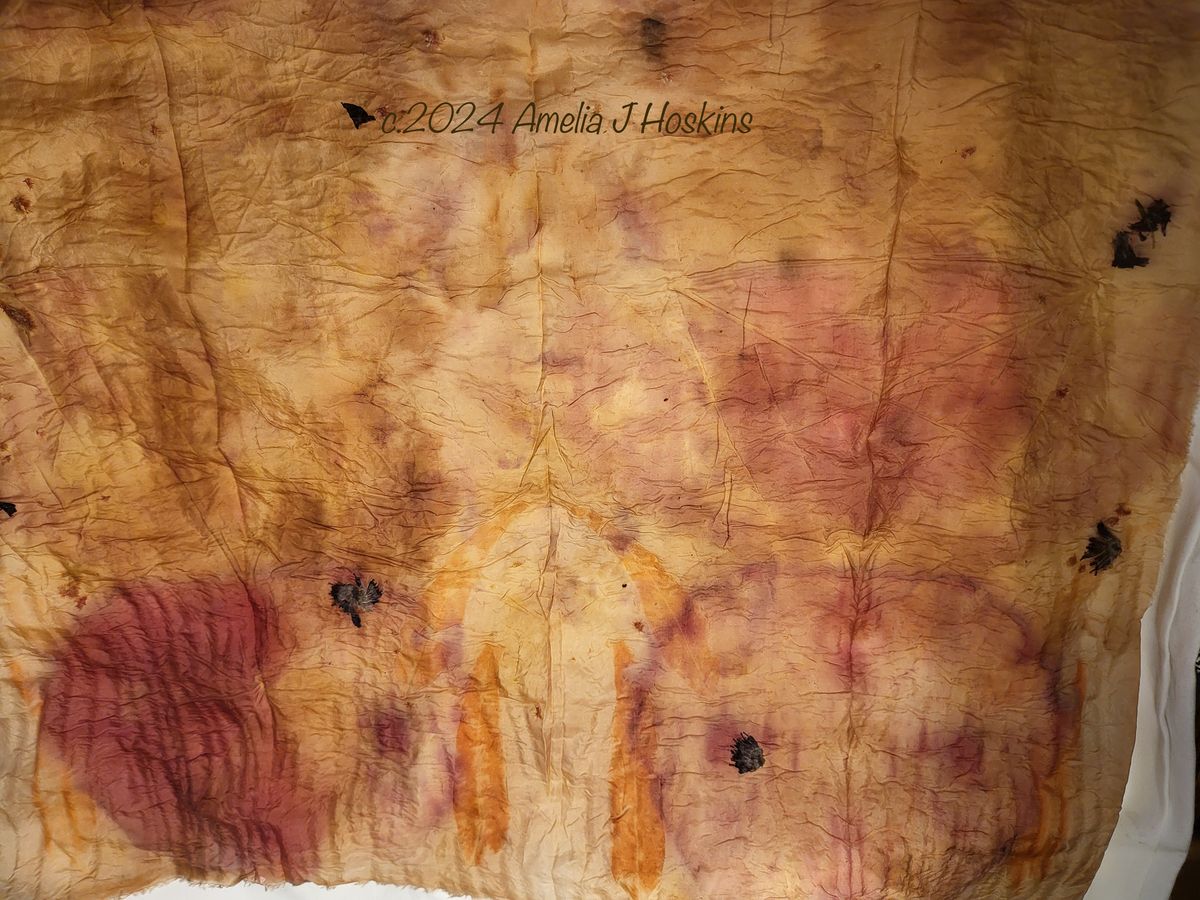
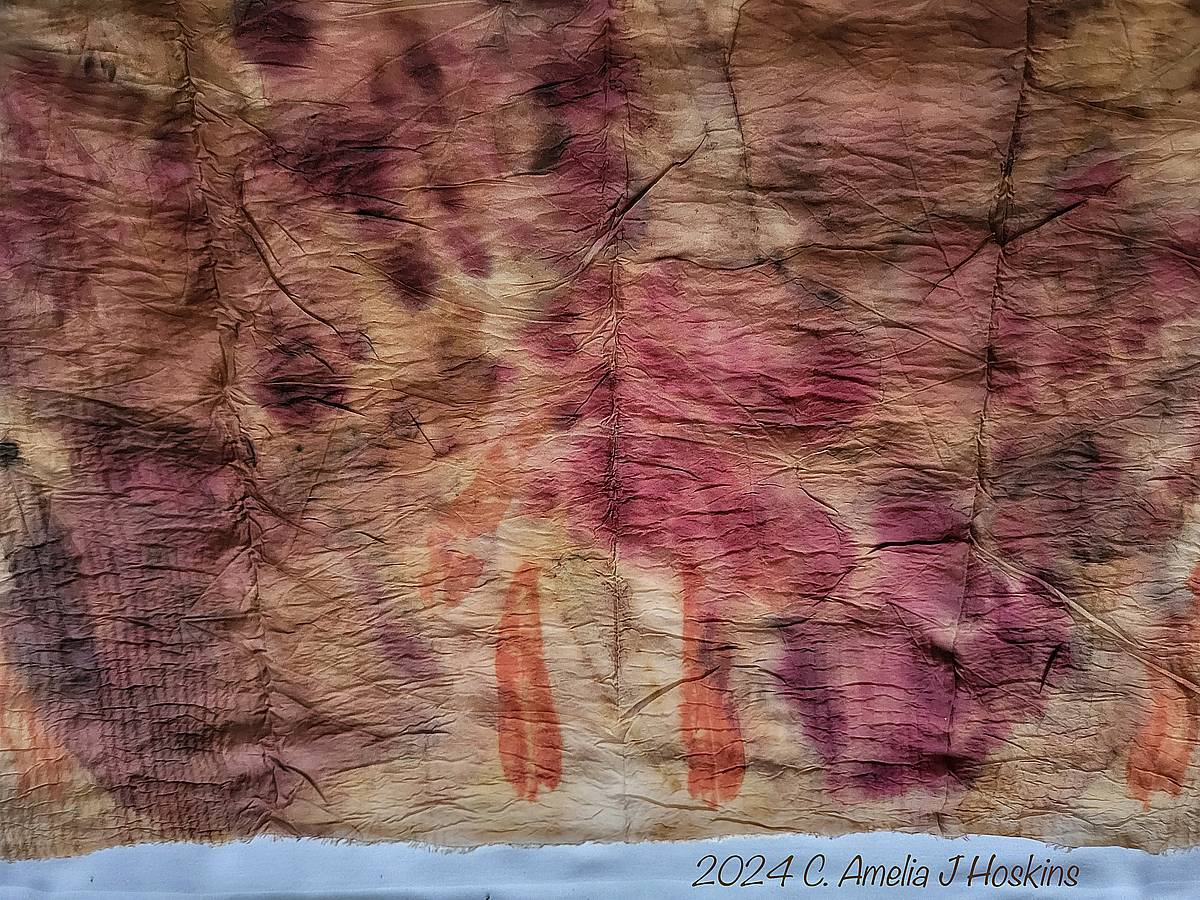
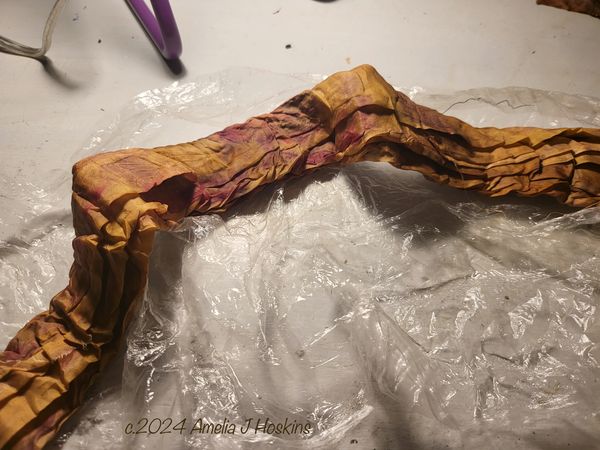
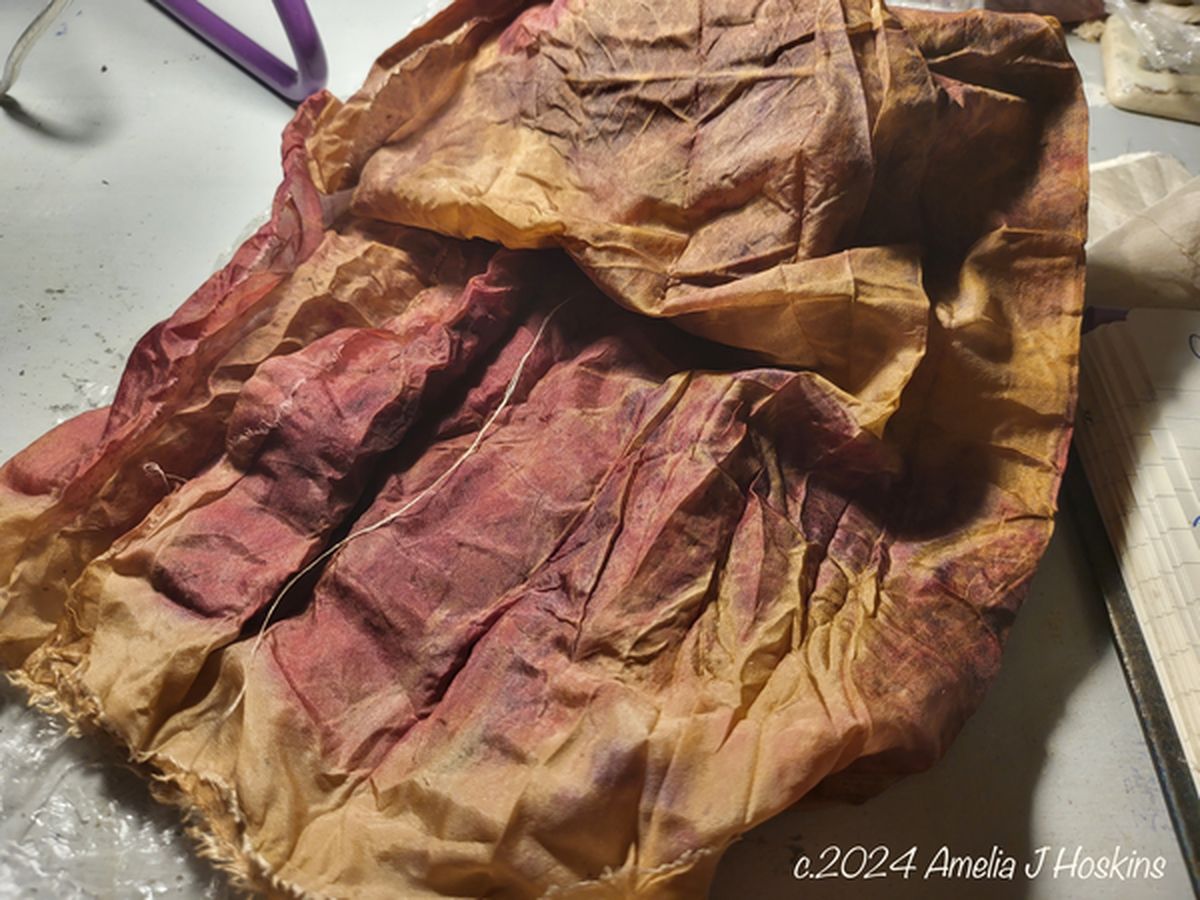
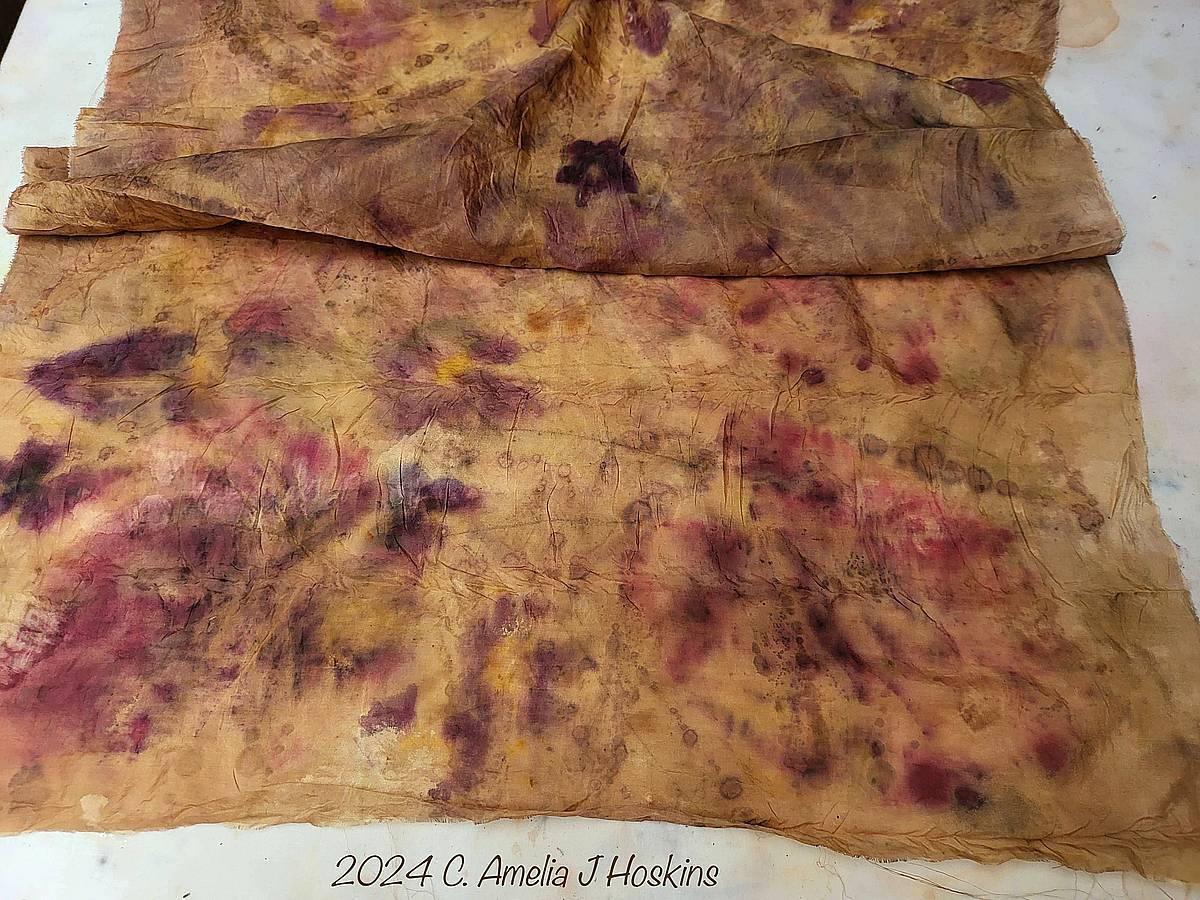
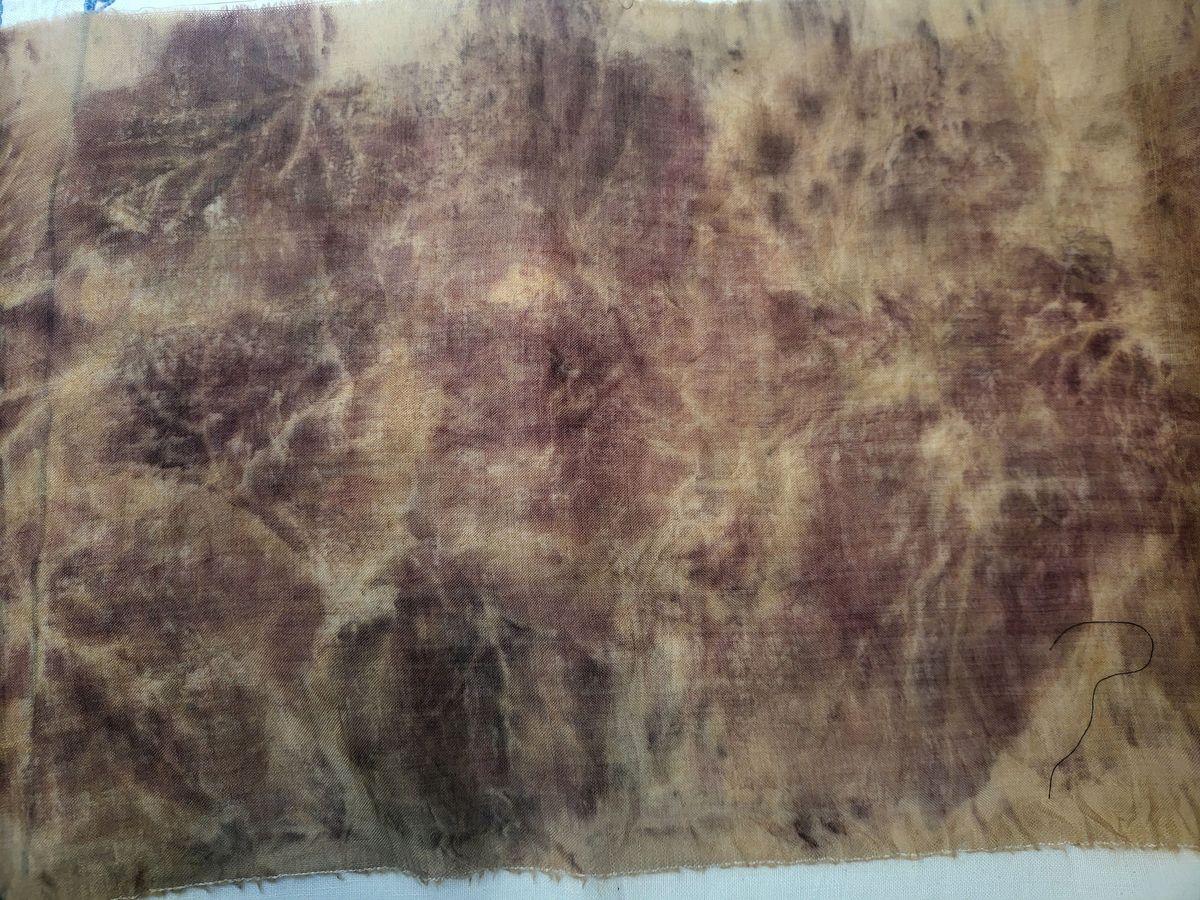
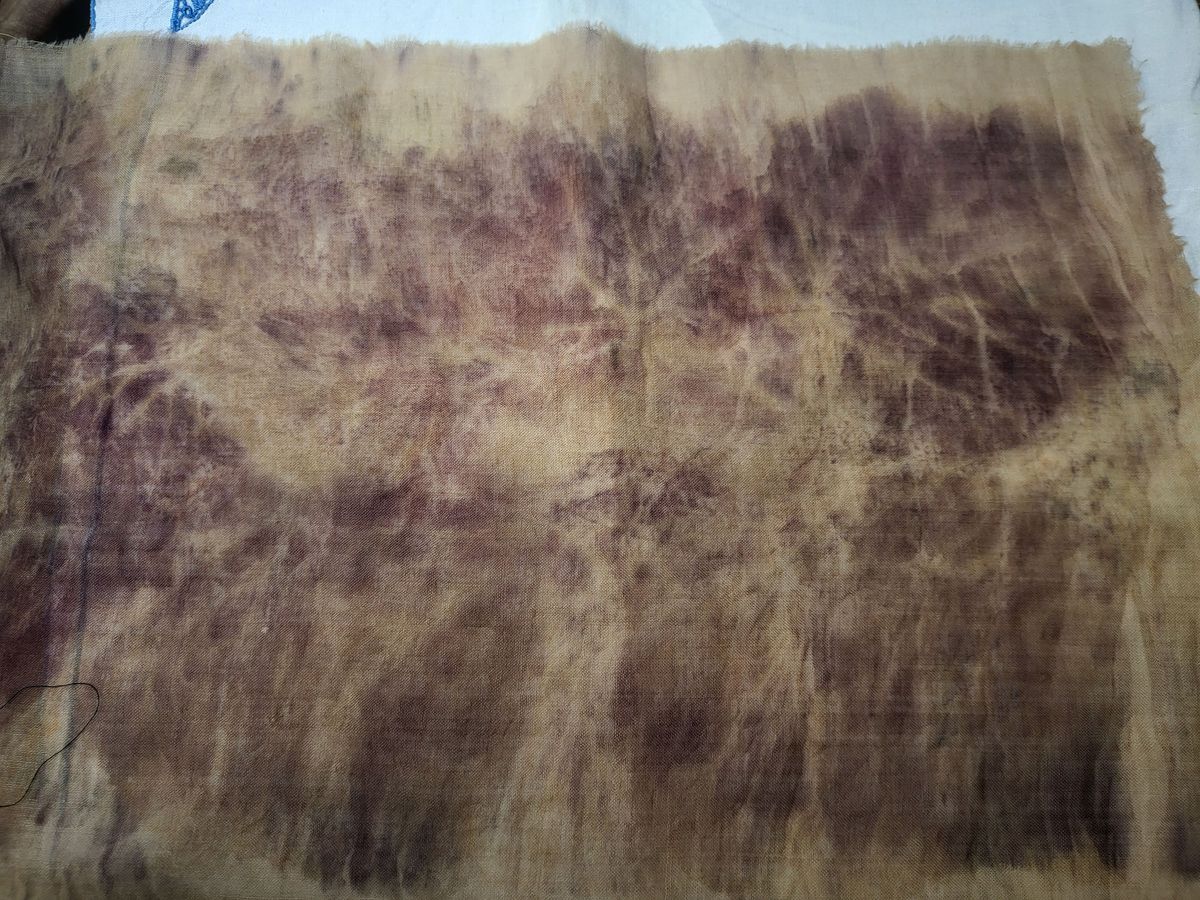
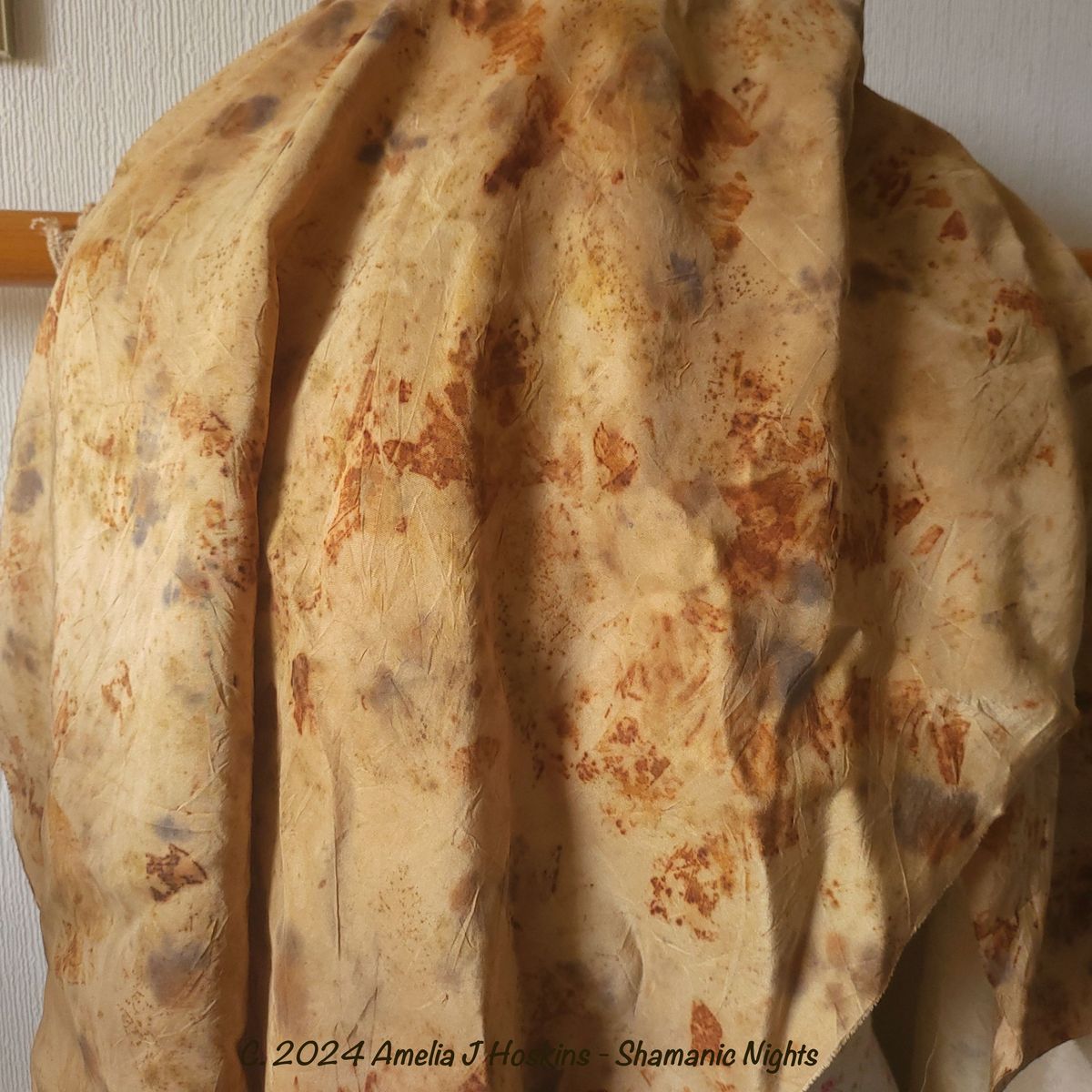
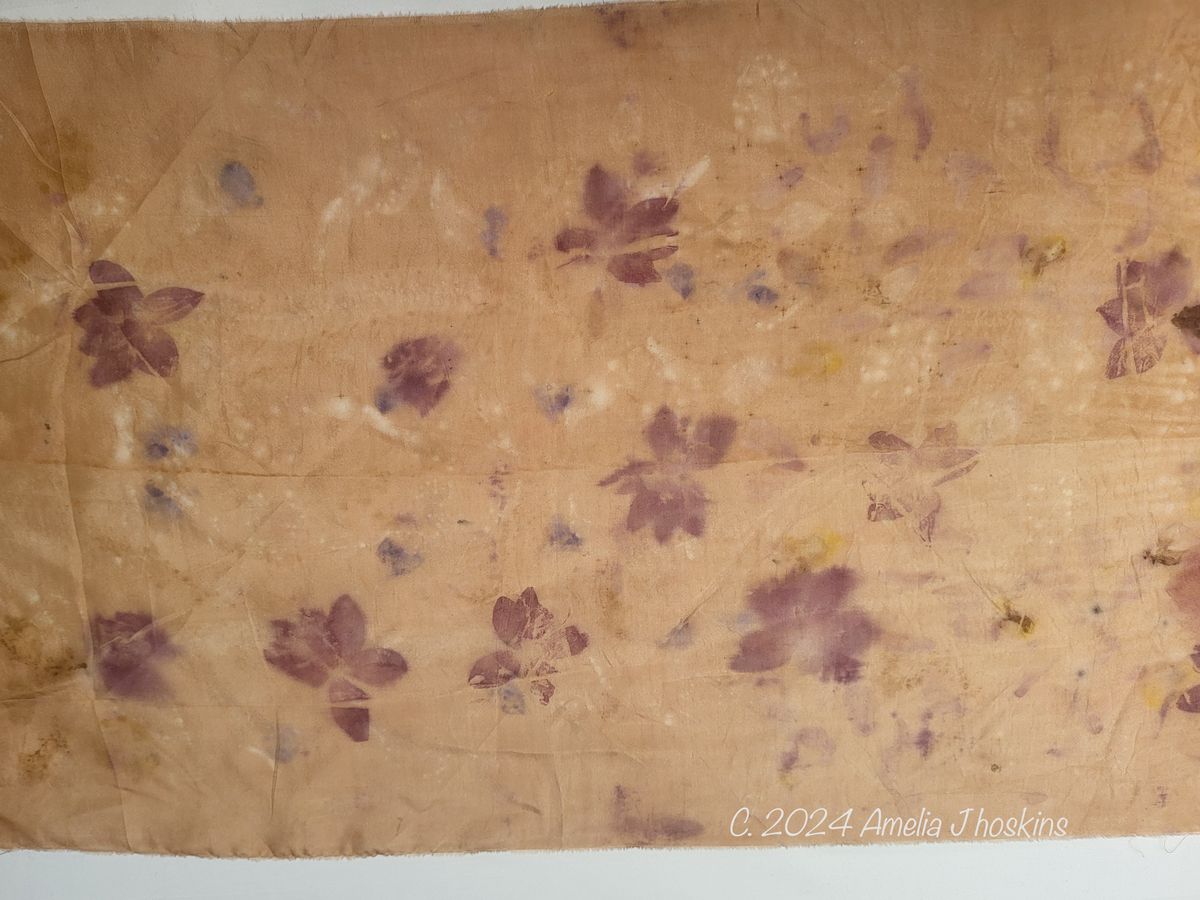
FINE WOOL SCARF ECO PRINTED WITH RED CATALPA LEAVES

Wool previously dyed with Rosemary or Comfrey.  Length 70 inches (1780mm), Width 14 inch (36cm).  3 inch double silk border ends.

Available: At my Shamanic Nights FOLKSY shop Celtic Rose

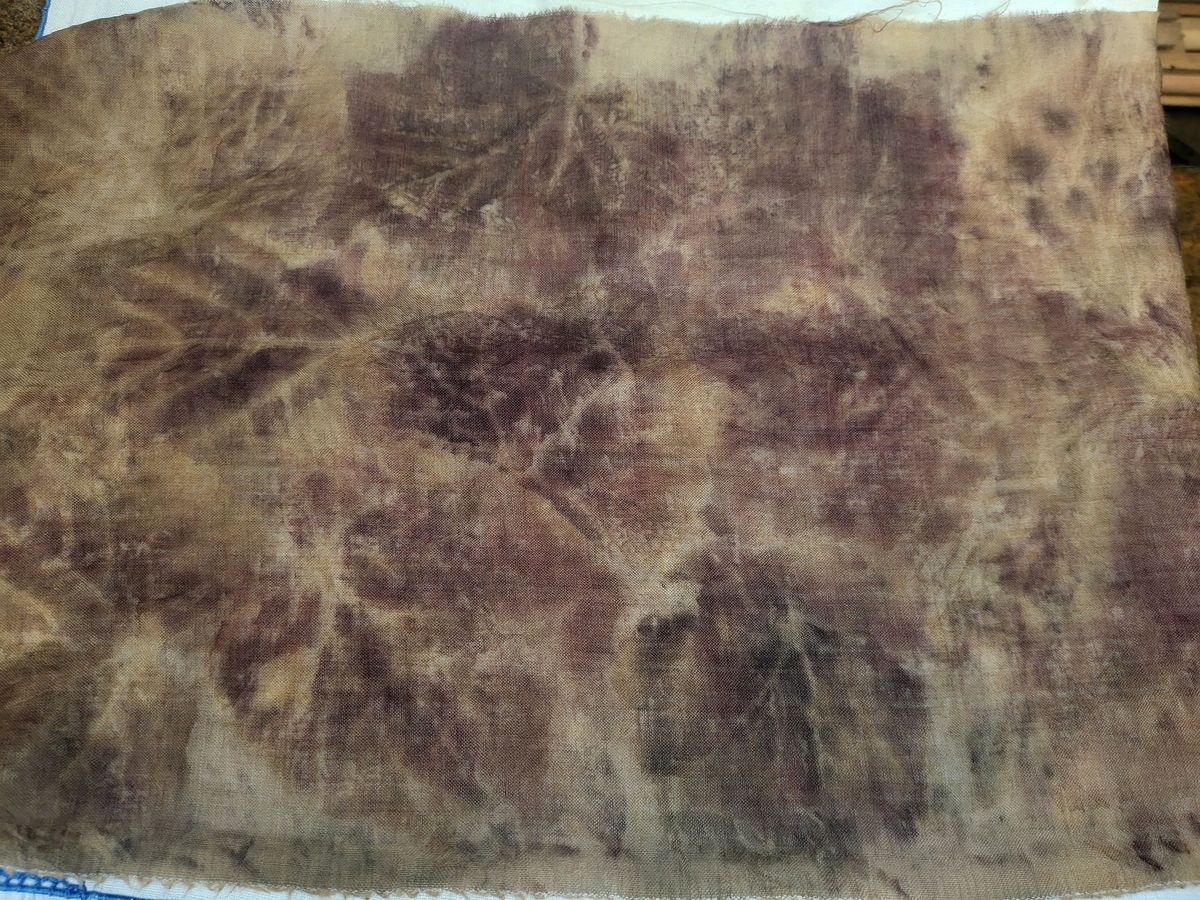
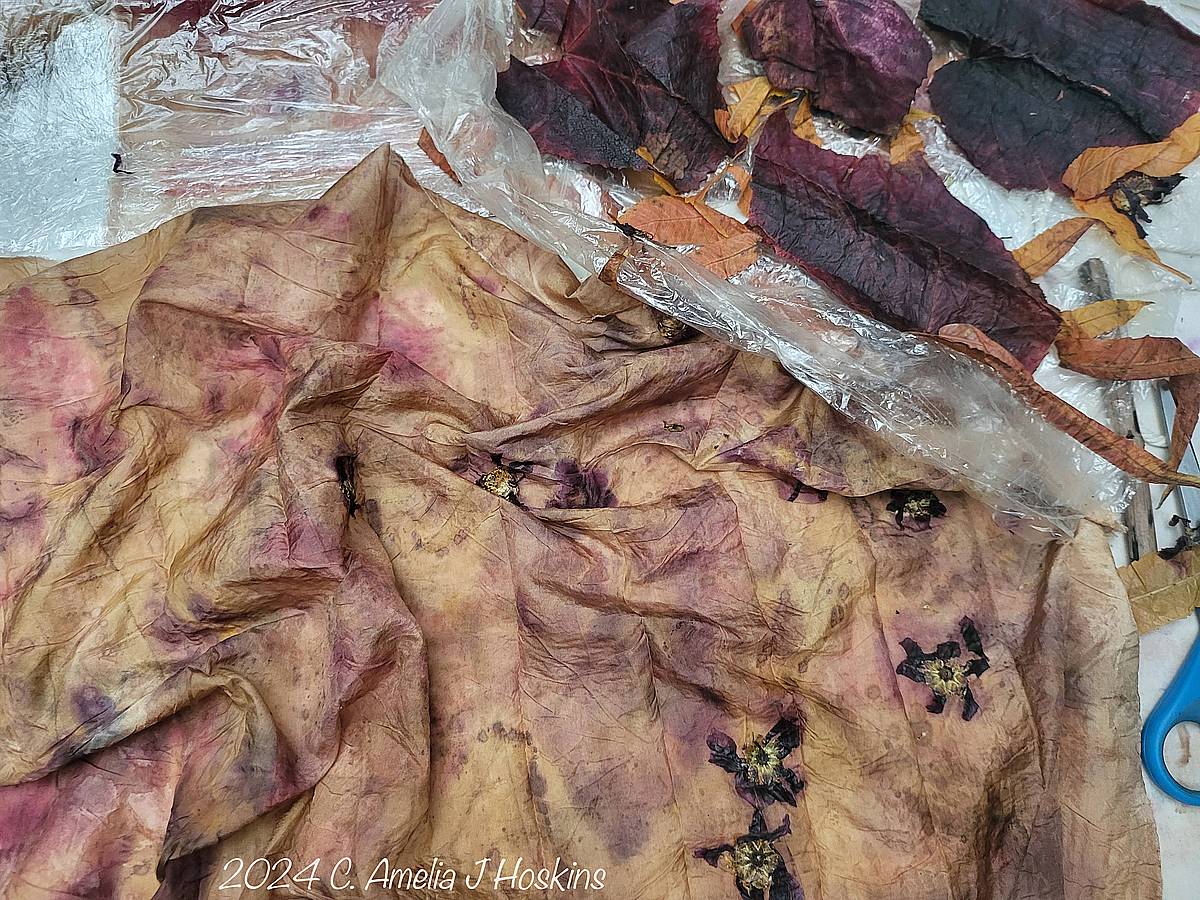
Eco Print result dark leaves

Dark leaves modified

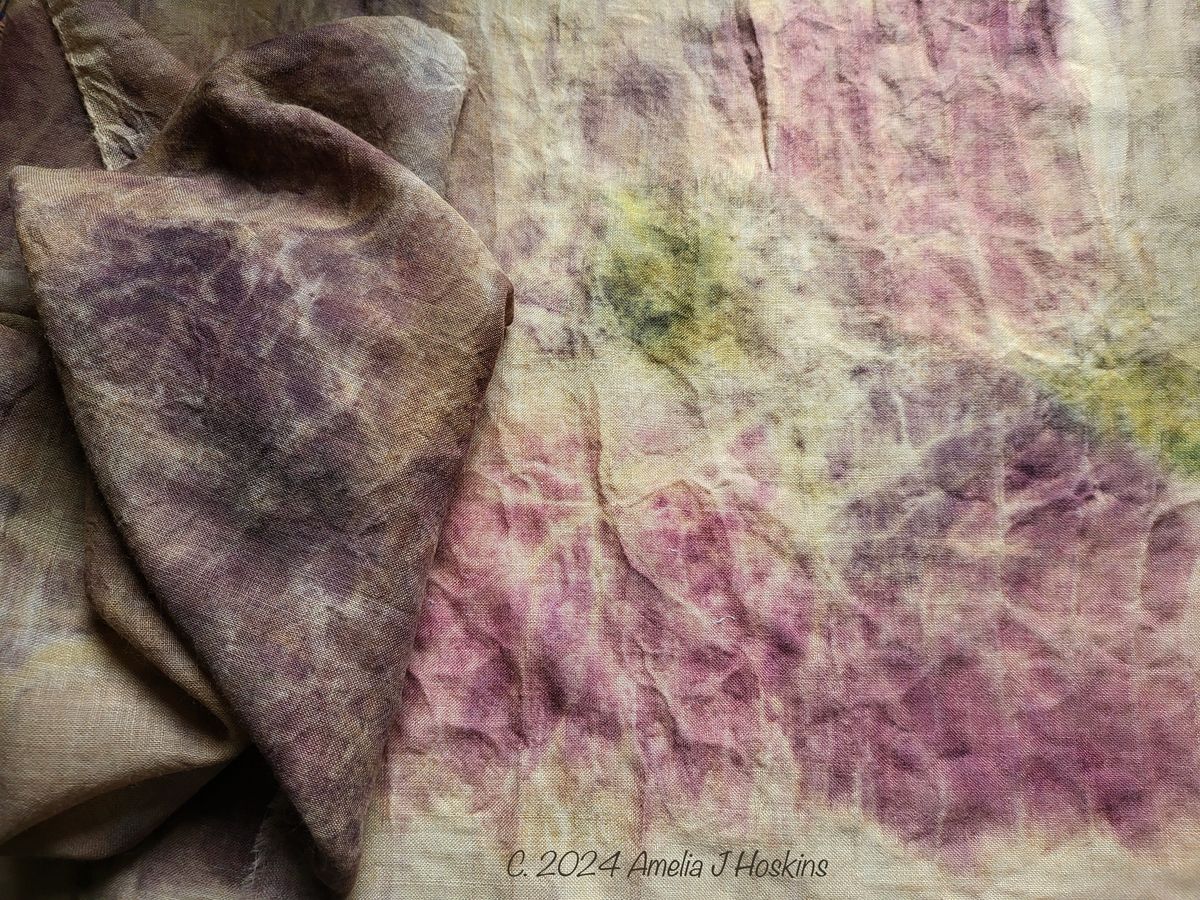
Modifying Colour:  Lemon juice turned leaves PINK. Bicarbonate of Soda turned leaves GREEN.

05 Dec

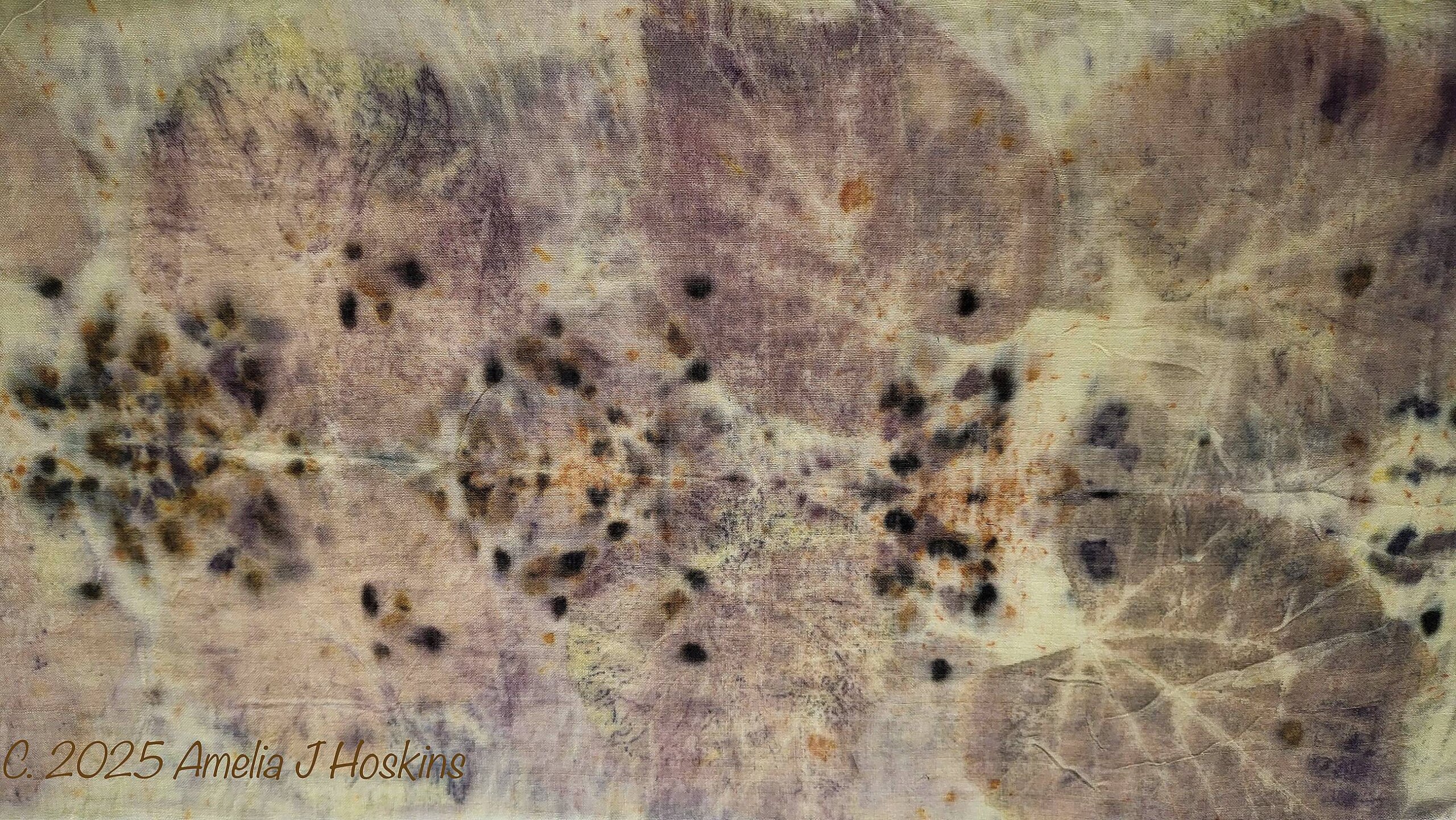
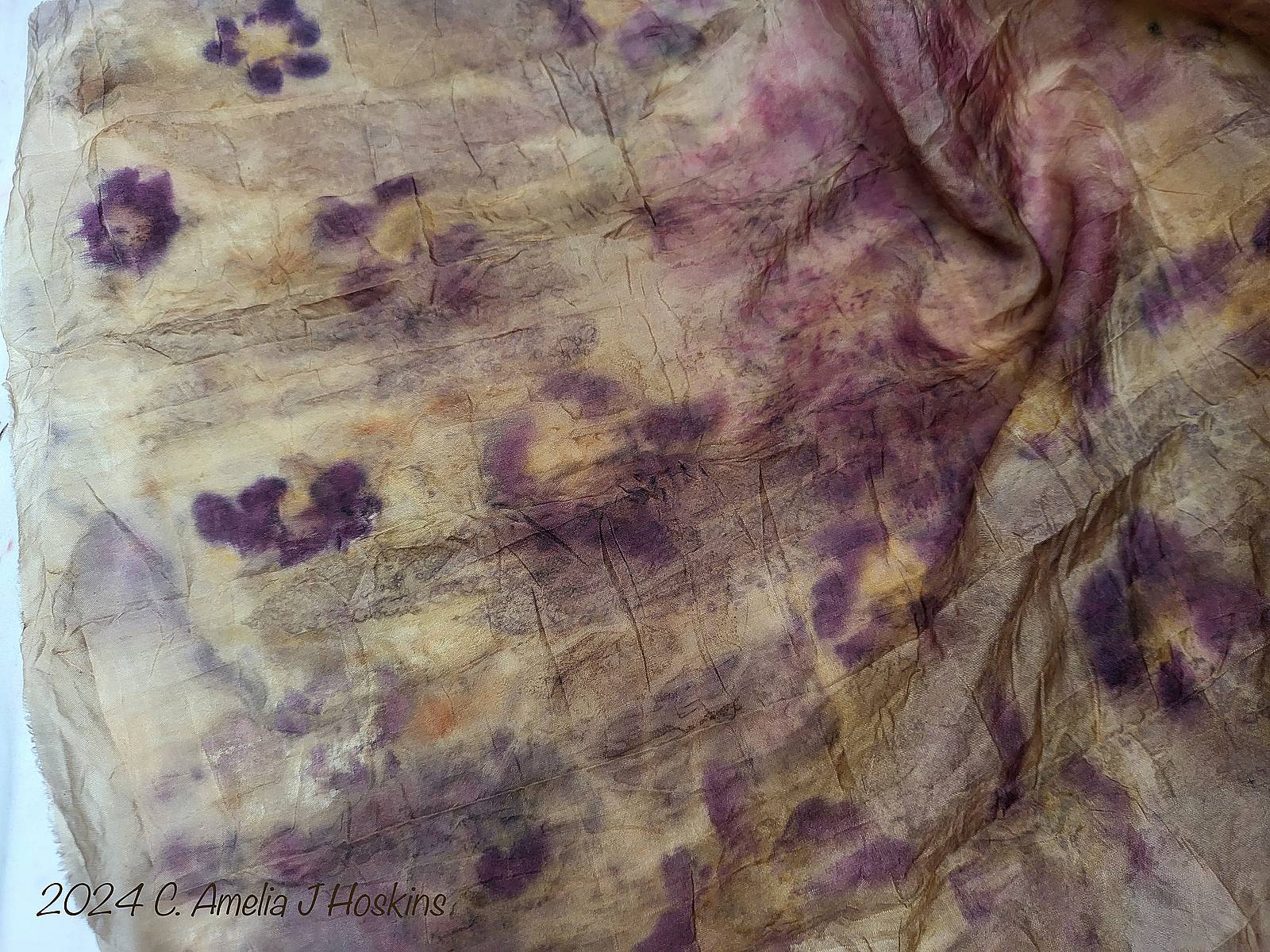
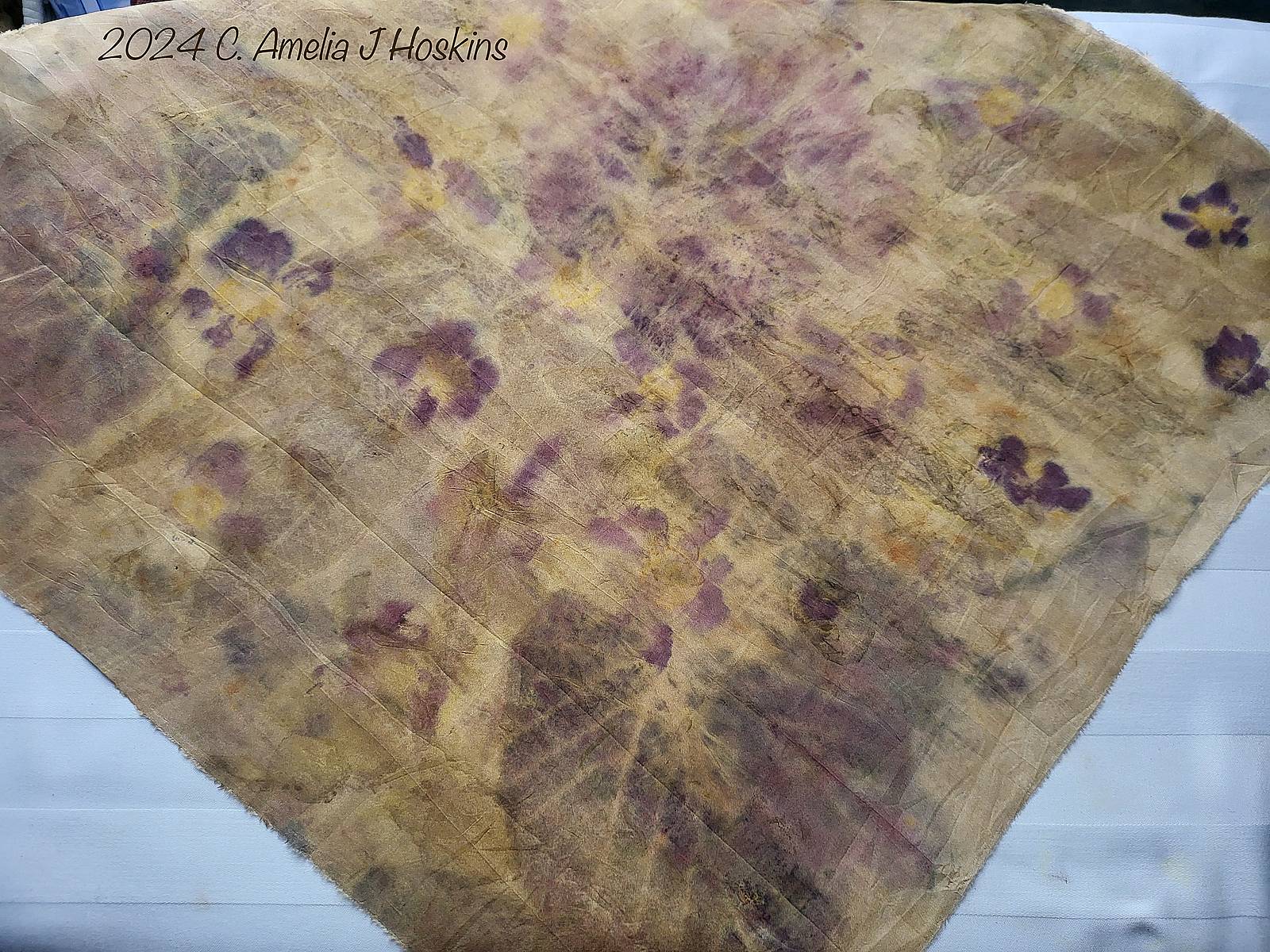
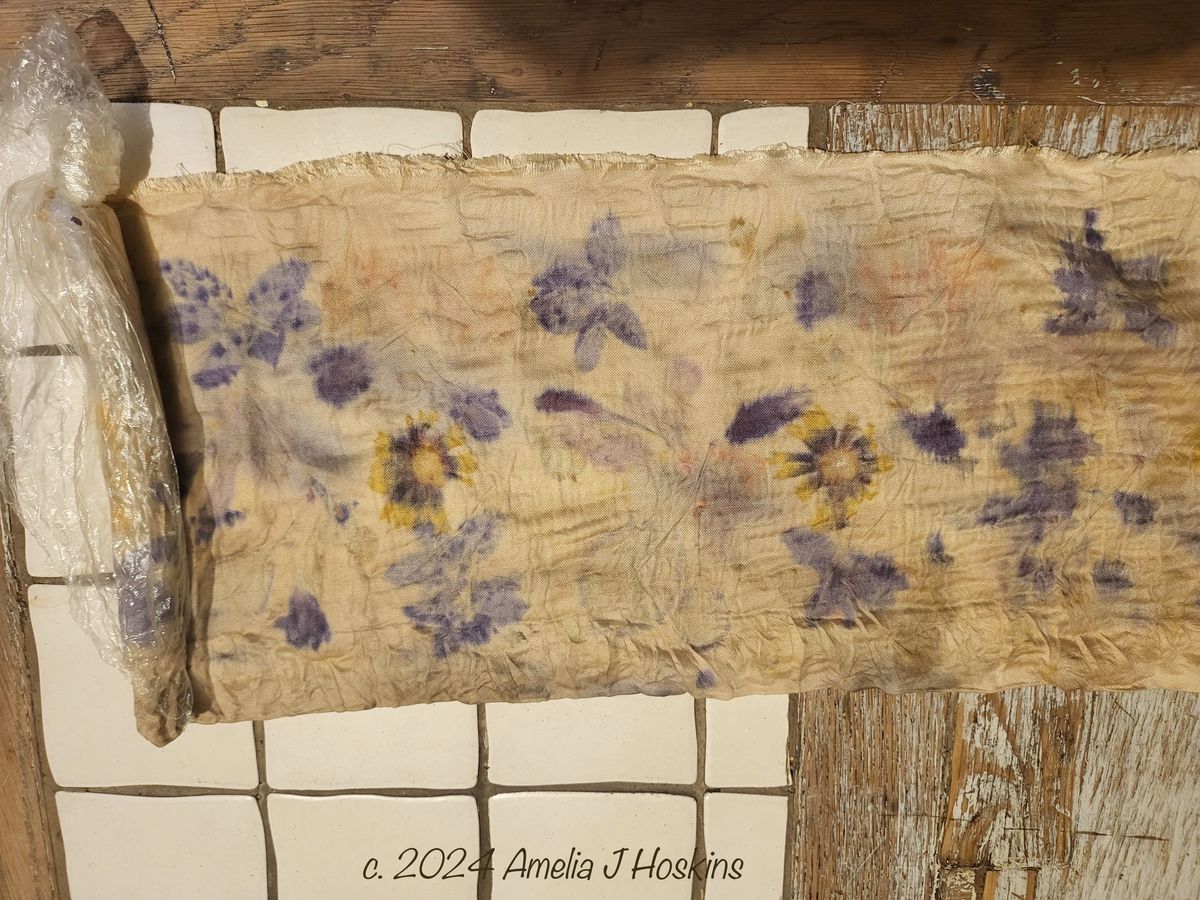
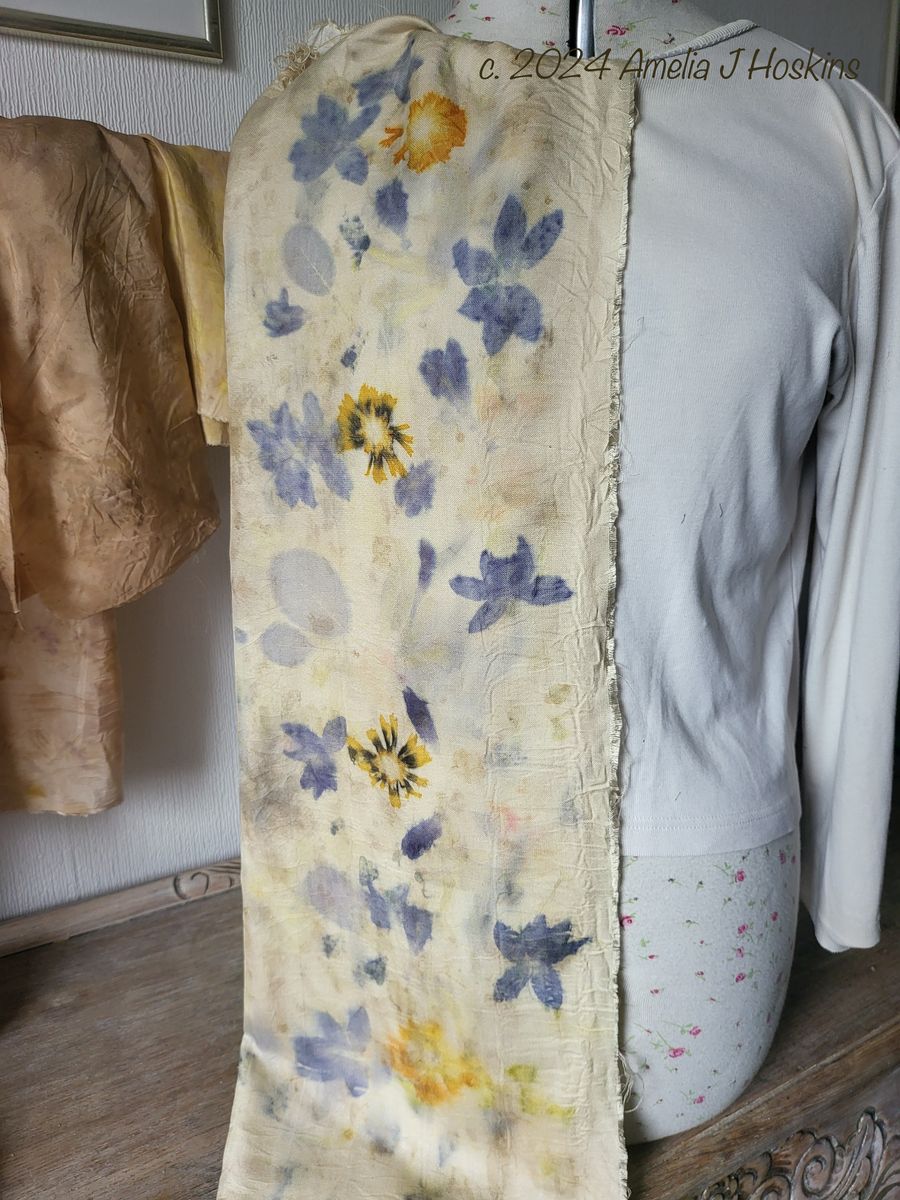
Eco print fine wool scarf Catalpa leaves Purple Coreopsis and seeds

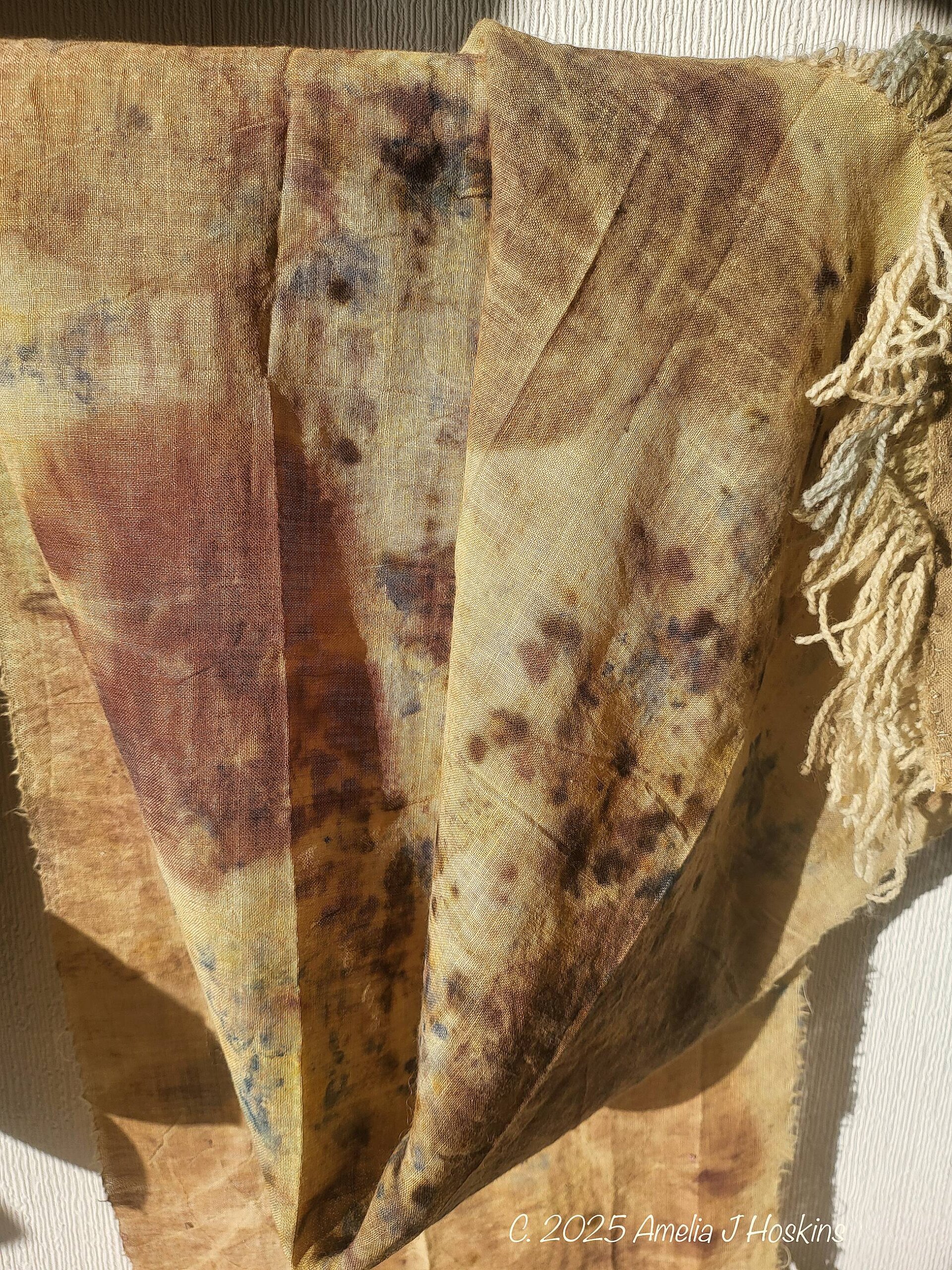
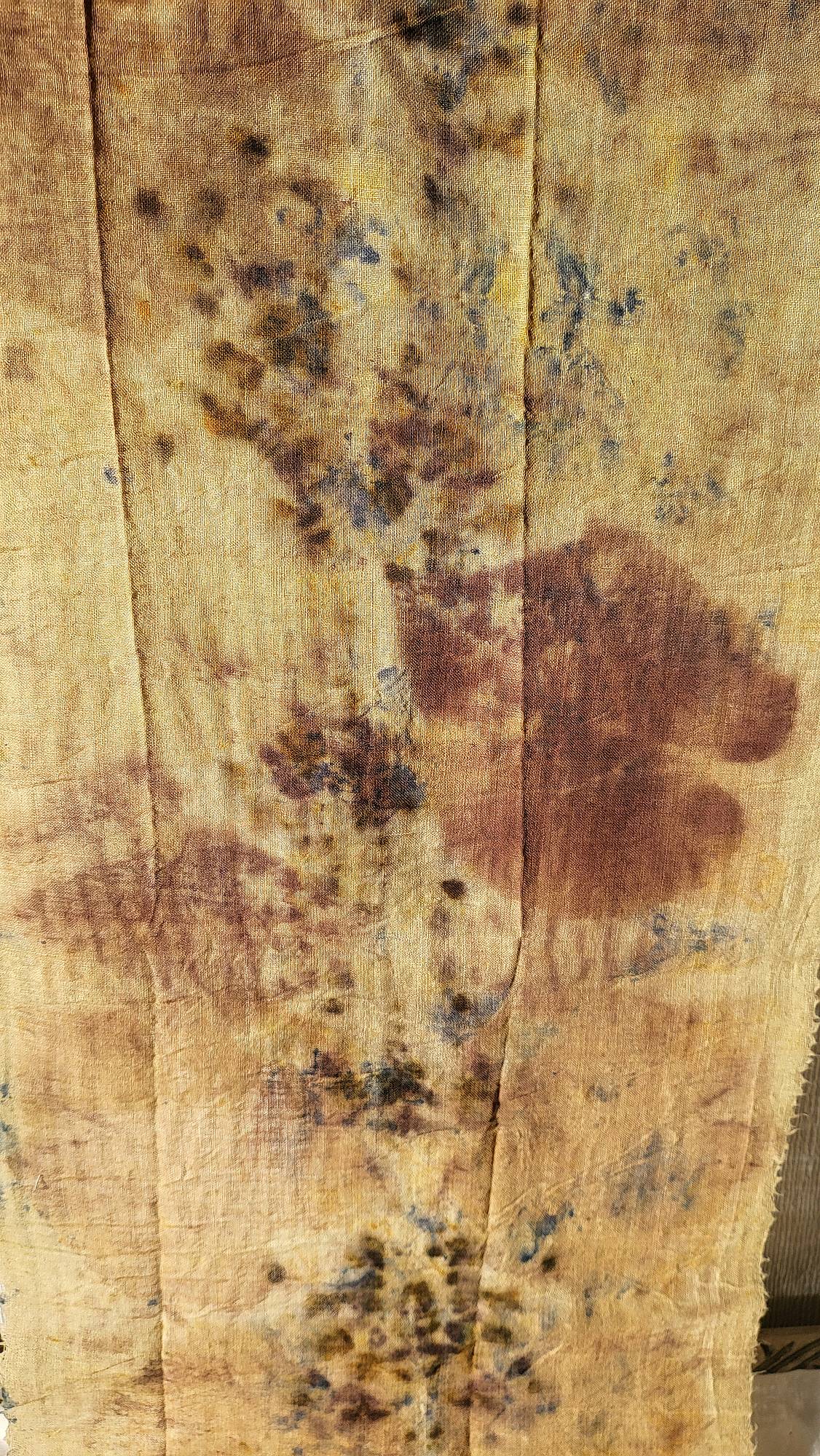
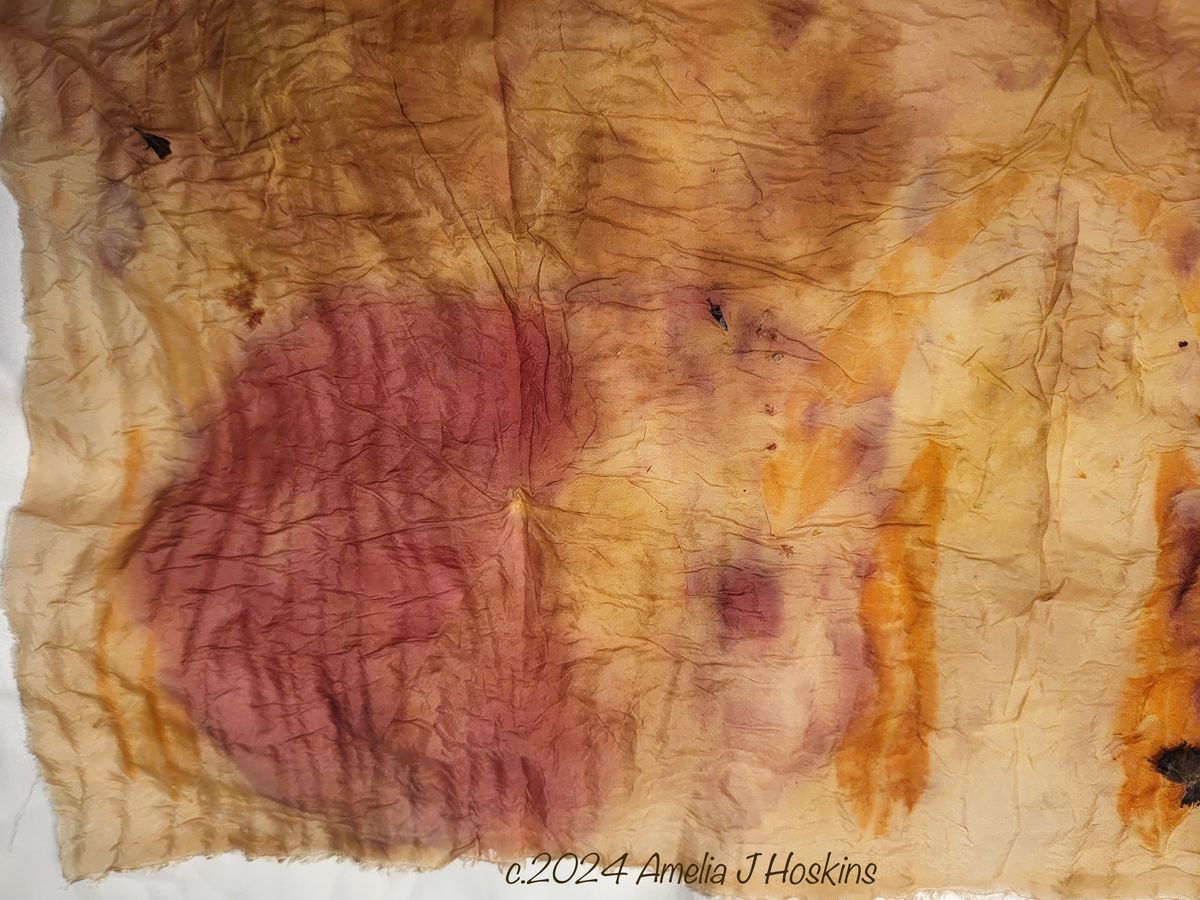
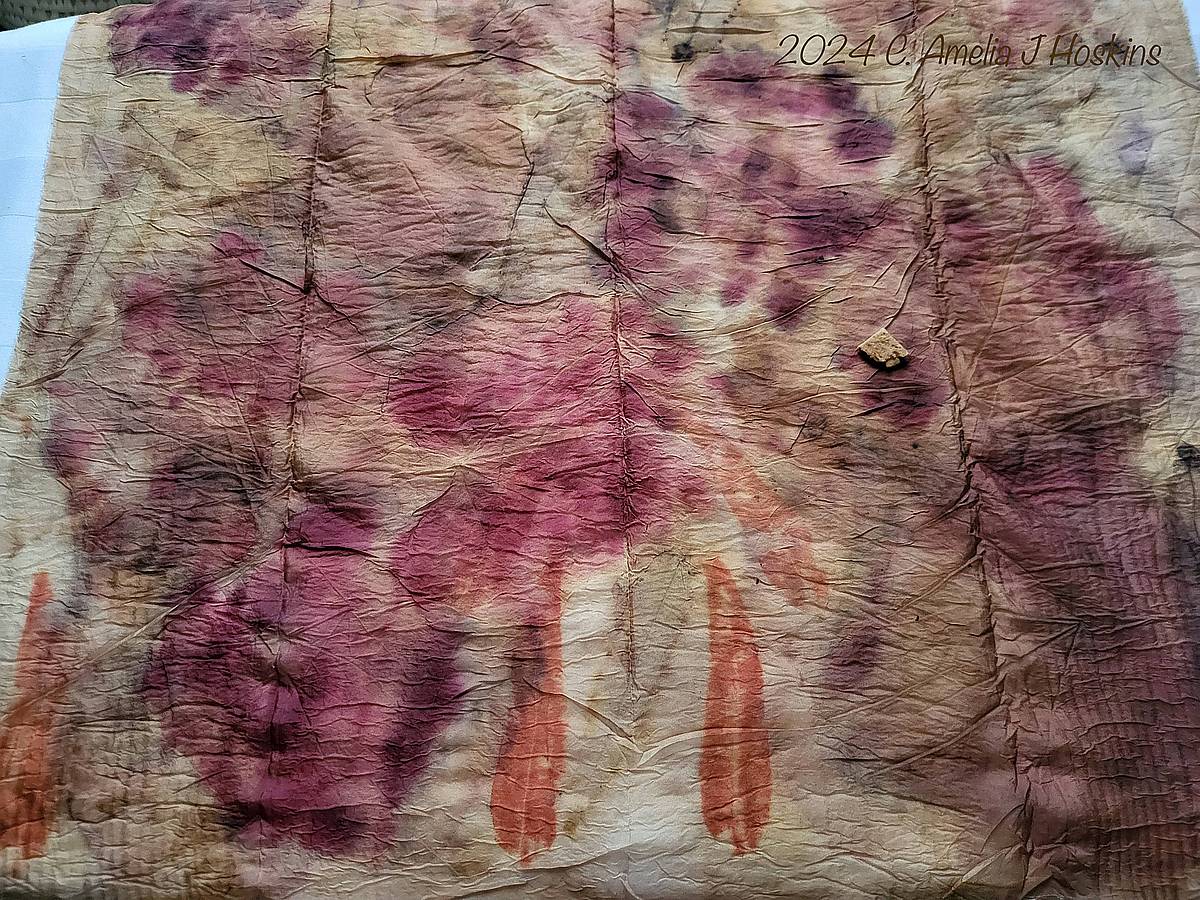
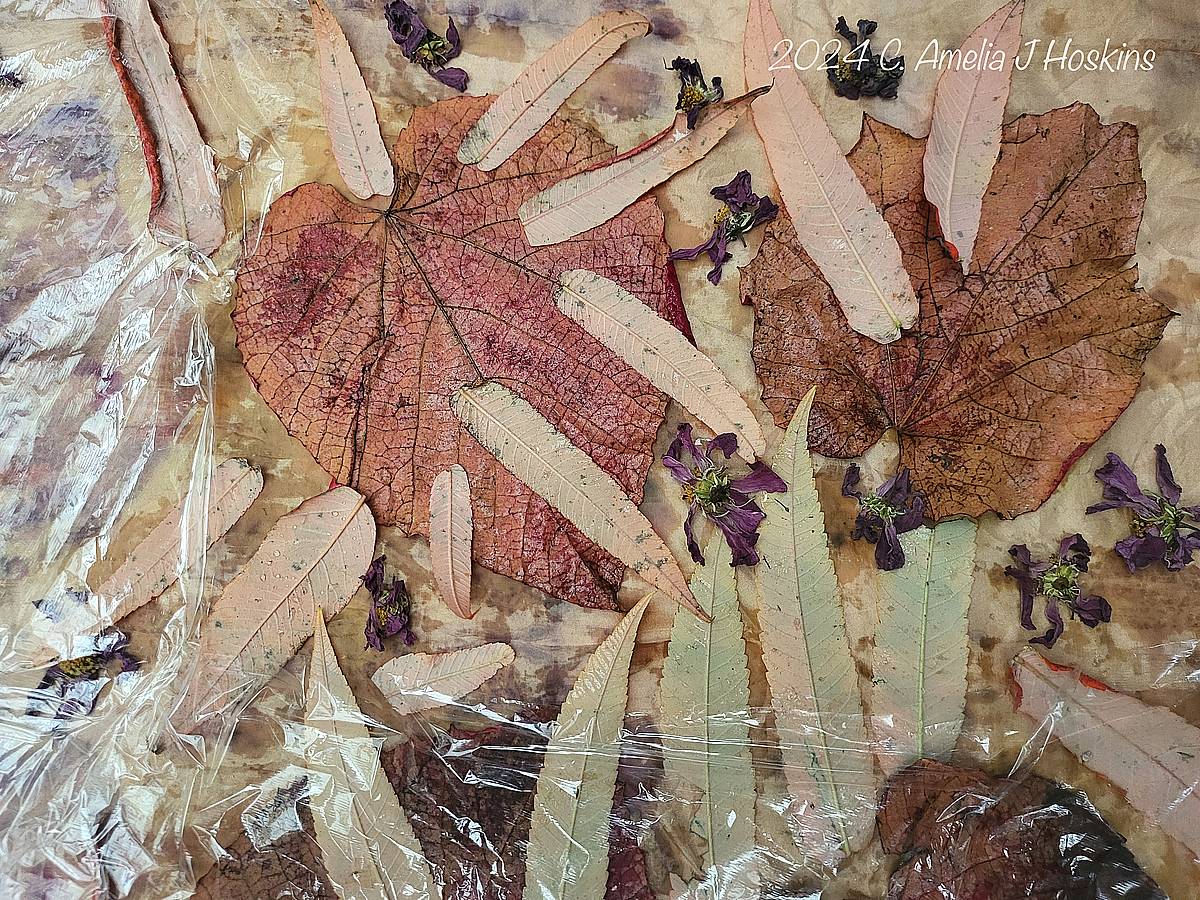
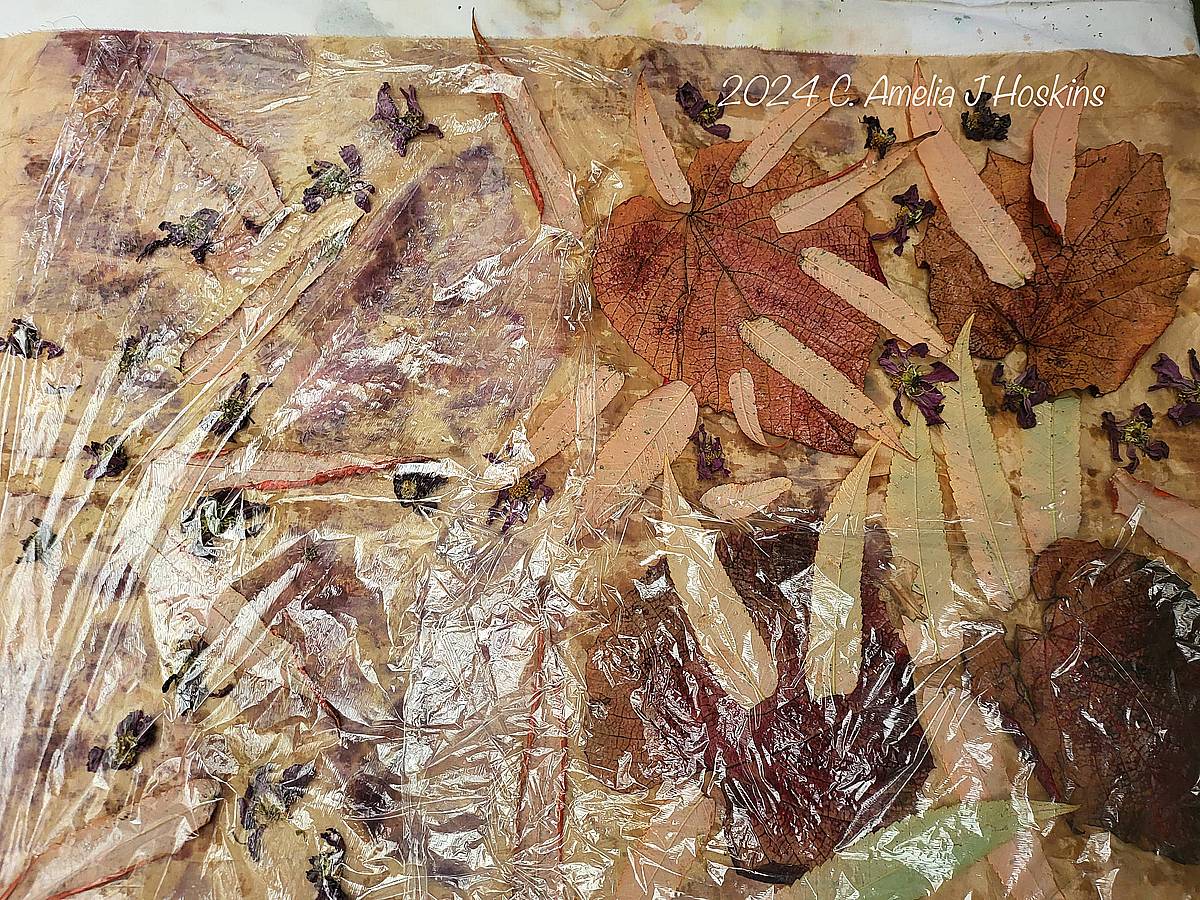
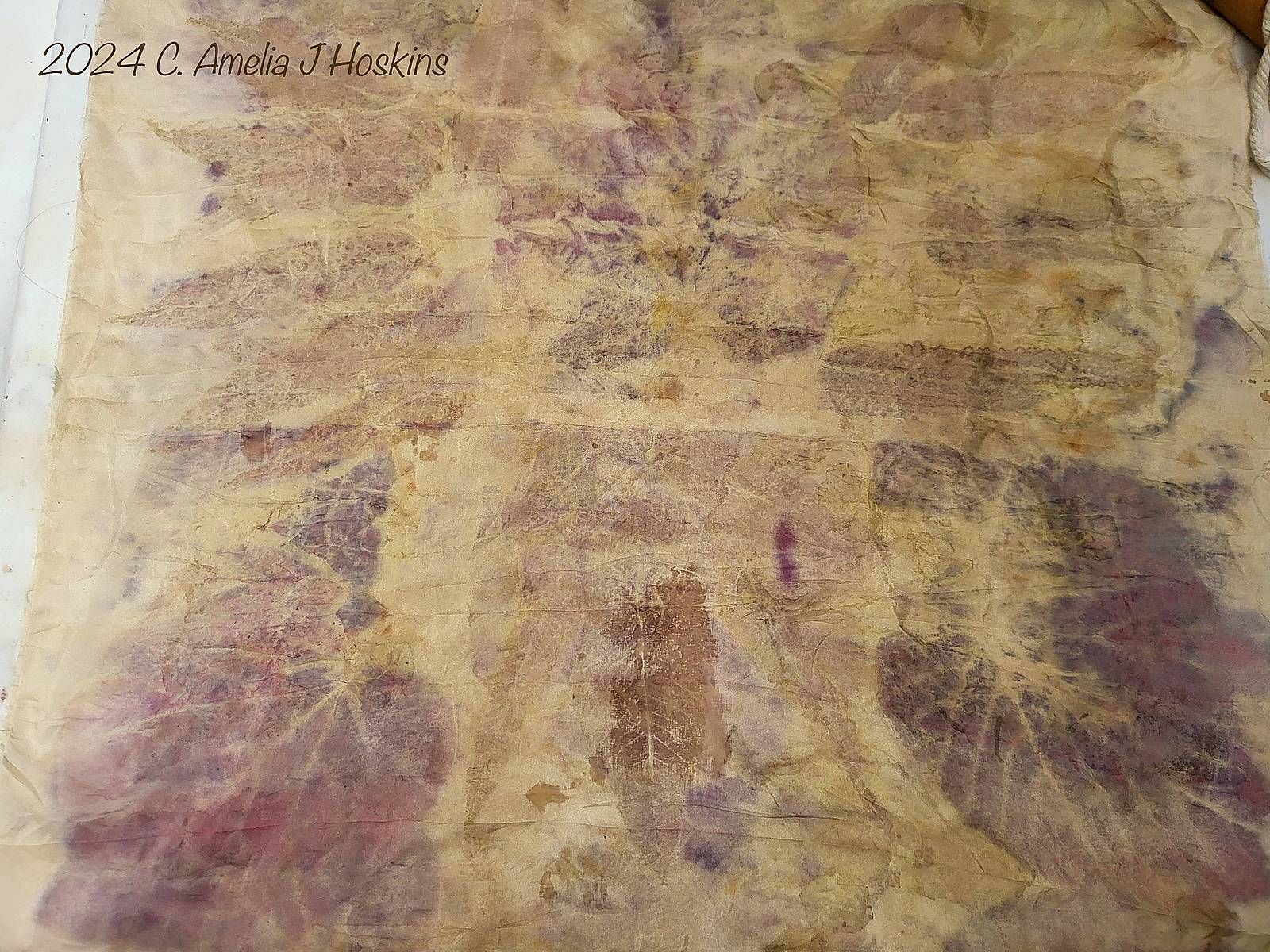
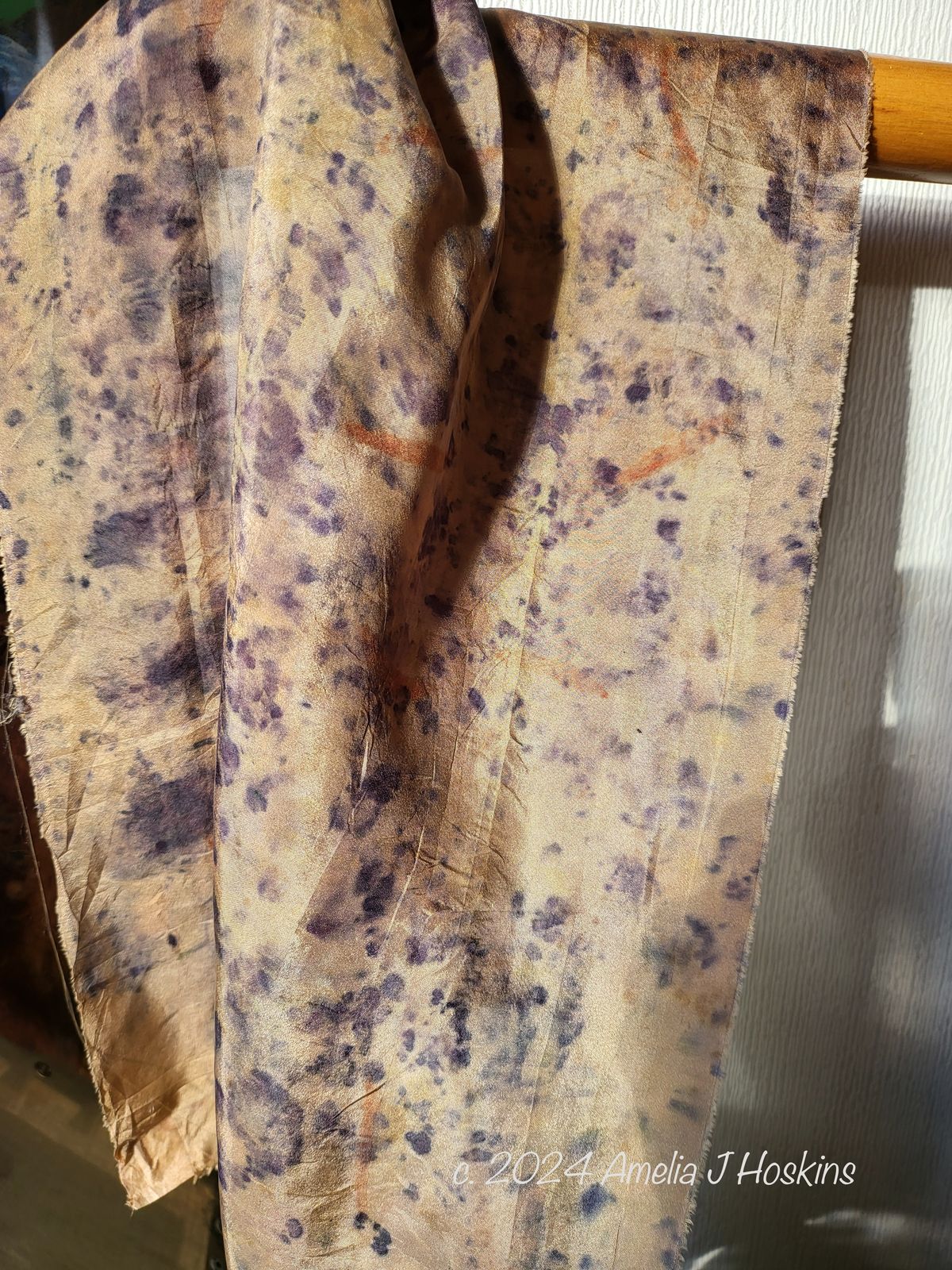
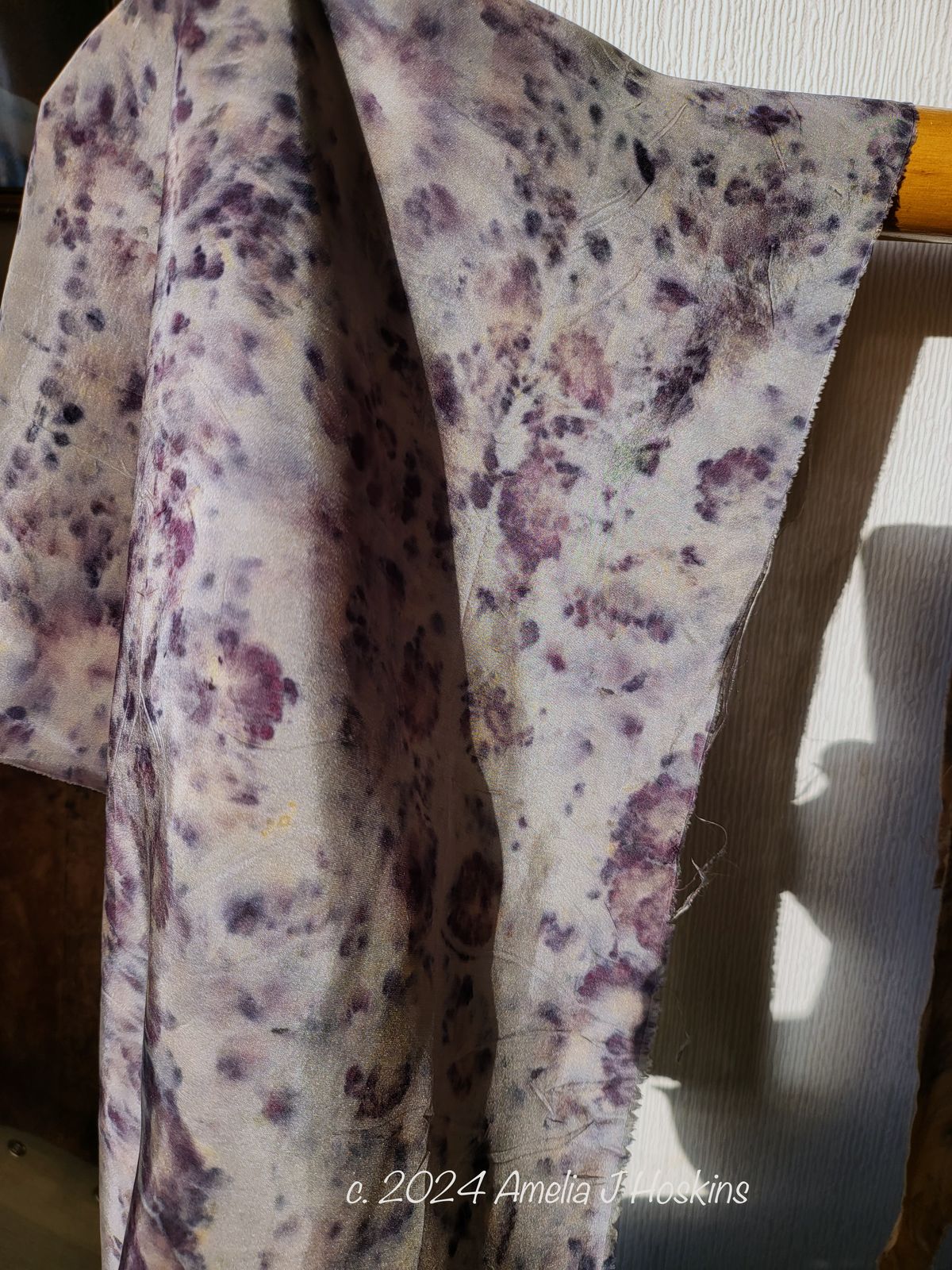
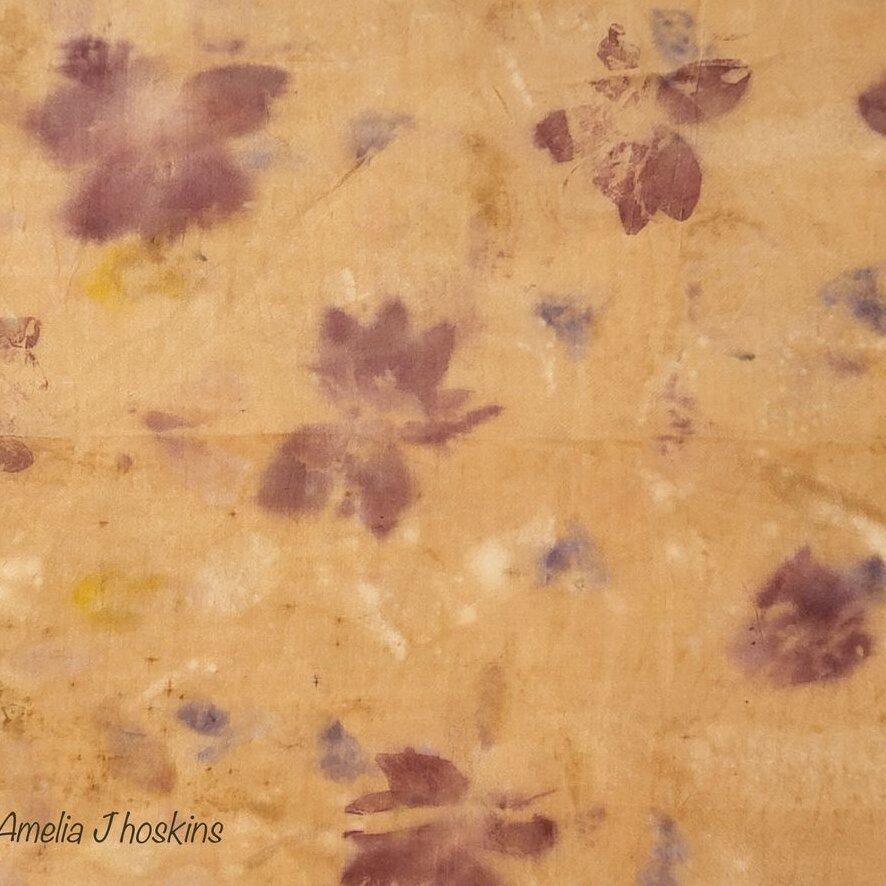
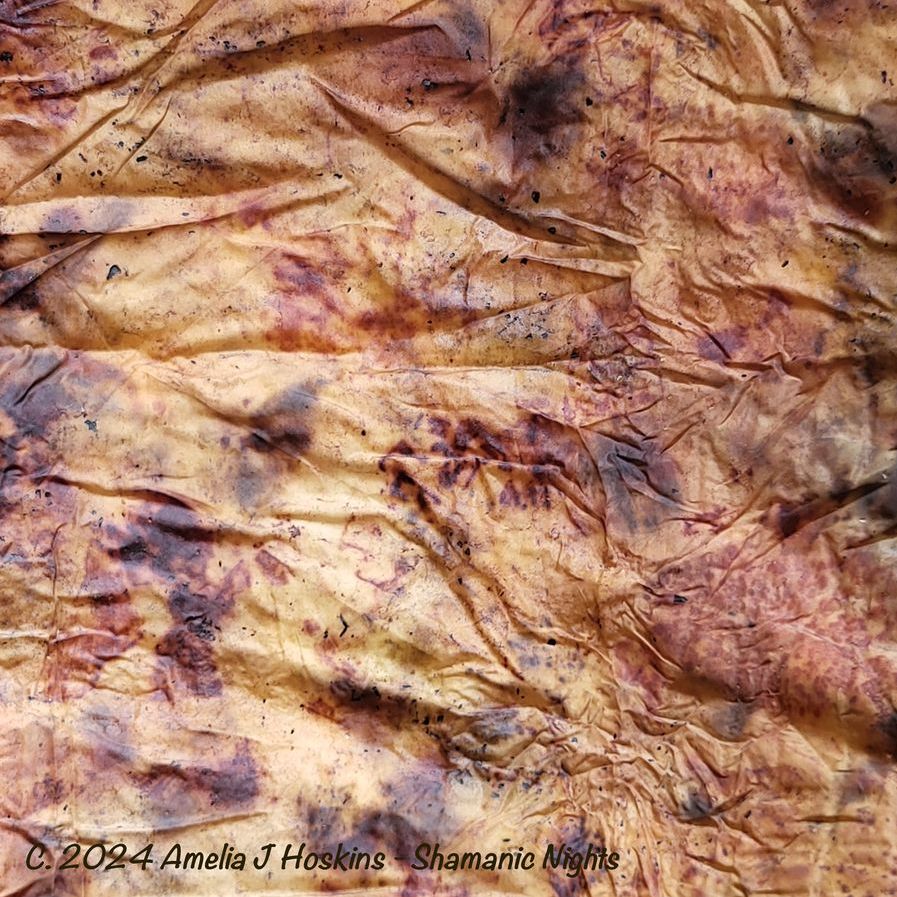
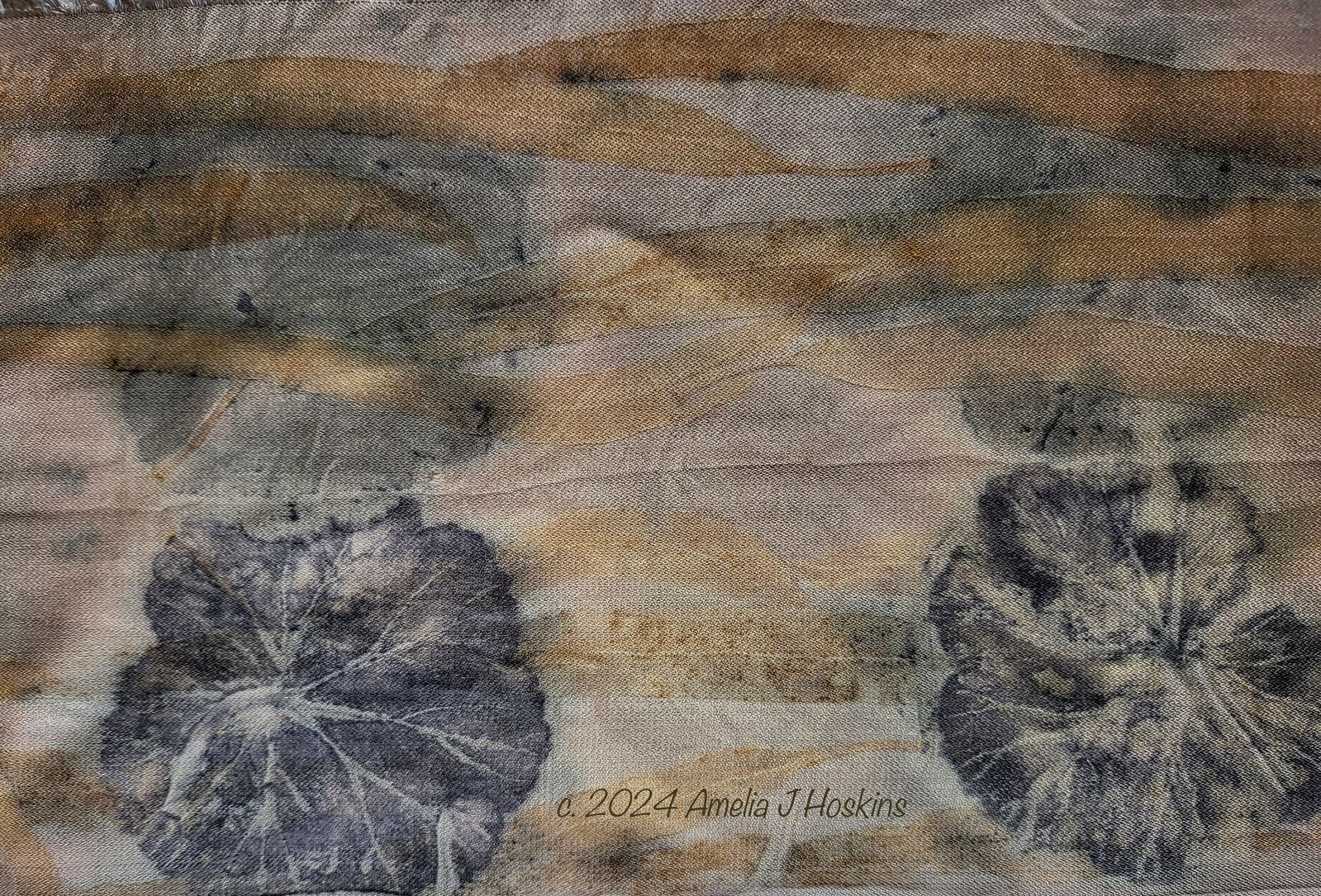
Fine wool scarf eco printed with large Catalpa leaves (deep red-brown)

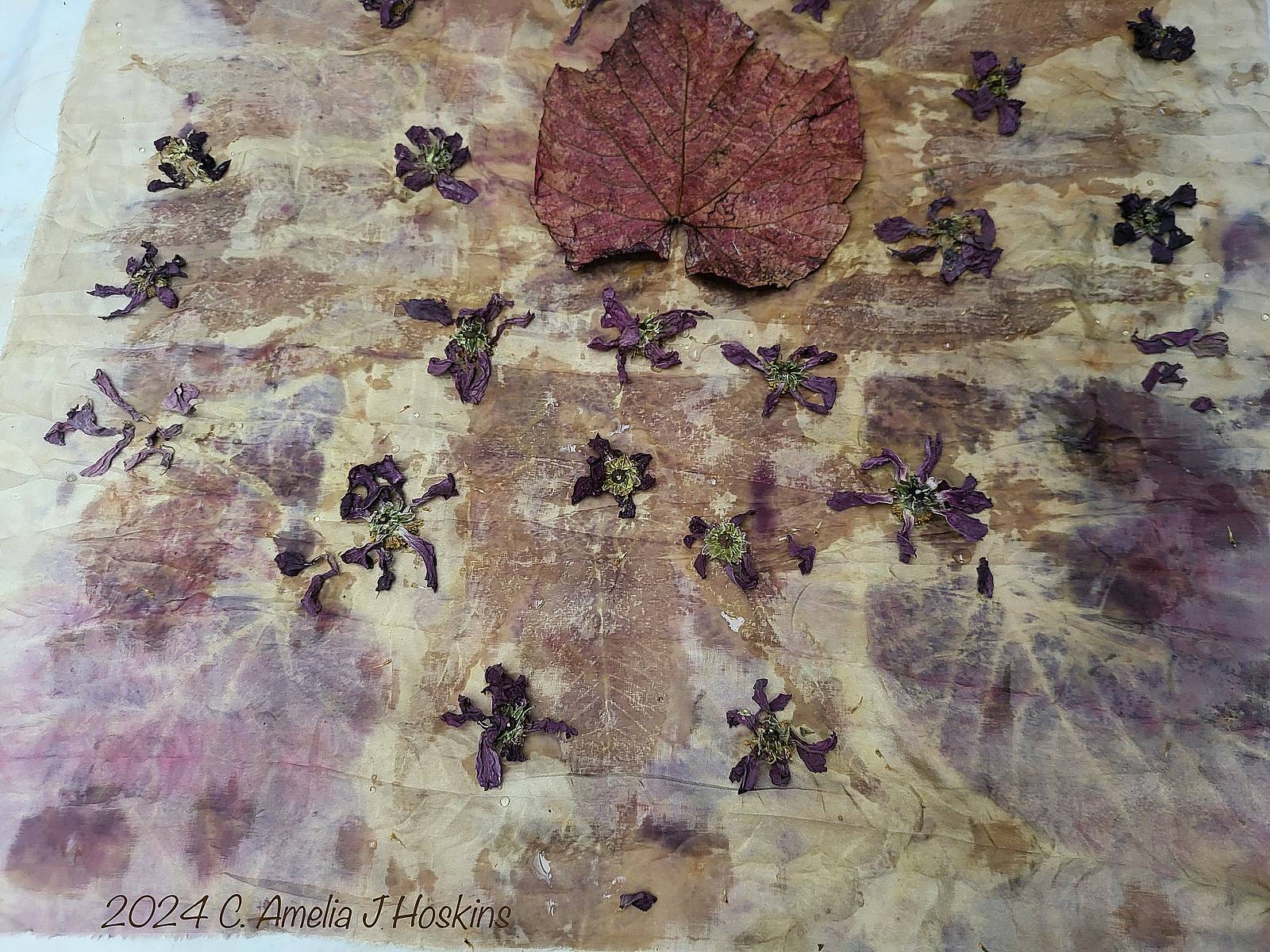
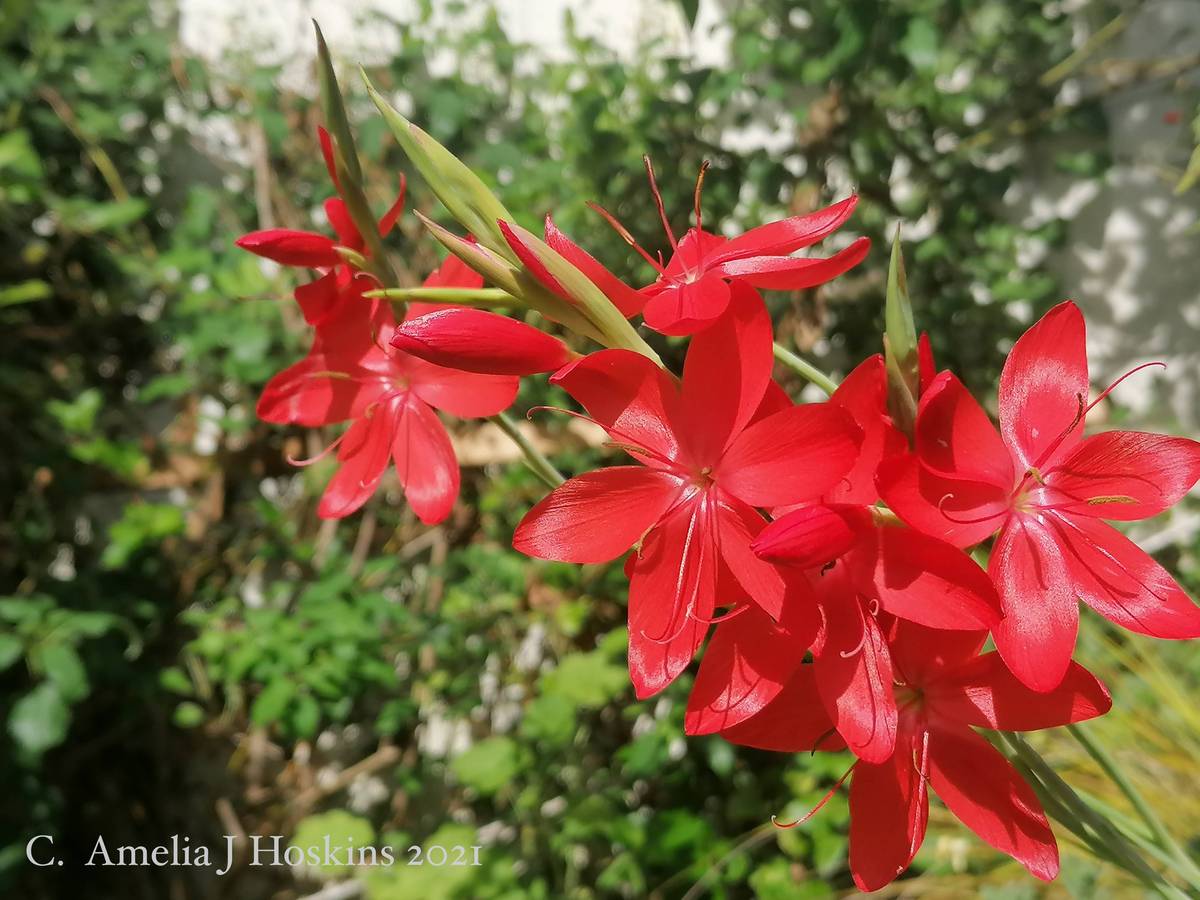
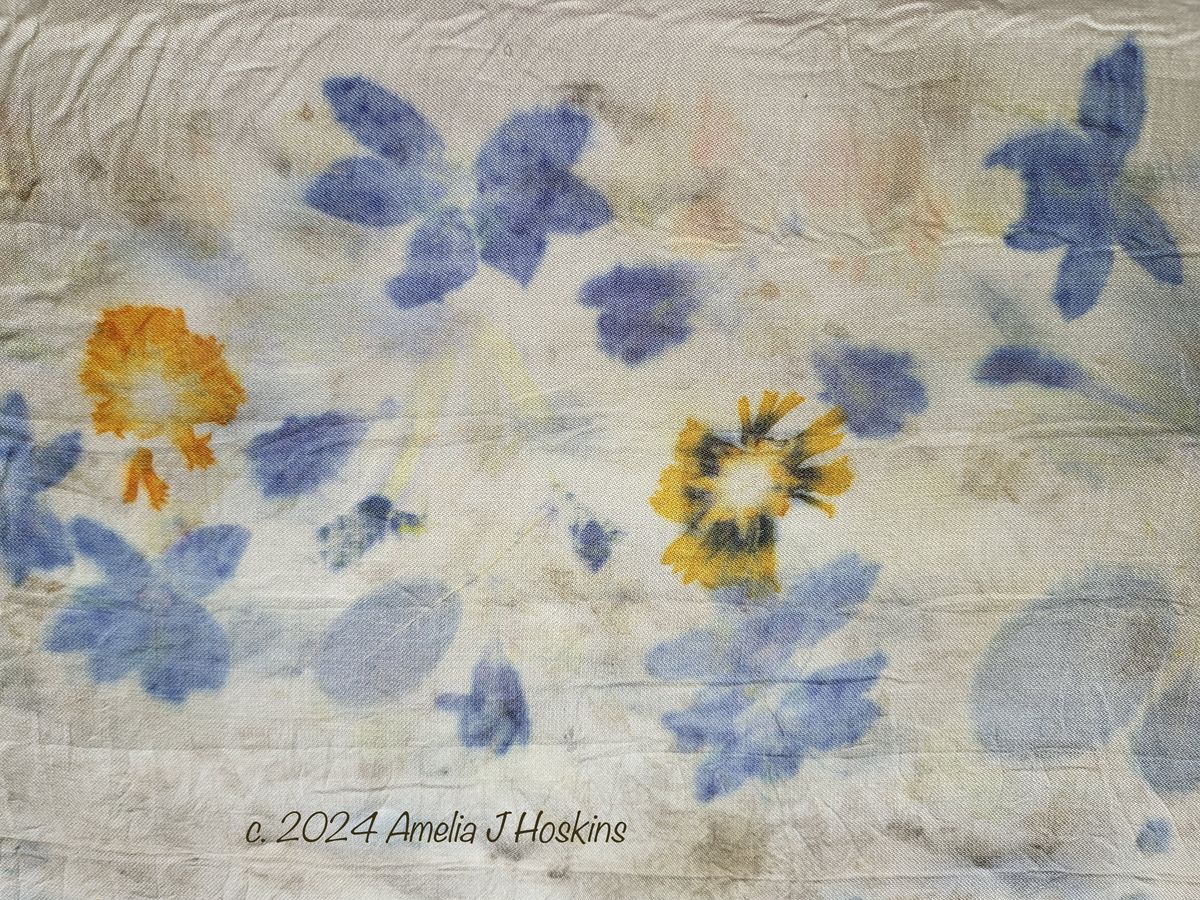
Addition: Purple Coreopsis flowers (deep violet print), and red Hesperanth flowers which turn blue.

Fringe:  Dartmoor Shetland wool - hand dyed with Scabious Black Knight (grey) and three tones of Amaranth (beige).

Colour in sunlight is yellower than actual, which is dull gold

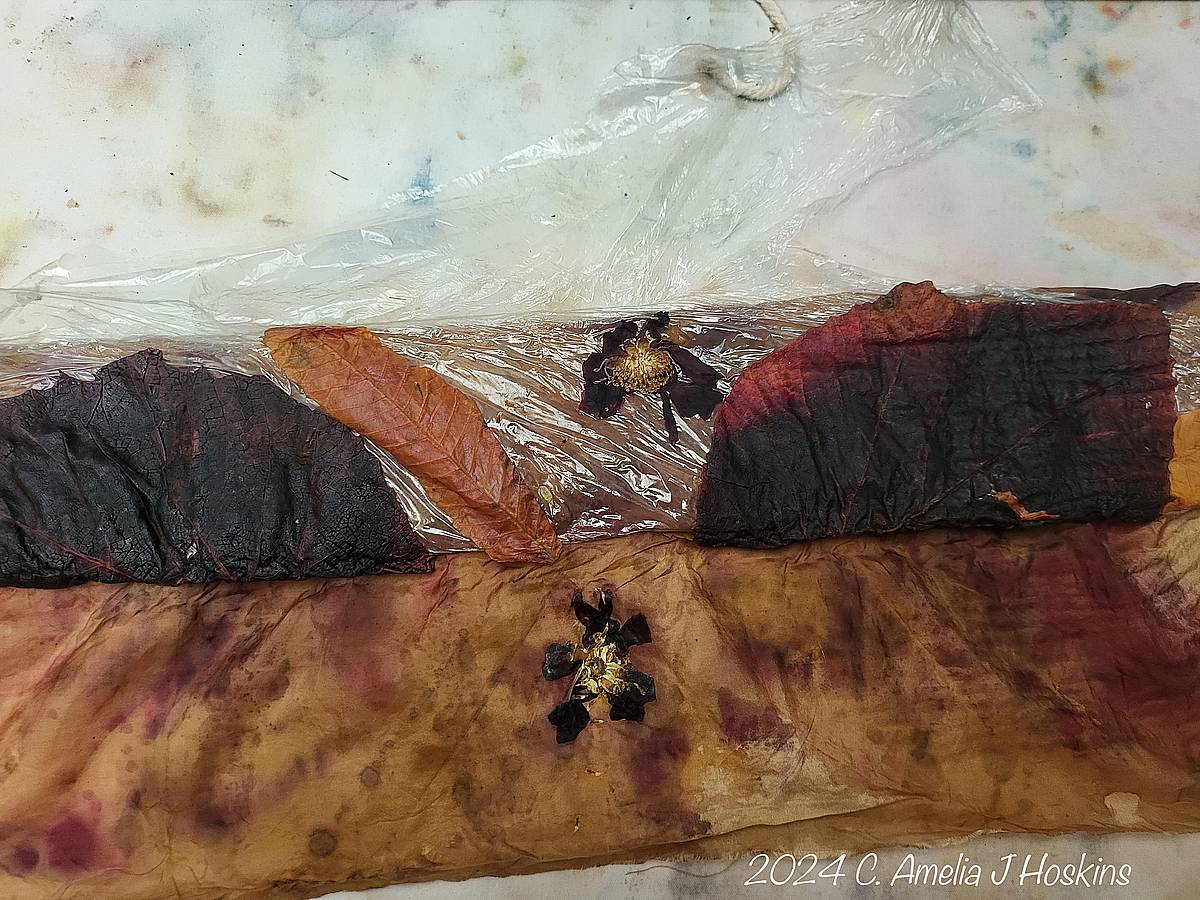
Crimson Catalpa leaves with Violet centre Coreopsis prints

Eco Print Process:

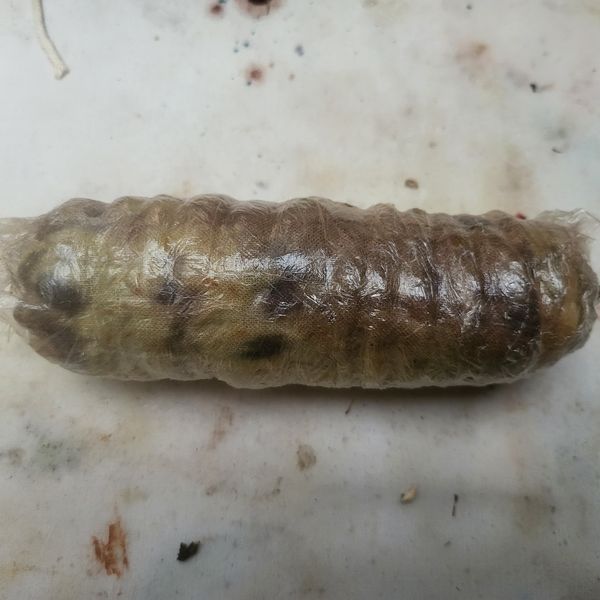
Fine wool was previously dyed with Comfrey or Rosemary giving dull gold background.  Large red leaves of vine tree Catalpa Bignoniodes See post; Secondary bundle dye needed: Catalpa leaves, Purple Coreopsis flowers (making violet) and Hesperanth (red - turns blue) form the scattered prints.  Blue not seen in all photos is now prussian blue.

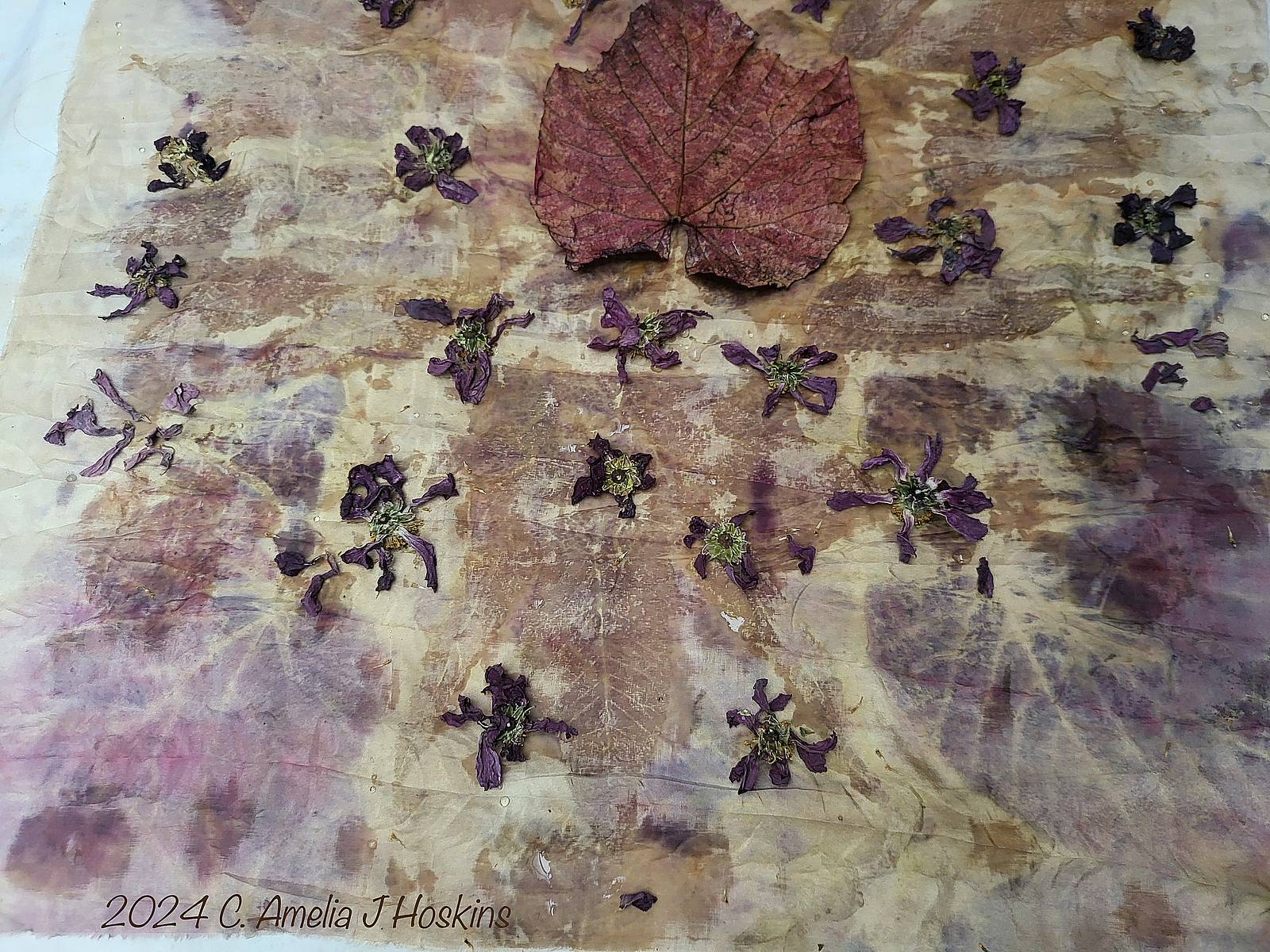
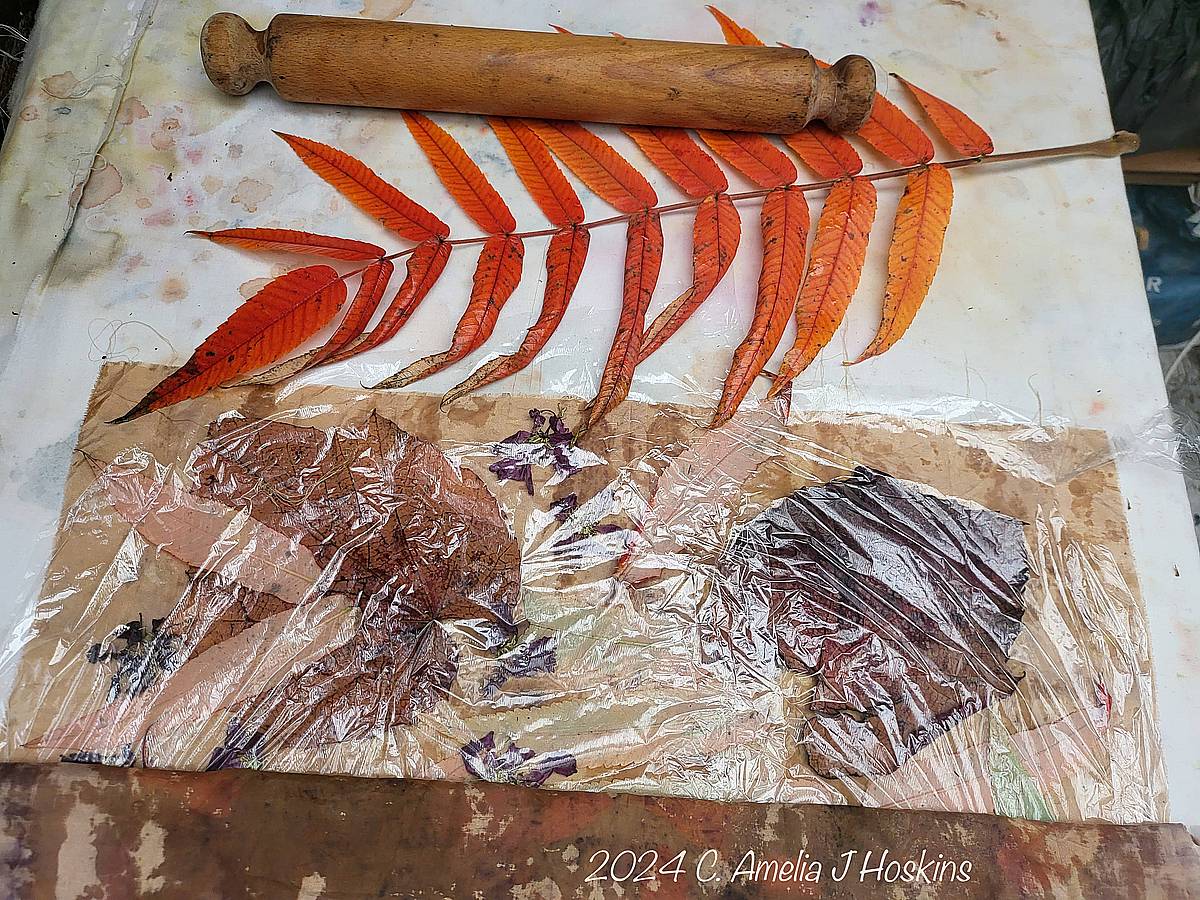
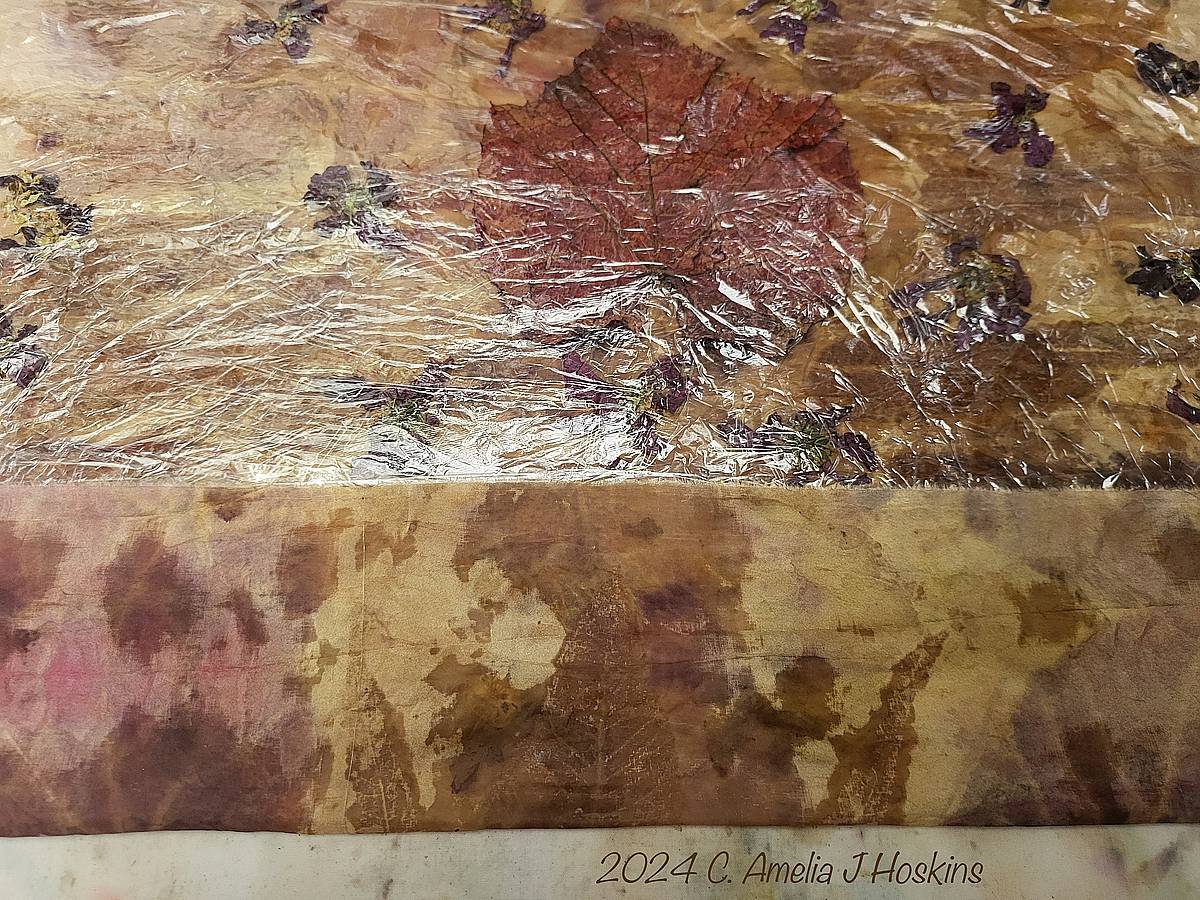
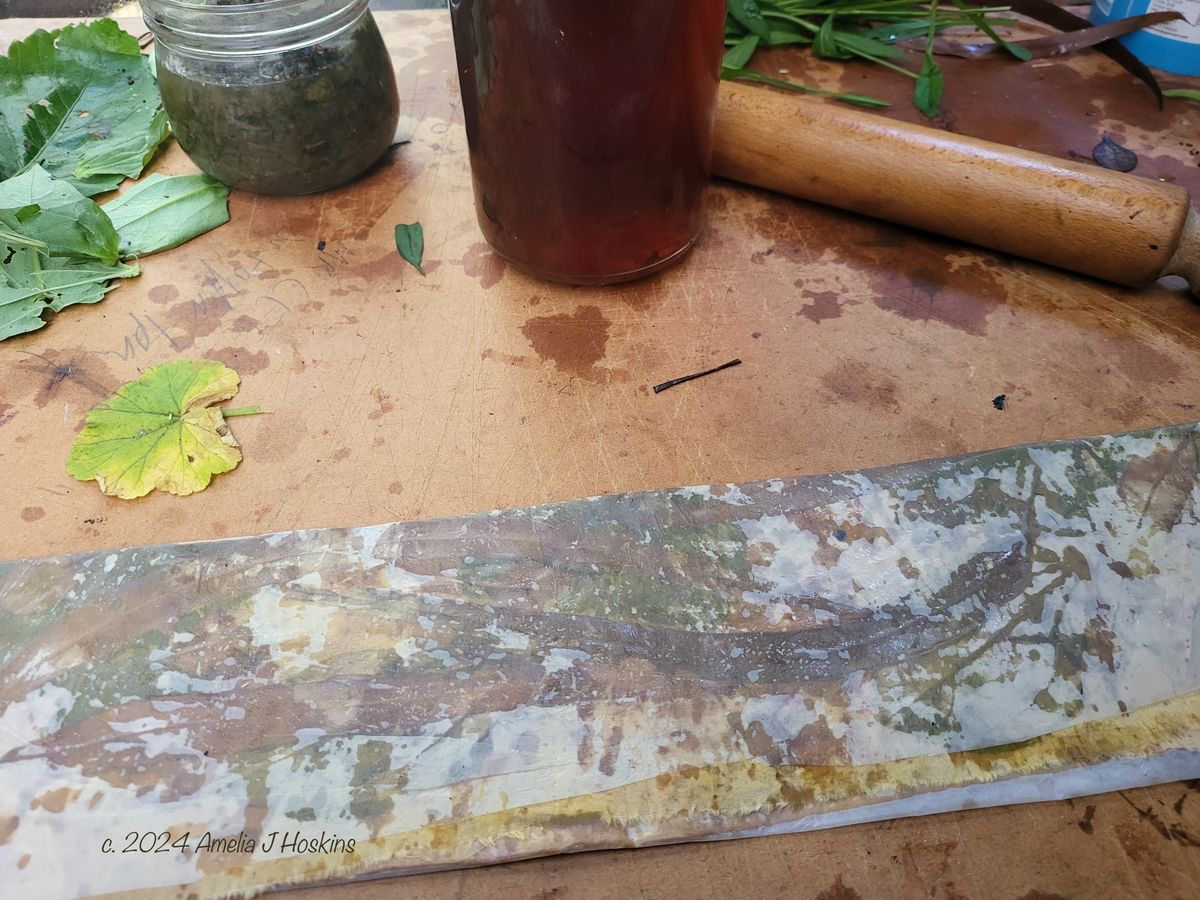
Preparation of 2nd bundle dye Catalpa leaves and Purple Coreopsis over 1st eco print Catalpa leaves

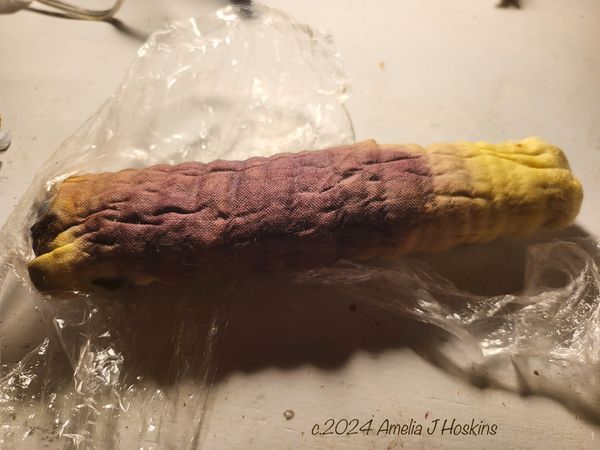
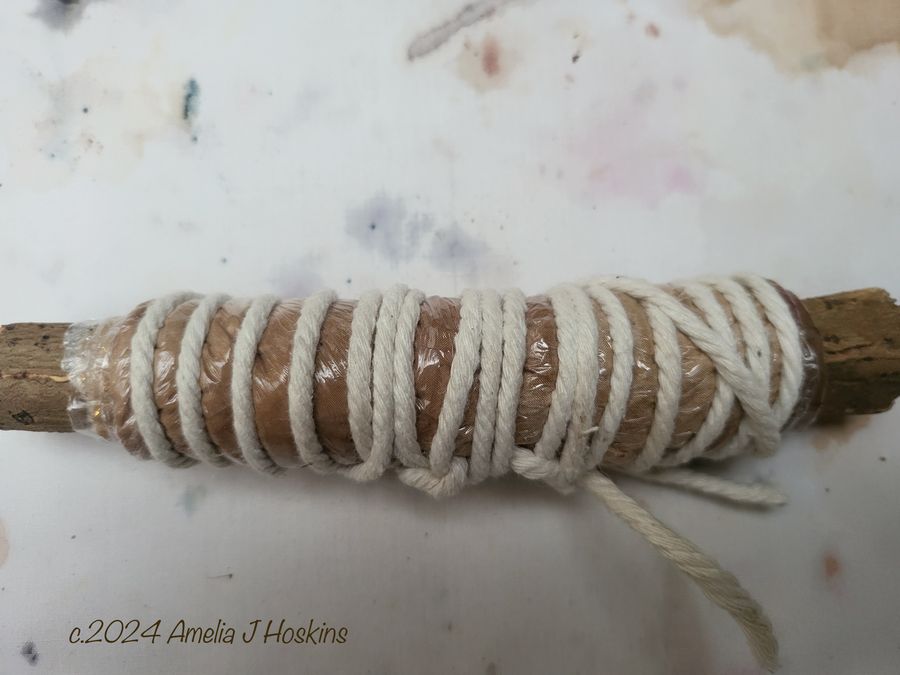
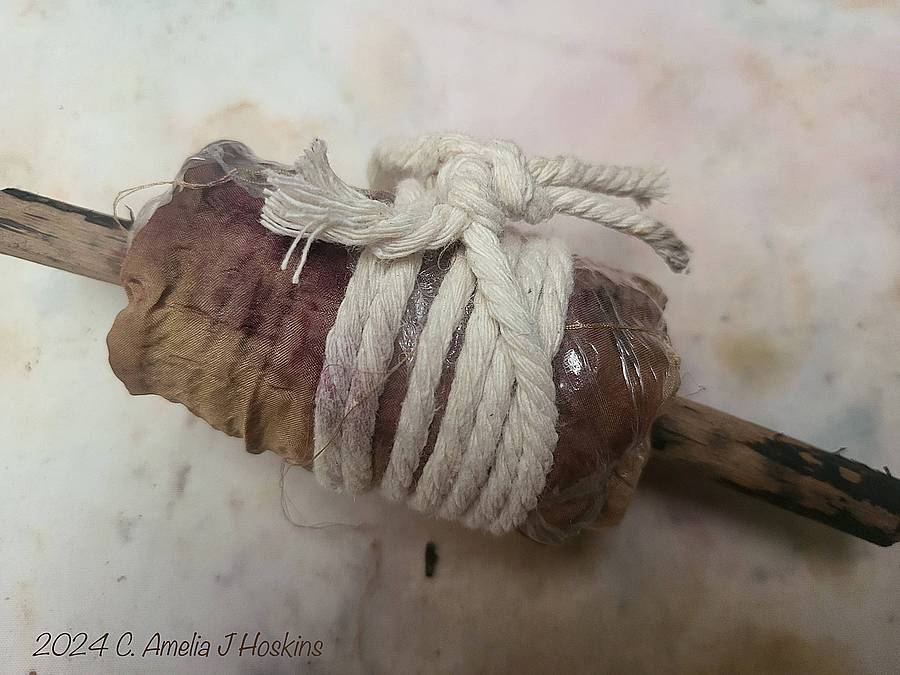
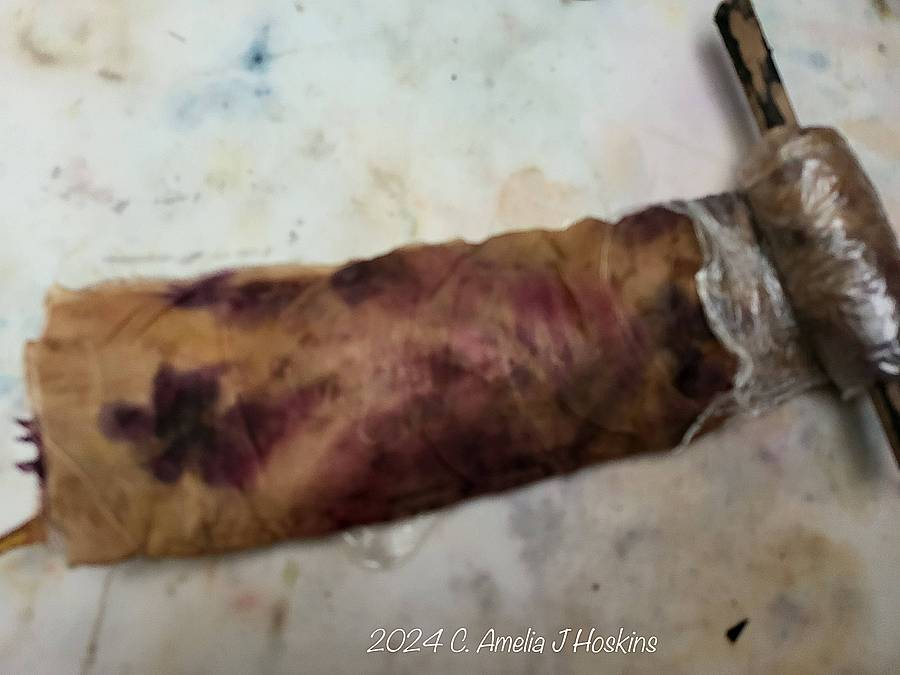
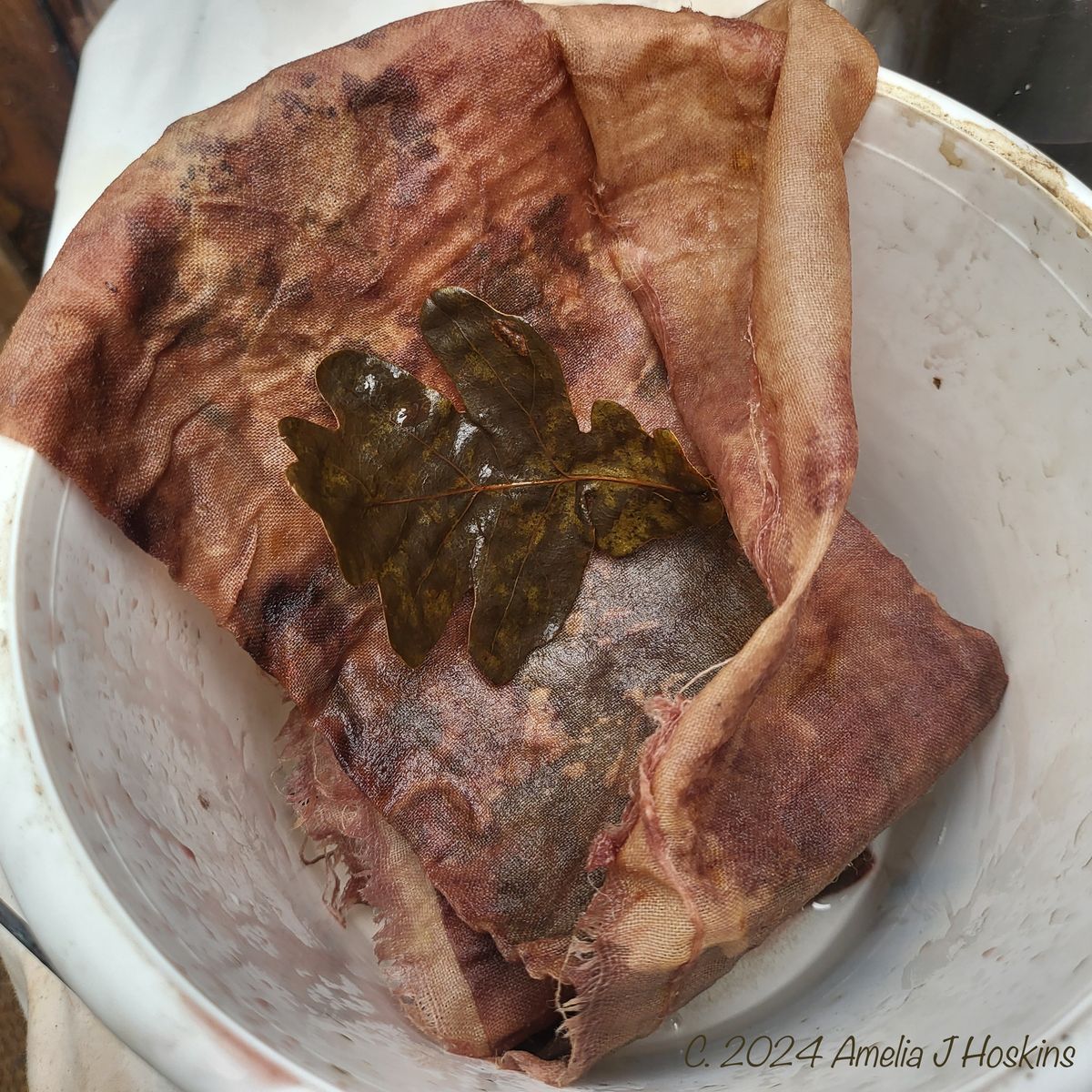
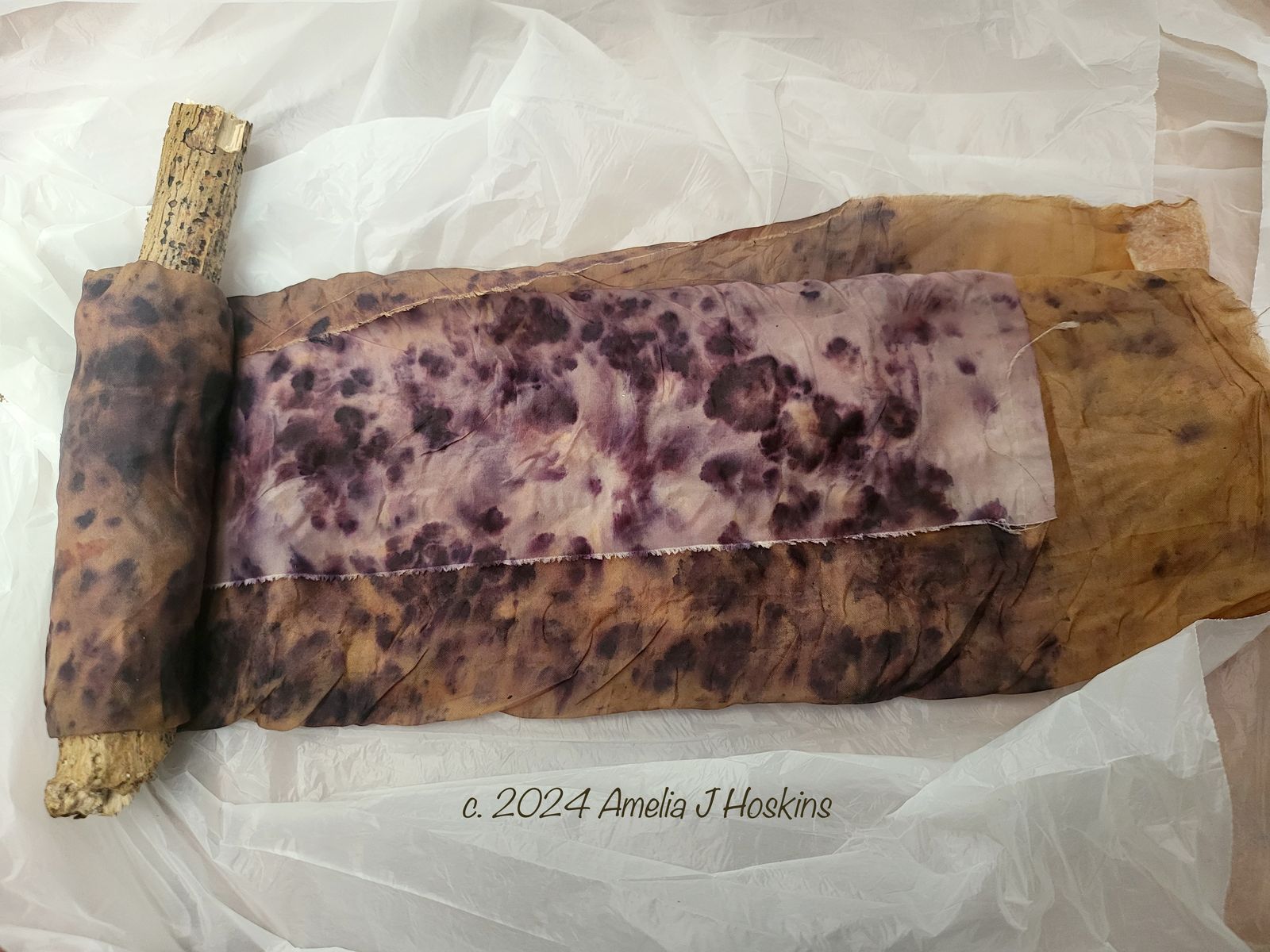
Dowel of fine wool with leaf print wet

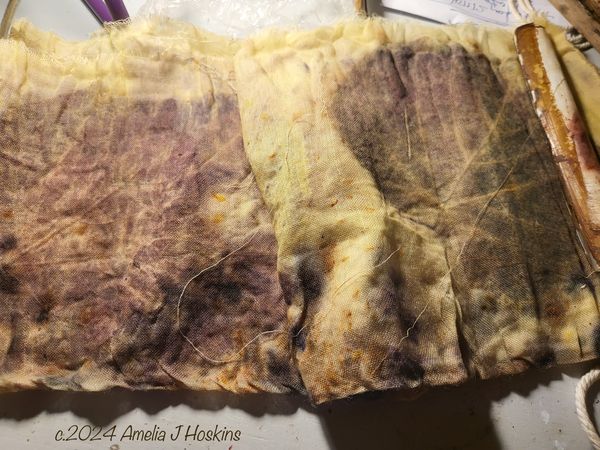
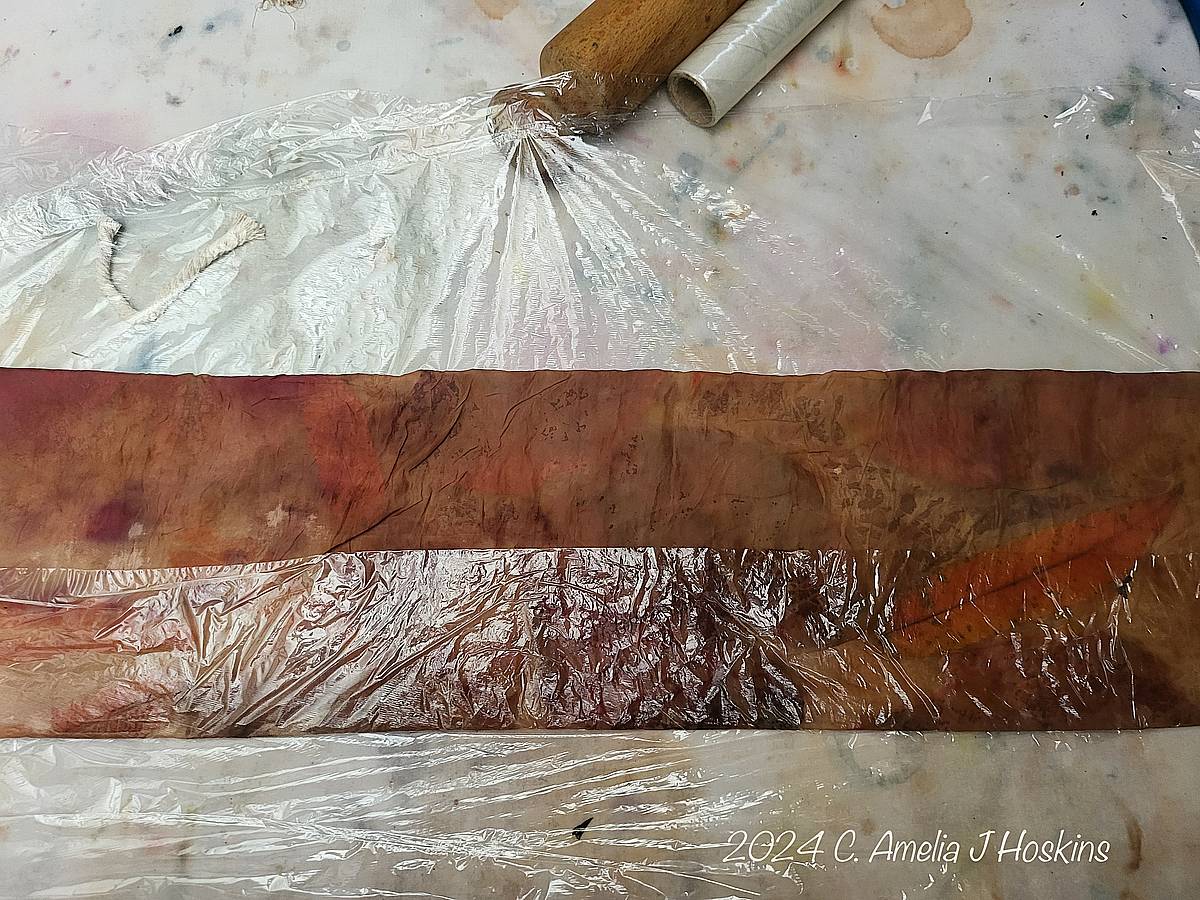
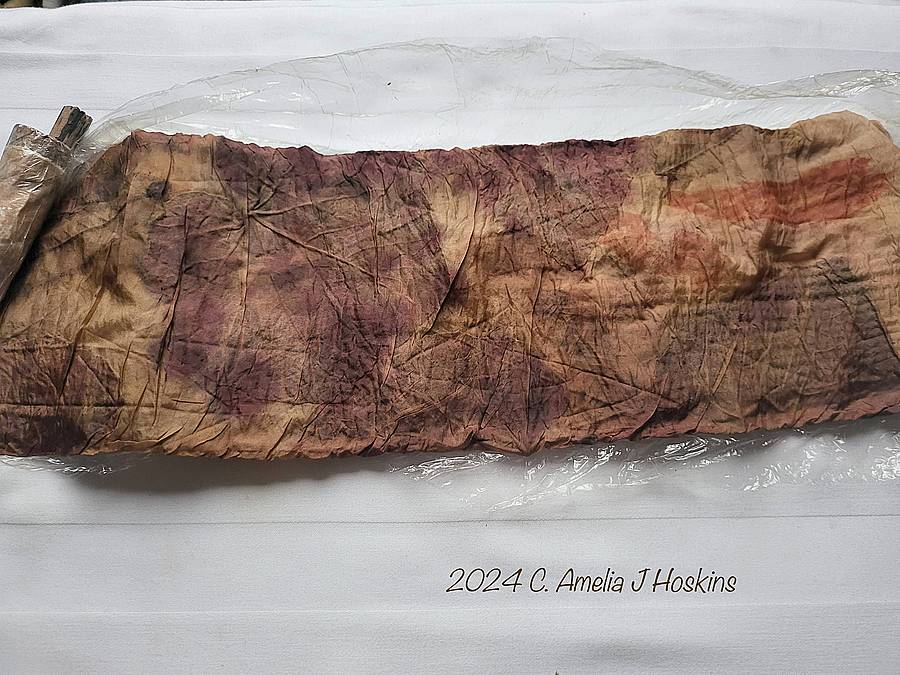
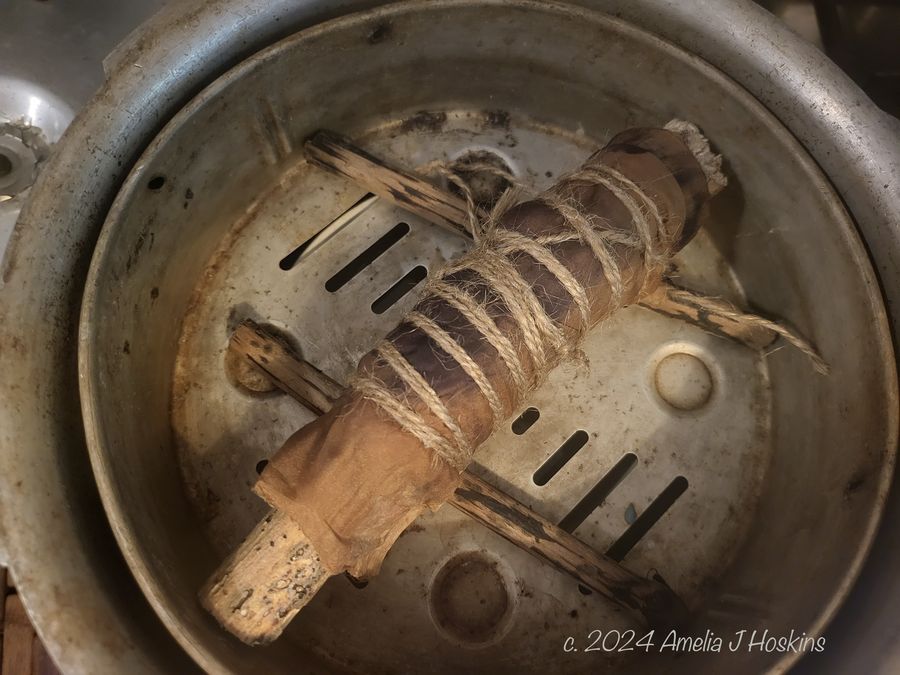
Unrolling the steamed bundle of leaves

07 Apr

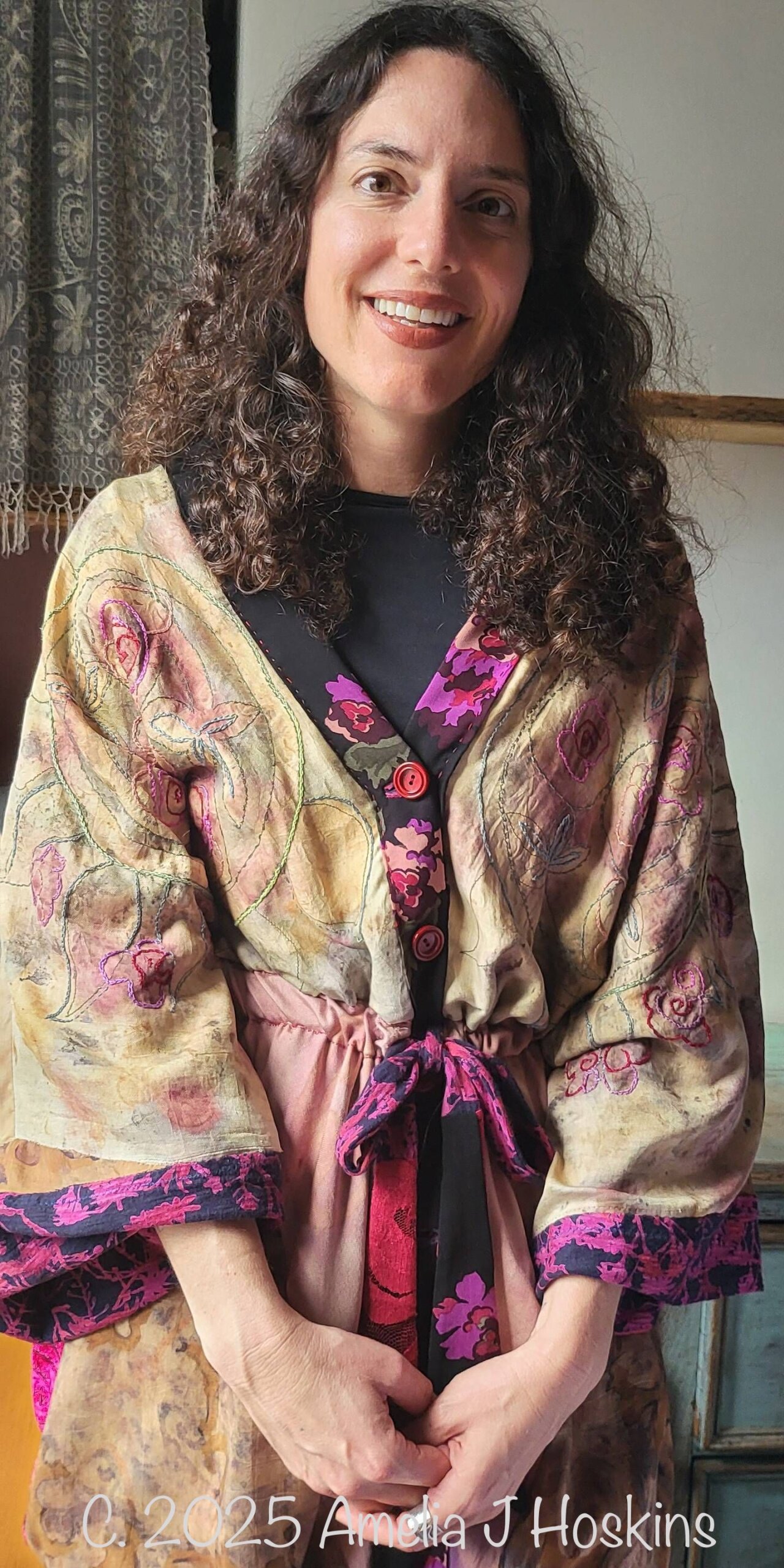
Raspberry Rose Celtic Kimono Dress

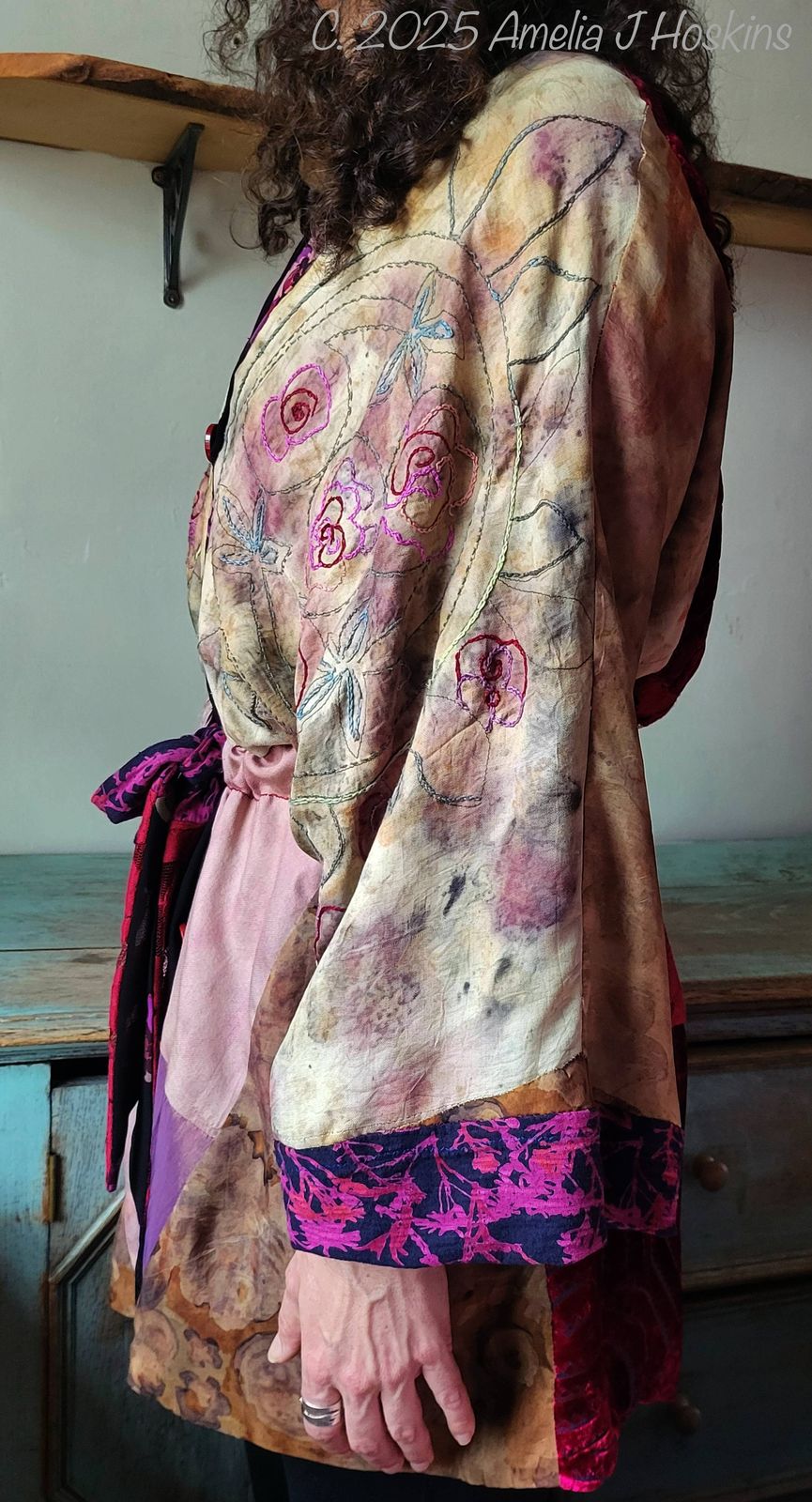
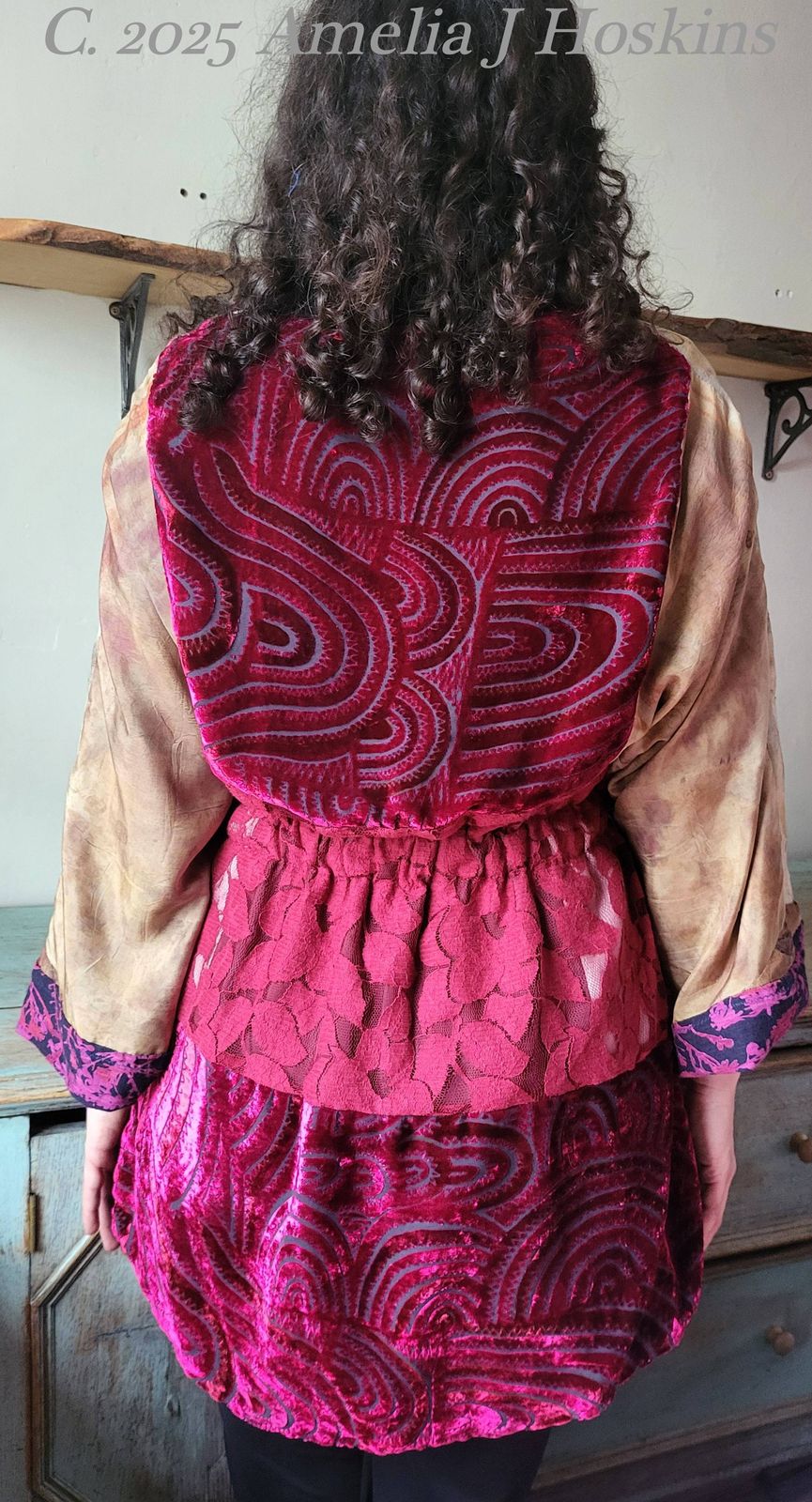
Sumptuous and totally unique kimono dress.  Mixed fabrics: including magenta pink-red velvet devore at back and a variety of silk dyed pieces at front.  Experiments with eco dyeing using plants to dye Ahimsa and Habotai silks.


LEFT SIDE SILK LOWER


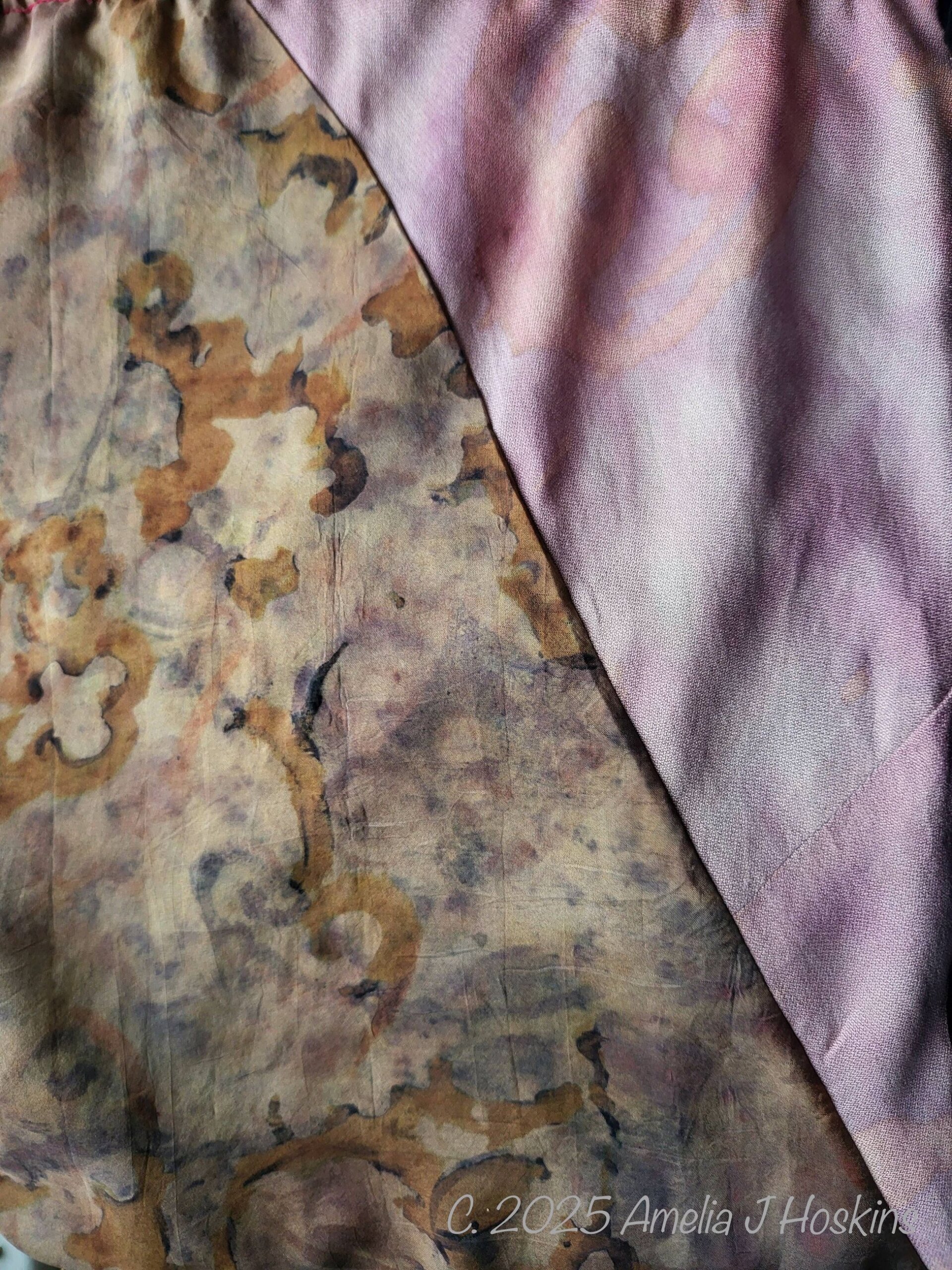
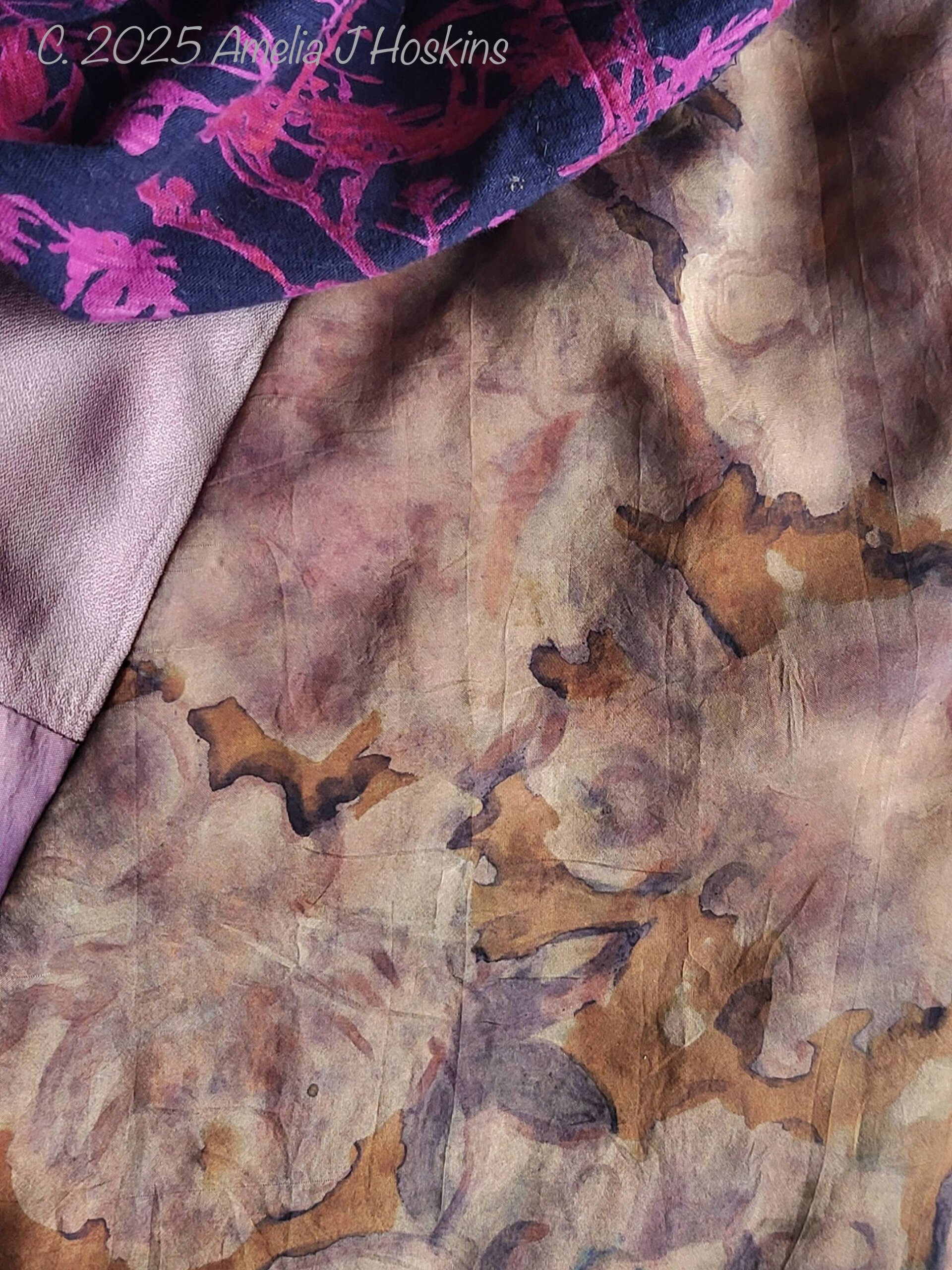
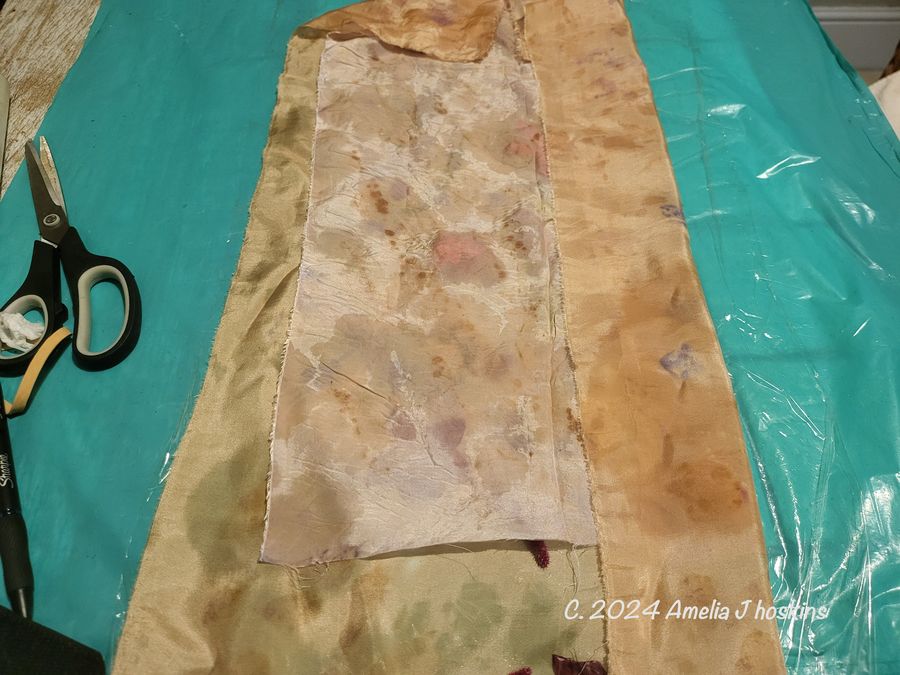
Lower dress side: Habotai silk dyed in golds and purples; created by bundle dyeing [link] - Many layers of over dyeing. Definition added with logwood, lemon juice and woad.  With bundle dyed silks, after steaming, outlines can be added to create 'design' shapes, like flowers.  Useful when the dyed effects merge together with no design definition.

This has come out quite well; using just one piece, cut diagonally to add to each side of garment.

Additional blackberry dyed Ahimsa silk is used bottom front next to it.

LEFT SIDE SILK UPPER

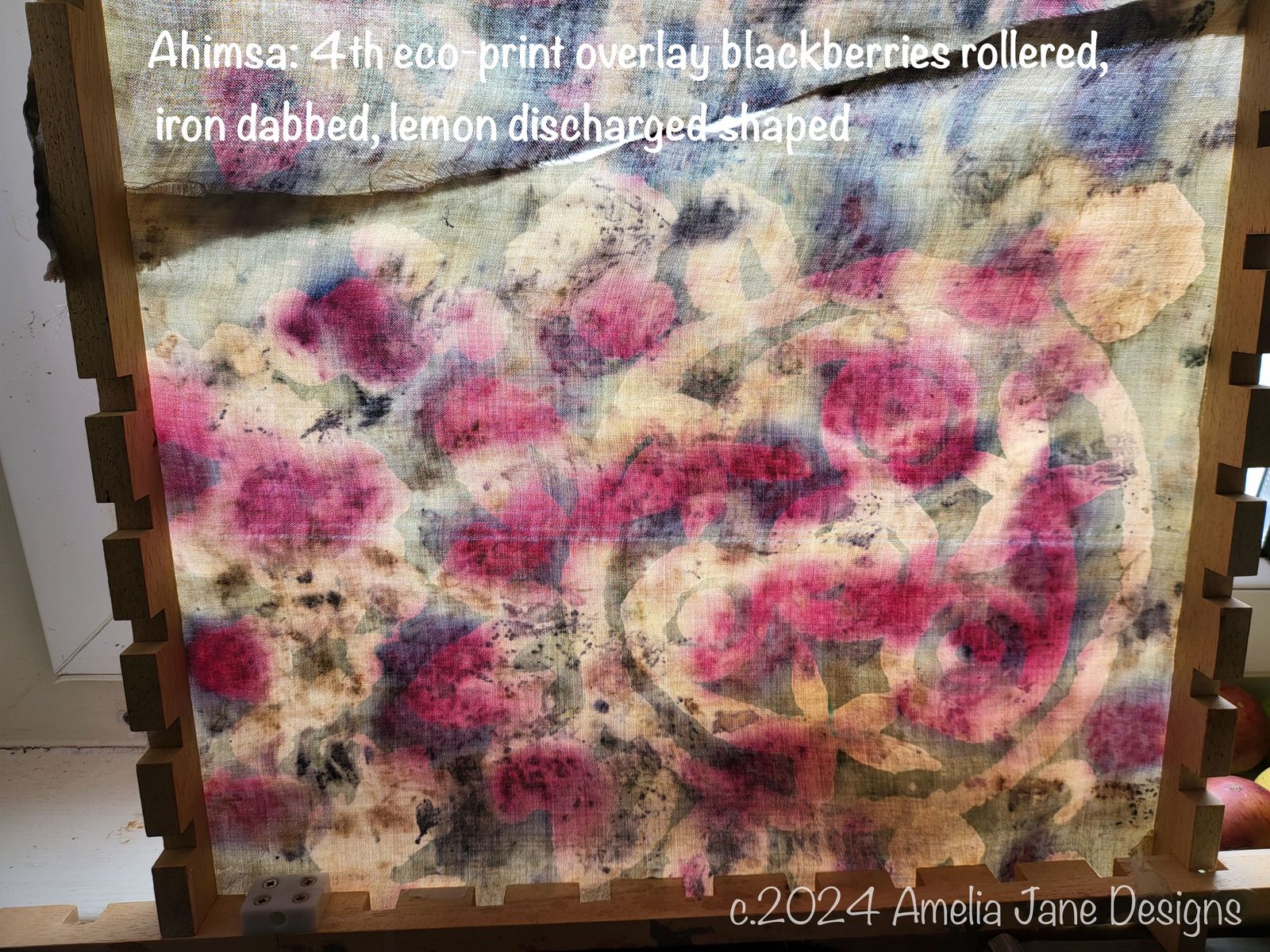
Sleeve section in Ahimsa silk, bundle dyed with various flowers and leaves, and blackberries [background eco print session see Session 4 'To get some colour'.  A blotchy result led to being over-embroidered.

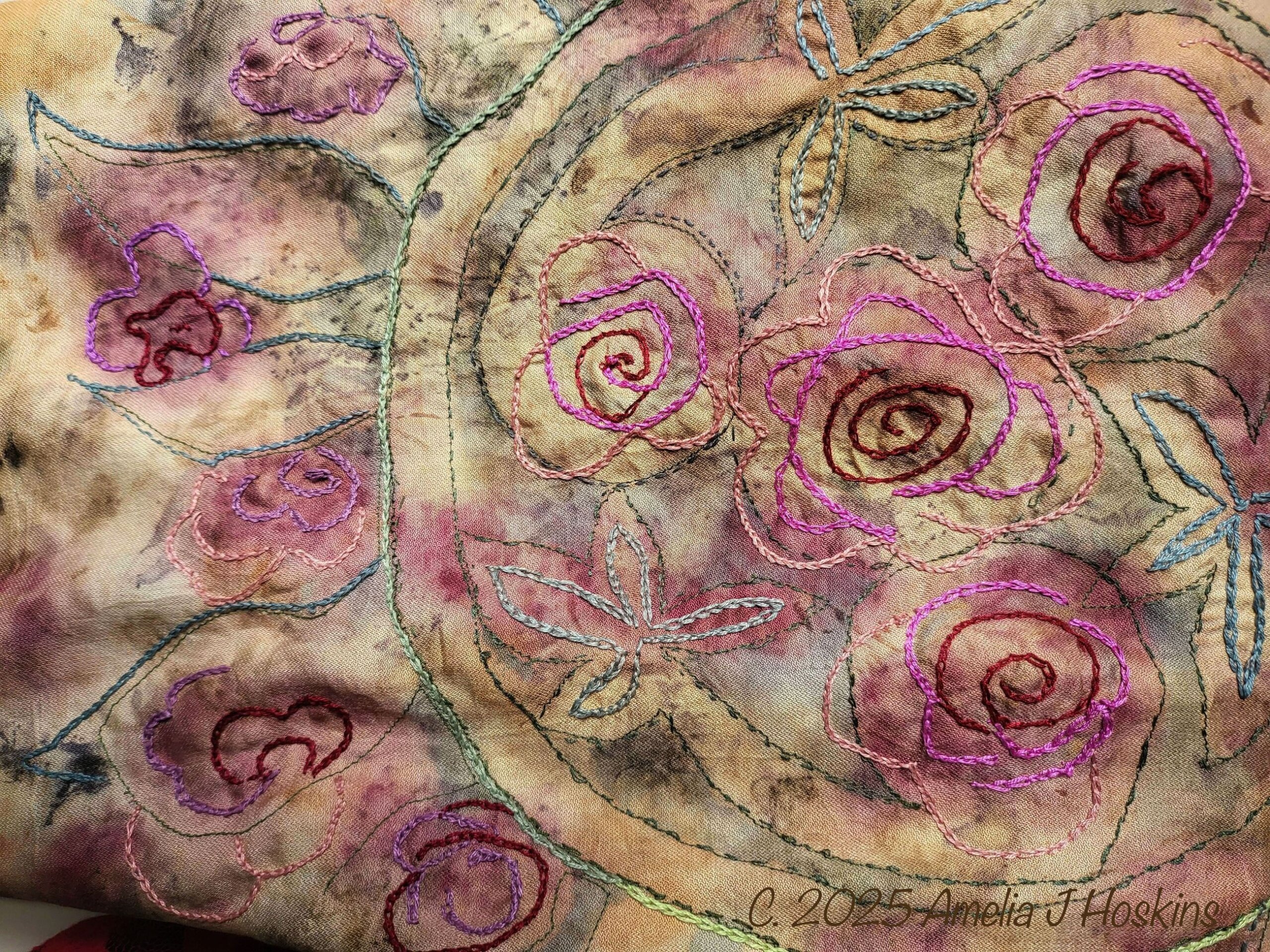
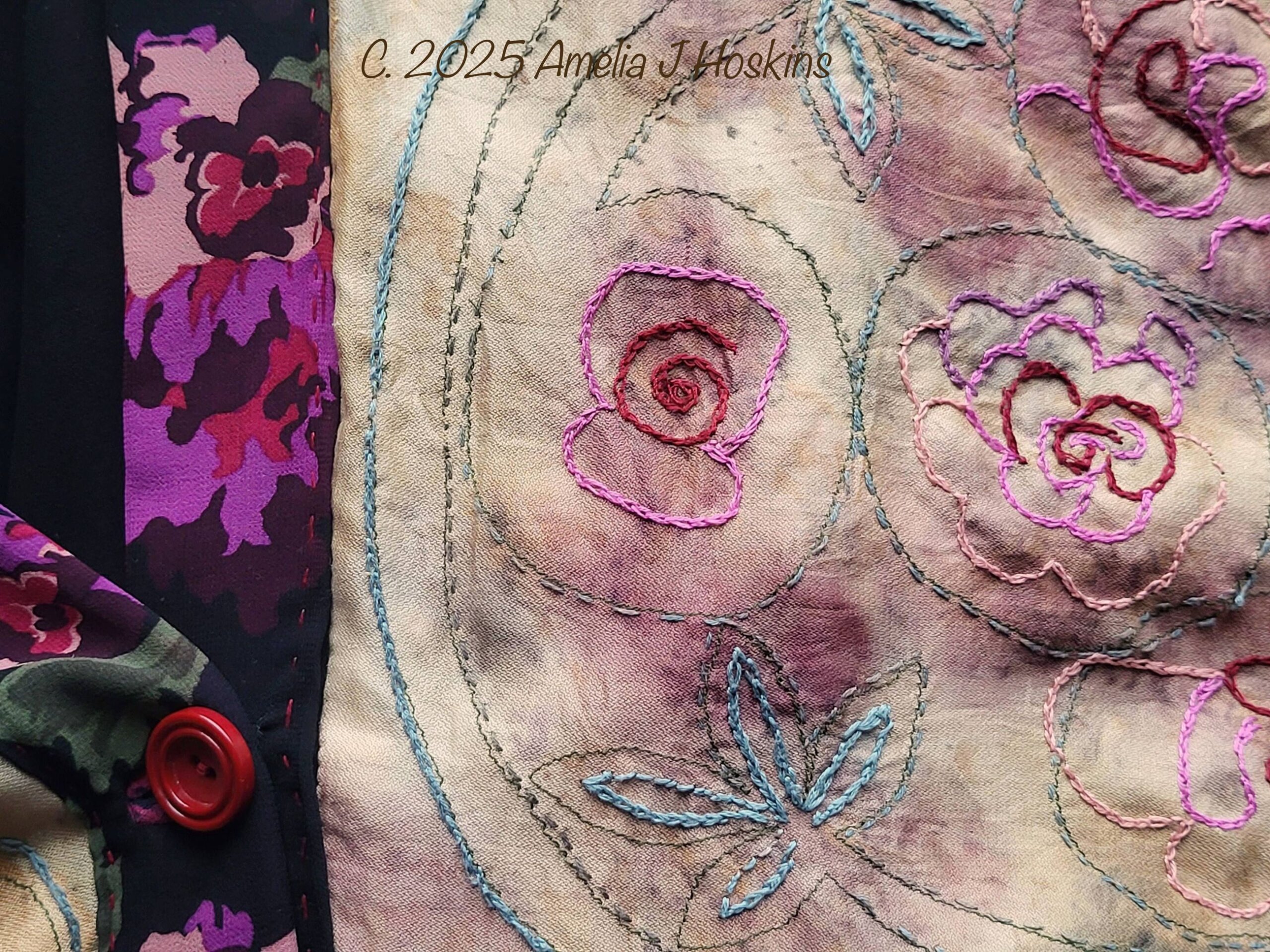
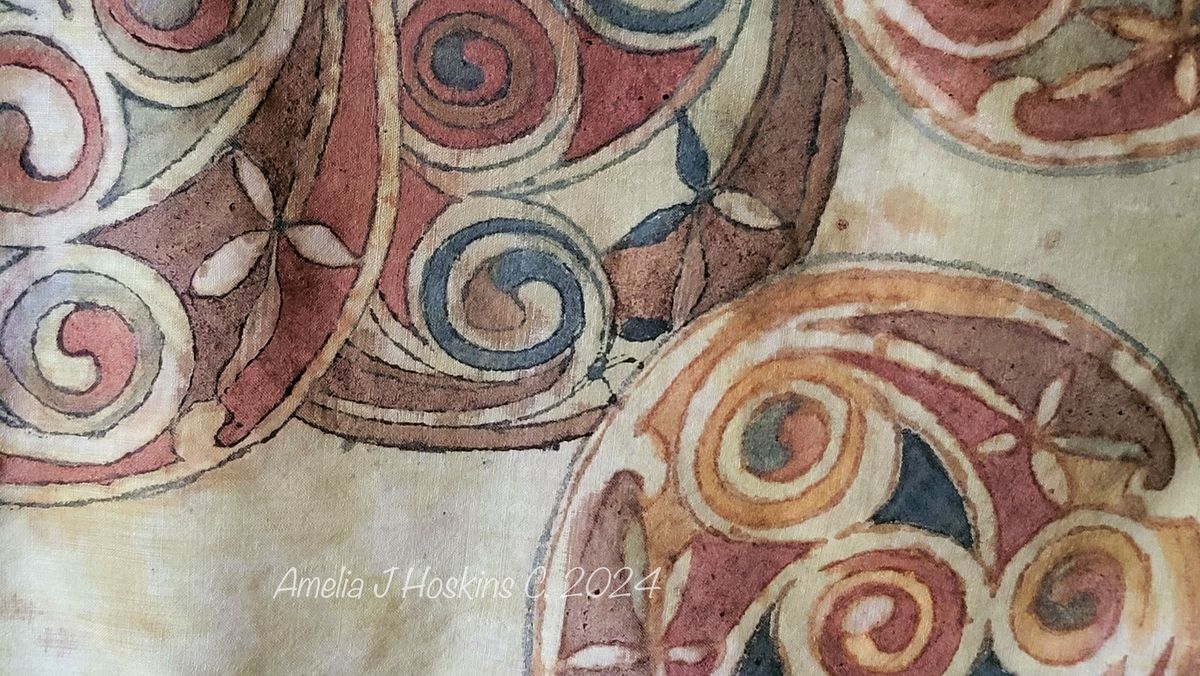
Embroidered Celtic Triskele design of 'rounds' added to silk with overplay of abstracted chain stitch embroidered 'roses'.  Added embroidered 'leaves' extend from circles down sleeve.

Black/pink cotton jersey is seen as 'cuff' below sleeve and is partial lining inside sleeves.  Together with the jersey and the Ahimsa silk, the main 'body' is very warm.
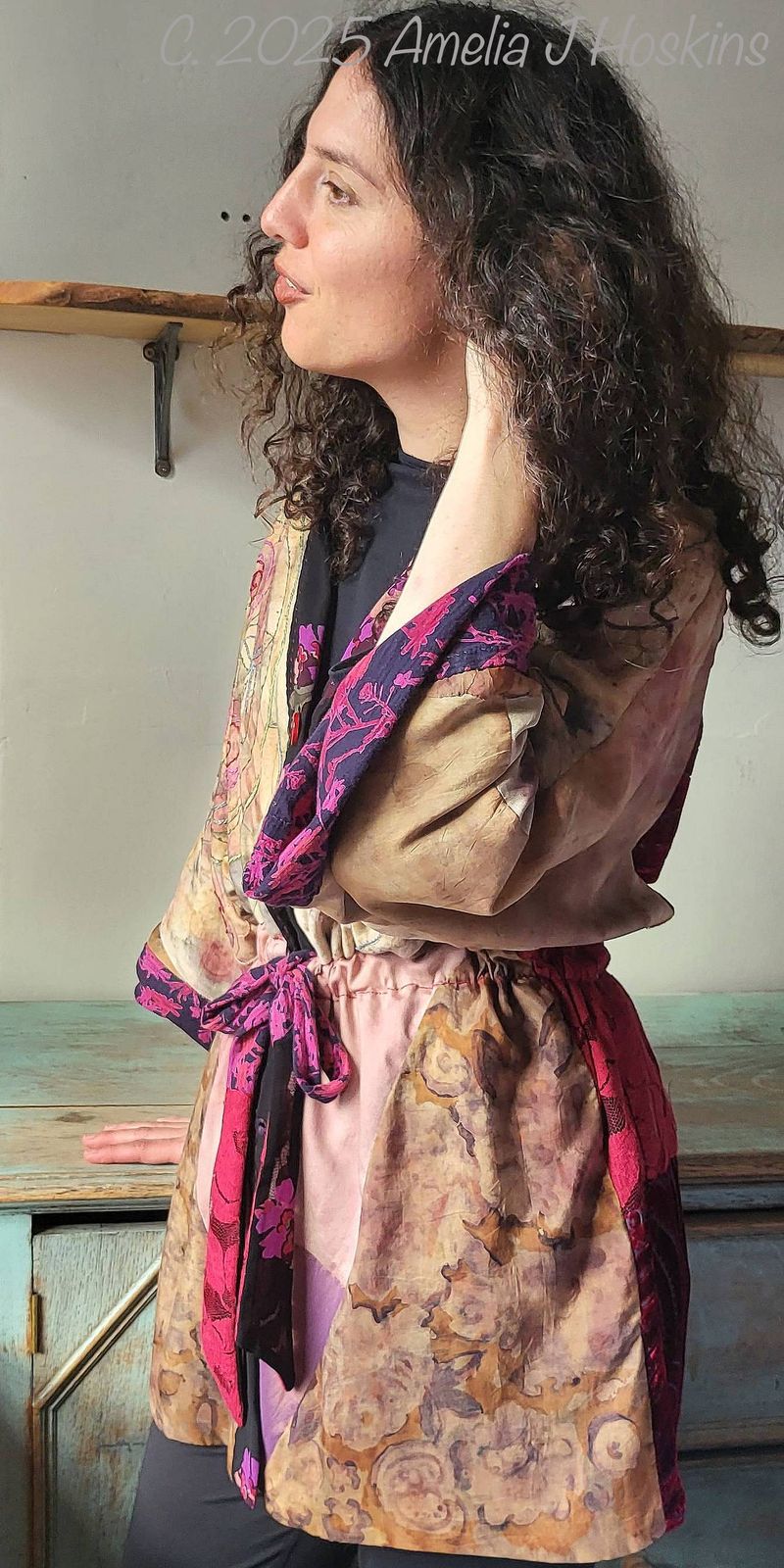
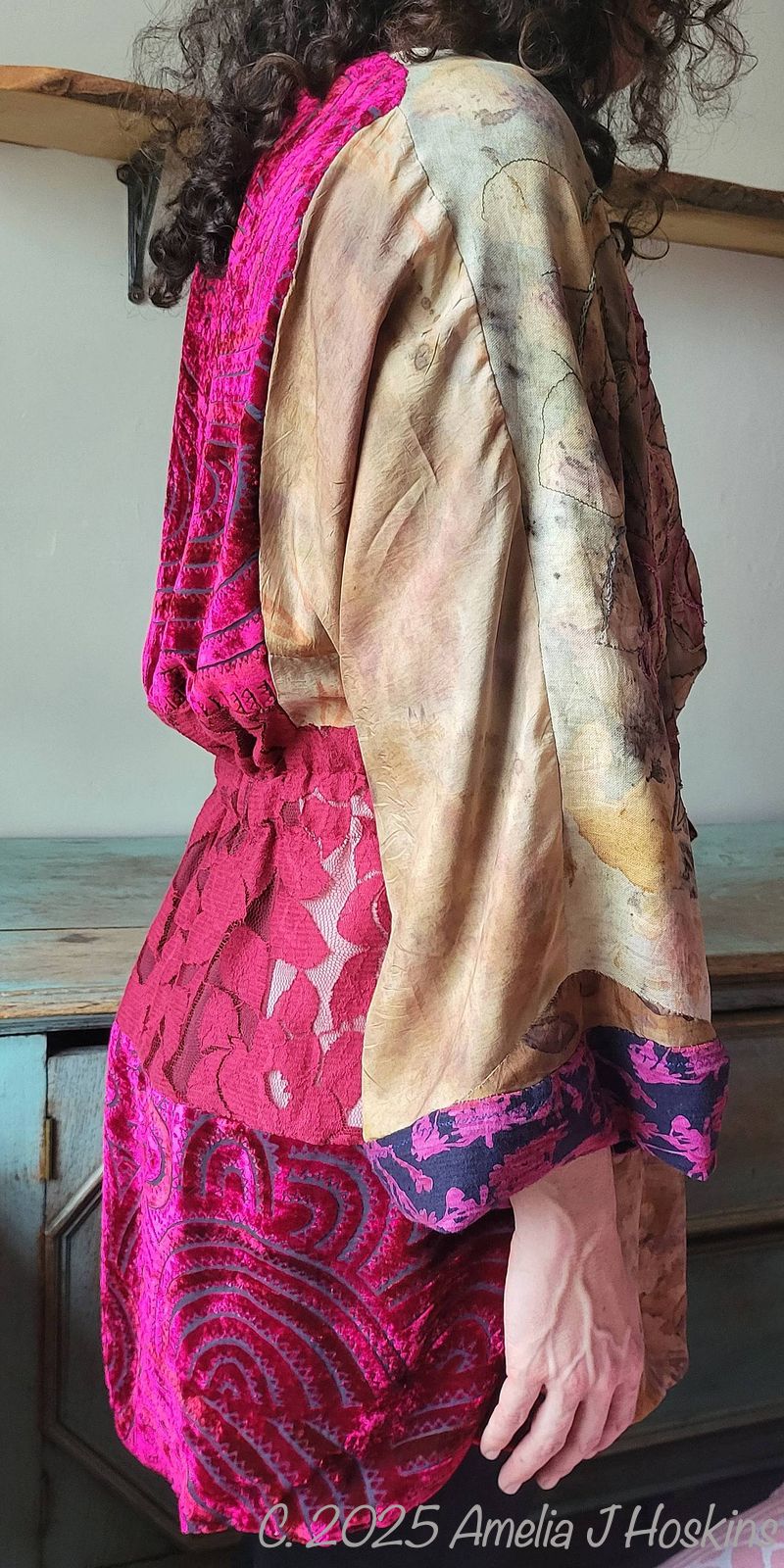
Celtic Raspberry Rose Kimono right side and back

SILK SLEEVES

View shows differences between front and back kimono dress.
Sleeves have a join following down from shoulder.  Different silk bundle dyed outcomes front and back sleeve sides.  Front Ahimsa silk embroidered; back Habotai silk eco steamed tones.
Black and pink patched fabrics seen through crimson red lace.
Black and magenta pink cotton jersey sleeve cuff is an extension of the inner sleeve lining, echoing the pinks used on dress back.  Its always a matter of what fabrics I have in stock to coordinate with.

Model 'Rose' is quite tall. shorter people would find the dress sits on or just above knee.


Vivid Magenta velvet devore and crimson cotton lace add a sumptuous tone to the lighter mottled front silks

LINING

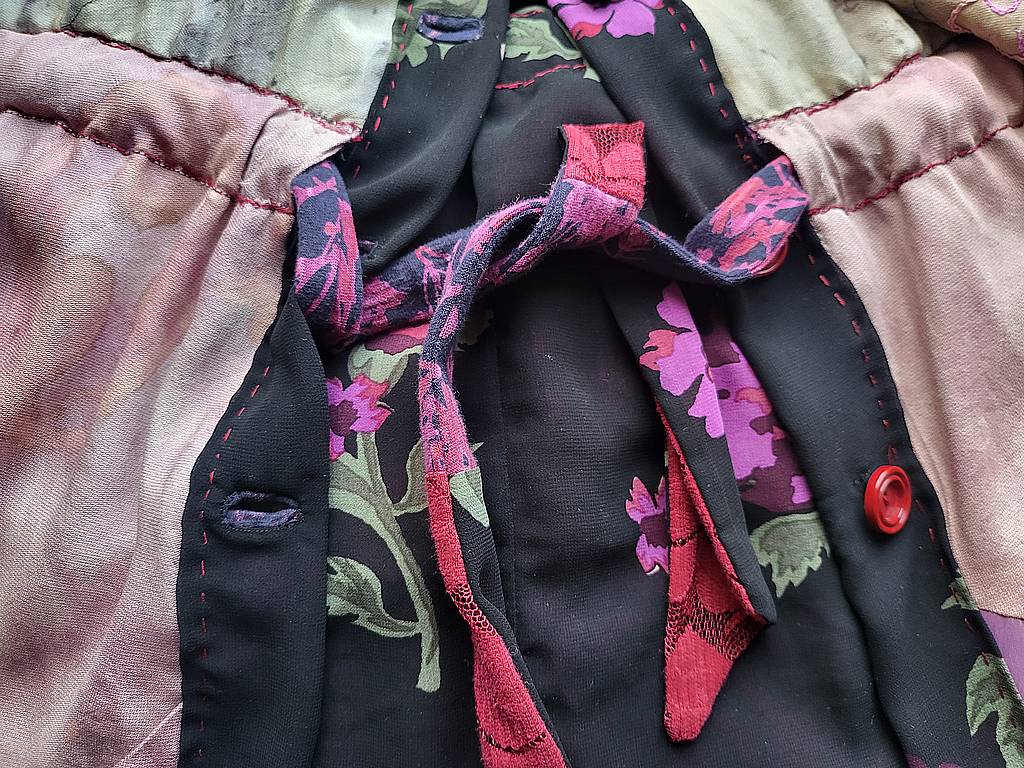
Garment is built around an existing black/pink roses polyester printed lining which provides the collar and front buttoning section; i.e. the original front welt is used for front welt on kimono dress, and one side of the sash belt, which threads around waist and having back part elasticated.  New buttons and bound button holes added.  Pink silks either side of front are blackberry dyed.

Celtic Raspberry Rose Kimono Silks

Original source for Celtic Triskele design was formalised geometric plant forms within a sphere.  On this silk they are not geometrically exact; the spheres have more loose design, left so to enable simplified embroidery areas.  Shapes within Triskeles have been modified with lemon juice to discharge some of the left over dye colour, and to create definition in the design.

Embroidery Designs Over Eco -Dyeing

Silks Ahimsa - Chain stitch follows the outlines of the discharged Triskeles.  Original development of colour on the Ahimsa silk at bottom of this page.  Freestyle 'roses' are created within the Triskele design.  Silk Habotai bundle dyed and modified to create appearance of roses, but no embroidery.

Celtic Triskele shapes are seen painted on with lemon juice to discharge through the blackberry and multi plant eco-dyed and steamed Ahimsa silk

This is the start of ideas to design specific coloured shapes over eco prints, to be afterwards modified to change dyed colours, and embroidered over with details.  I created the 'rose' shapes where there would have been more circular triskele designs within the larger triskele.  i.e. I have modified the design taken from Celtic designs: also used in wool scarf. (below)

05 Nov

Crimson Vine Leaves Eco Prints Silk and Wool

Catalpa Bignoniodes Tree - Crimson Vine type - Several experiments on Habotai silk and fine wool

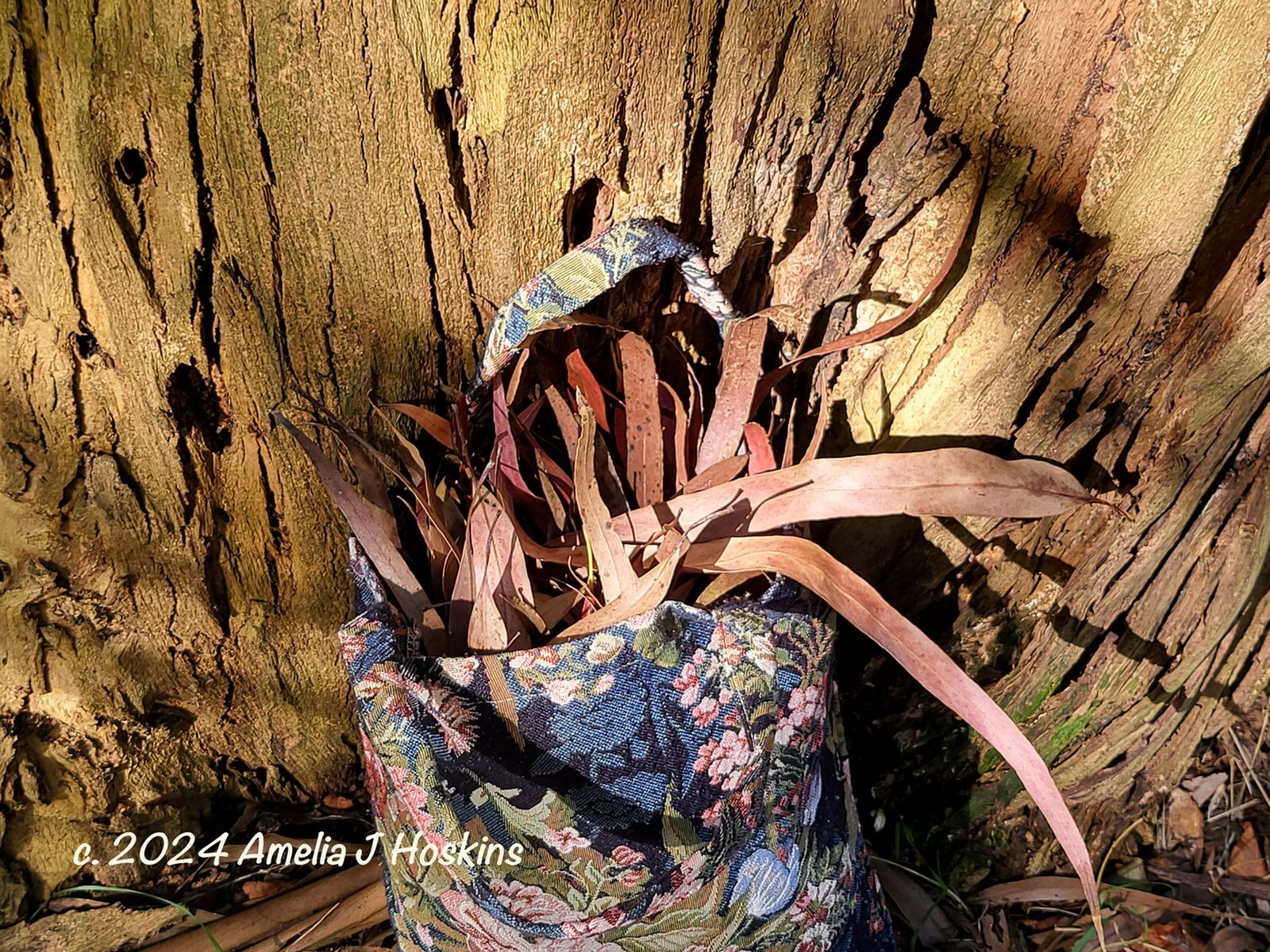
The correct name for this vine tree was advised by head gardener at Overbeck Gardens, Salcombe, Devon during visit November 2024. They have a huge spread of it over wooden trellis. Large leaves turn red and deeper red/black in October/November.

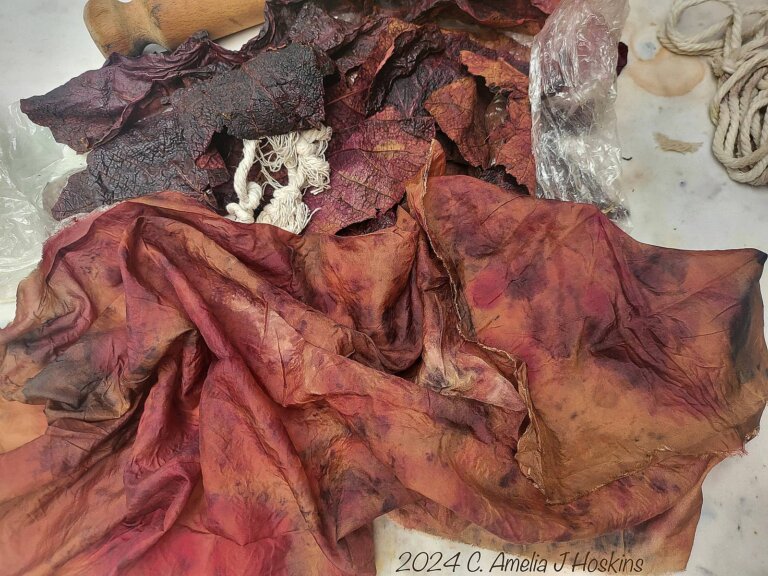
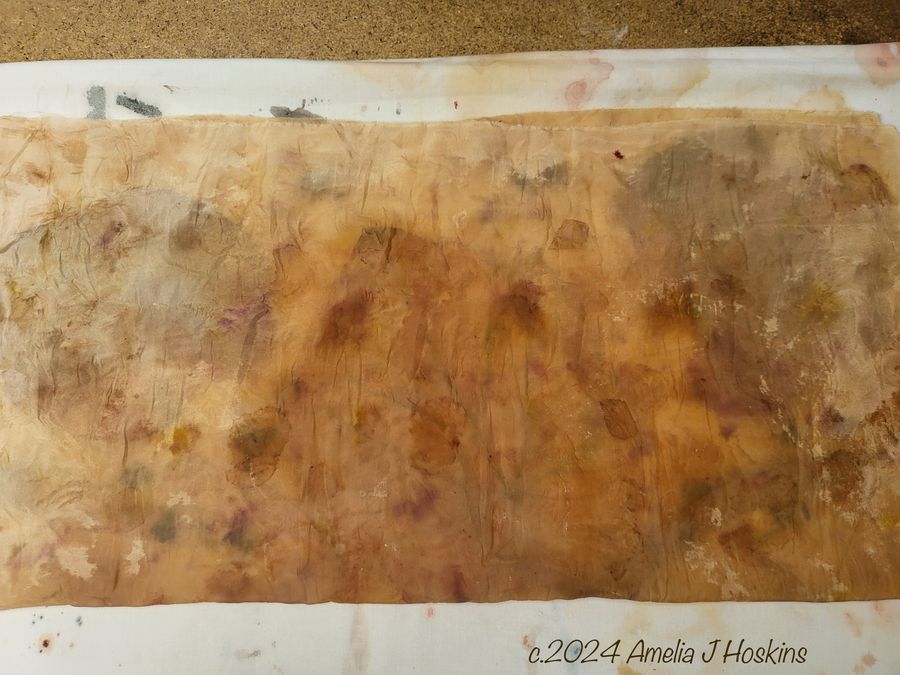
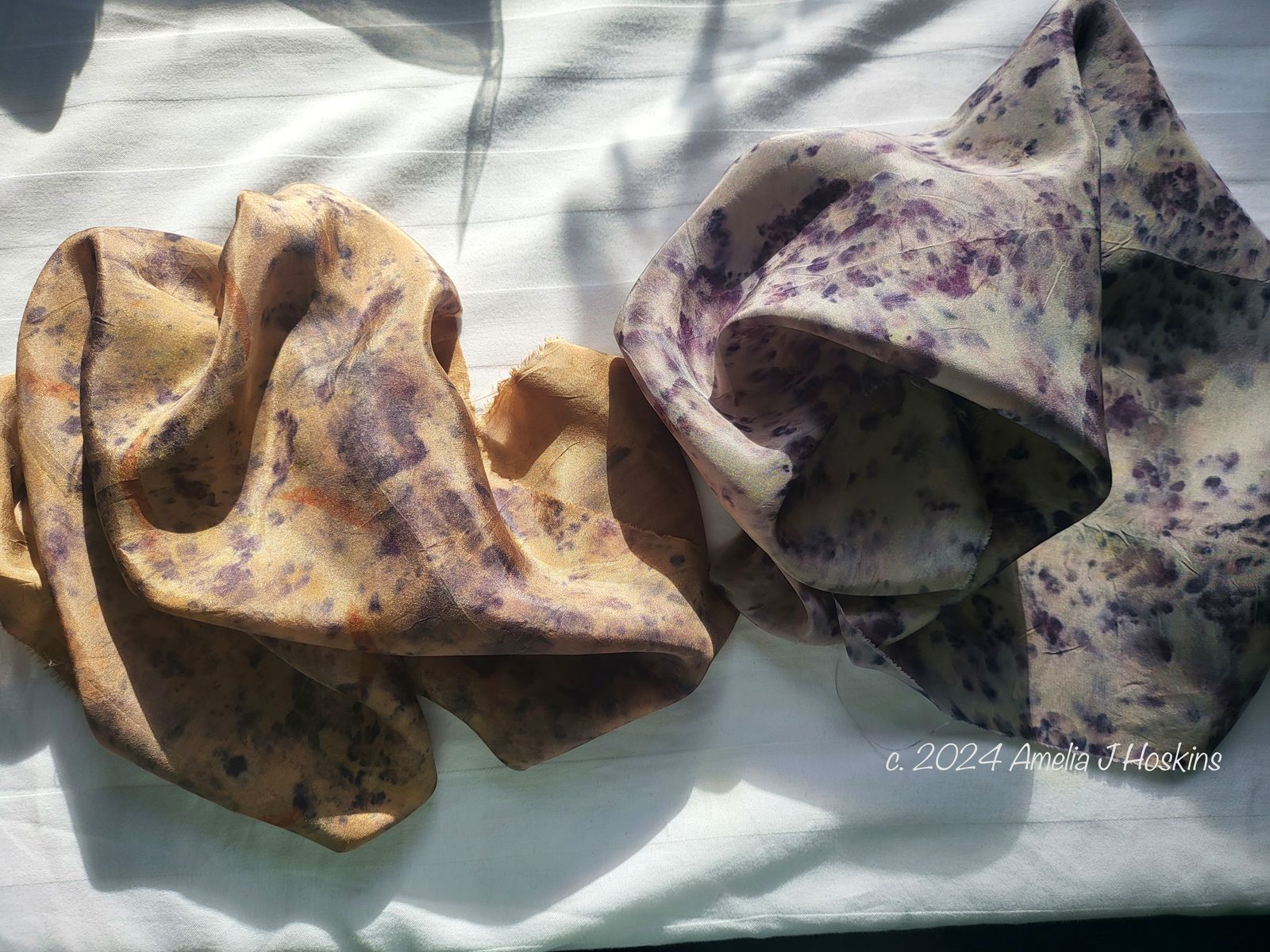
Habotai (1):   Tests to add more leaf prints to previously dyed habotai silk samples. Crimson vine dye bath gave pink silk in 2023, then oxidized to silver This year testing red leaves with eco printing, rather than immersion dyeing, for better result of colour preservation.

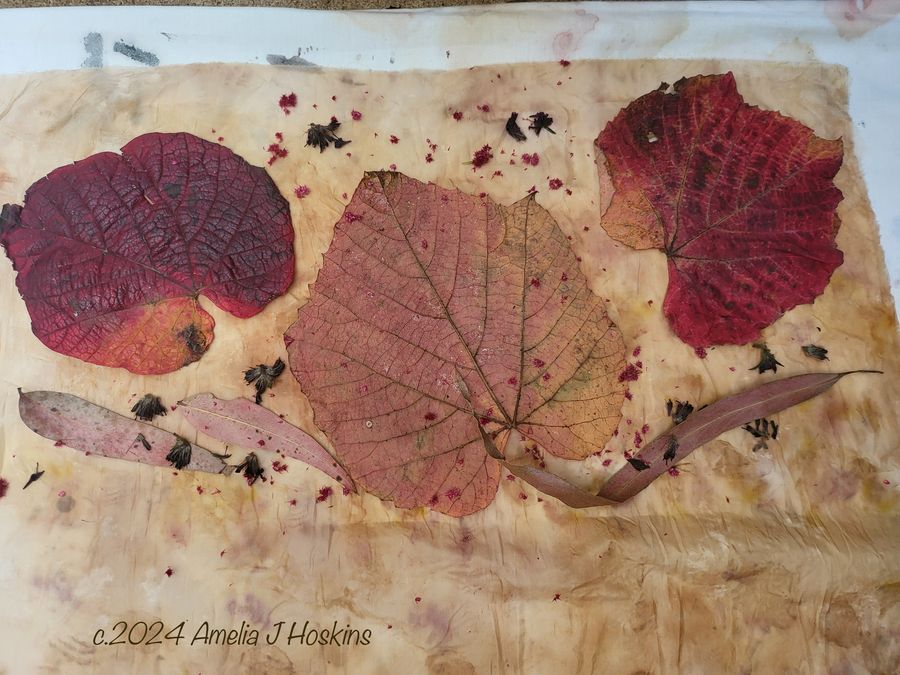
Using Catalpa to enhance previously dyed silks: Steamed Red Catalpa leaves, Eucalyptus leaves, with sprinkled Amaranth flowers and Black Knight Scabious flower petals.

Silk folded up from bottom and over top layout - for a mirrored print result.  Leaves area sponged with urine as experiment to retain red pigment. (previously dyed and eco printed silk has already been alum mordanted, which may help new prints)  Bundle prepared for steaming.

Secondary additional bundle steam with Red leaves Catalpa Bignoniodes on Hab (1) areas without strong colour.

Crimson leaves Catalpa Bignoniodes on Habotai (2)

Another two previously dyed gold silks with failed eco prints to be enhanced.  Red leaves with some eucalyptus and coreopsis.  Two pieces of habotai silk 8 sandwiched.

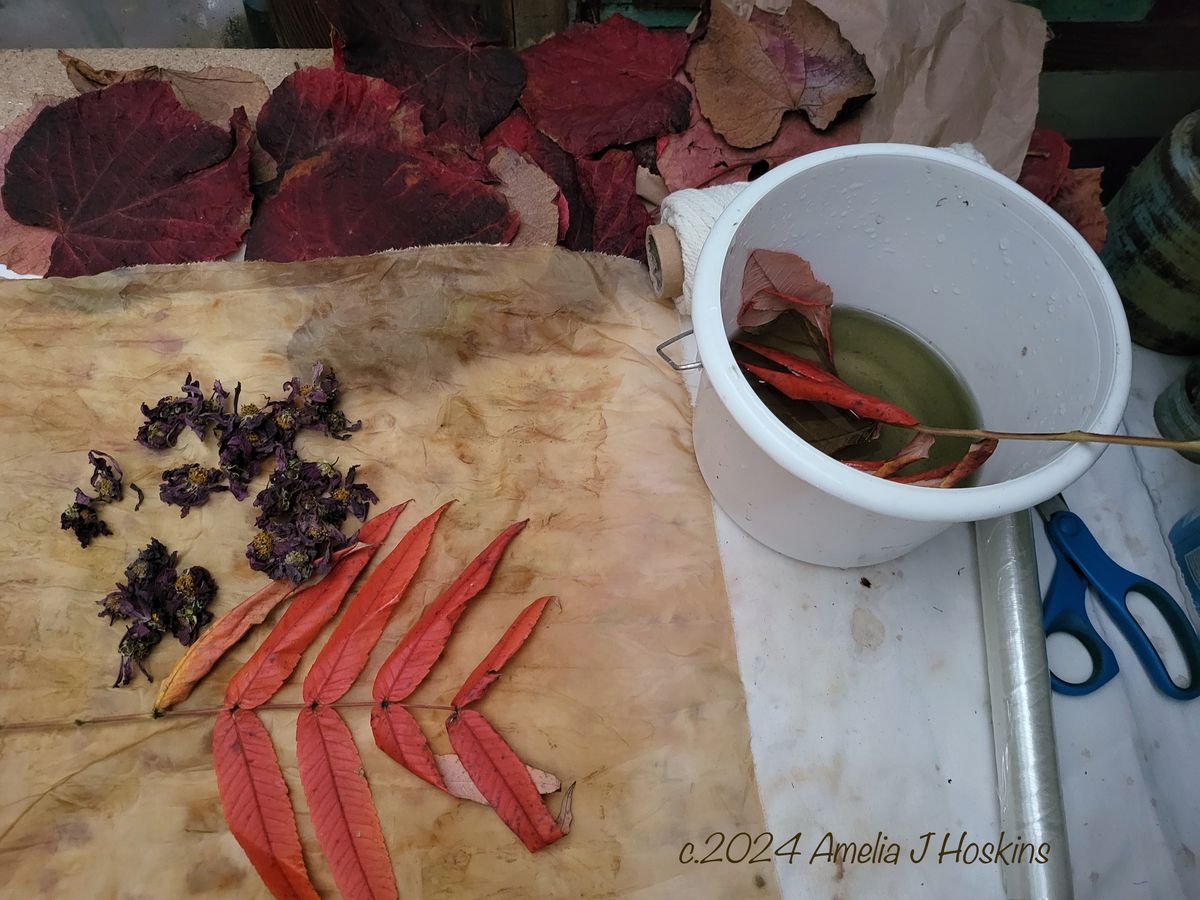
Crimson leaves experiment - (no added urine sponging).  Fresh red Sumac leaves dipped in a solution before placed with silk: Bucket solution: (water with used alum + dollop of rusty nail iron water + dollop of urine).  Hoped to give a stronger tone to Sumac leaves, due to previous prints being pale.

SECONDARY ADDITIONAL bundle steam with red Catalpa Biognoniodes leaves on Hab. (2)

Extra Sumac leaves dipped in mordant liquid [alum water + rusty nail iron water + 2 dst sp urine].  Coreopsis Gazebo Red laced between leaves.

ADDITIONAL LEAF AND COREOPSIS STEAMING - Pre-dyed gold silk Hab. (3) test

Another gold dyed sample with secondary purple-lilac leaf prints and grey Sumac leaf prints needs MORE enhanced colour...  One Catalpa crimson leaf and several Coreopsis Gazebo Red added.  Clingfilm laid and rollered over folded silk.  Bundle tied.  Steam 20 mins. [Note: Gazebo Red stated to produce sage green; but produced purple after alum + water mordant sprinkling, combined with tannins already in the previous dye colour.] 

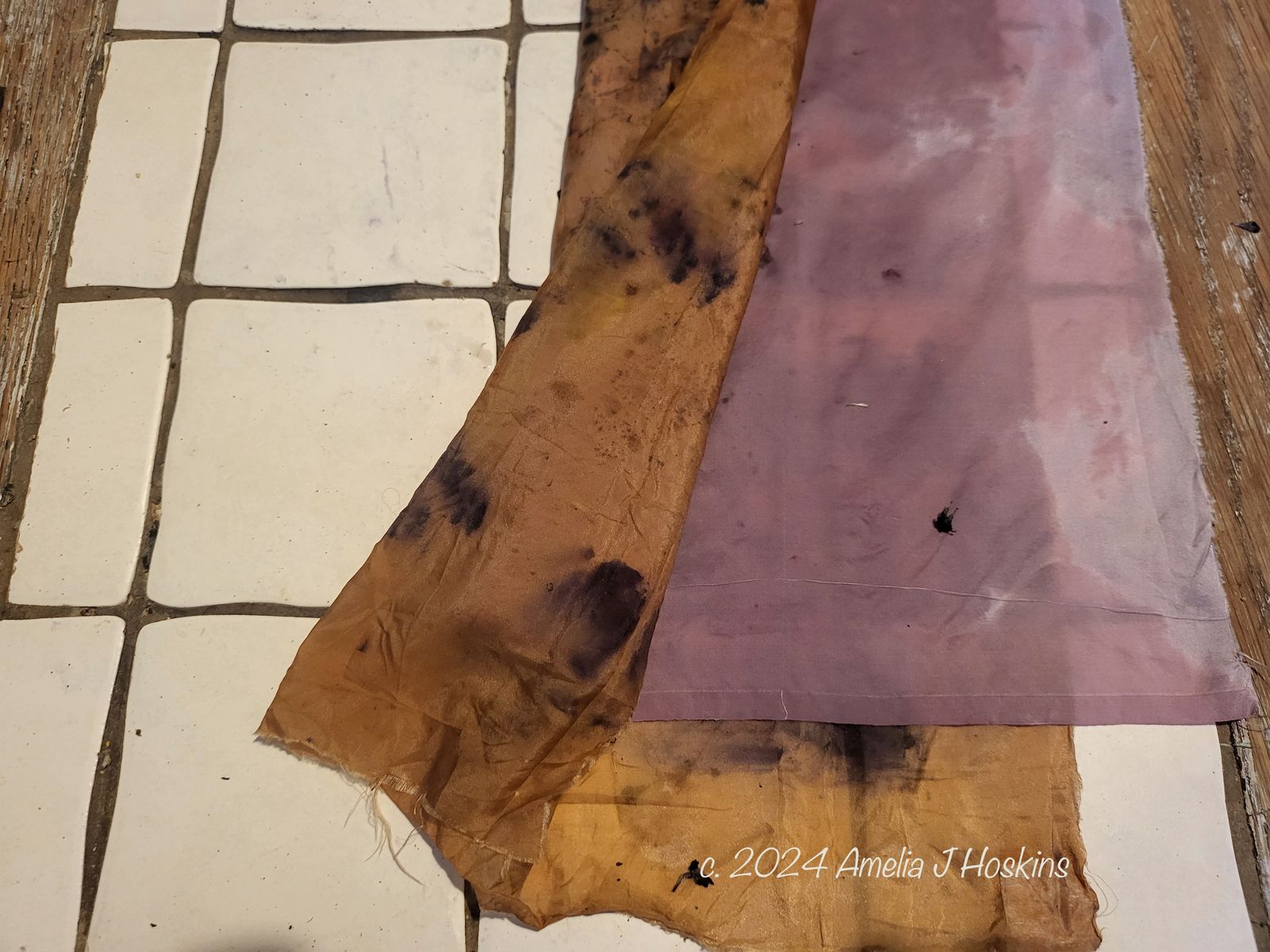
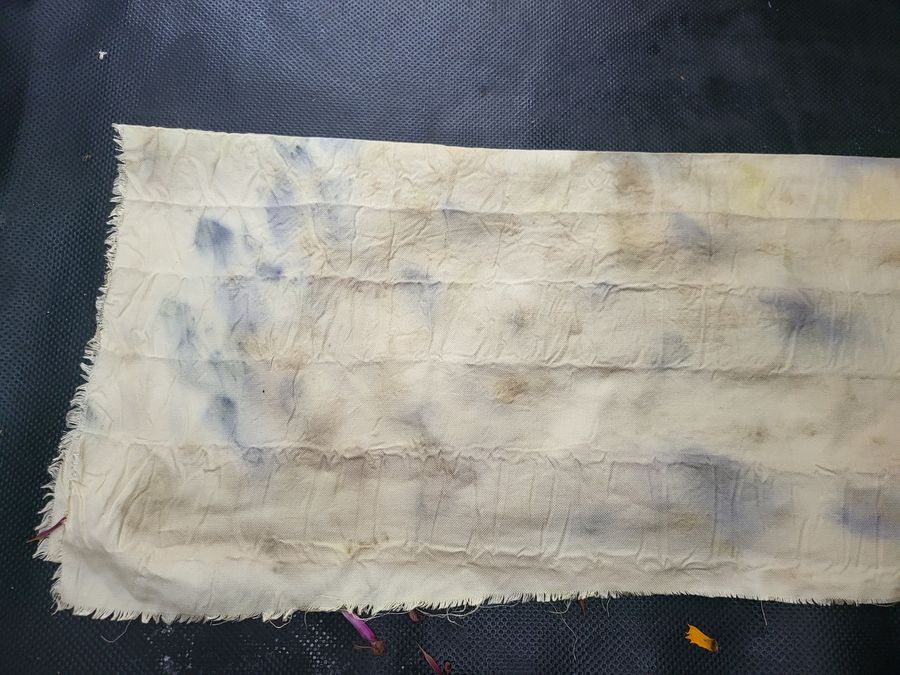
Crimson Catalpa leaves - Experiment on Fine Wool scarf (1). Fine wool previously dyed in comfrey.  Red leaves and small petals from Coreopsis Roulette (result violet-black).

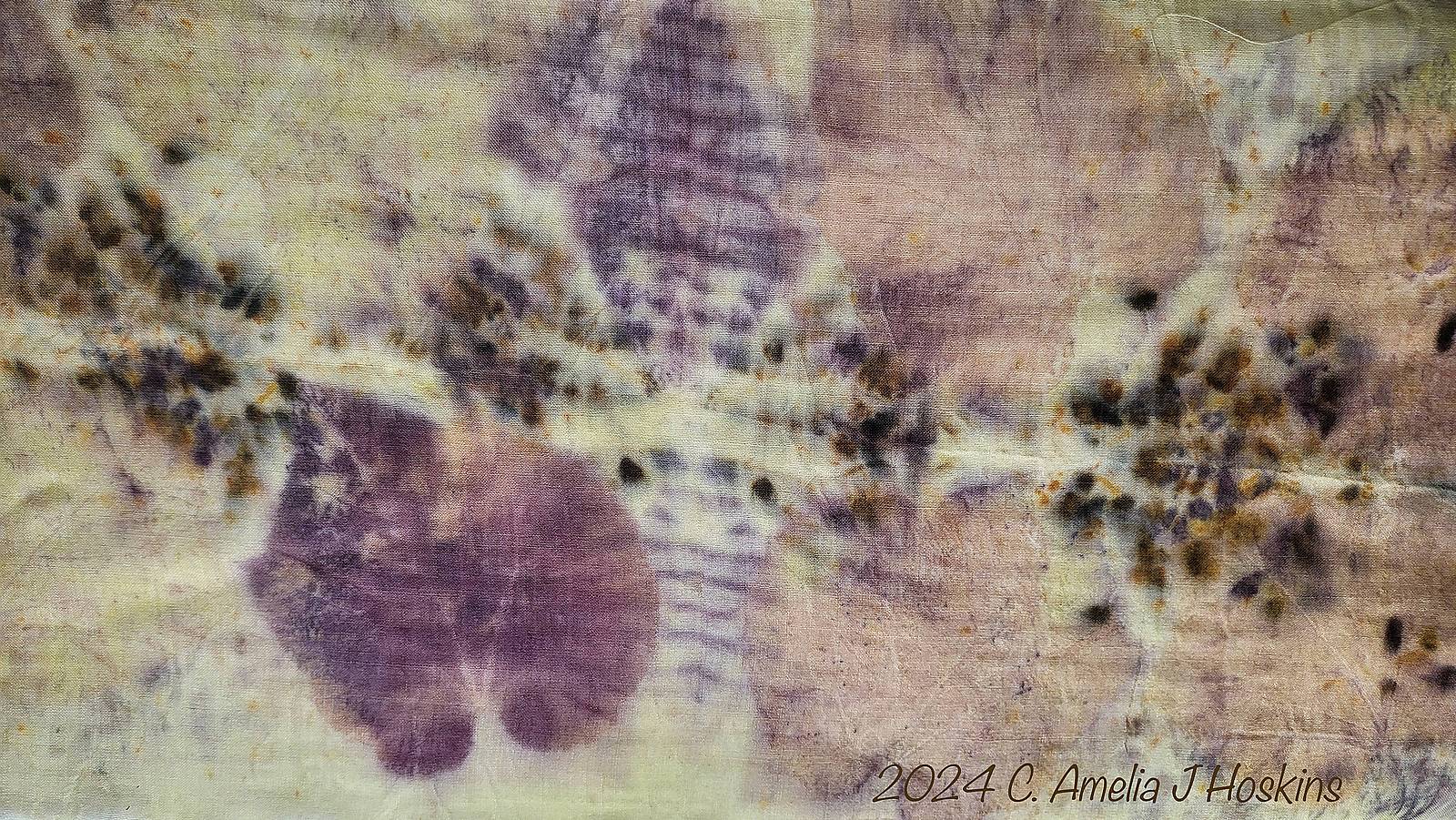
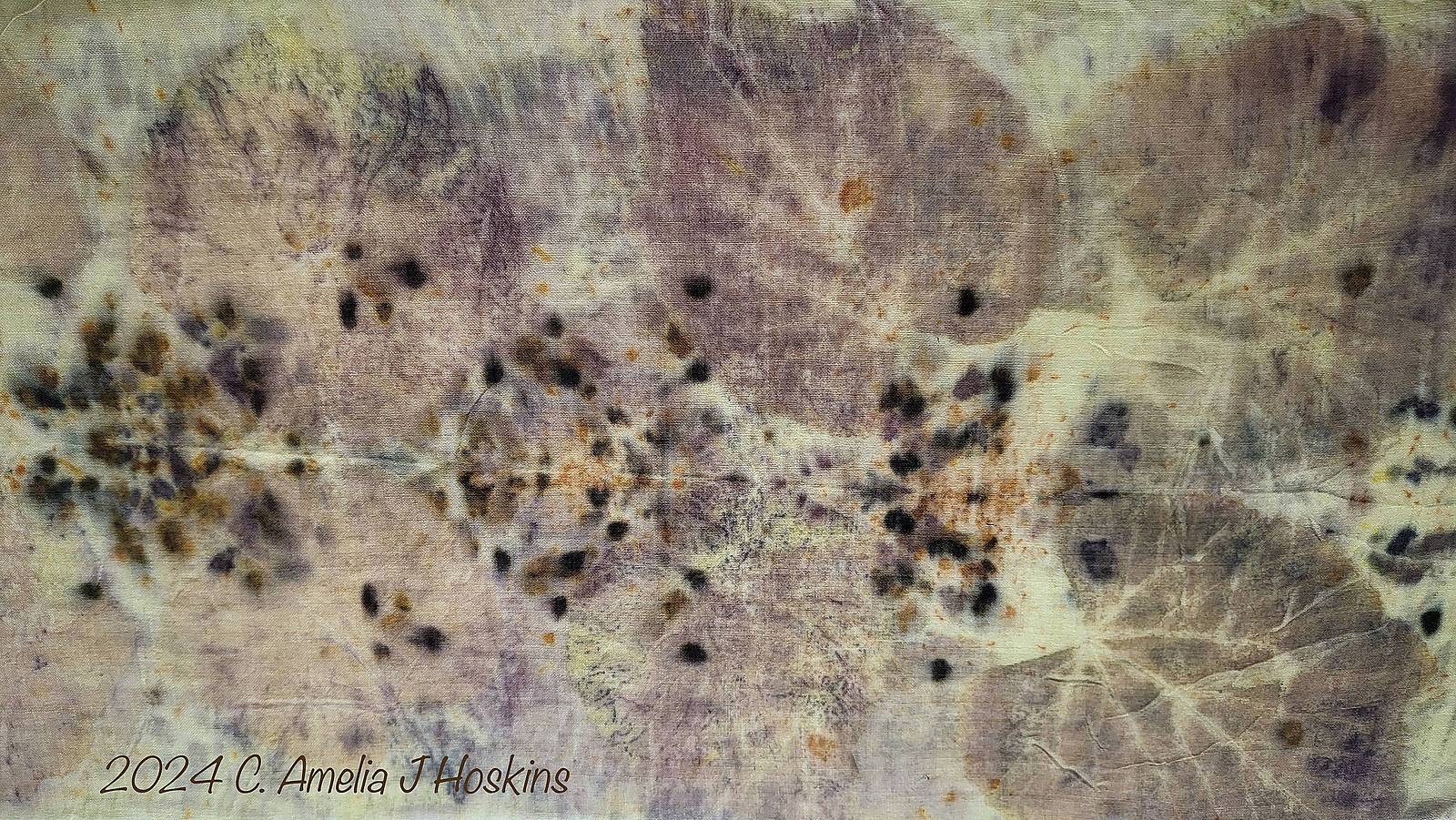
RESULT - Red leaves turn purple on silk and wool after washing out.   Acceptable - as in 2023 these leaves made silk a similar deep pink, then oxidized to silver.  At least they produced a print.   Some leaves partly faded lilac prints which gives an interesting 'ghostly' effect. (to be tried without background dye).  The iron and possibly the urine mordanting helped to give a stronger tone.  Coreopsis Roulette (dark violet spot) prints are darker than expected, as dried flower packet states 'Olive Green'.

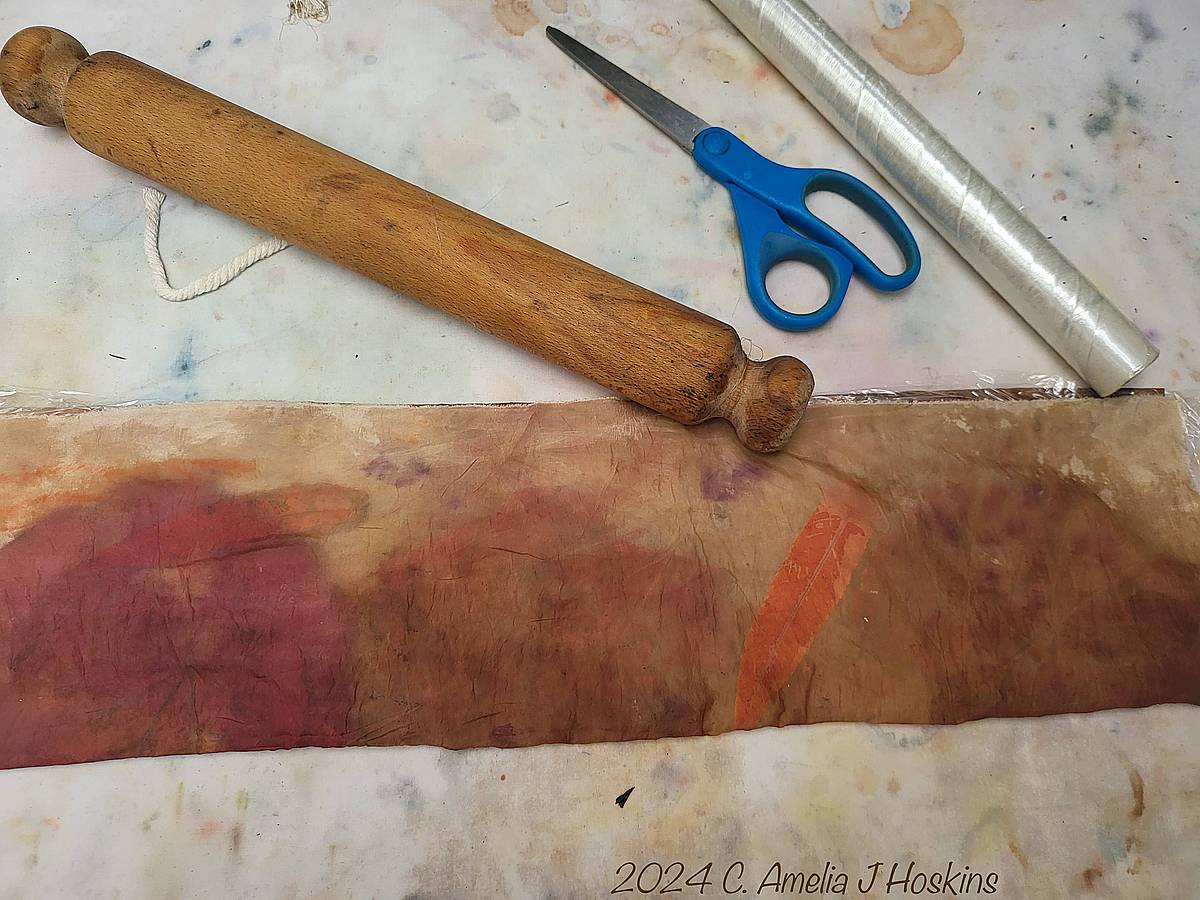
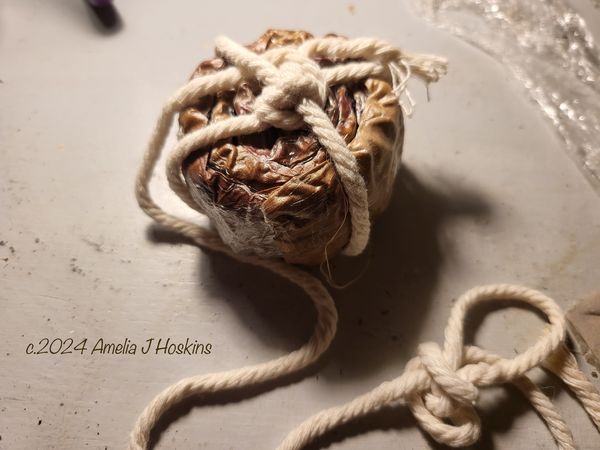
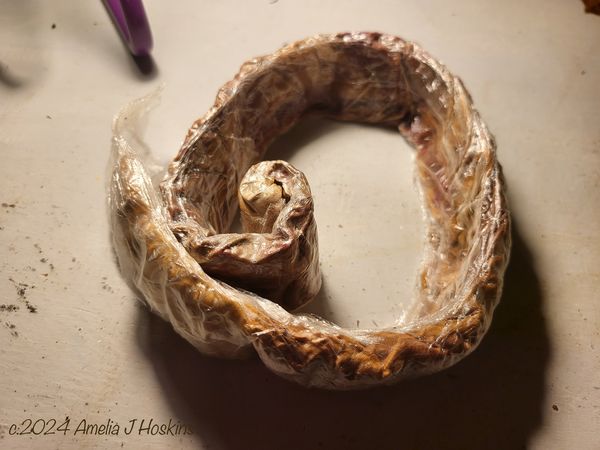
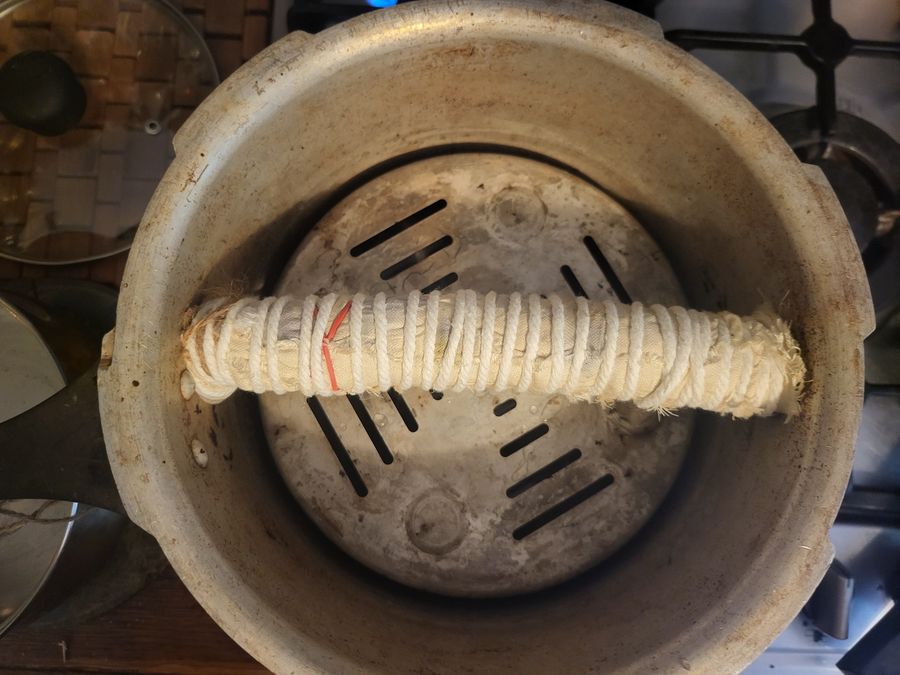
If silk looks a bit dry when folding into bundle, leafs are used to dab liquid over.  This aids ghostly effects where dampness is unevenly spread.  When cling film is wrapped around folded silk, air is squeezed out with rolling pin either end of folded bundle.  Folding lengths to a 4inch-6inch flat bundle, enables wrapping around stick, or swiss-rolling into itself, secured with string/piping cord.

2nd Steam with extra oak leaves (dipped in soya wax resist) - No iron modifyer.  Oak leaves as resist didn't show any difference. Steaming will have melted out the wax.  Bundle was placed in jar of red water made from soaking the Catalpa leaves several days. The wool appeared to dye red, but on washing out after 24 hours, no colour.  Wool was slightly duller, needed to change the bright yellow from 1st steam.

Crimson Catalpa leaves - Experiment on Fine Wool scarf (2)

Eco print steaming 1hr 30mins.  More leaves were positioned on scarf, close together, than previous scarf 1. Amaranthe was included in spaces between leaves, but no result seen apart from more blurred purple.

MODIFYING the eco printed wool, to change the darkness of the dull aubergine prints.  PINK by painting on lemon juice and GREEN by painting on bicarbonate of soda.

28 Oct

Eucalpytus leaves

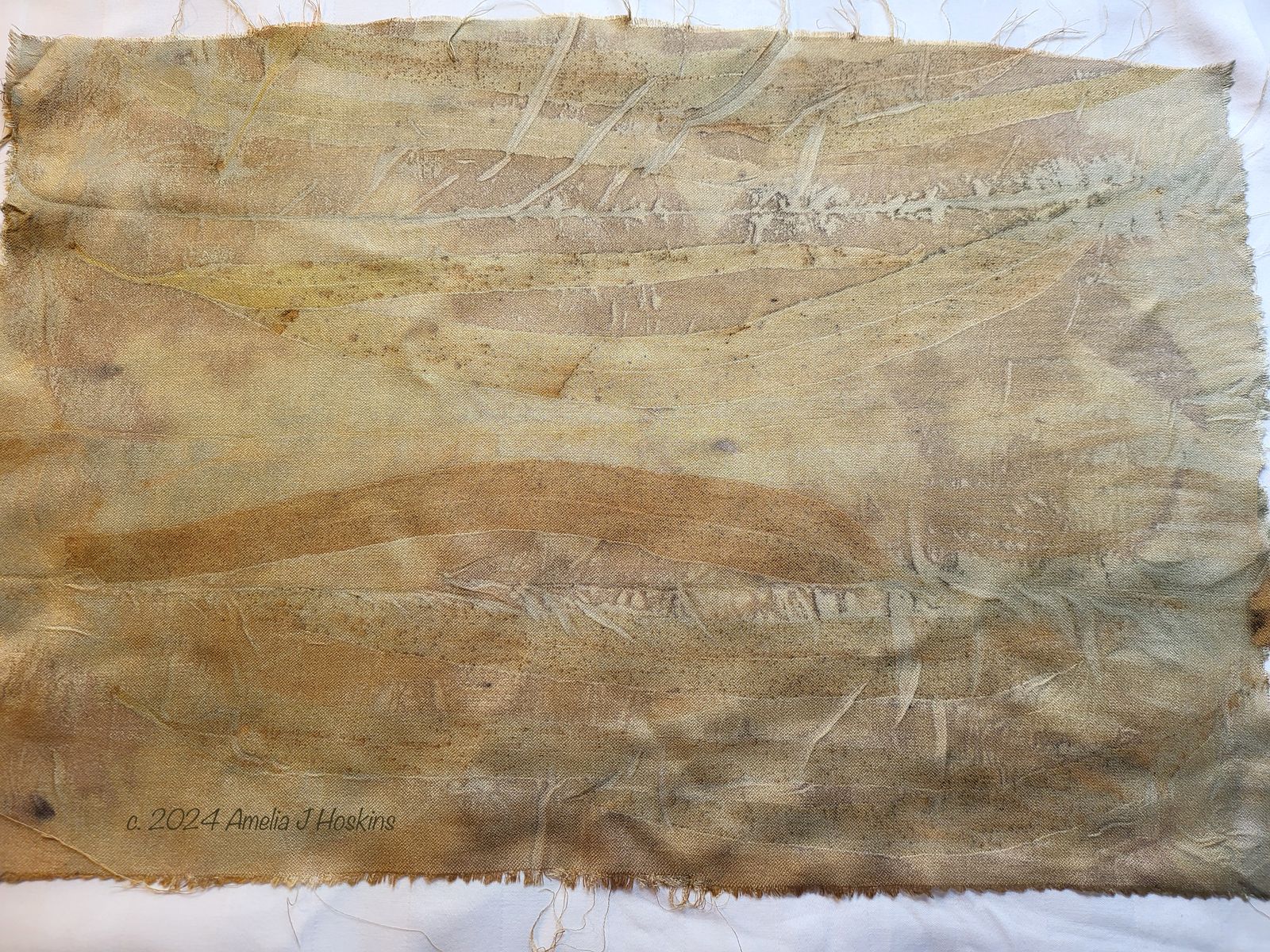
EUCALYPTUS ON FINE WOOL

First eucalyptus print results!

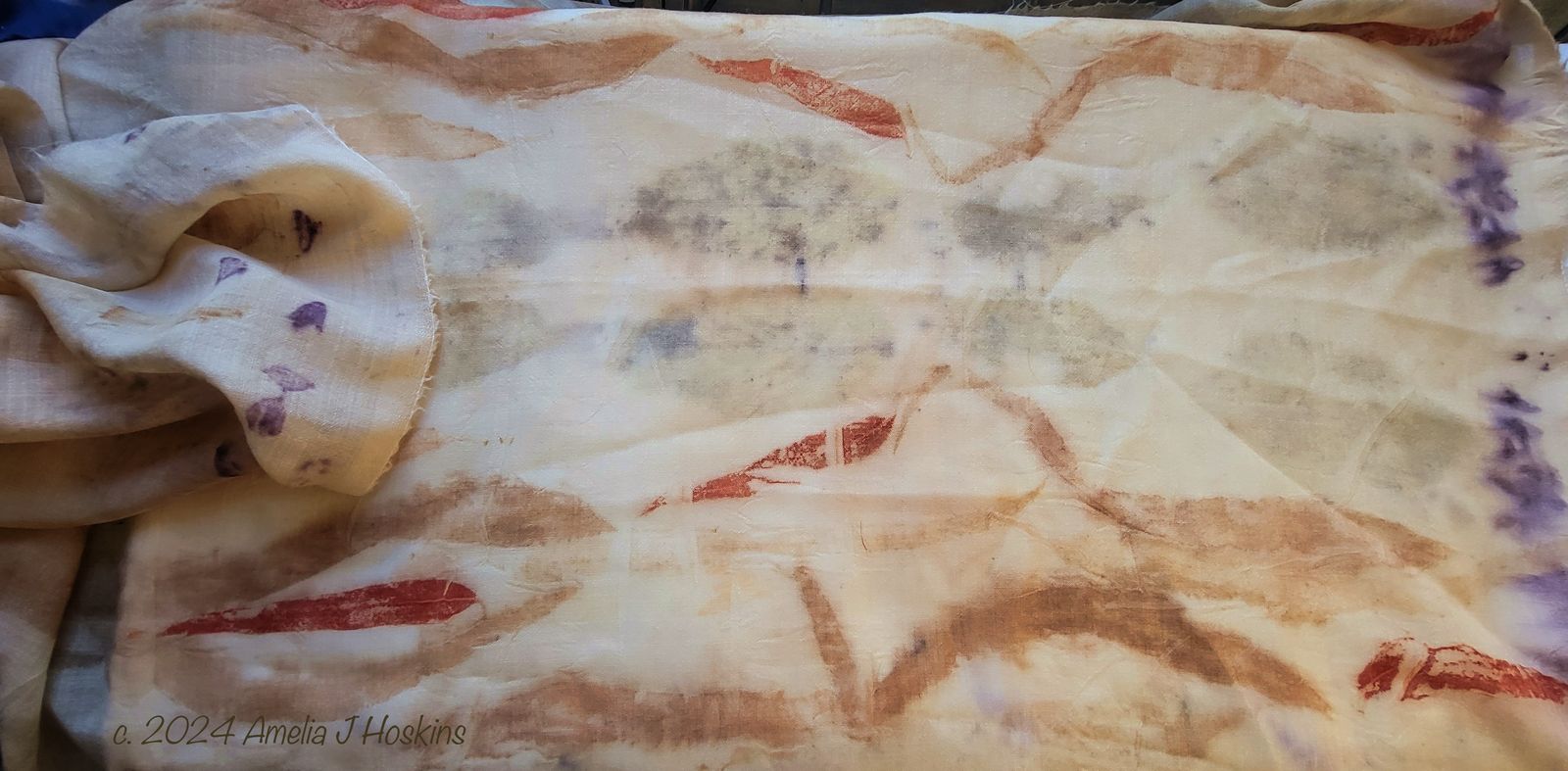
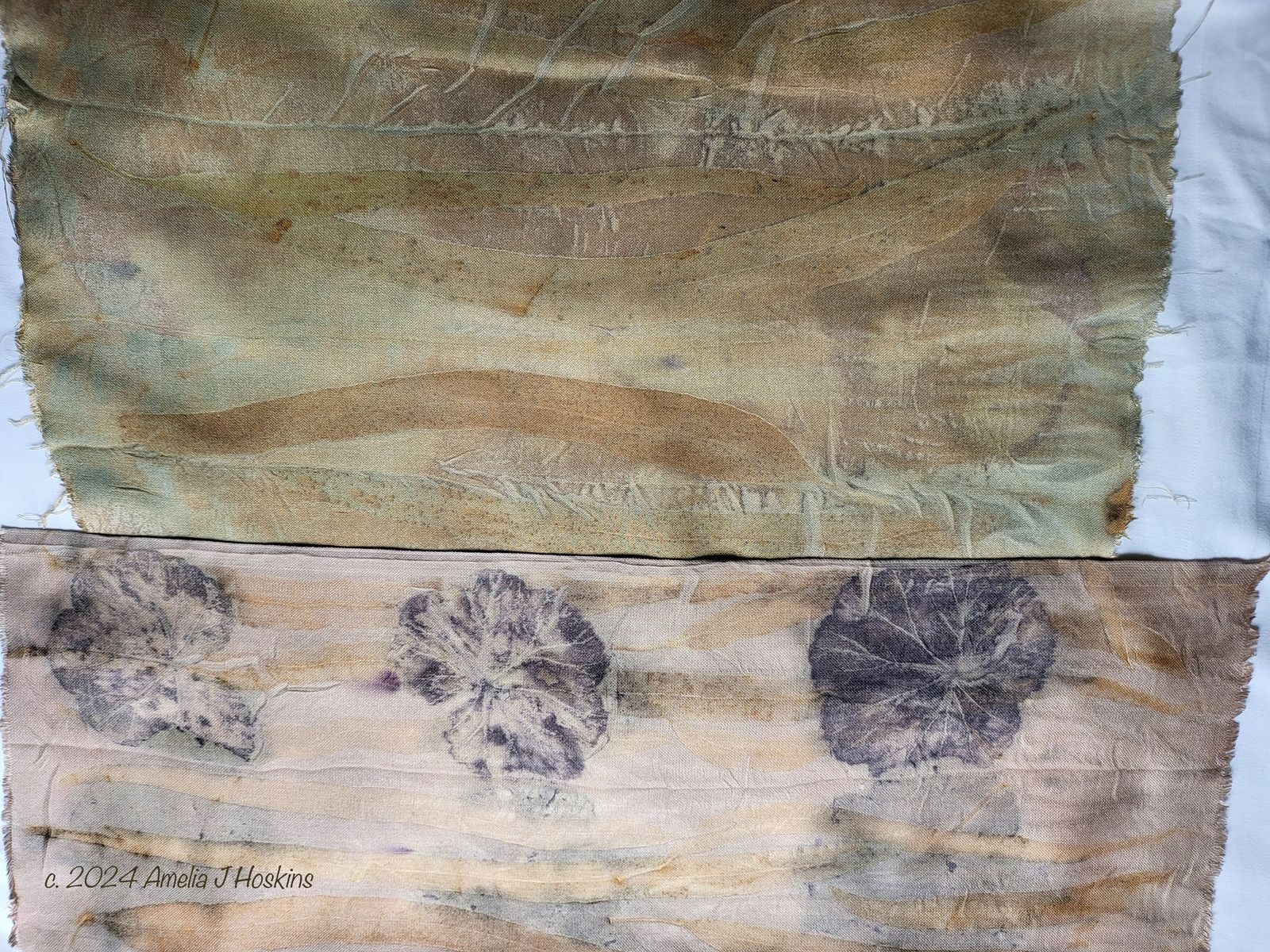
Long leaves down length of scarf.

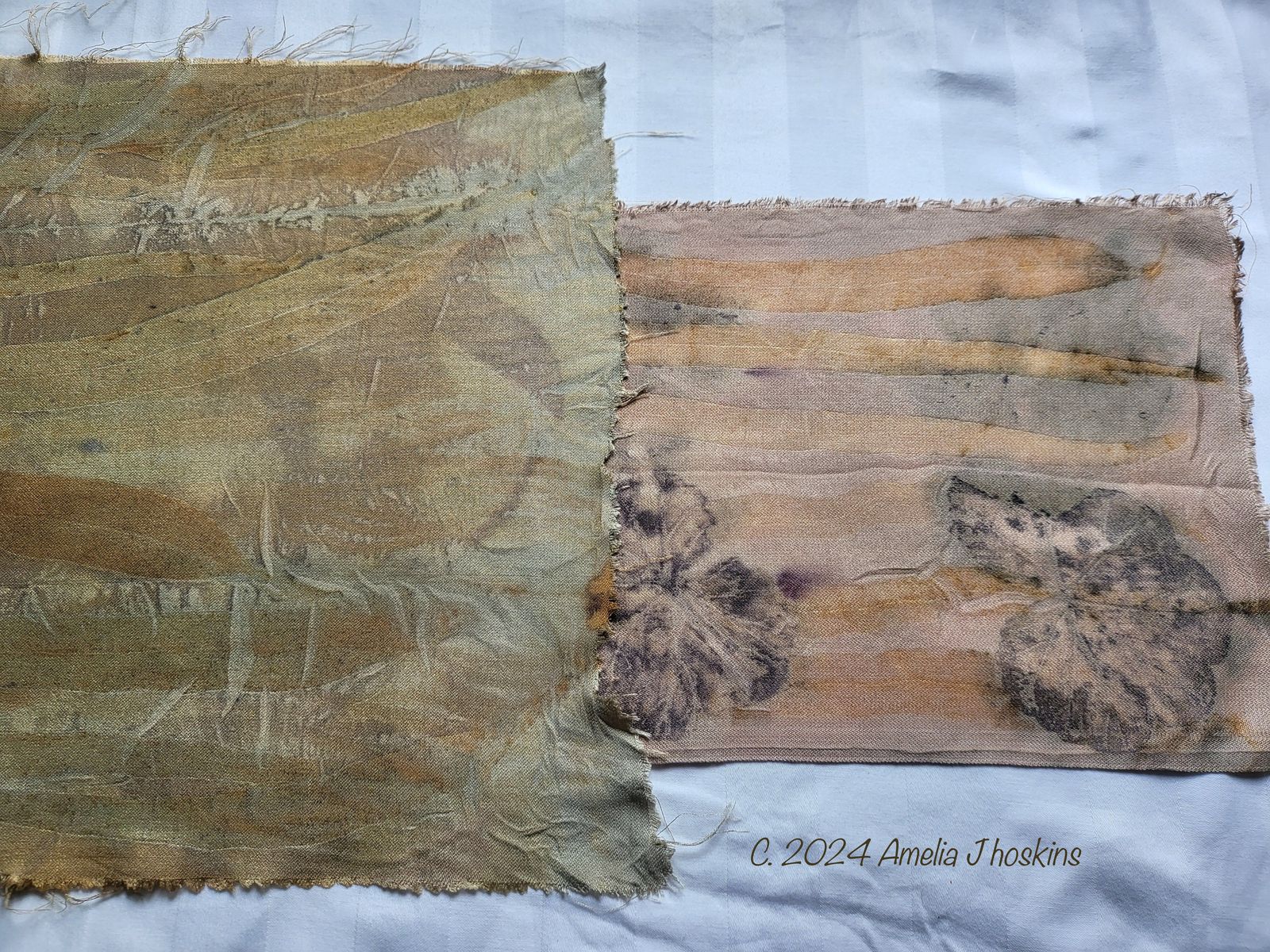
Previously rose hip dyed wool (warm banana background).  Most long leaves steamed orange-brown; a few smaller leaves produced scarlet.   Centre of dahlia prints - dipped in iron water appeared slightly mauve.  Purple ends are a purple salvia.

EUCALYPTUS

Subtle leaves and background result on the gold Ahimsa silk


EUCALYPTUS

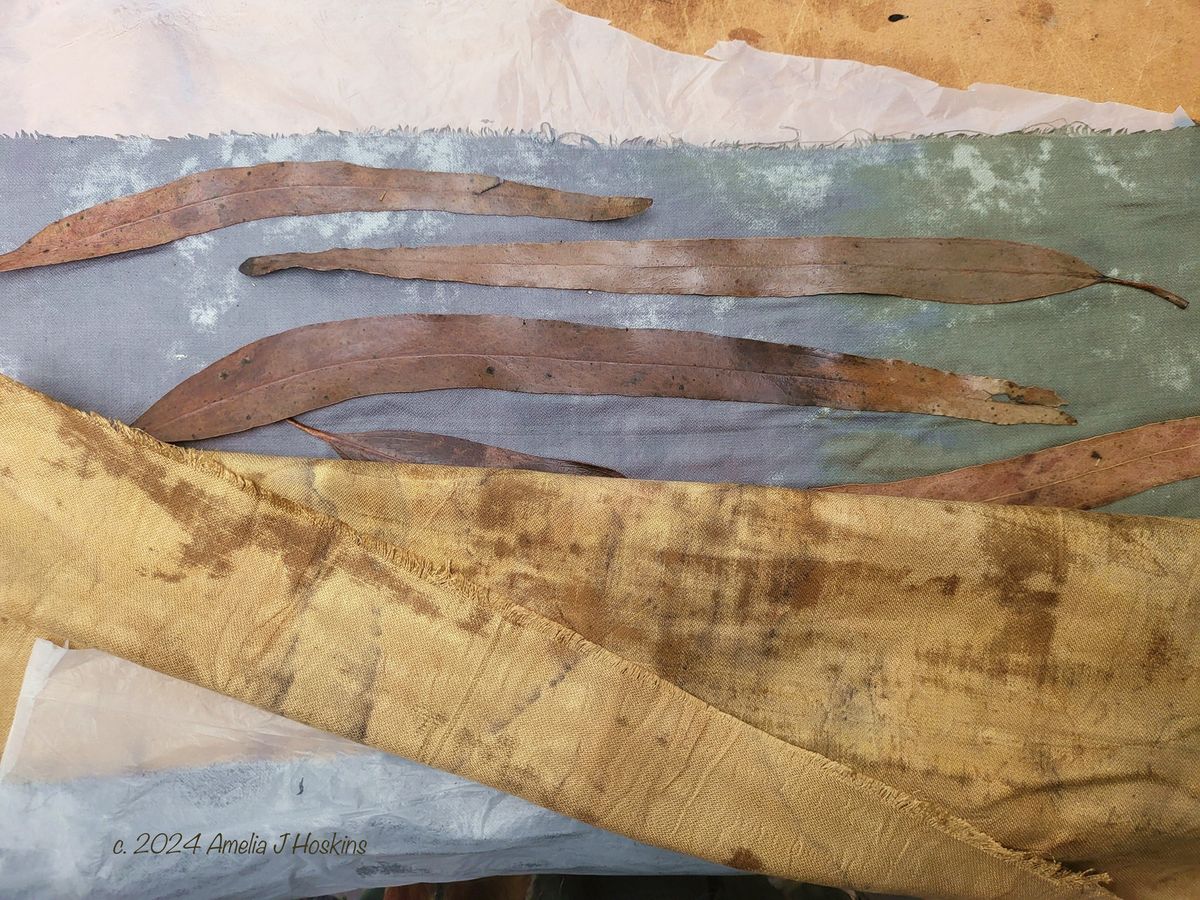
Eucalyptus leaves laid on grey silk - folded over for steam printing.

EUCALYPTUS + GERANIUM Experiment

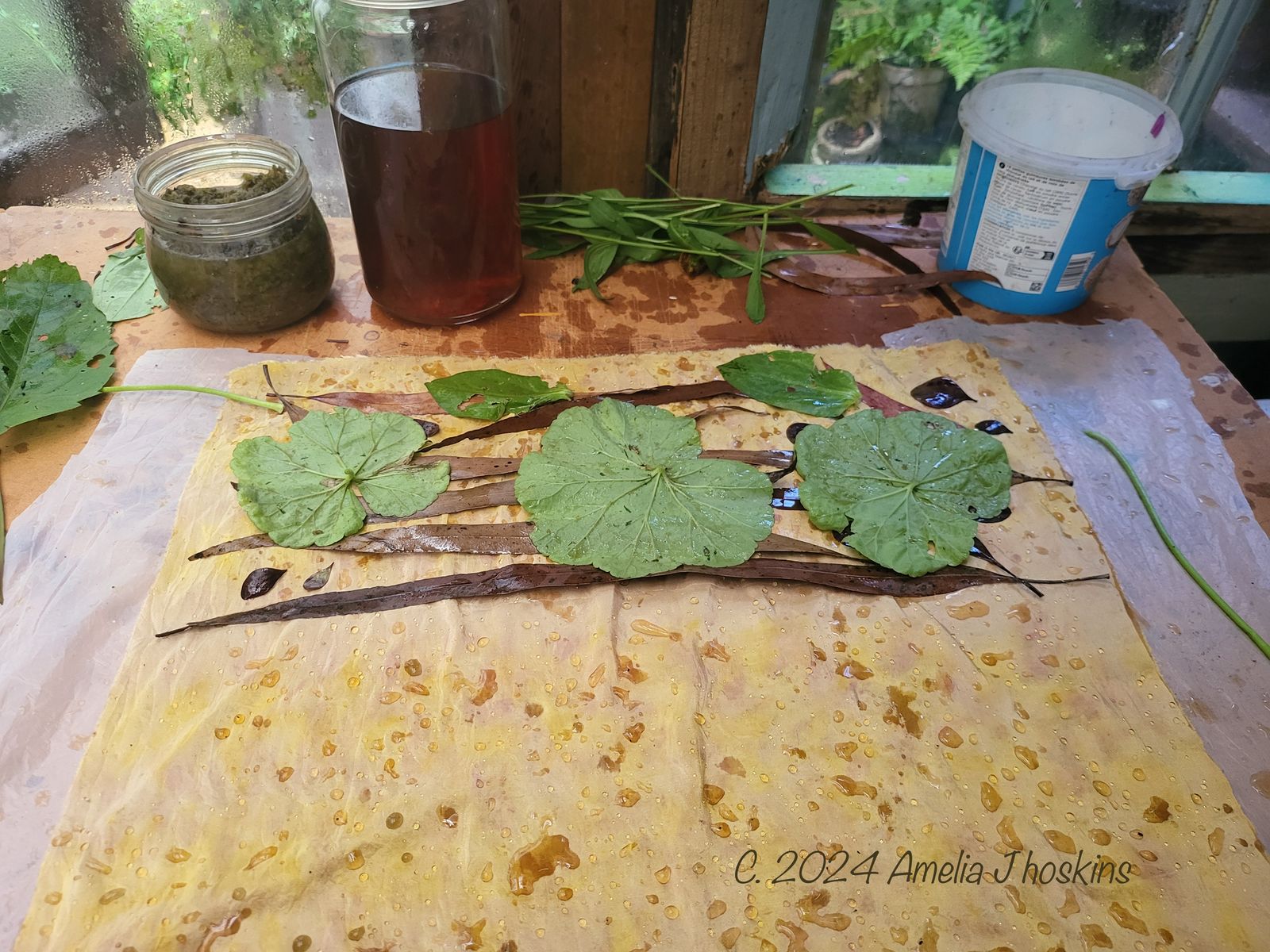
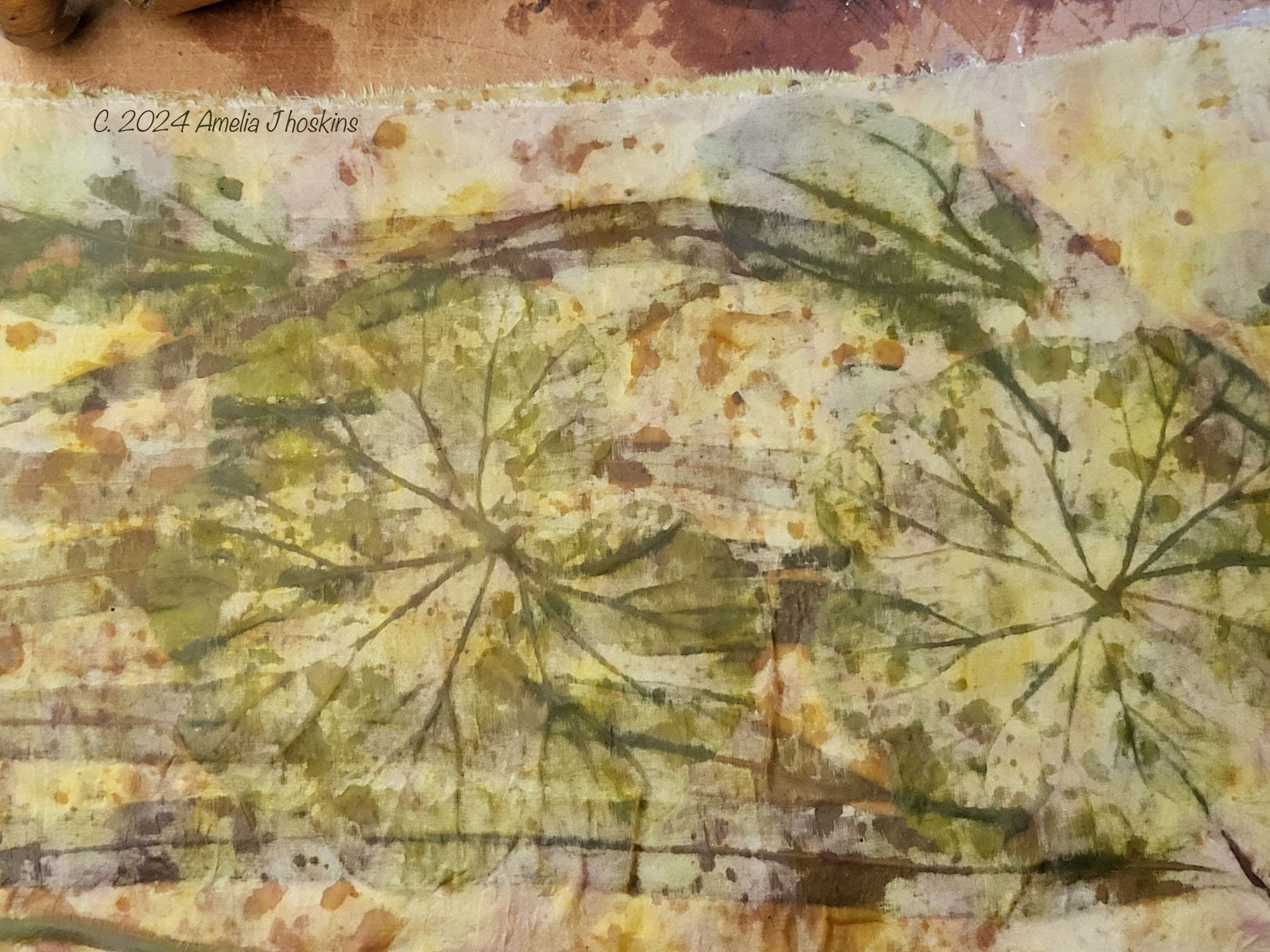
Geranium leaves dipped in slight iron water, placed sky side down over eucalyptus leaves: all over previously golden dyed habotai silk, and splashed with water  that the eucalyptus leaves had been soaked in for two days; (jar with brown liquid).   I must have put another grey piece over this (half the base piece size) for the result below.  [Important to NOTE each step!]. Result on the larger gold habotai silk 'blanket' was hardly noticeable.  Ahimsa seems to take the dyestuff better.


EUCALYPTUS

Eucalyptus leaves laid on grey silk - folded over with gold silk - smoothed and rollered, for steam printing. Brown colour was spread by the action of rollering where silk had been splashed.


With folded piece, eucalyptus leaves design runs both OVER the geranium leaves and BEHIND them.  An idea to exploit again. Photo record above shows this is the earth side of the leaves; and gives a good detailed print.

01 Oct

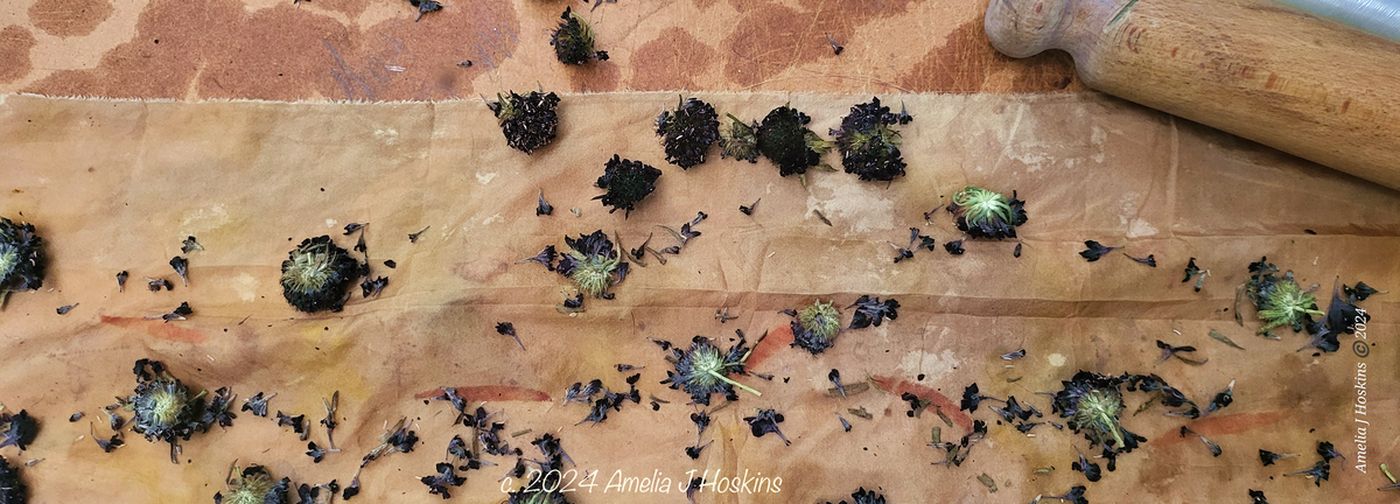
Black Knight Scabious

Black Knight Scabious is a strong dye flower giving a range of violet - blue - green - olive - grey and deep blue colours.

First test results were easy to obtain with steam bundle dyeing process.  Two silk pieces: one previously dyed with iron modified blackberry (lavender) and one previously tan dyed from leaves with small orange eucalyptus prints.

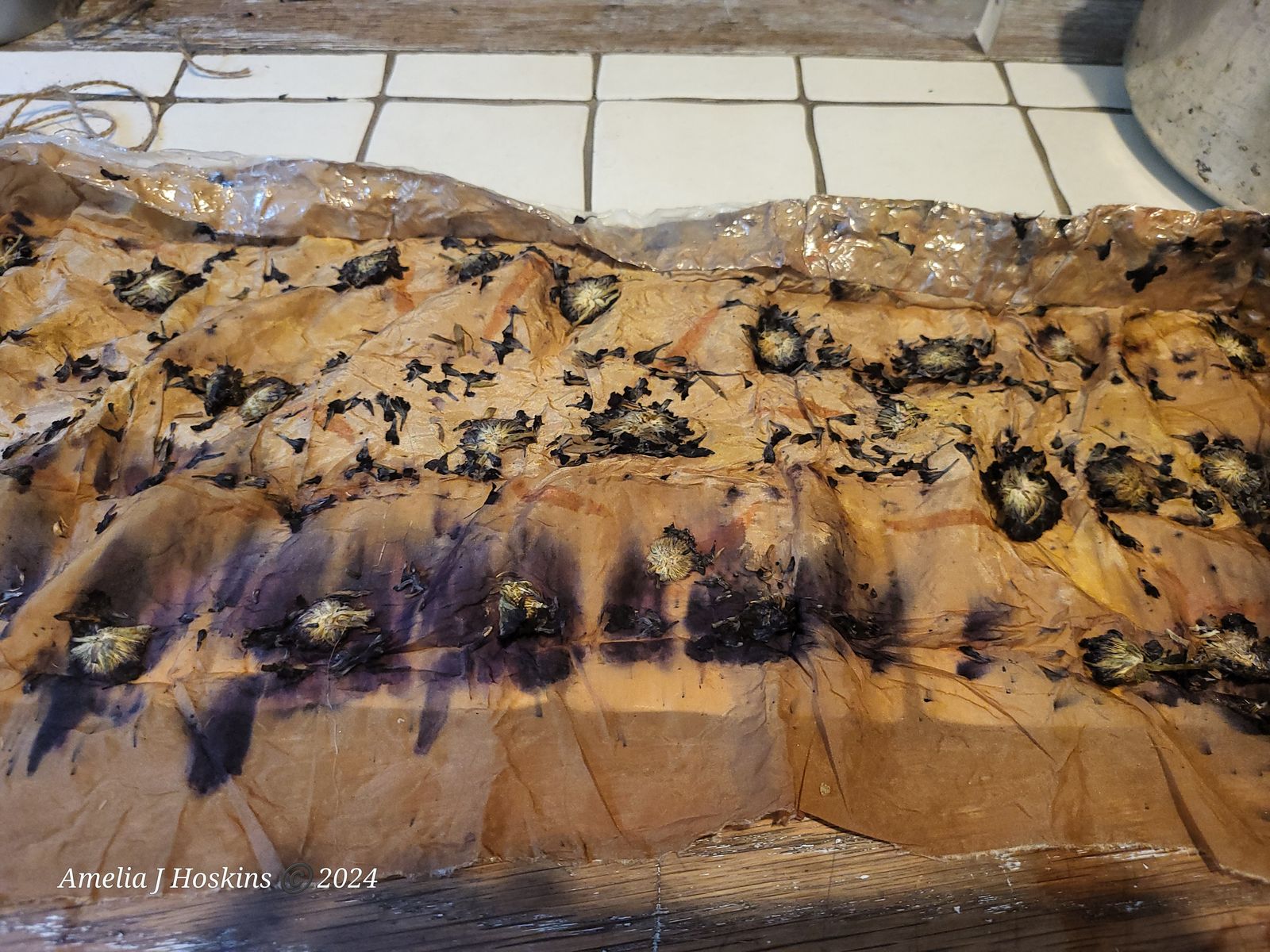
FIRST steam print with Black Knight Scabious flowers

Result of Scabious steaming is seen as strong deep violet bleeding of dye colour at one edge, which must have been an open part around an end of the stick.  Other flowers seem dry with barely a full print.  Silk is very dry, so got too hot in pan, inside a tight parcel.  Edge would have remained damp, hence the colour collected there.  Pattern print not at all covering whole area, so decision made to re-dye with similar distribution of flowers, together with another silk (previously dyed with blackberry modified with weak iron dip).

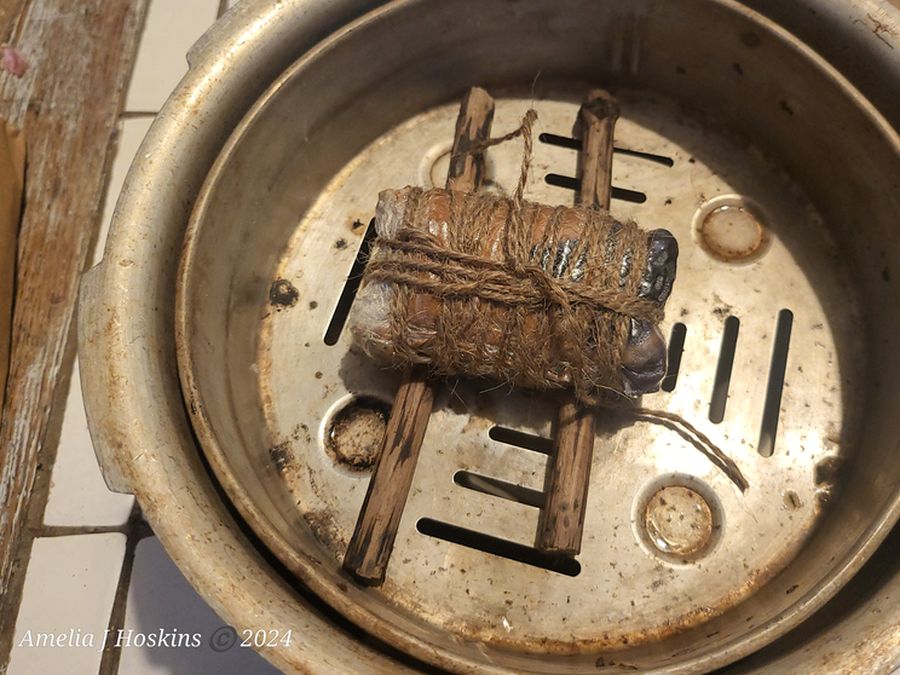
Stick wrap-around method chosen for 2nd attempt with two silks.  First parcel became too dry inside.  Additional silk is Habotai previously dyed with blackberry (but had iron dip modifier), so grey-lavender background.

20 minute steam in pan

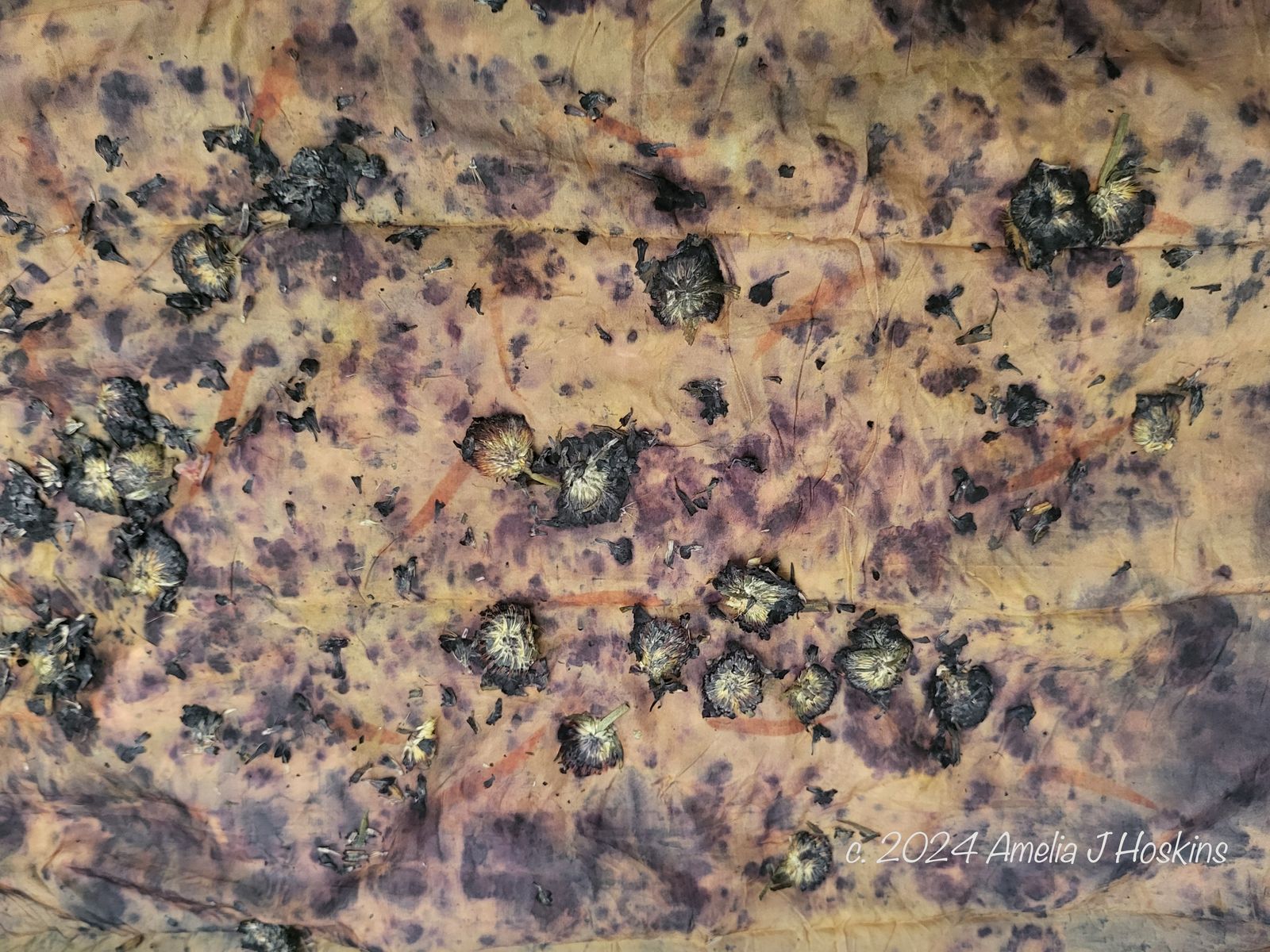
RESULT!  A good evenly dyed print design

A good dye take up from the Scabious flowers, which had. been positioned over flat silk, similarly as first attempt; and with added sprinkling of individual Scabious tiny petals.  These can be used with other steam dyes as a 'spot sprinkling' background with other eco prints.

Scabious Black Knight dried flowers on ecru Shetland wool

Top sample          Dye pot (2b). GREEN:  Modifed with Bicarbonate of Soda.

Second sample   Dye pot (2a). Airforce BLUE:  Twice as many dried flowers boiled up several times in a non stick coated pan, and rested a day or two.  Wool added after reheating; left to soak around 3 days.

Third sample       Dye pot (1a):  GREY: First dye pot but flowers had been used in a bundle steam first. Not many flowers used, not boiled, flowers placed in boiled water soaked for 7 days.

Fourth sample    Dye pot (1b):  Had same process but boiled up again after in a dye pan.   (Possibly had tannin residue from a bundle dye)


09 Sep

Scarlet Lilies blue echo print

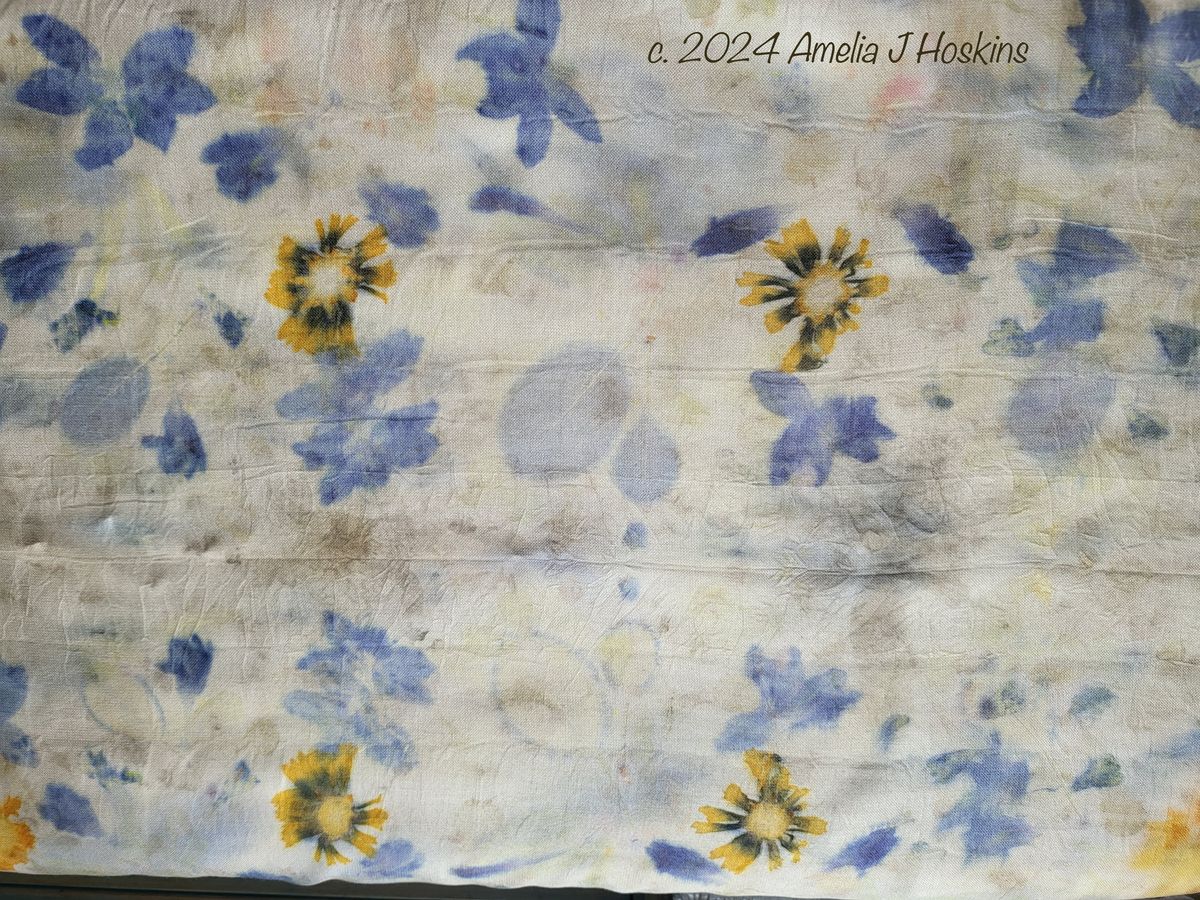
Ahimsa silk - (below left) previously bundle dyed with bright pinks and lilacs of clematis and bougainvilea, produced only a weak colour result, so a new arrangement of flowers was done, but including Hesperantha Coccinea Major (scarlet lilies) and Coreopsis.

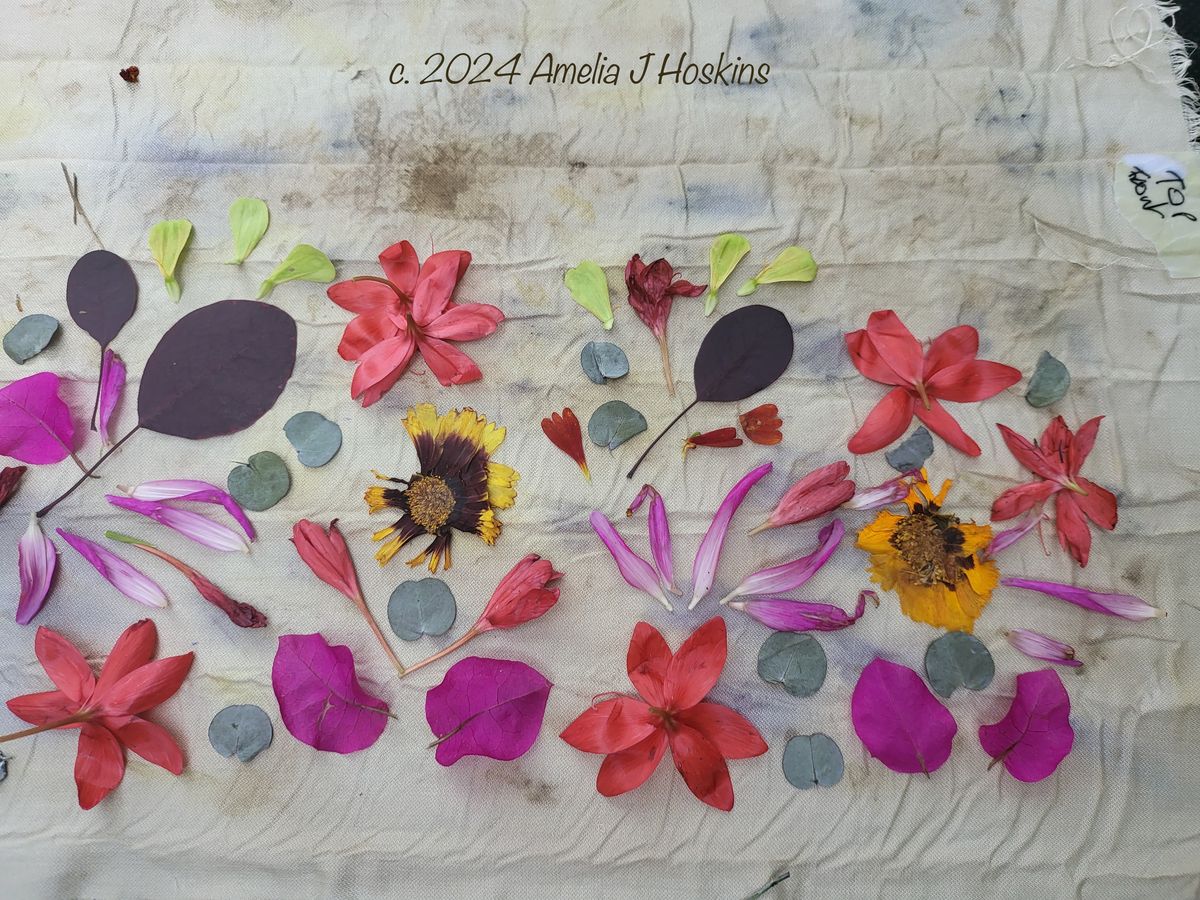
Hesperantha Coccinea Major, Heliotrope, Coreopsis, Cotinus leaf (Smoke Bush) and Dahlia.  Flowers laid on one half of silk length only, allowing for folding over during steam.  Two sided result provides two side shapes for a garment.  Flowers were used fresh, not dried.

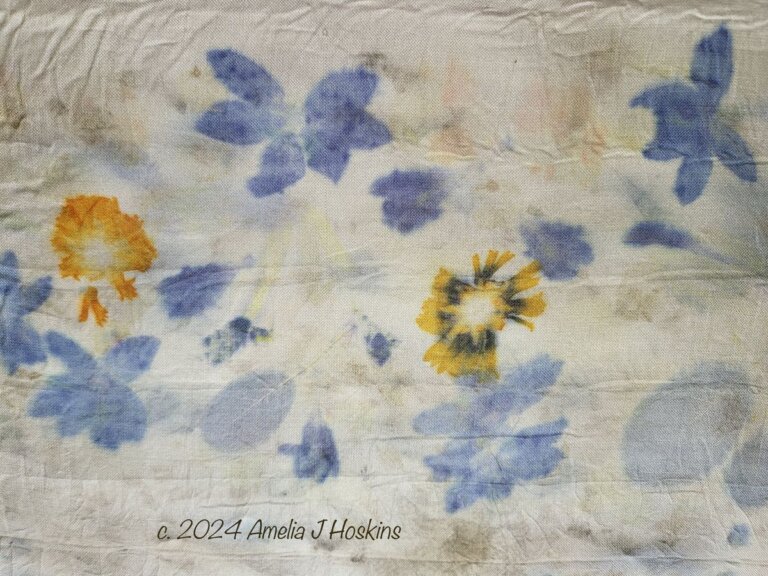
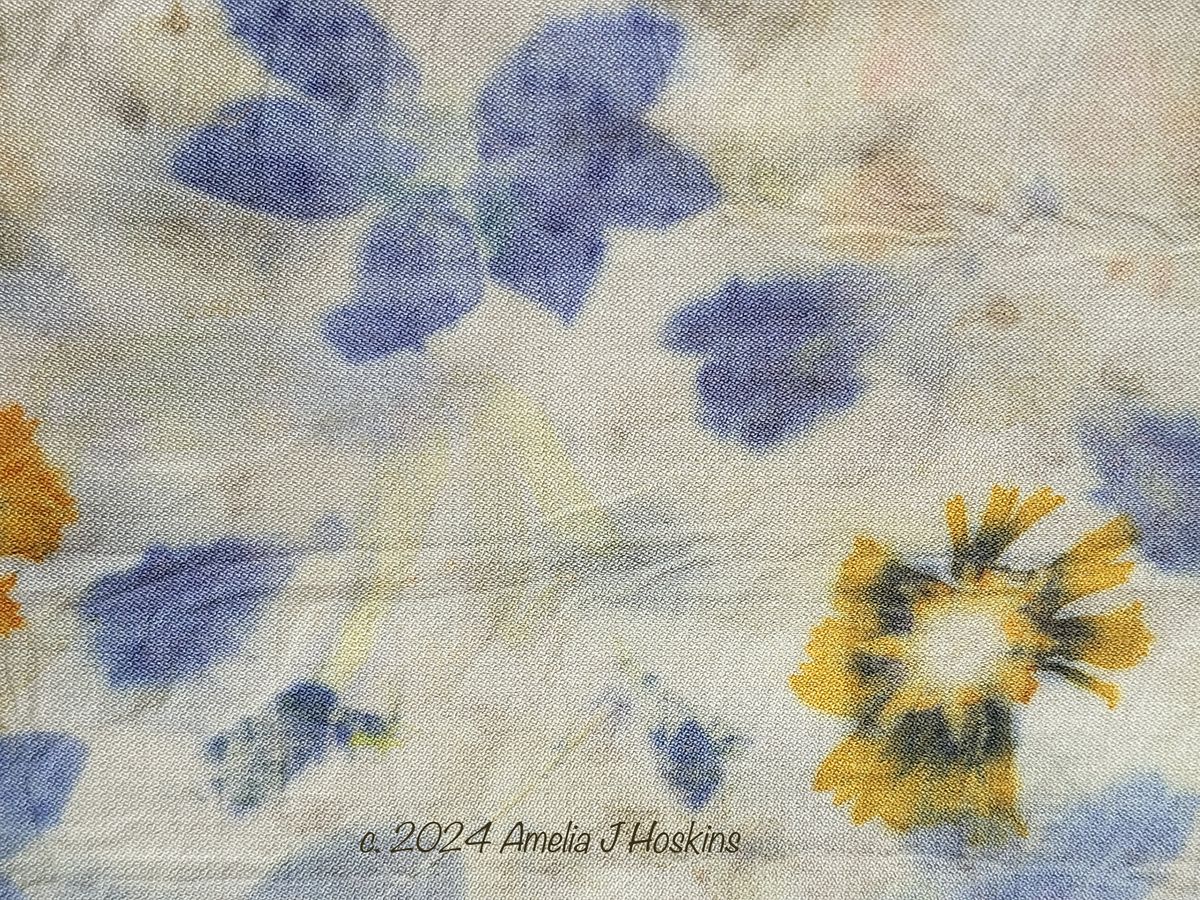
Scarlet lilies make violet blue!

Of the various petals for second attempt, Hesperantha and Heliotrope are successful; giving a good violet blue, adding firm flower shapes to the previously weak prints.  Indoor light after steaming.

More importantly this was steamed only for 20-30 mins.  Other petals; dahlia and bougainvillea made no print.

Mirrored Flowers   -   Folded Ahimsa Silk

Flowers arranged on only half of length, to produce mirrored pattern of imprints.  One half folded over, then clingfilm wrapped, before tying to stick for steaming.  Wrapped fairly tight, but not strenuously, pushing fabric flat around before wrapping with string or cord. Initially use rubber bands to hold in place, prior to string wrapping.

Background silk shows previous steaming with pink and lilac petals, as blurs, which were oversteamed.  Cotinus leaves work well, but paler than Hesperantha lilies.  Some Heliotrope also turned blue-violet.    Silks with failed steaming can always be oversteamed again with better performing flowers.

Ready for a garment

Dried length folded - Hesperantha lilies, Scarlet to Blue prints.

Will be used in a kimono front; one piece each of mirrored prints each side.

More design details can be added by hand overpainted, dependant on other fabric prints inspiration used in the garment.

MORE  HESPERANTHA  STEAM  PRINTS on pre dyed silks

With a number of previously gold dyed silks; some steam prints over were weak and so the next step is to OVERPRINT to create more interesting designs.  Strength of Hesperantha pigment allows for a purple print on existing dyed silk which is influenced by tannin.  Clamps used to see if they make the prints firmer, by excluding some steam. Flower prints were good, regardless.  Small purple flowers are salvia prints and along with other print marks are from a previous steam.

21 Jul

Bundle Dyed Backgrounds

Experiments for background texture

Making steaming parcel

Carefully folding silk over from edge and corners to enclose dye stuff.  Folding method: 'Side over', 'Corners over to centre' : repeatedly.  Otherwise spread only on half of fabric, to fold over easily.

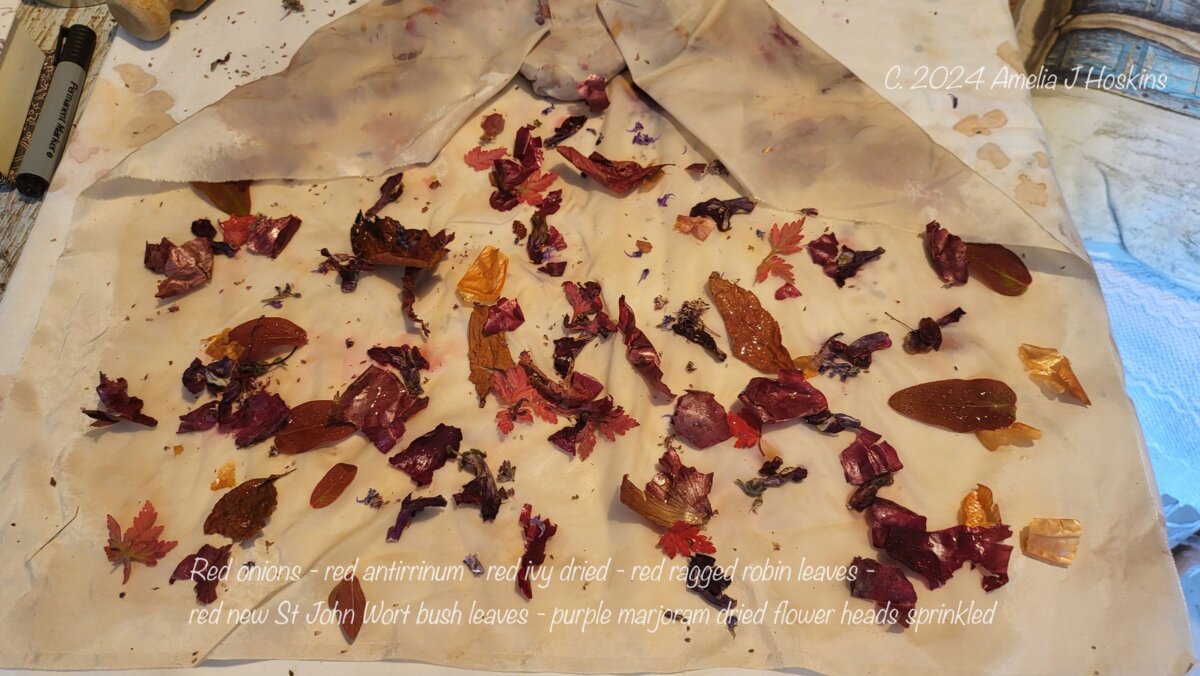
1.  Red onions - red antirrhinum - red ivy dried - red ragged robin leaves - red new St. John Word bush leaves - purple marjoram dried flower heads sprinkled

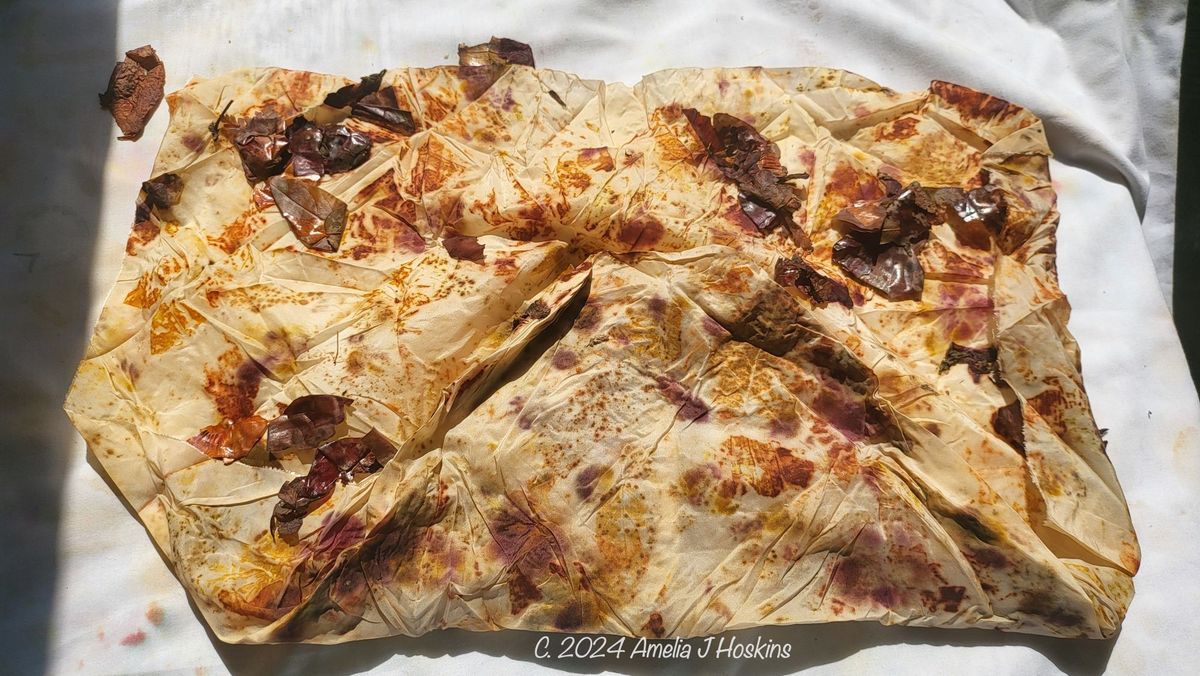
2. Ferns added - made it browner

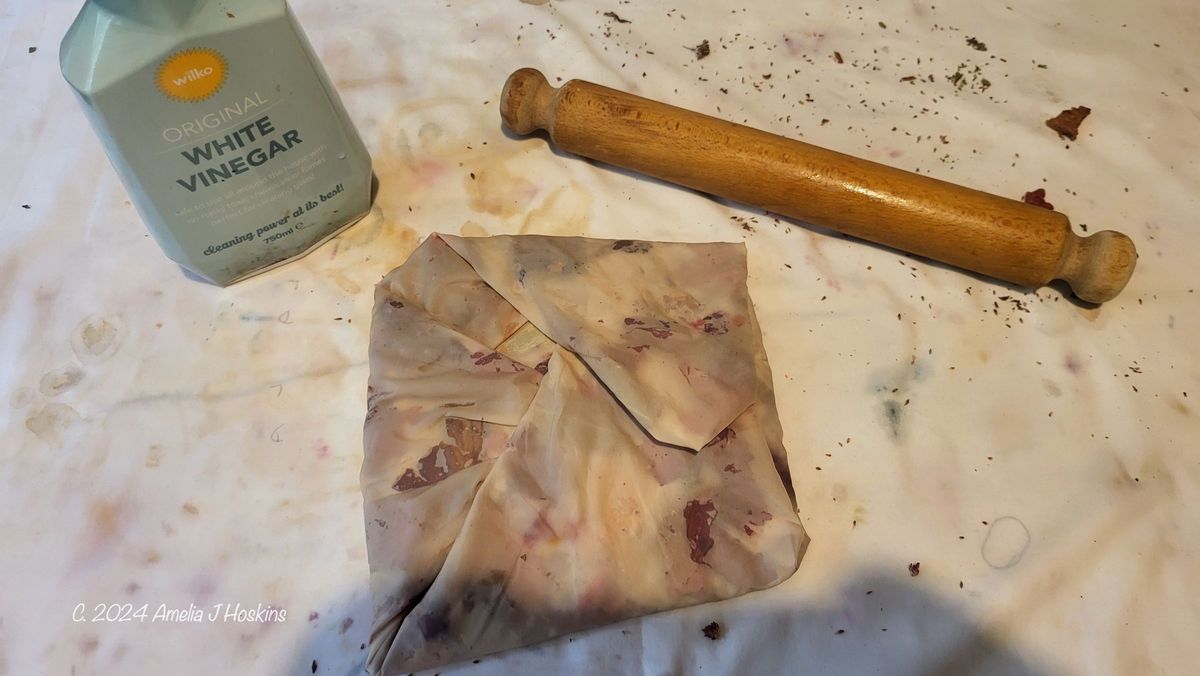
Parcel preparation

Spraying with vinegar and using baking roller to flatten.

Experimental parcel other than rolling around a stick.

Ferns added

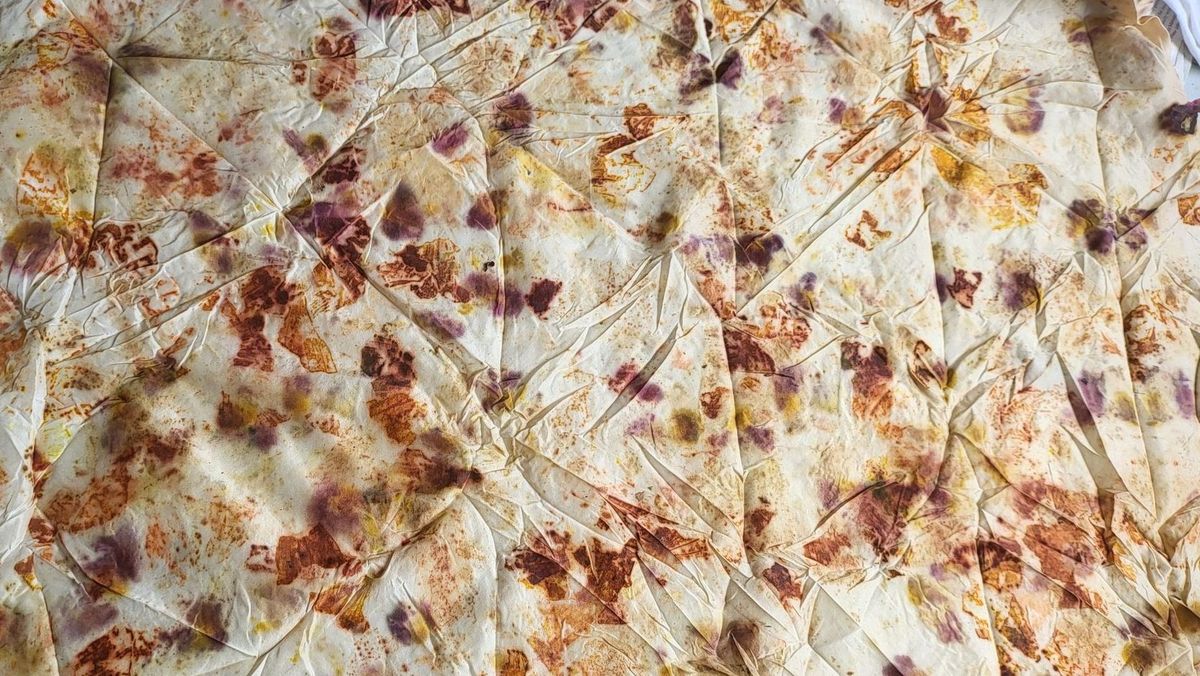
Although a few textured results were acceptable, I wanted to change the brown/white contrast.

Extra steaming with ferns produced browner overall dyed.   The brown fuzzy seeds on reverse of ferns I believe cause this.

The bundle can be flat, and not always tied around a stick.

A bit too brown for me...

One piece can be continually experimented on.  Maybe lemon juice will bleach lighter some of the background, as painted shapes?  Maybe blackberry, or woad blue, or logwood pigment dyes can be used as design shapes over the brown?

Adaptations to be continued...

Images copyright Amelia Jane Hoskins Please email for use permission.