Category: Natural Plant Dyes

05 Dec

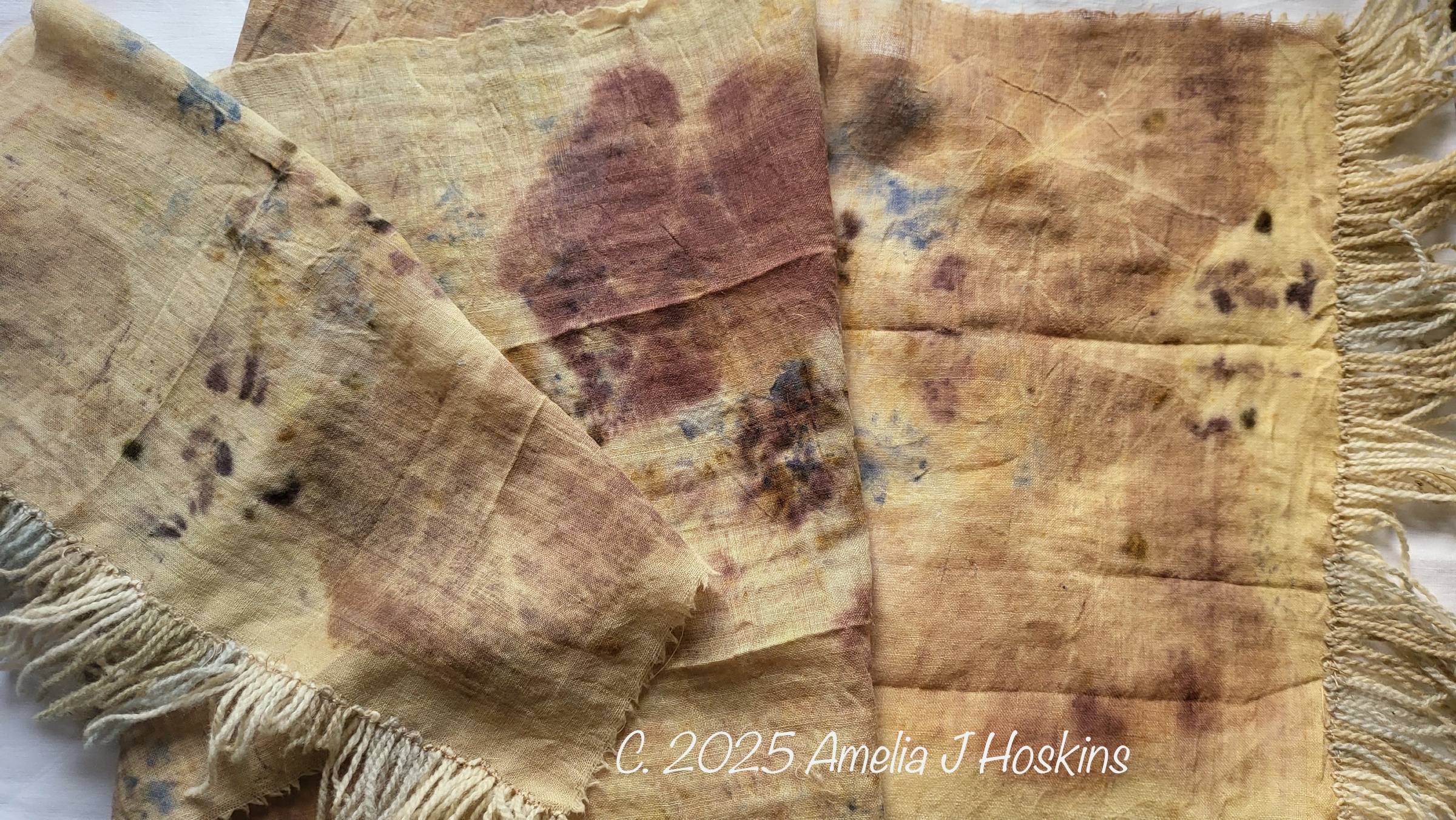
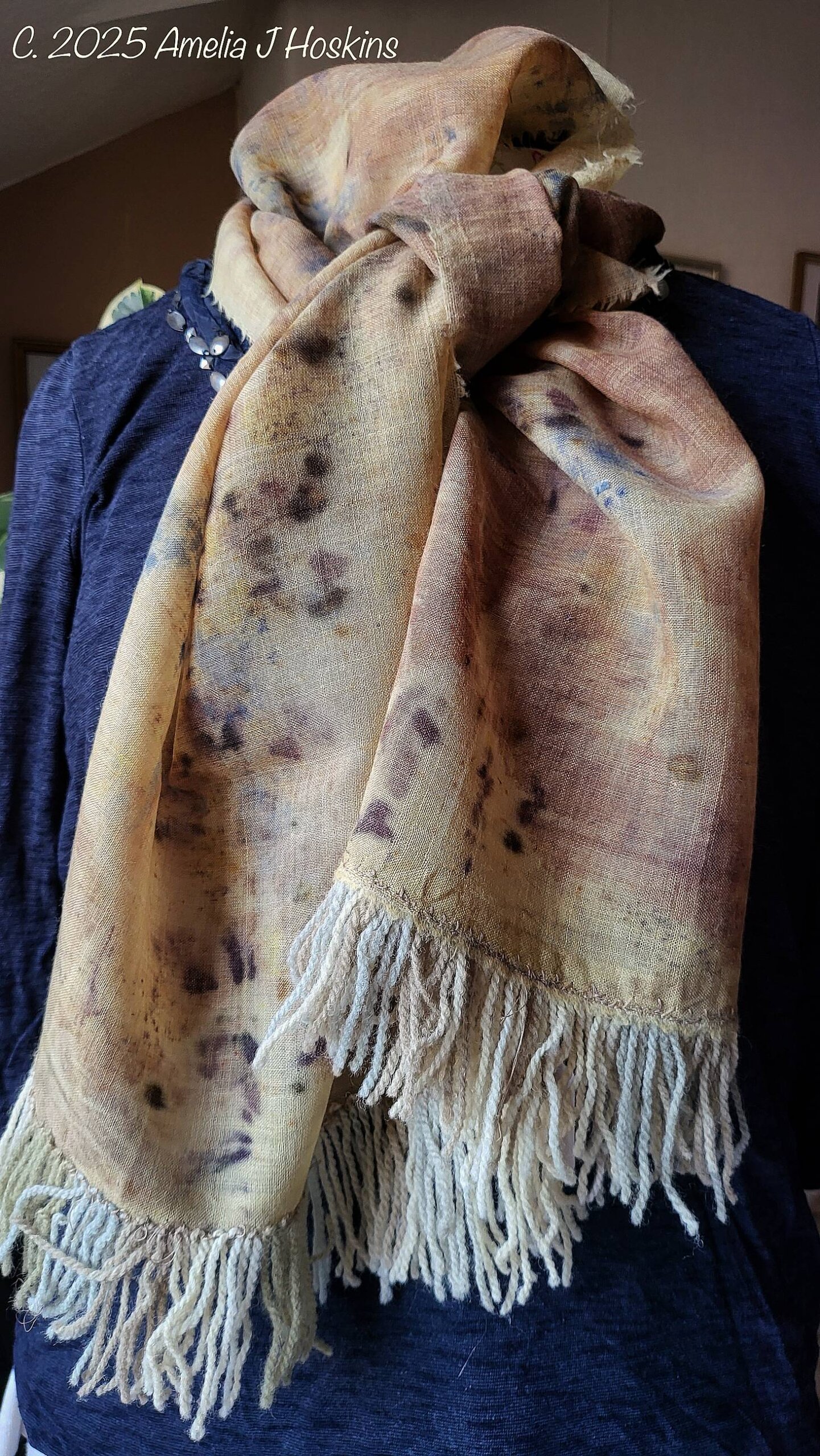
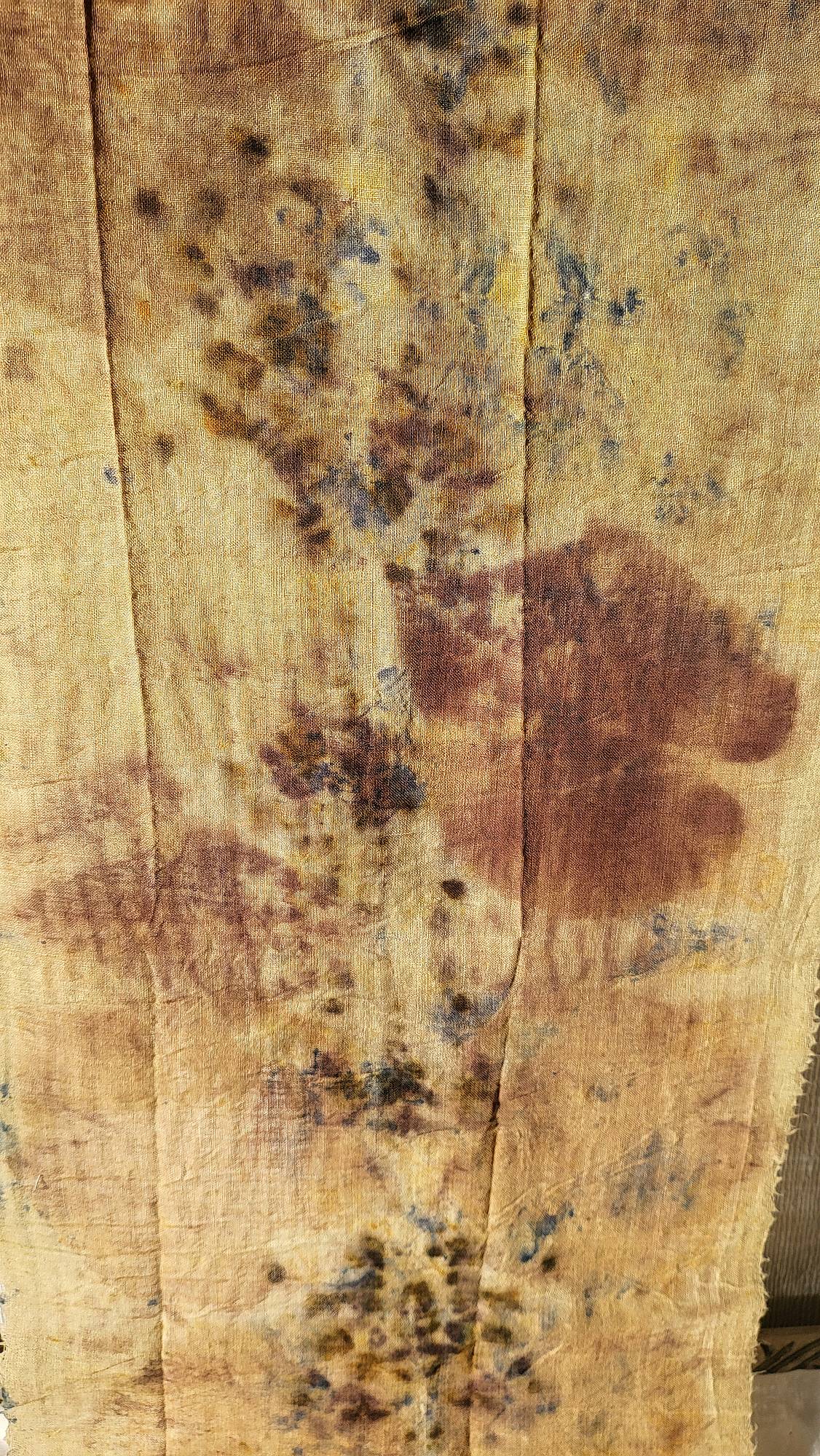
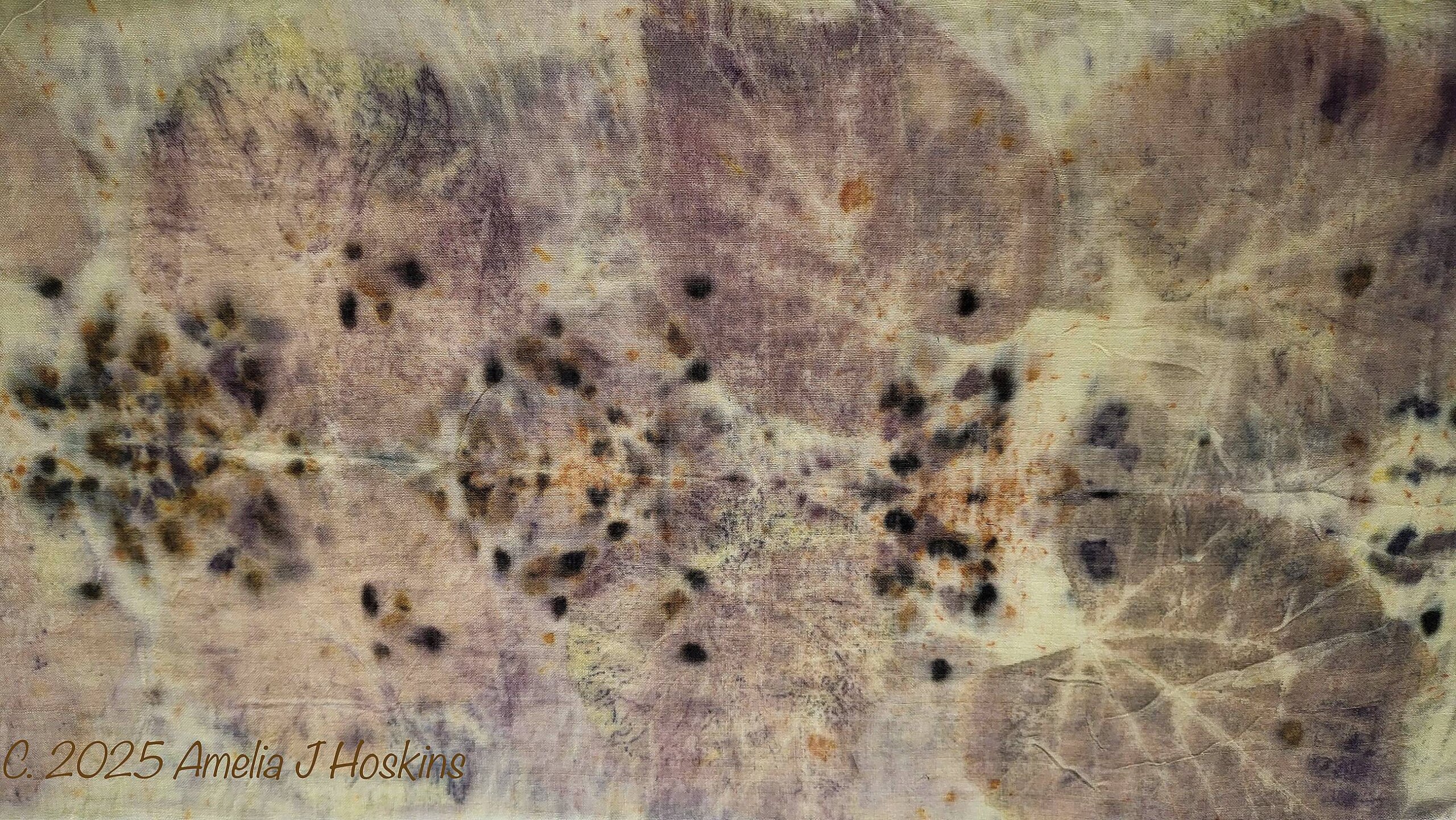
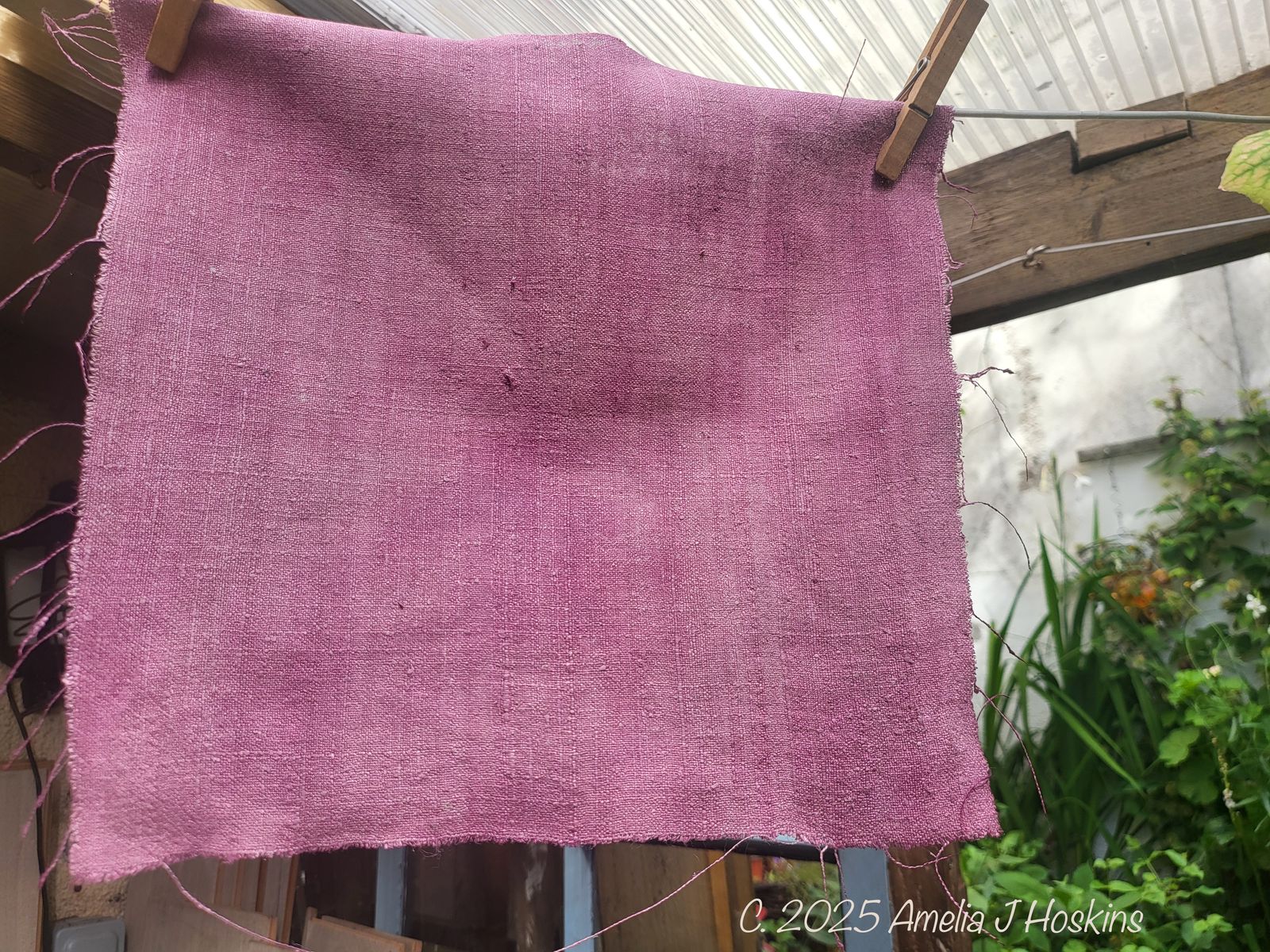
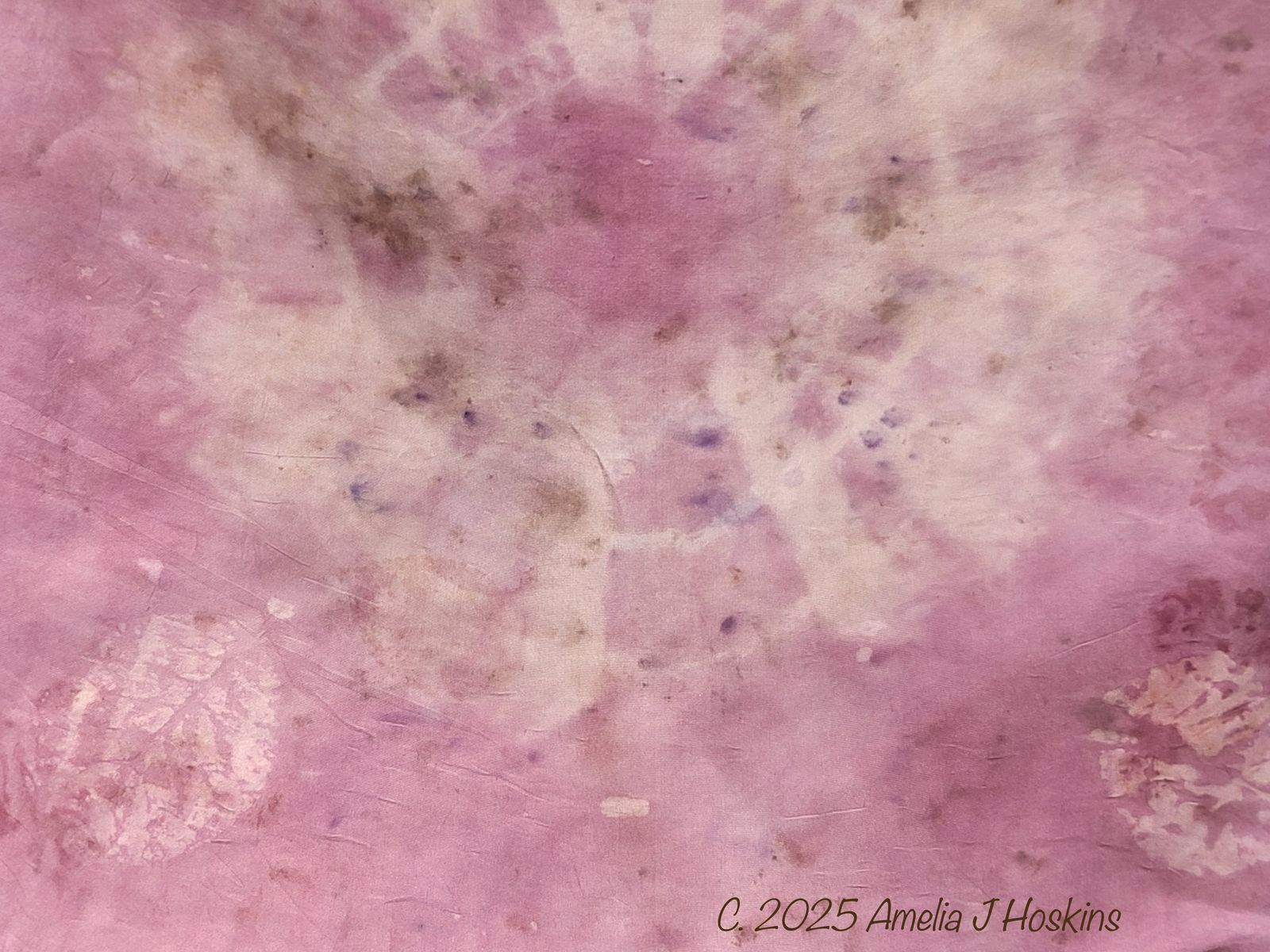
Eco print fine wool scarf Catalpa leaves Purple Coreopsis and seeds

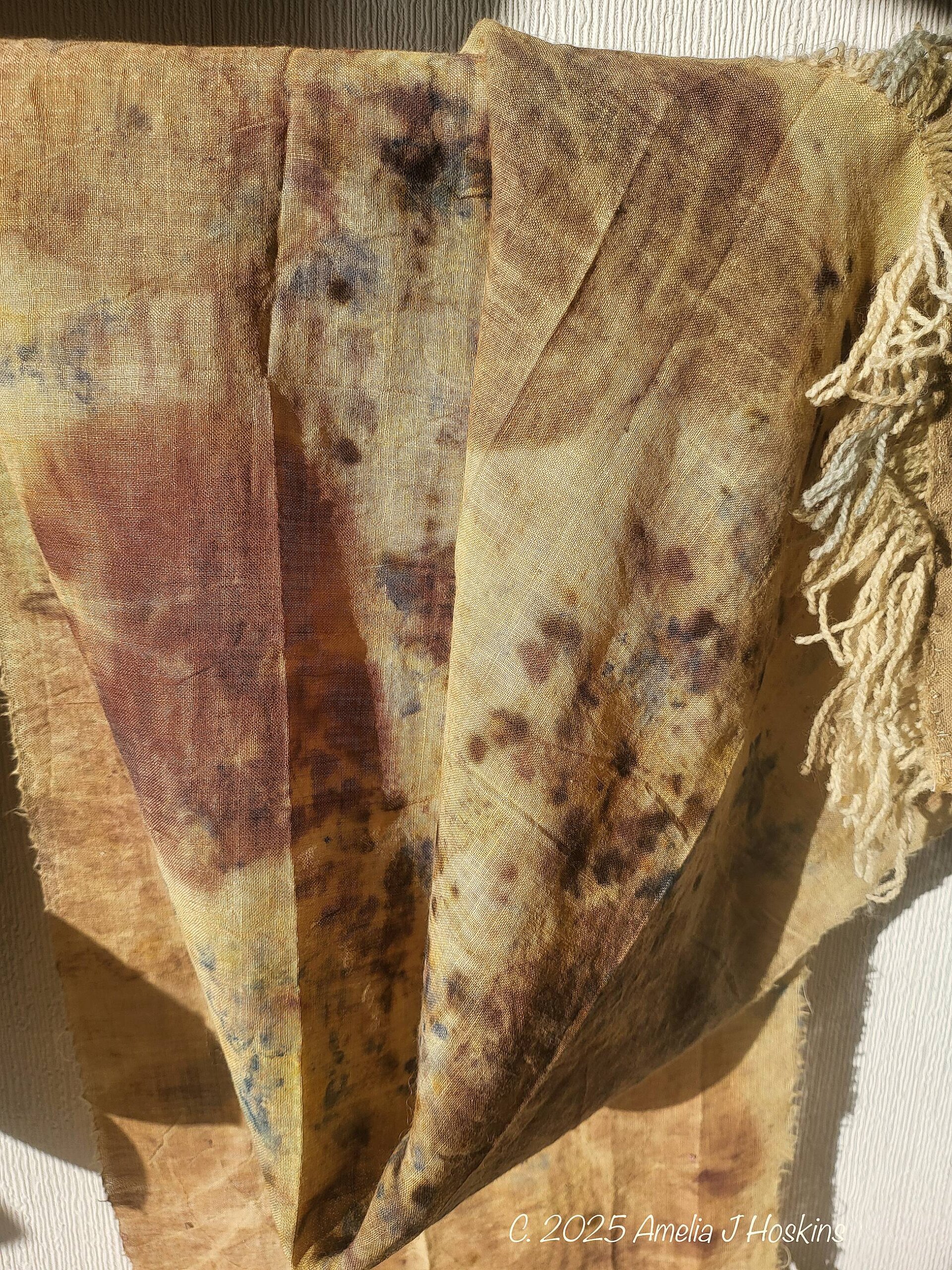
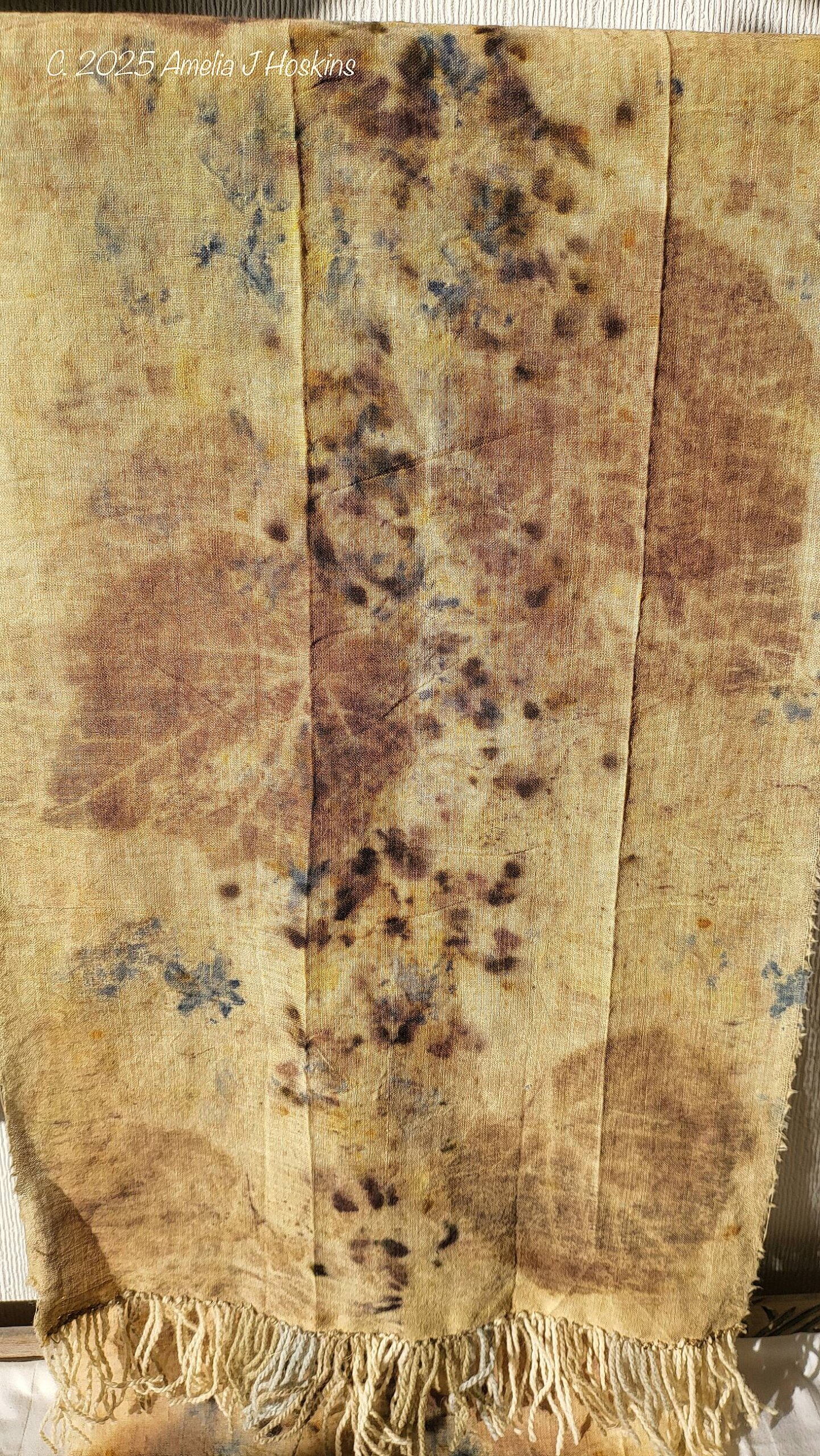
Fine wool scarf eco printed with large Catalpa leaves (deep red-brown)

Addition: Purple Coreopsis flowers (deep violet print), and red Hesperanth flowers which turn blue.

Fringe:  Dartmoor Shetland wool - hand dyed with Scabious Black Knight (grey) and three tones of Amaranth (beige).

Colour in sunlight is yellower than actual, which is dull gold

Crimson Catalpa leaves with Violet centre Coreopsis prints

Eco Print Process:

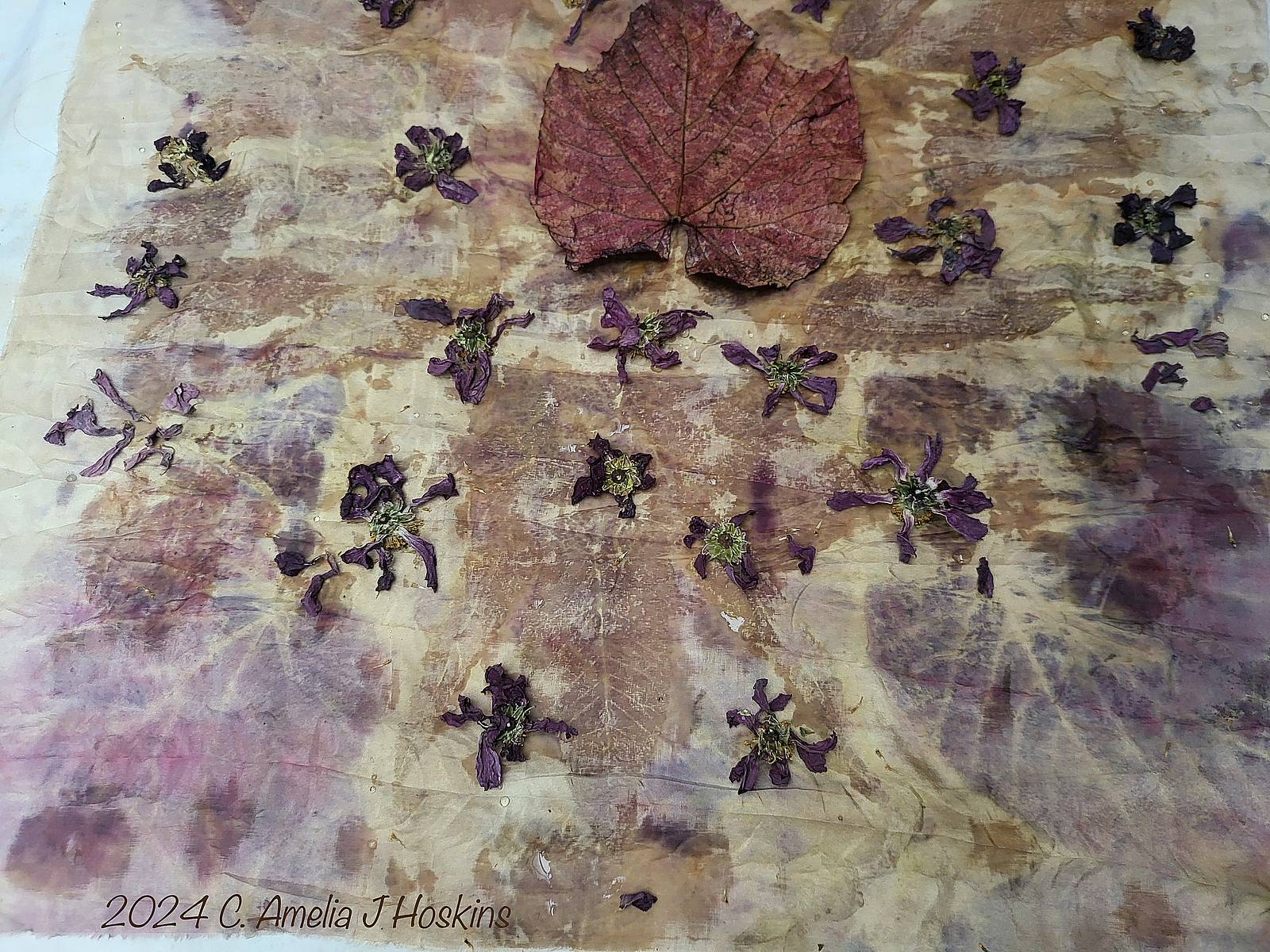
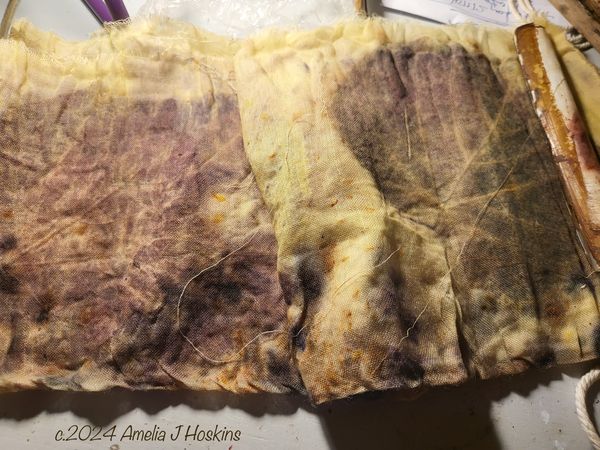
Fine wool was previously dyed with Comfrey or Rosemary giving dull gold background.  Large red leaves of vine tree Catalpa Bignoniodes See post; Secondary bundle dye needed: Catalpa leaves, Purple Coreopsis flowers (making violet) and Hesperanth (red - turns blue) form the scattered prints.  Blue not seen in all photos is now prussian blue.

Preparation of 2nd bundle dye Catalpa leaves and Purple Coreopsis over 1st eco print Catalpa leaves

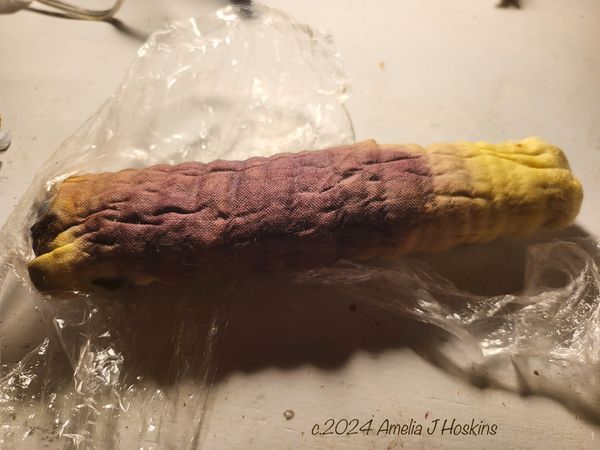
Dowel of fine wool with leaf print wet

Unrolling the steamed bundle of leaves

20 Nov

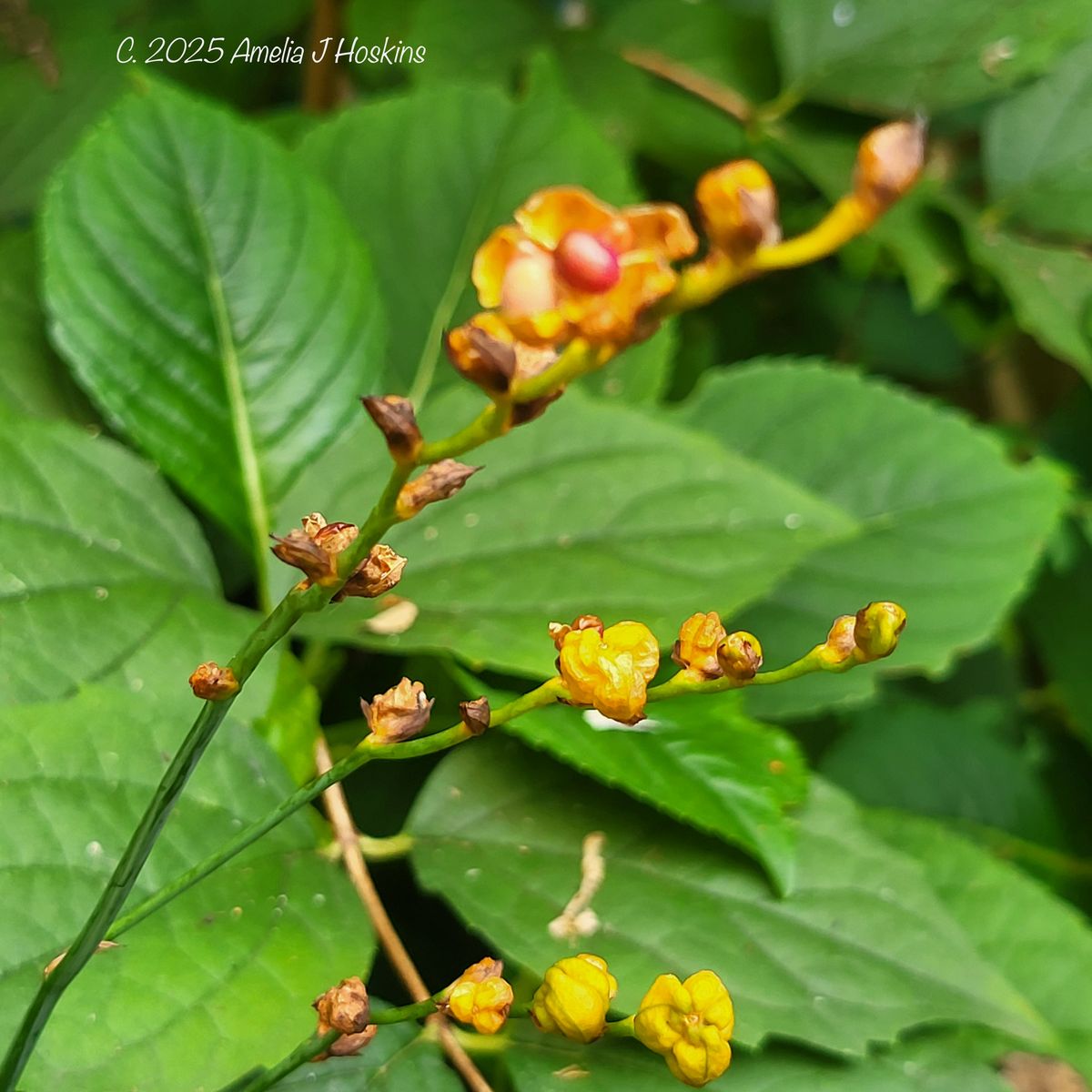
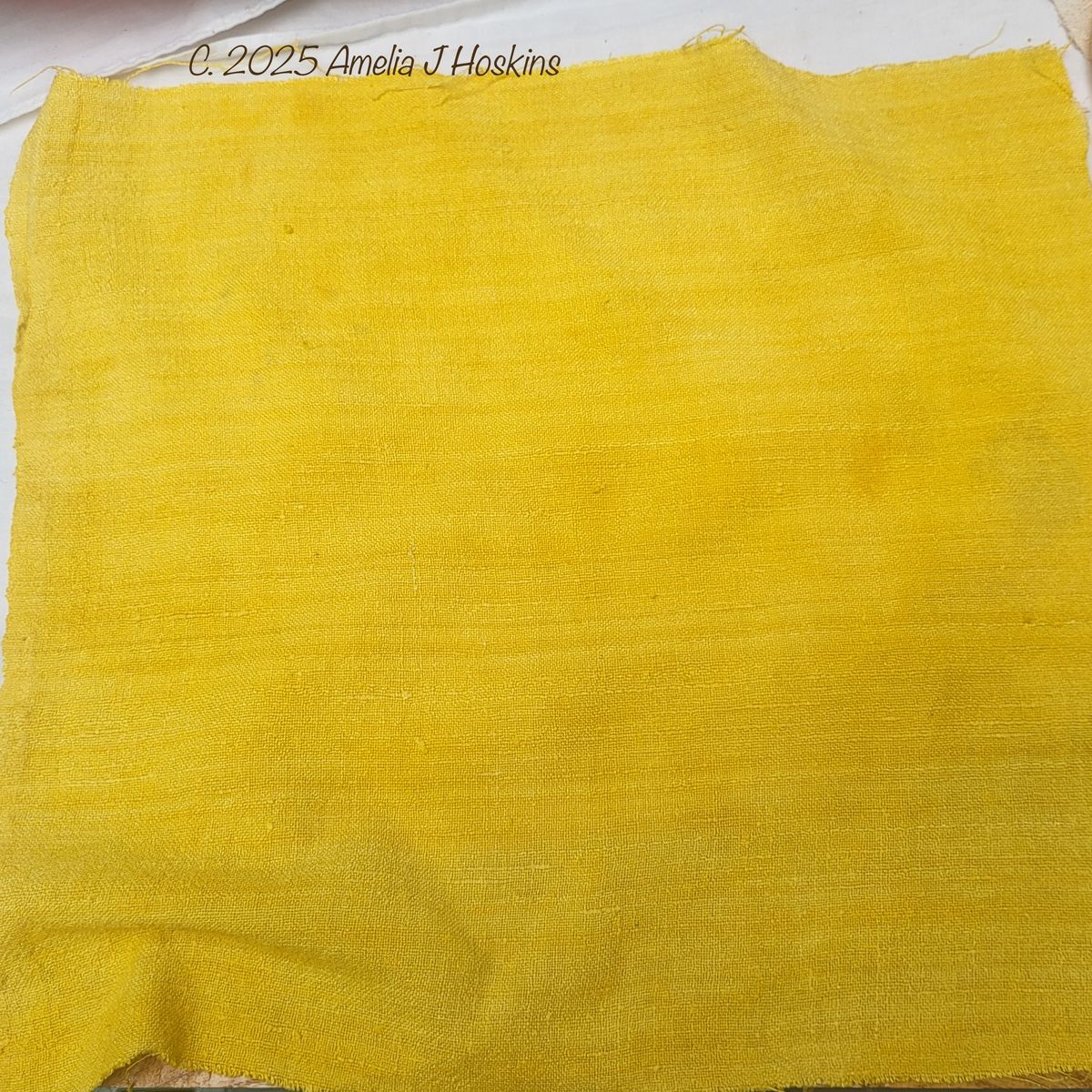
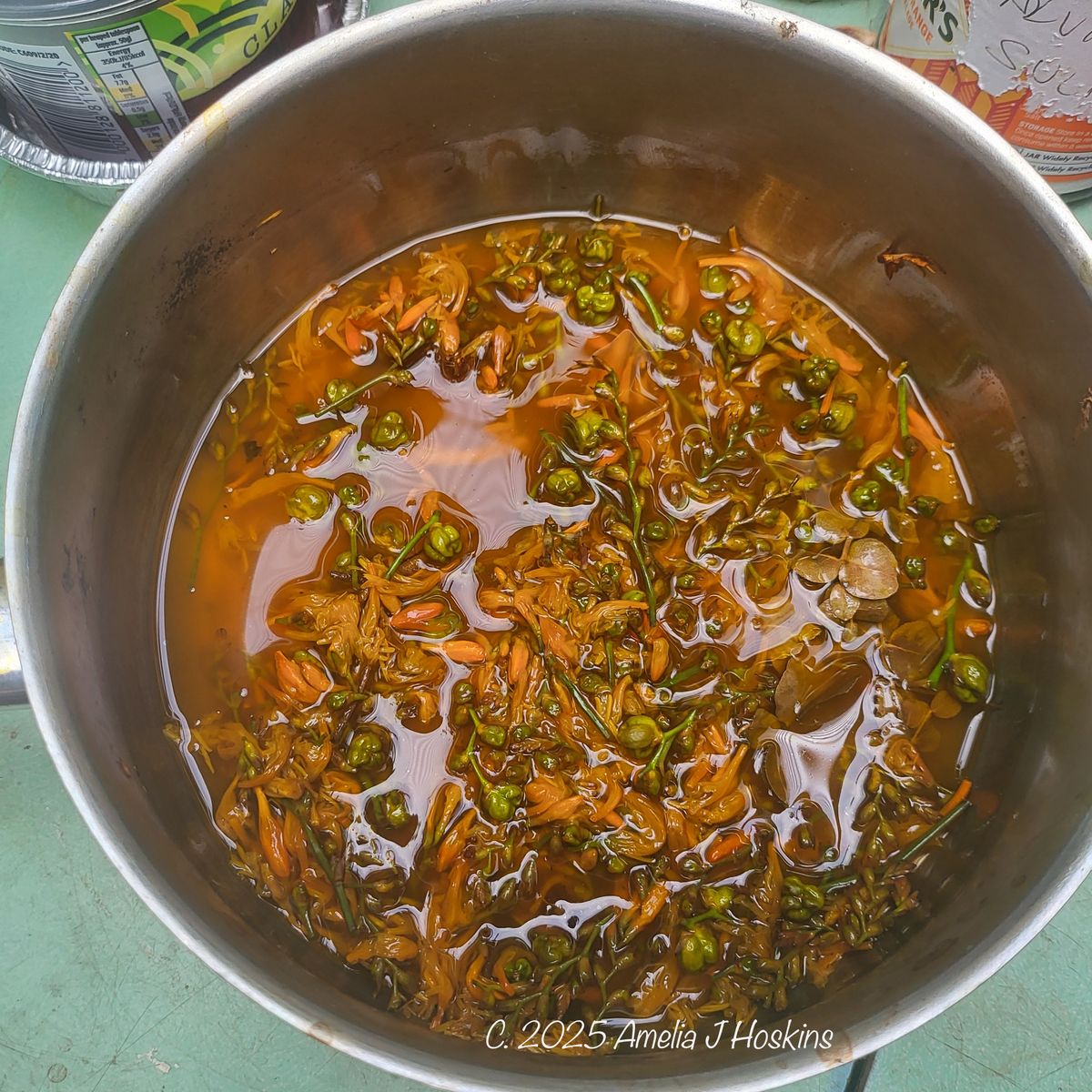
Privet Yellow

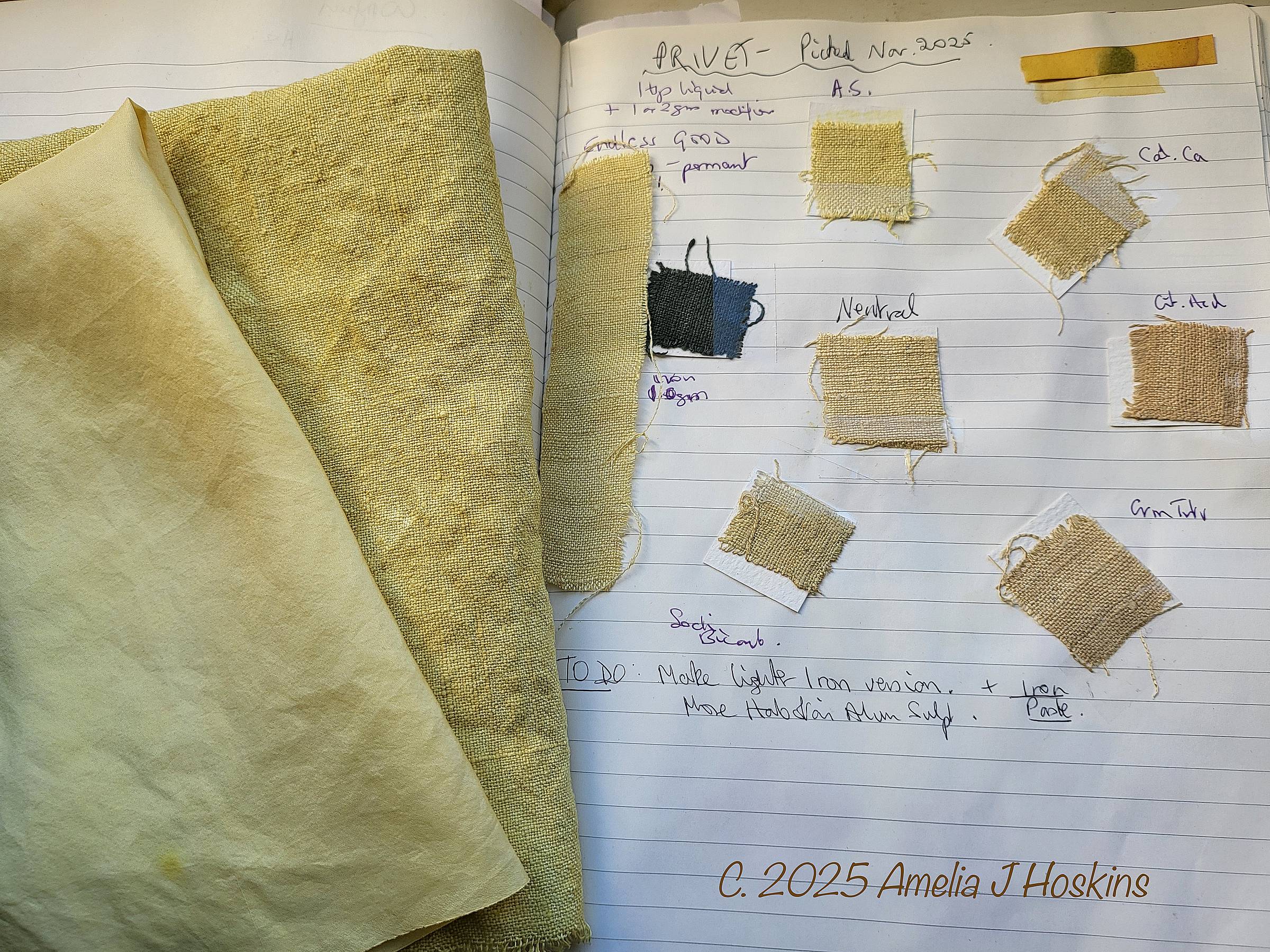
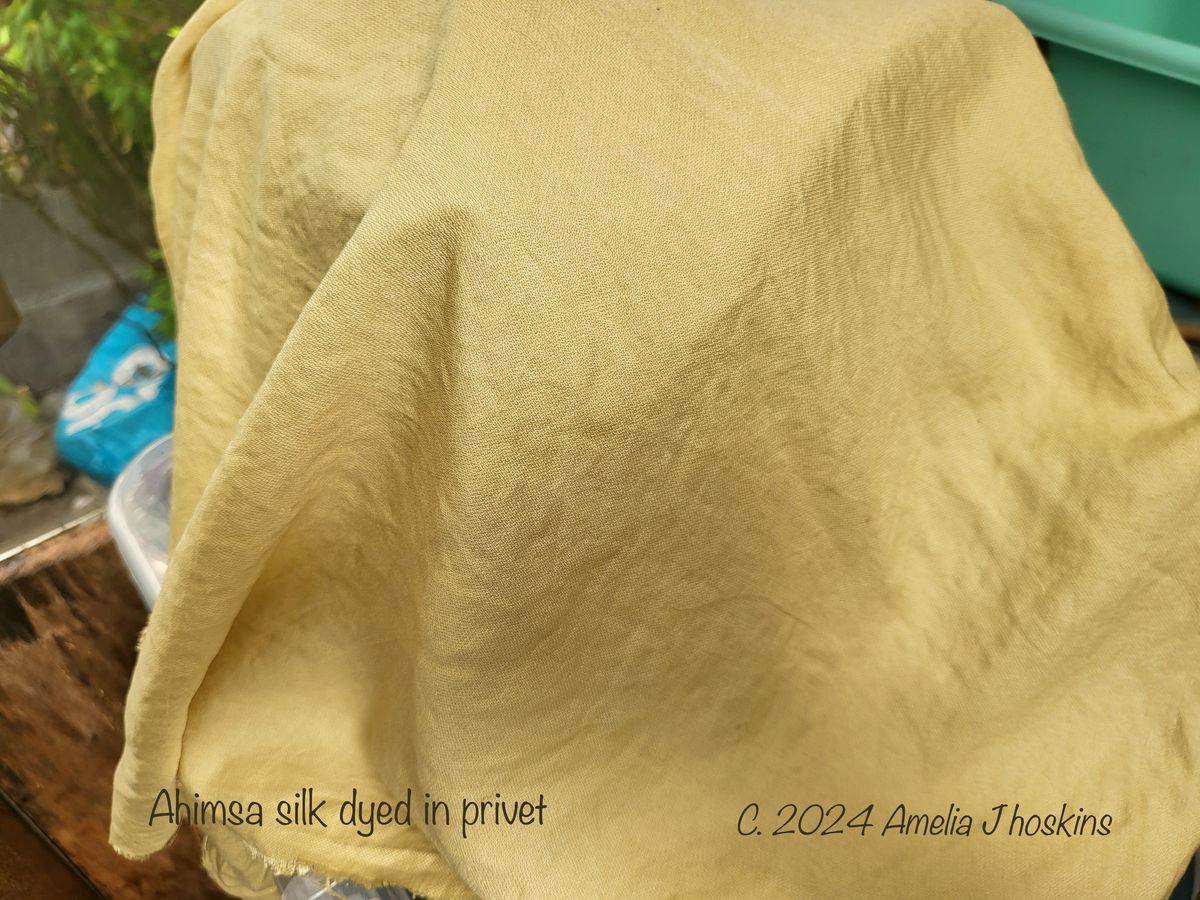
Privet leaves yellow for silks

SILKS:  Habotai and Erin

Habotai soaked 24hrs.  Erin soaked 72hrs

Silks premordanted with Alum Sulphate.

Samples modified show more towards gold with citric Acid and Cream of Tartar, and a touch of iron gives green-black.    Iron modifier can be used sparingly to achieve a green.

Privet yellow is similar in to privet dyeing in 2024. Page link


14 Nov

Apple Skins dye

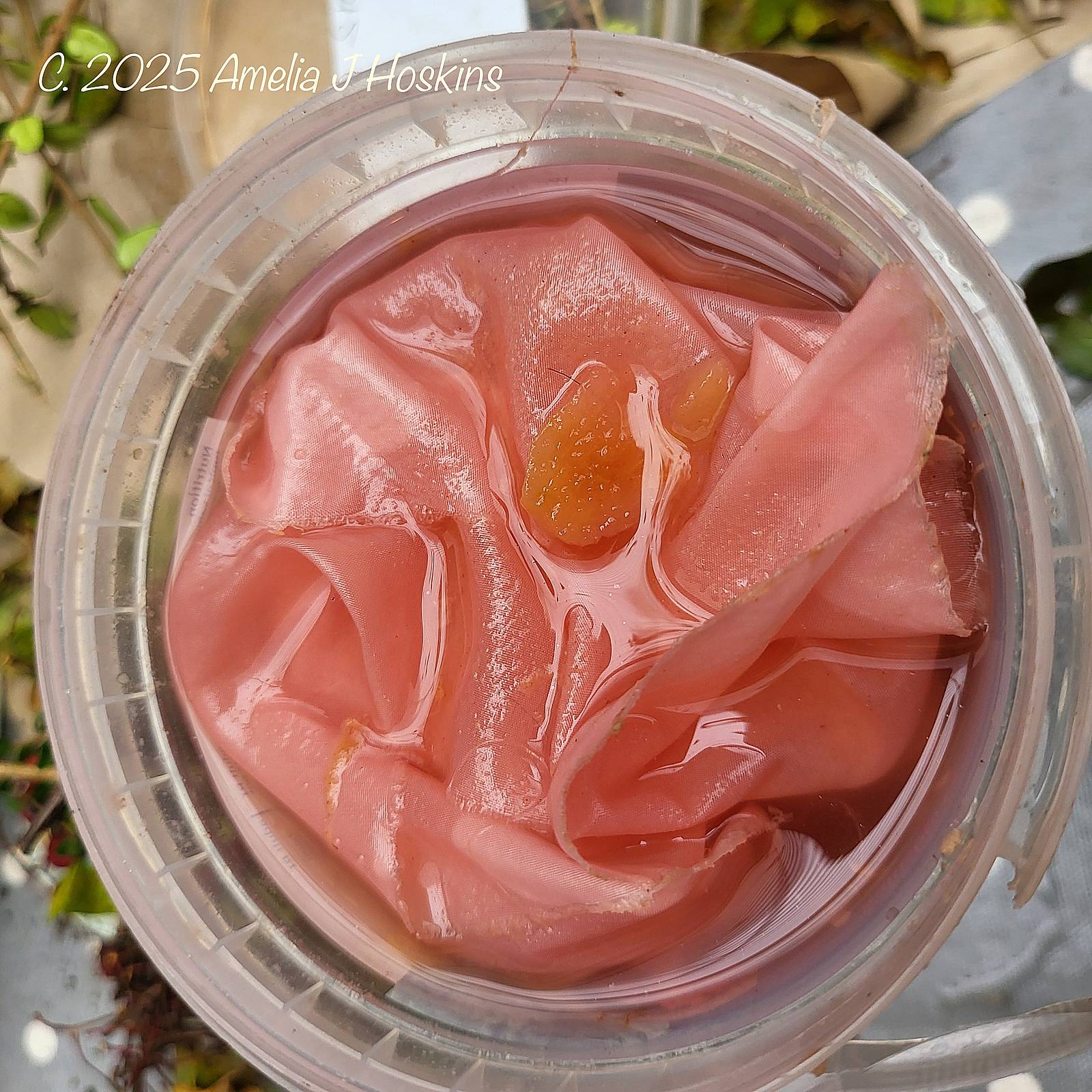
APPLES - 2025 crop - using red skins for dye after apples are processed

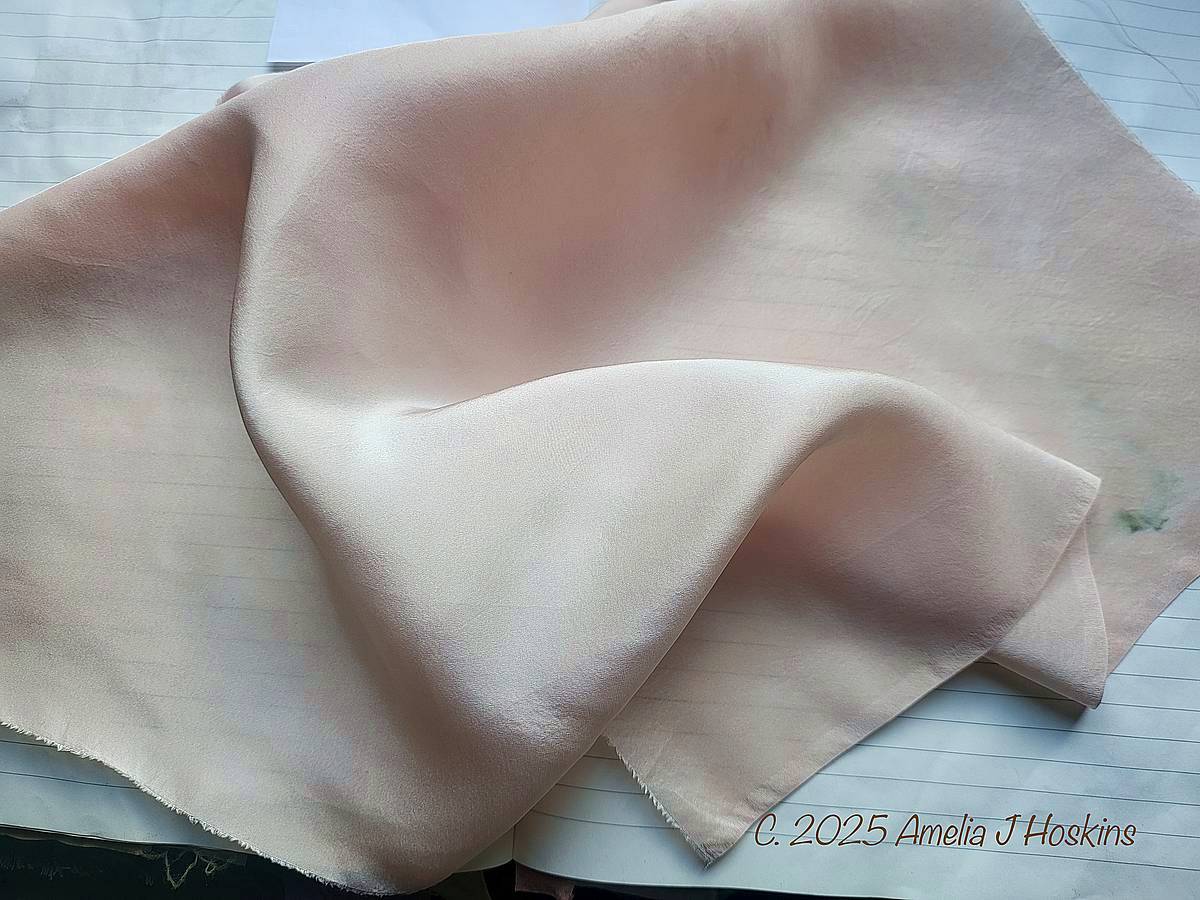
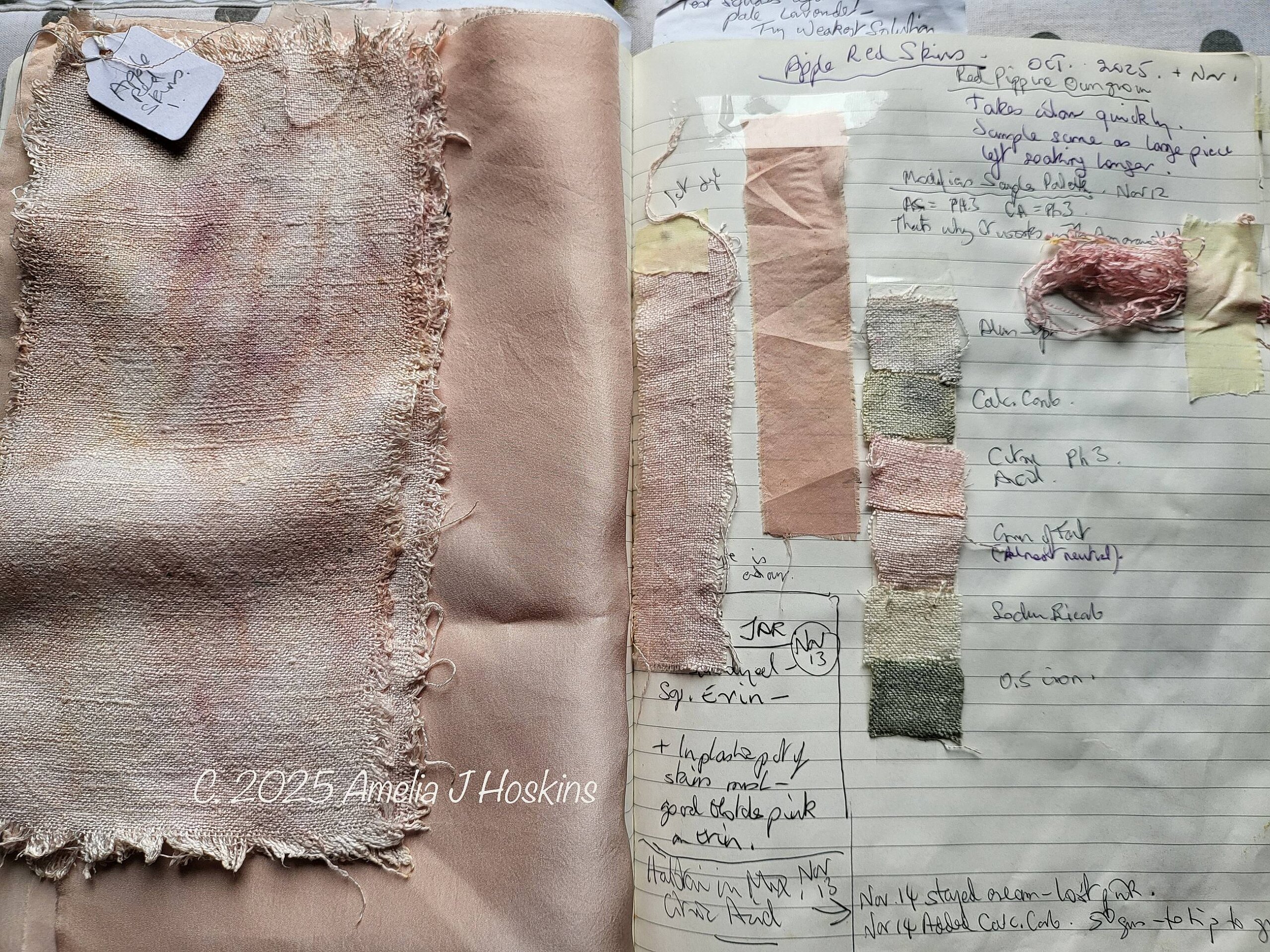
I only found out this year that the red skins when soaked produce a pale pink.  The apple cider vinegar produced is also very helpful in gaining a pink with Amaranth dye  as it gives a Ph3.  A few Amaranth flowers are visible behind the apples.

Habotai silk in pot of apple skin dye

Habotai pale pink result when dry

Silk dyed samples Erin and Habotai

Modified small Erin squares


  • Alum Sulphate -  Pale Grey
  • Calcium Carbonate - Grey
  • Citric Acid - Light Pink
  • Cream of Tartar - Dull light Pink
  • Sodium Bicarbonate - Cream
  • Ferrous Sulphate (iron) - mid Grey

Smallest Erin dyed sample shows marbled effects when silk is scrunched up beneath a small pot of skins.

13 Nov

Sloe Berry dyed silks

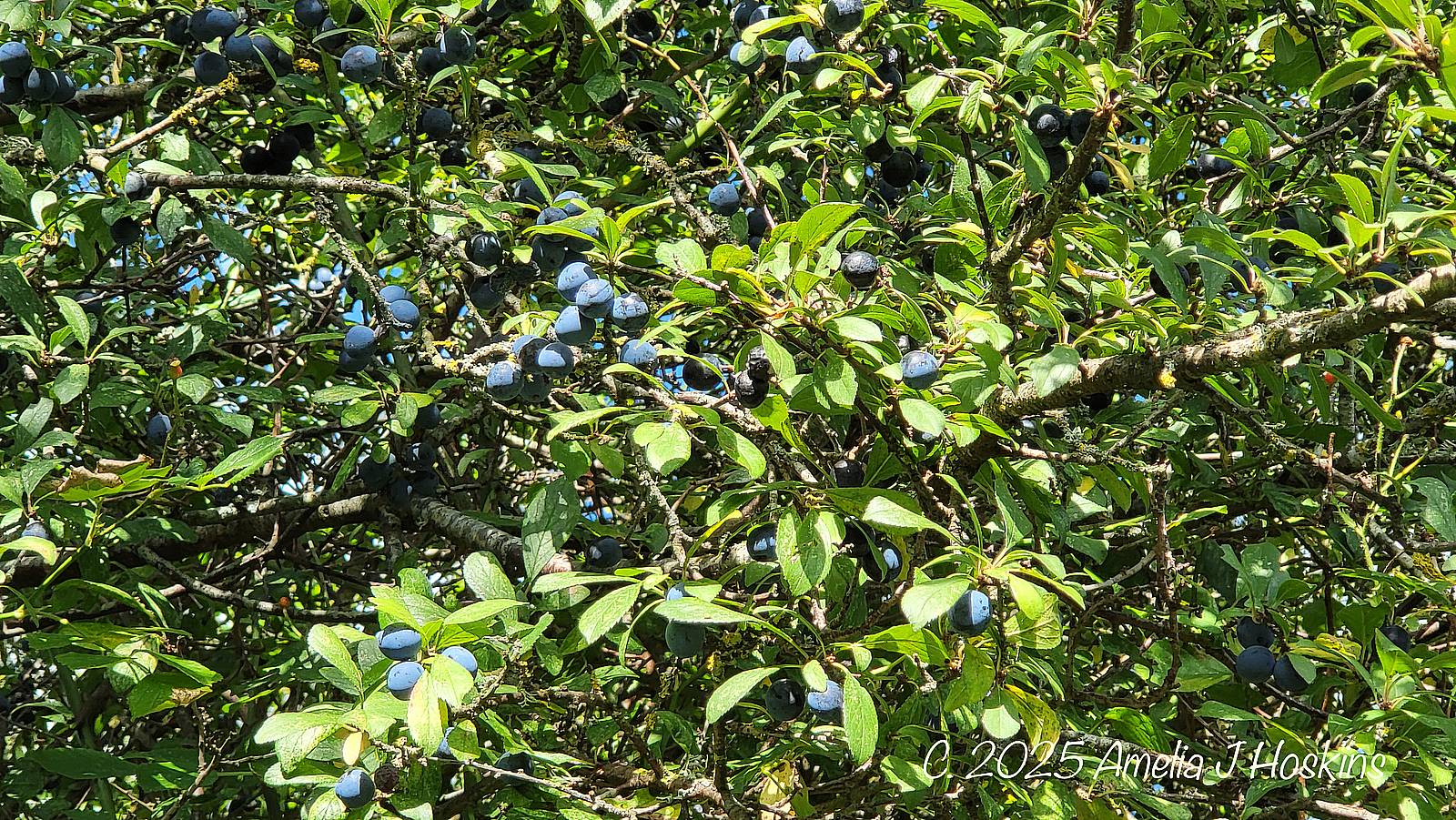
Sloe berries dark blue: first I've ever foraged

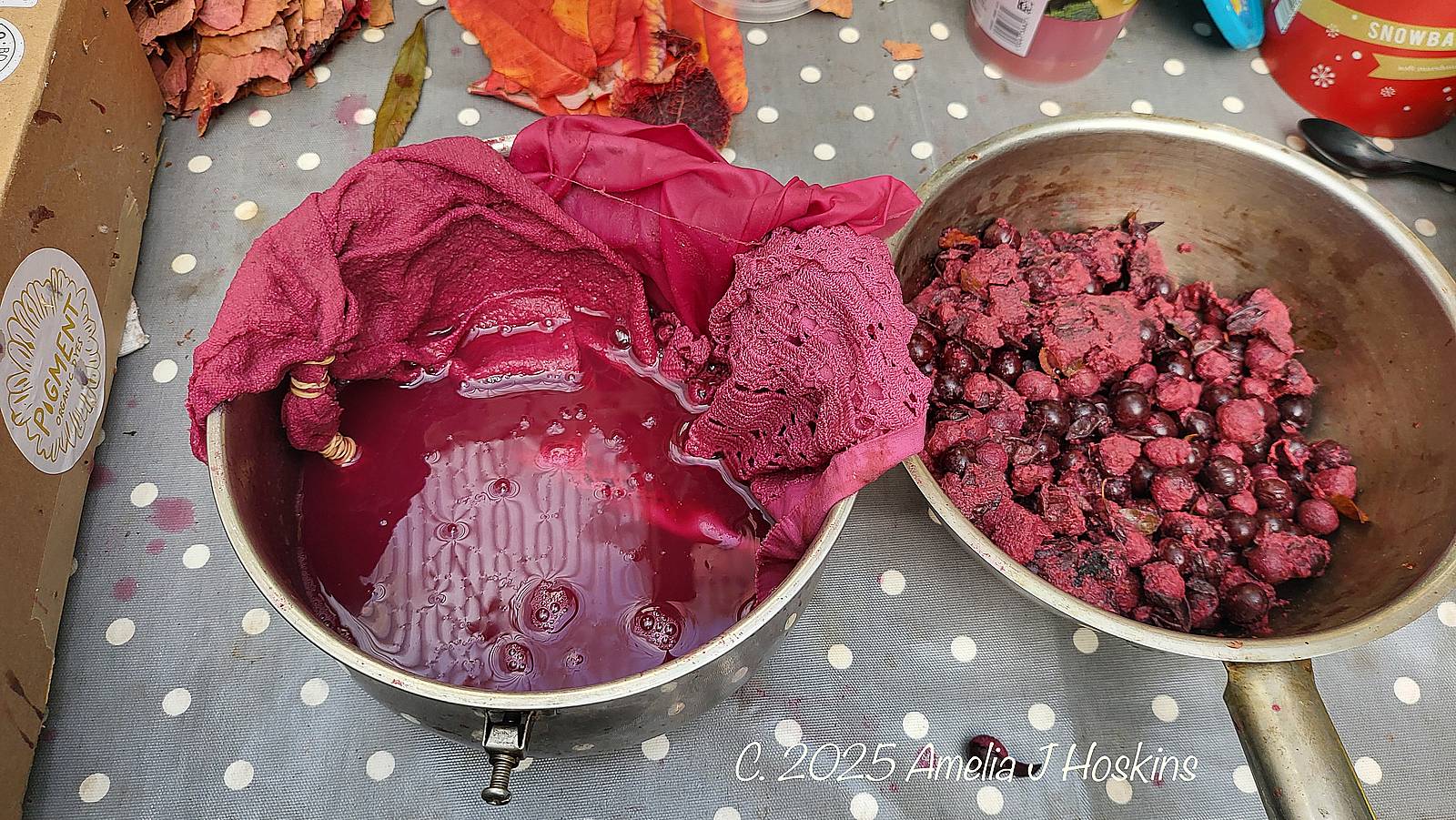
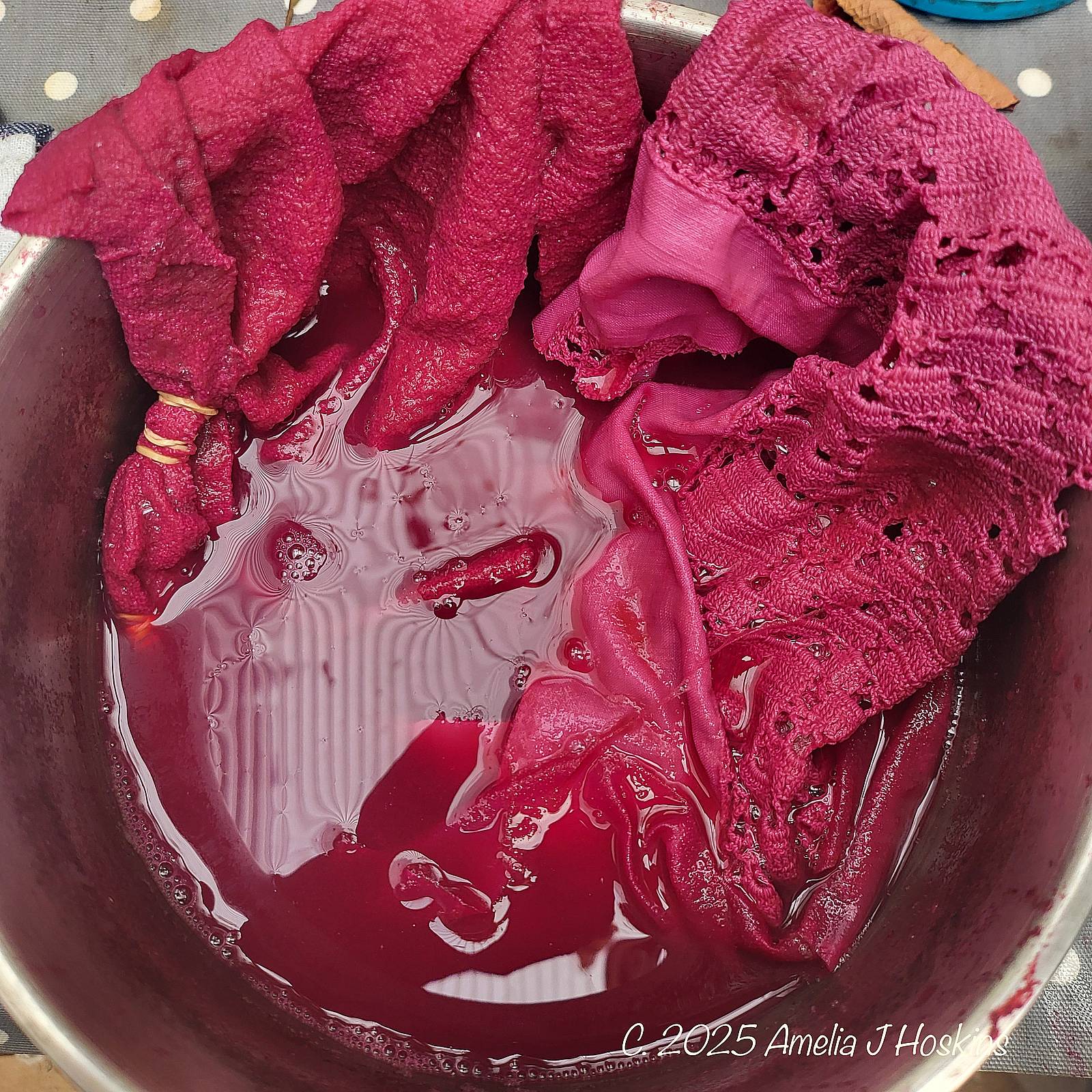
Soaked for a few days, boiled and simmered. Left to rest overnight.  Boiled up again and left to cool before straining plant material, and adding silk to the dye bath.

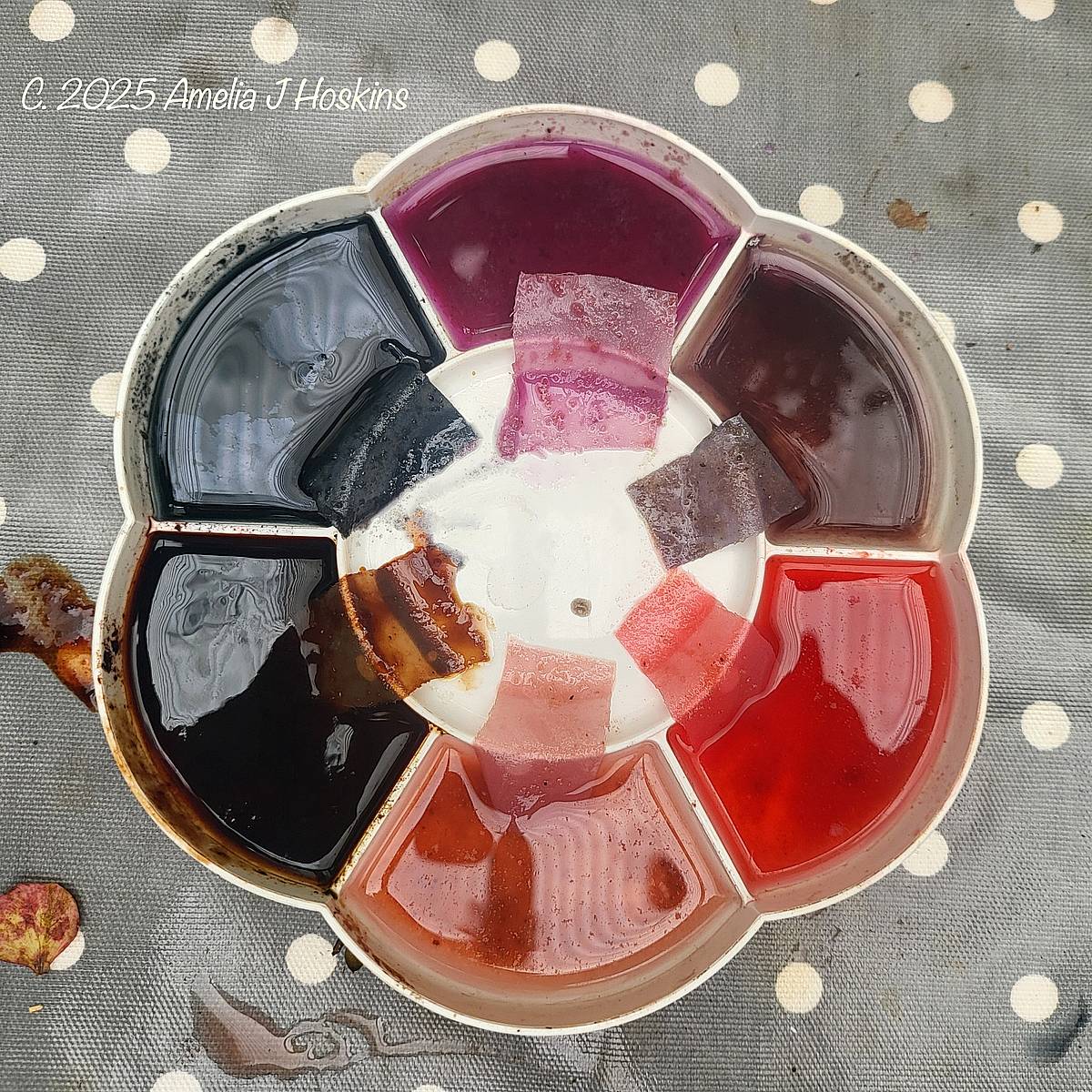
Sloe berry dye silk samples modified.  From these tests, I chose to use aluminium sulphate for Erin and Habotai silk

From TOP clockwise:

  • Aluminium Sulphate     -  Pink
  • Calcium Carbonate       -  Dull Brown
  • Citric Acid                        - Red
  • Cream of Tartar             -  Salmon
  • Sodium Bicarbonate     -  Russet Brown
  • Ferrous Sulphate           -  Charcoal

Sloe berries removed - Silk and lace dyed. Cotton lace was mordanted in Alum Acetate

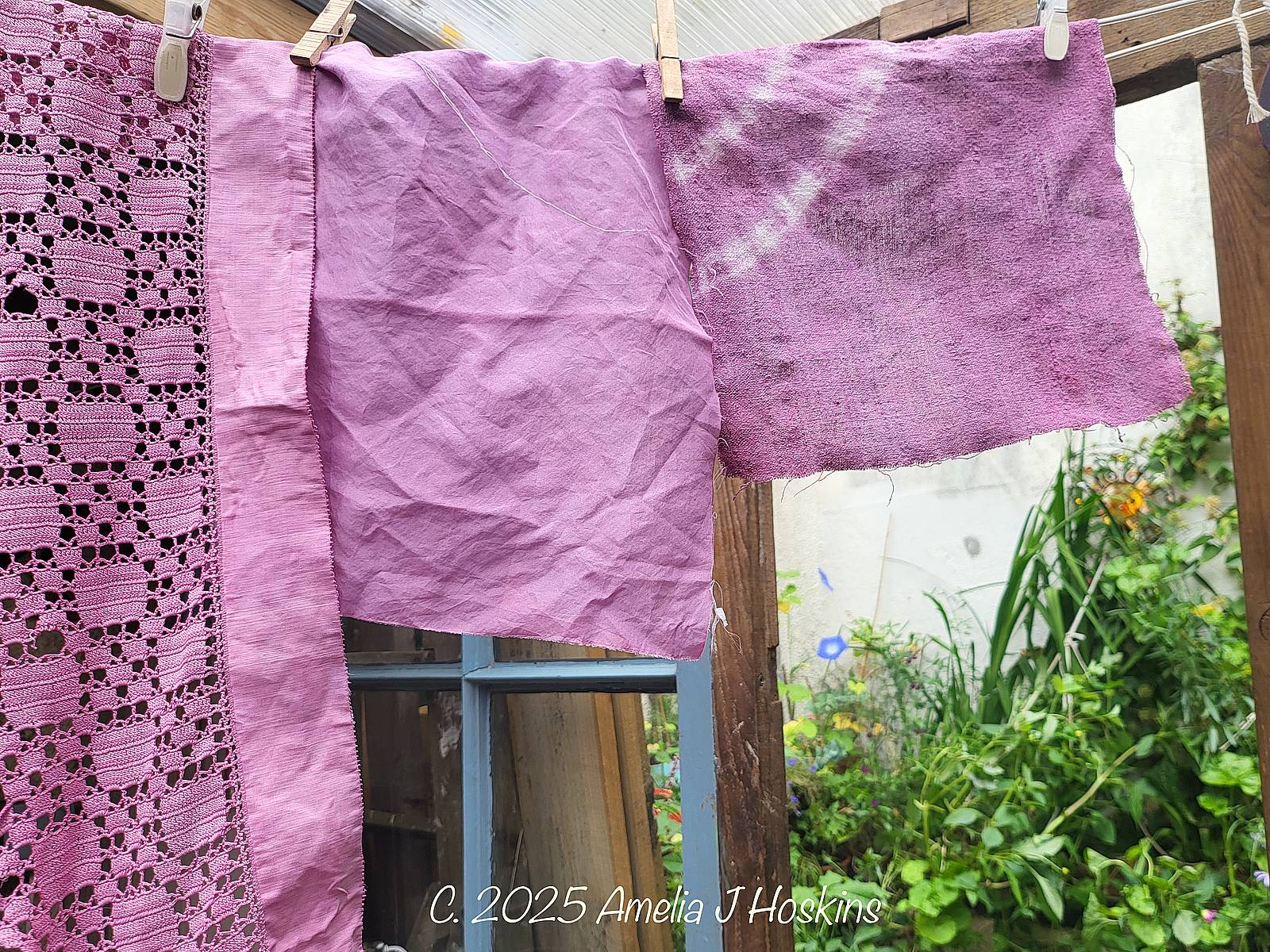
Died results of Sloe dyed silk and cotton

All similar, though silks modified in aluminium sulphate and antique cotton lace modified in aluminium acetate.  Cotton lace is more pinky.  I often make a resist circle by using rubber bands of tying with cotton twine.

28 Oct

Blackberry dyed Silks

Blackberries - Purples - Pinks

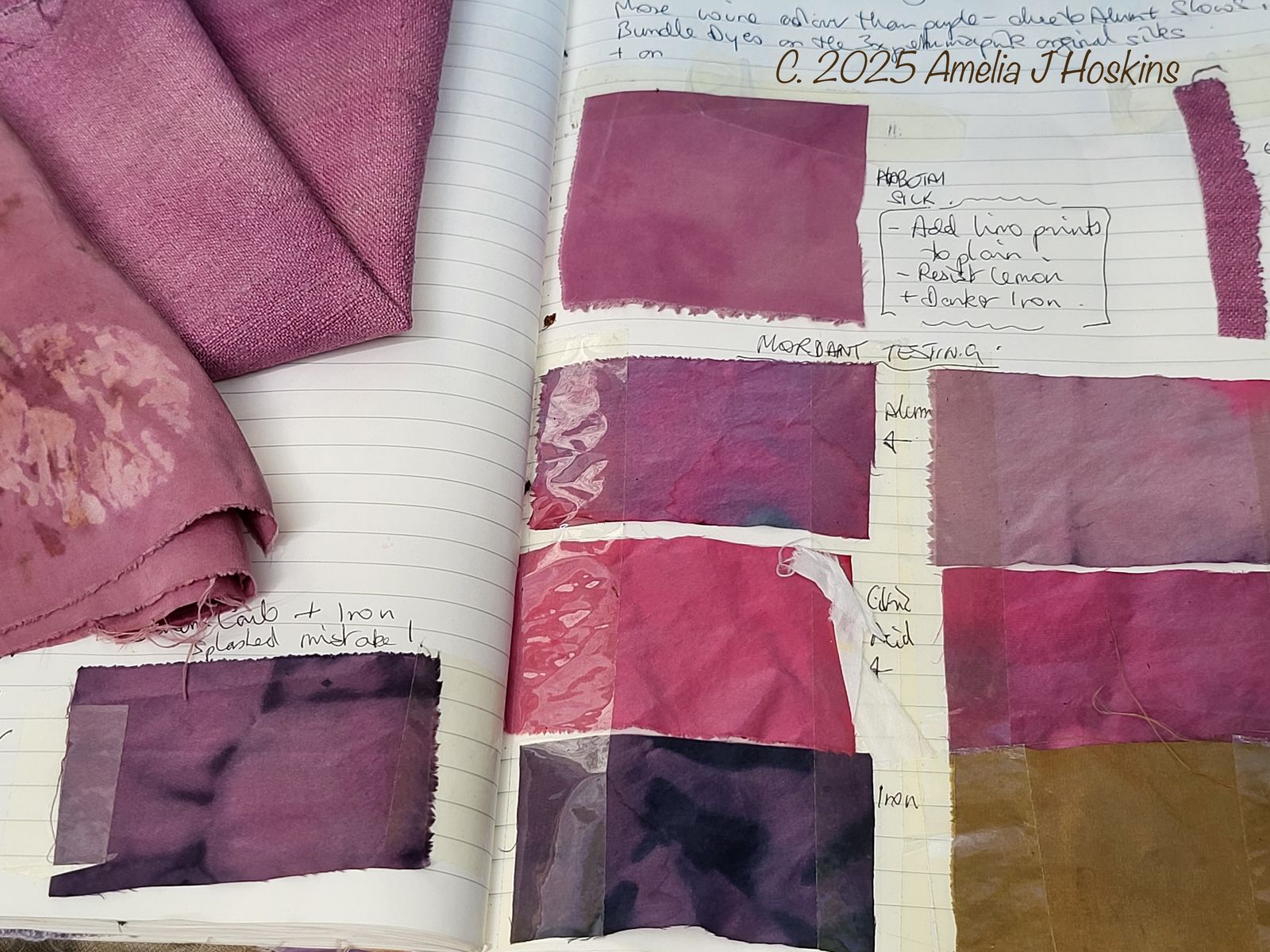
Berries are soaked overnight, then heated, simmered,  Samples with modifiers are first created in palette, to determine alternative colours.  Silks Erin (peace silk) and Habotai silk were soaked in blackberry dye bath when cooled to warm; with modifier. Silk is placed in dye bath then left for 24 - 48 hours.  Dye bath is saved in jar to use later; also to add to other colours to tip a shade.

Silk was pre mordanted in Alum Sulphate which would have given a more purple result, but just a few Slo Berries were also in the mix, which influenced the result to be more pink; in fact similar to neutral without modifiers.  (Subsequent Slo berry dyed silks showed how deep pink Slo dye is)

Range of colour tones with different modifiers.

  • Aluminium sulphate
  • Calcium Carbonate
  • Citric Acid
  • Cream of Tartar
  • Sodium Bicarbonate
  • Ferrous Sulphate

Erin Silk Result

Erin silk (peace silk, worm is not harmed) took the dye very well.

Slight variations in tone reflected by the slub nature of the weave.


Tie Dyed Blackberry dyed silk

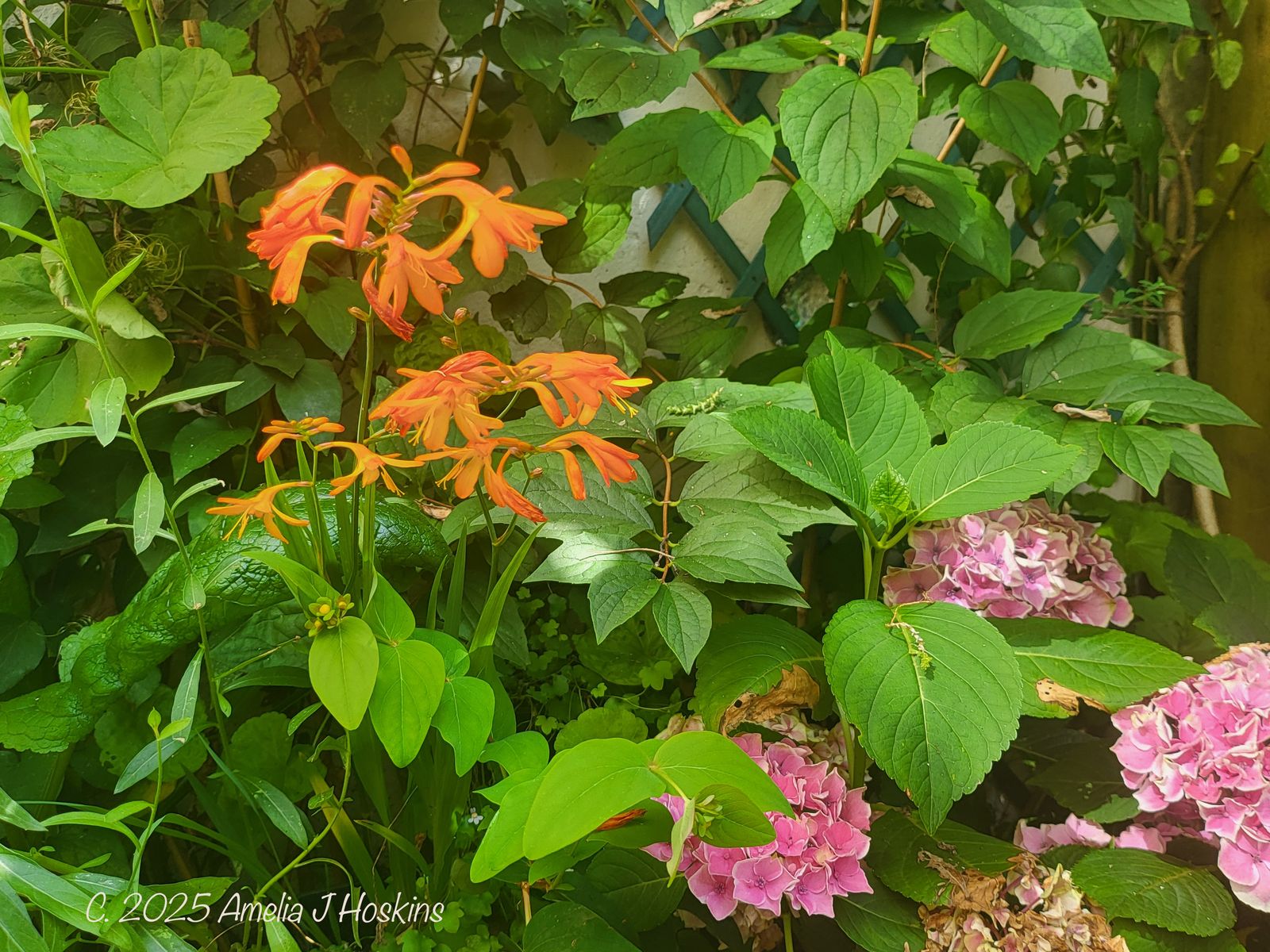
This piece was tided with cord in places to produce the circular fan resist effect.  It was also bundle dyed with some purple flowers (Linaria) which only came out in spots.

TESTS TO DO...

Blackberry dye is stored to be re-tested with iron for lavender to violet and citric acid for brighter pink. TO CONTINUE...


Images copyright Amelia Jane Hoskins Please email for use permission.