Category: Dye Plants

06 Dec

Scarf Red Catalpa leaves Silk borders

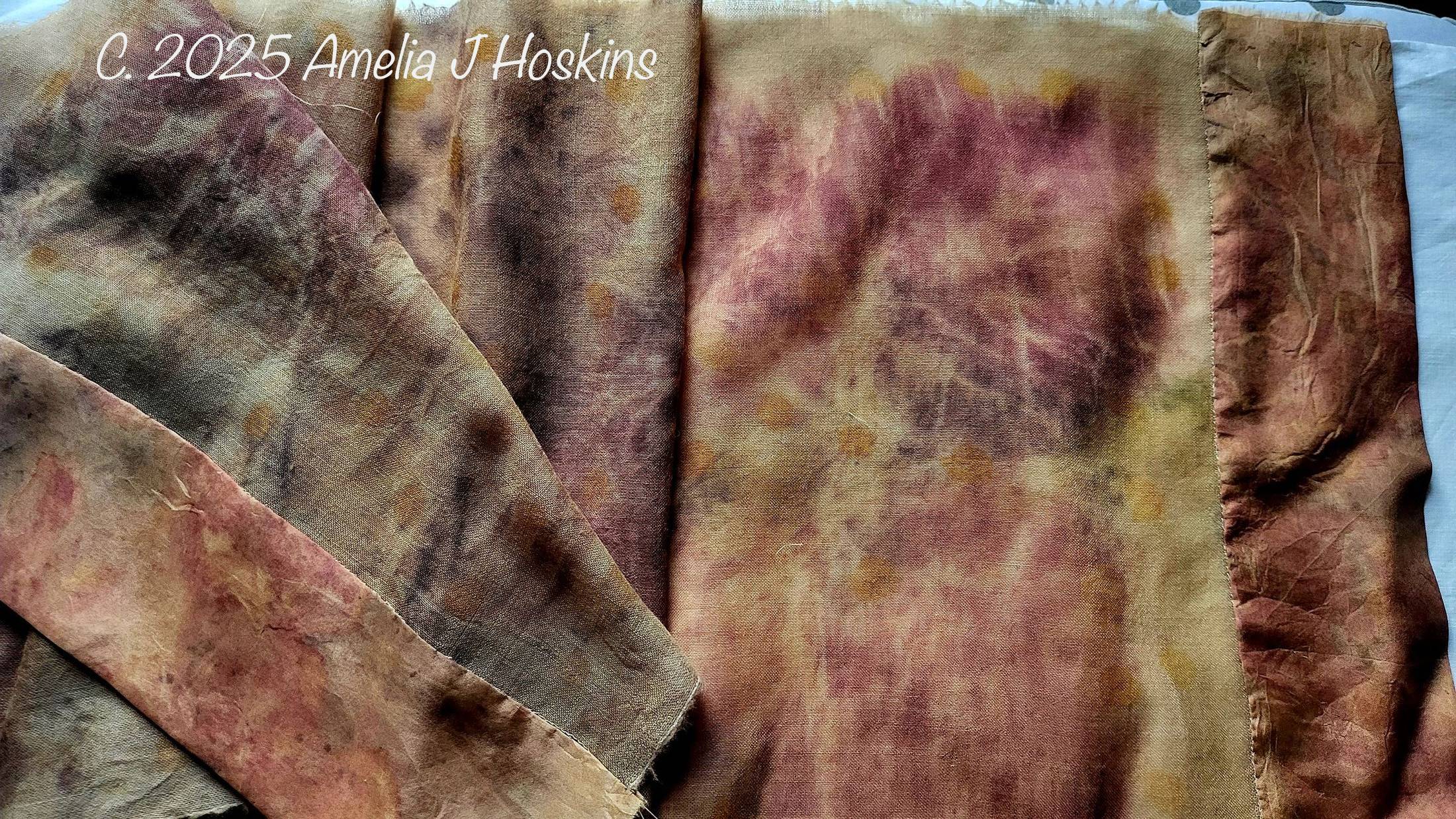
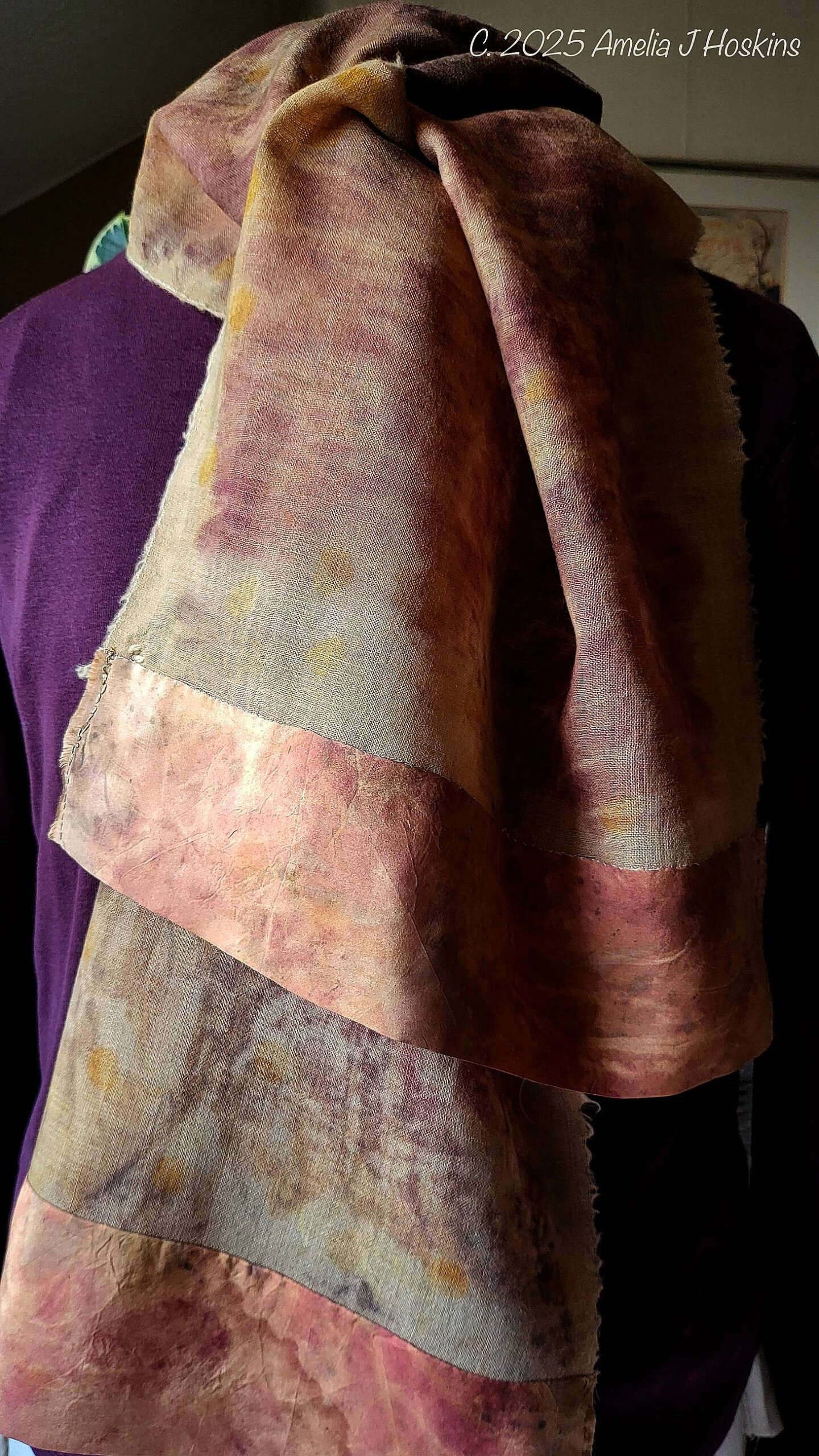
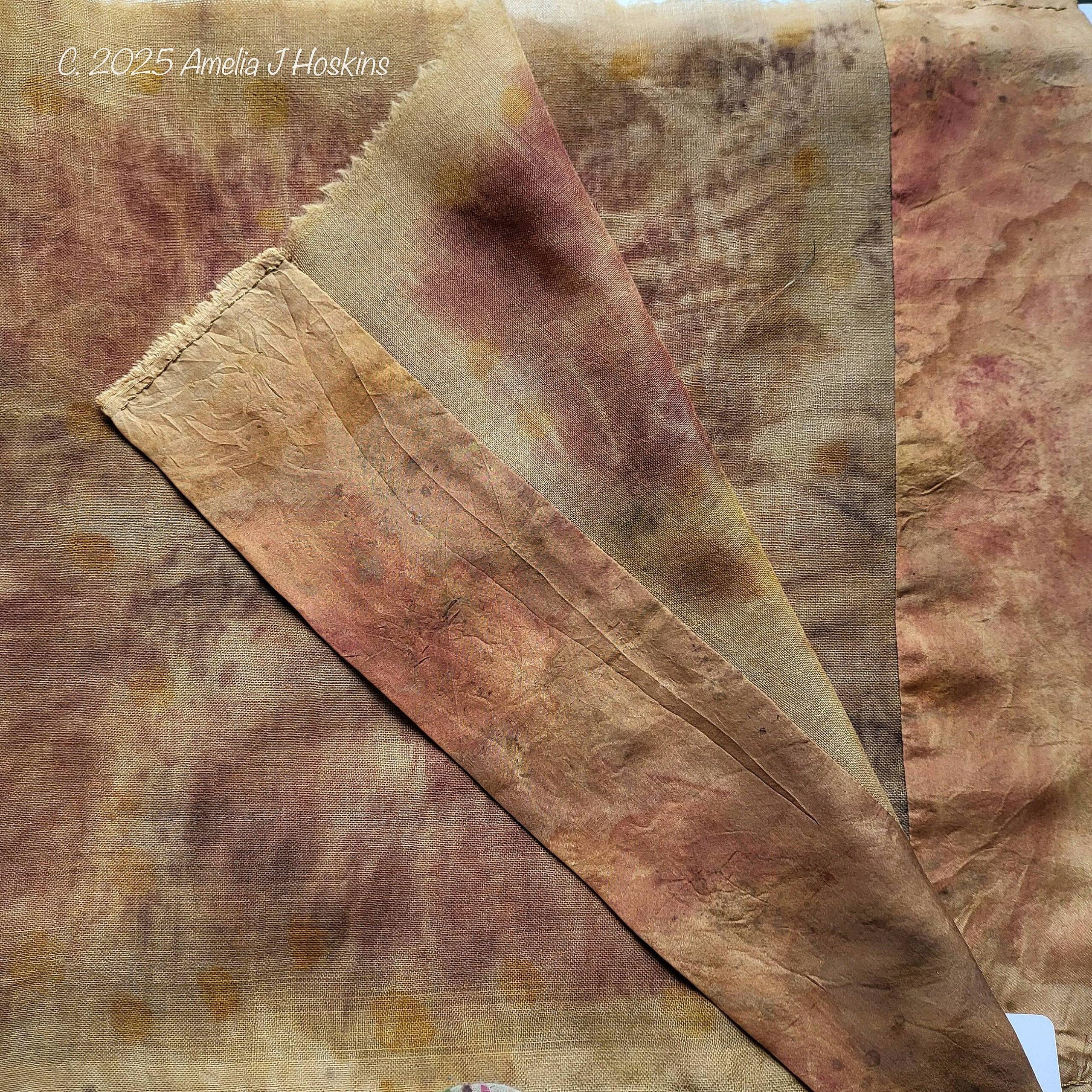
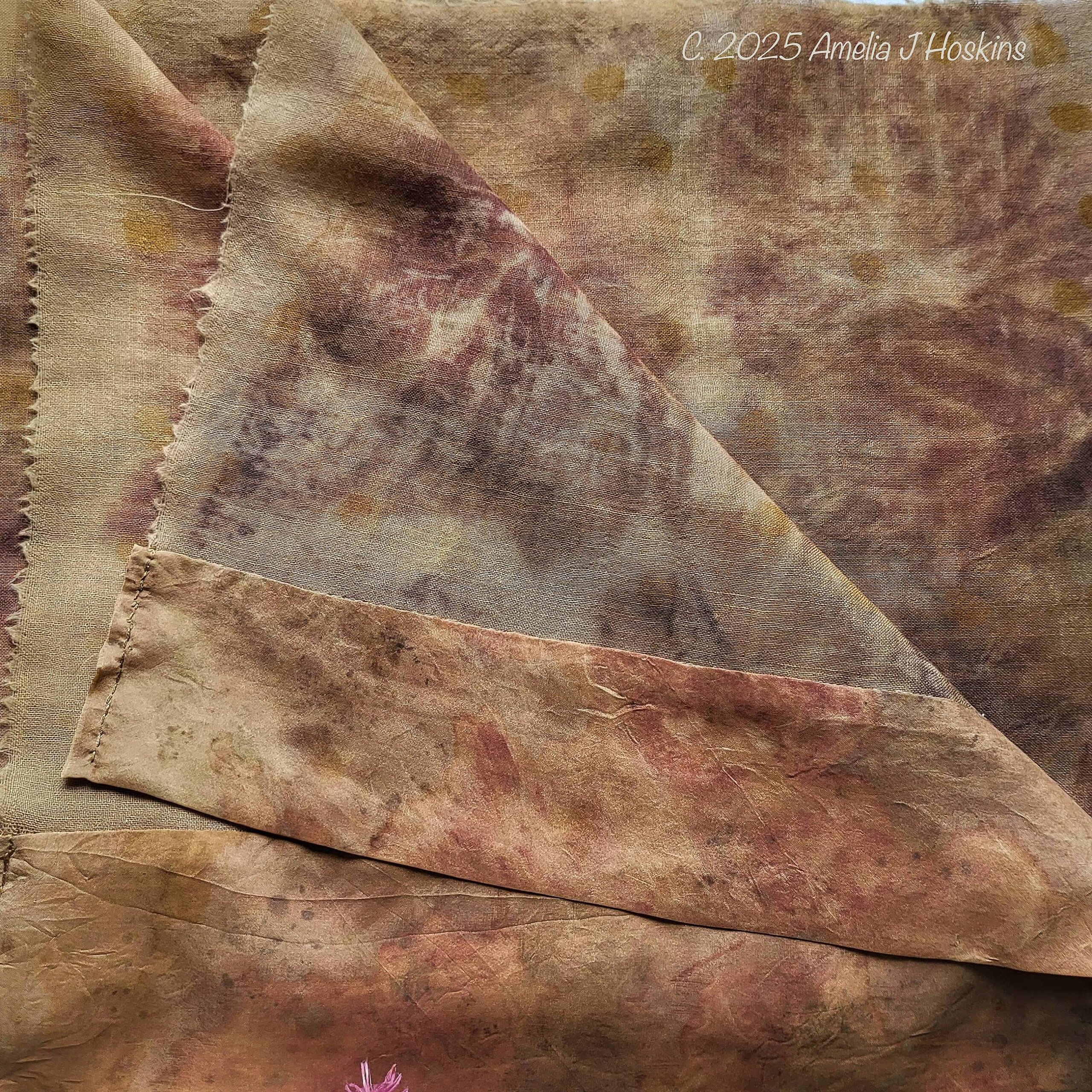
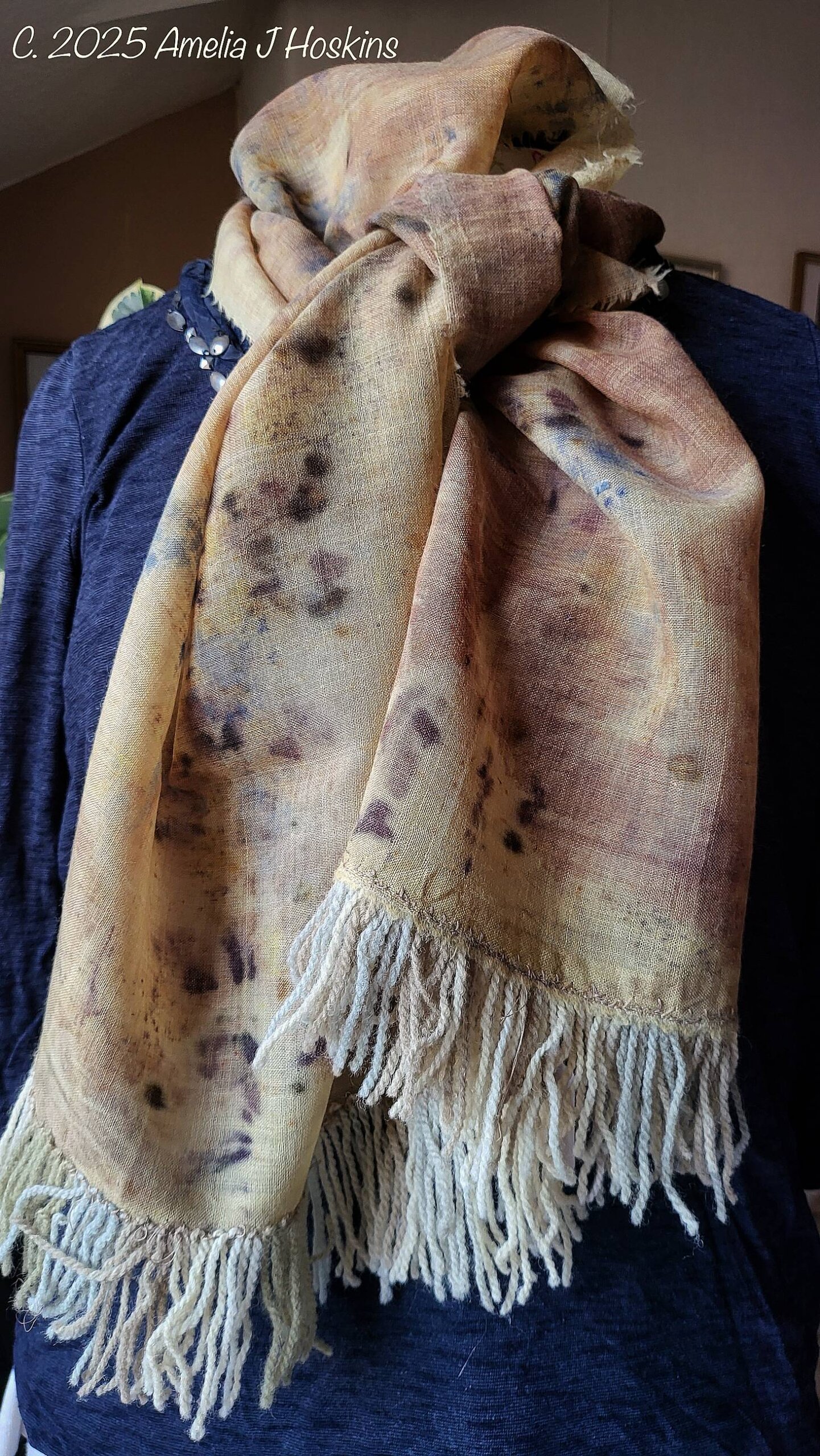
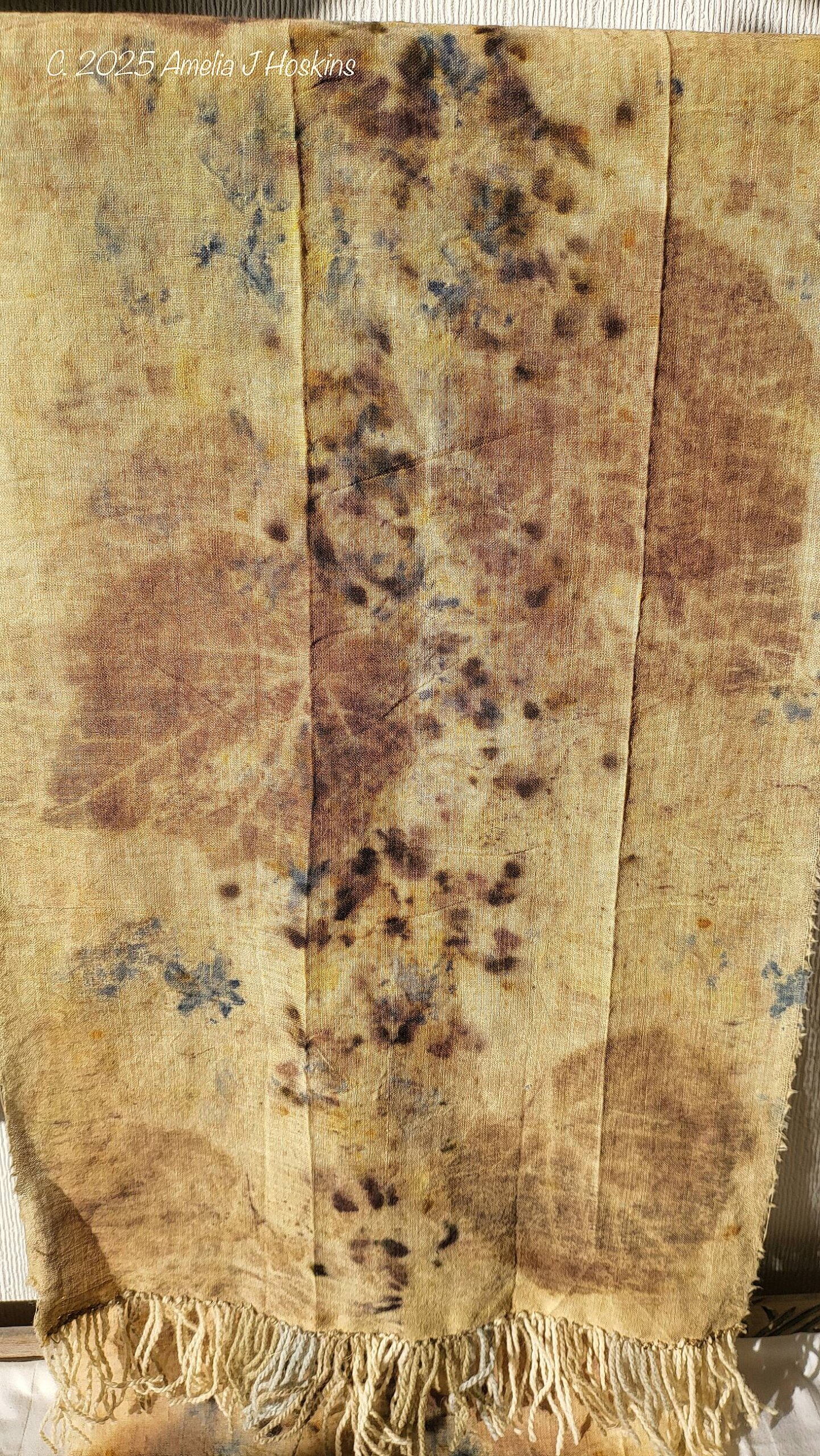
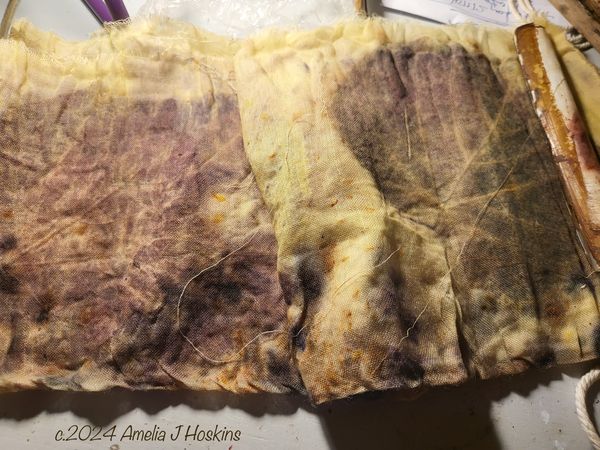
FINE WOOL SCARF ECO PRINTED WITH RED CATALPA LEAVES

Wool previously dyed with Rosemary or Comfrey.  Length 70 inches (1780mm), Width 14 inch (36cm).  3 inch double silk border ends.

Available: At my Shamanic Nights FOLKSY shop Celtic Rose

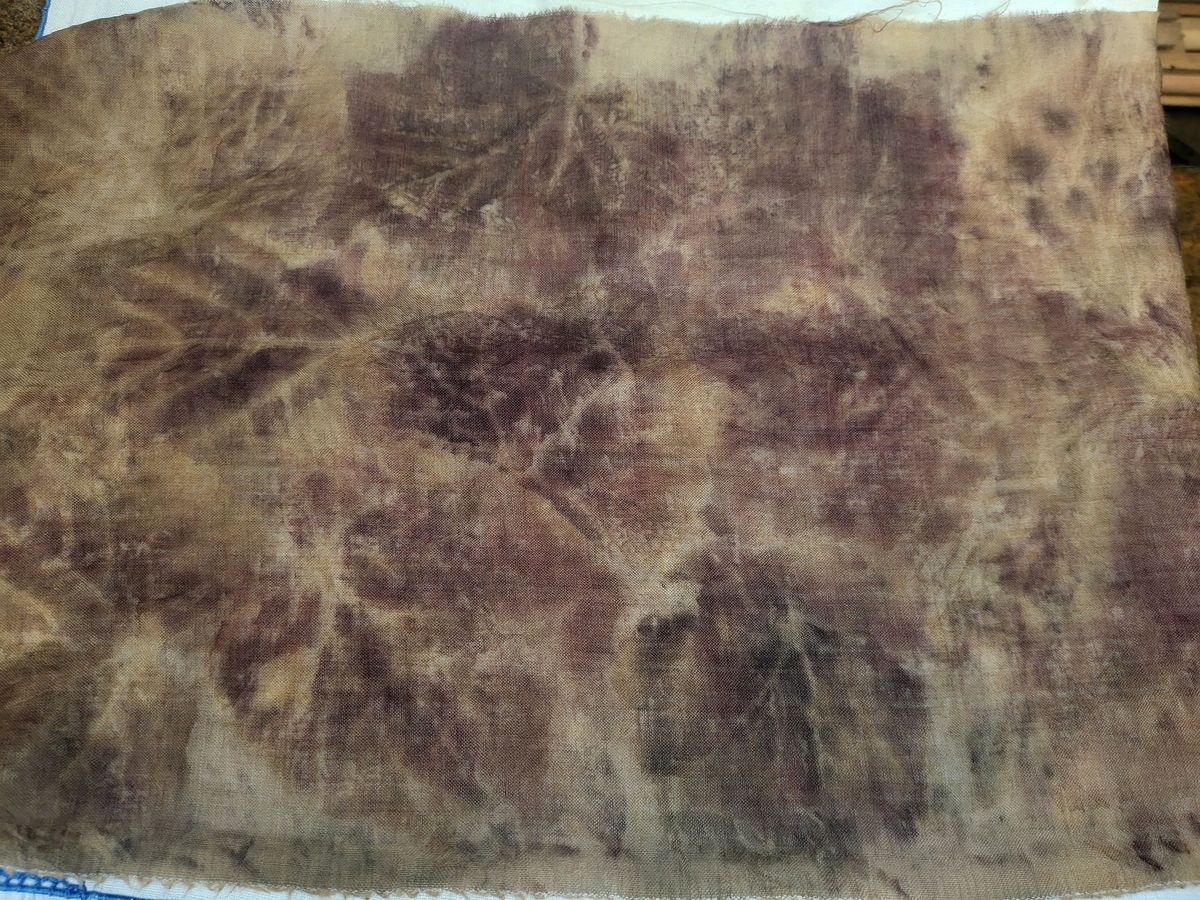
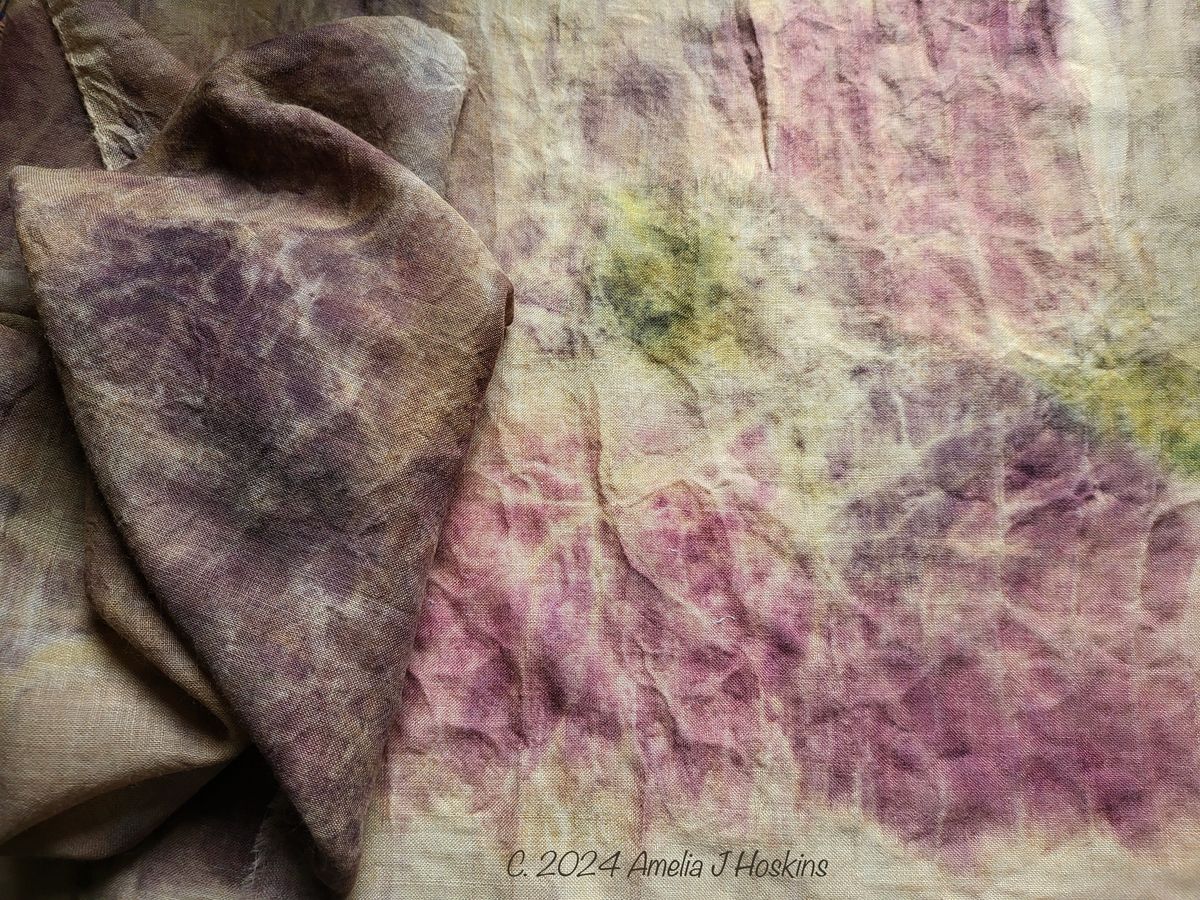
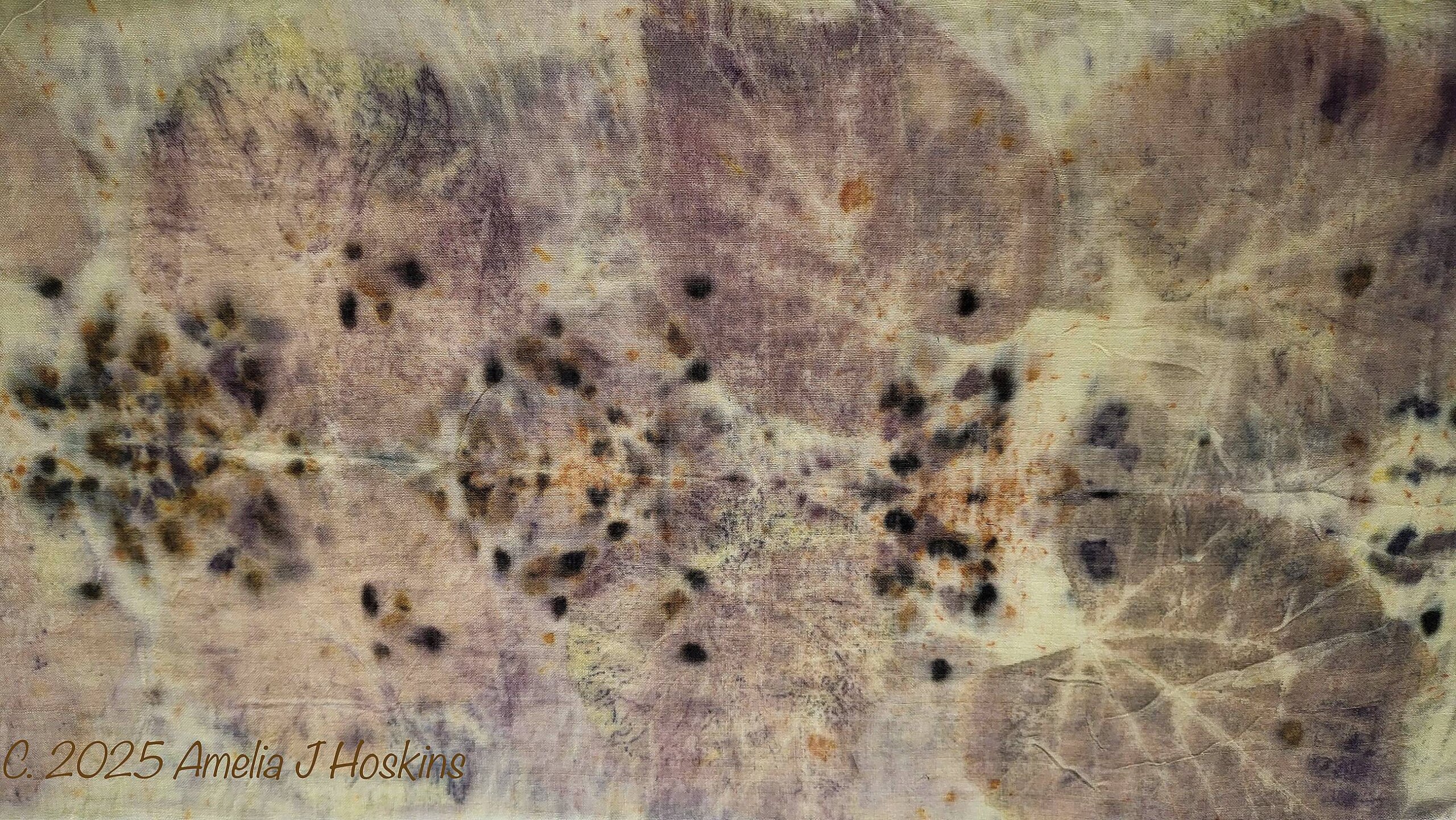
Eco Print result dark leaves

Dark leaves modified

Modifying Colour:  Lemon juice turned leaves PINK. Bicarbonate of Soda turned leaves GREEN.

05 Dec

Eco print fine wool scarf Catalpa leaves Purple Coreopsis and seeds

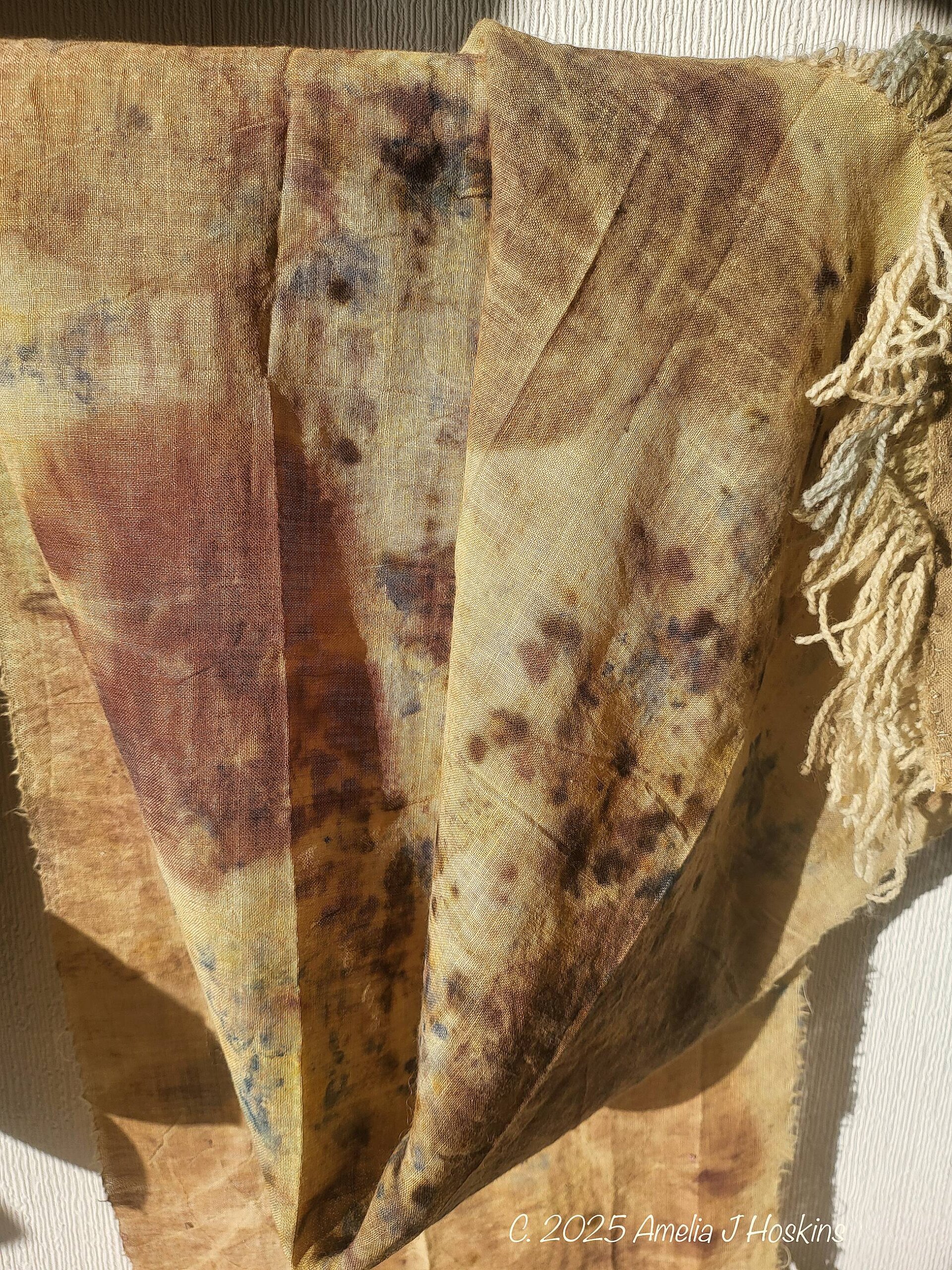
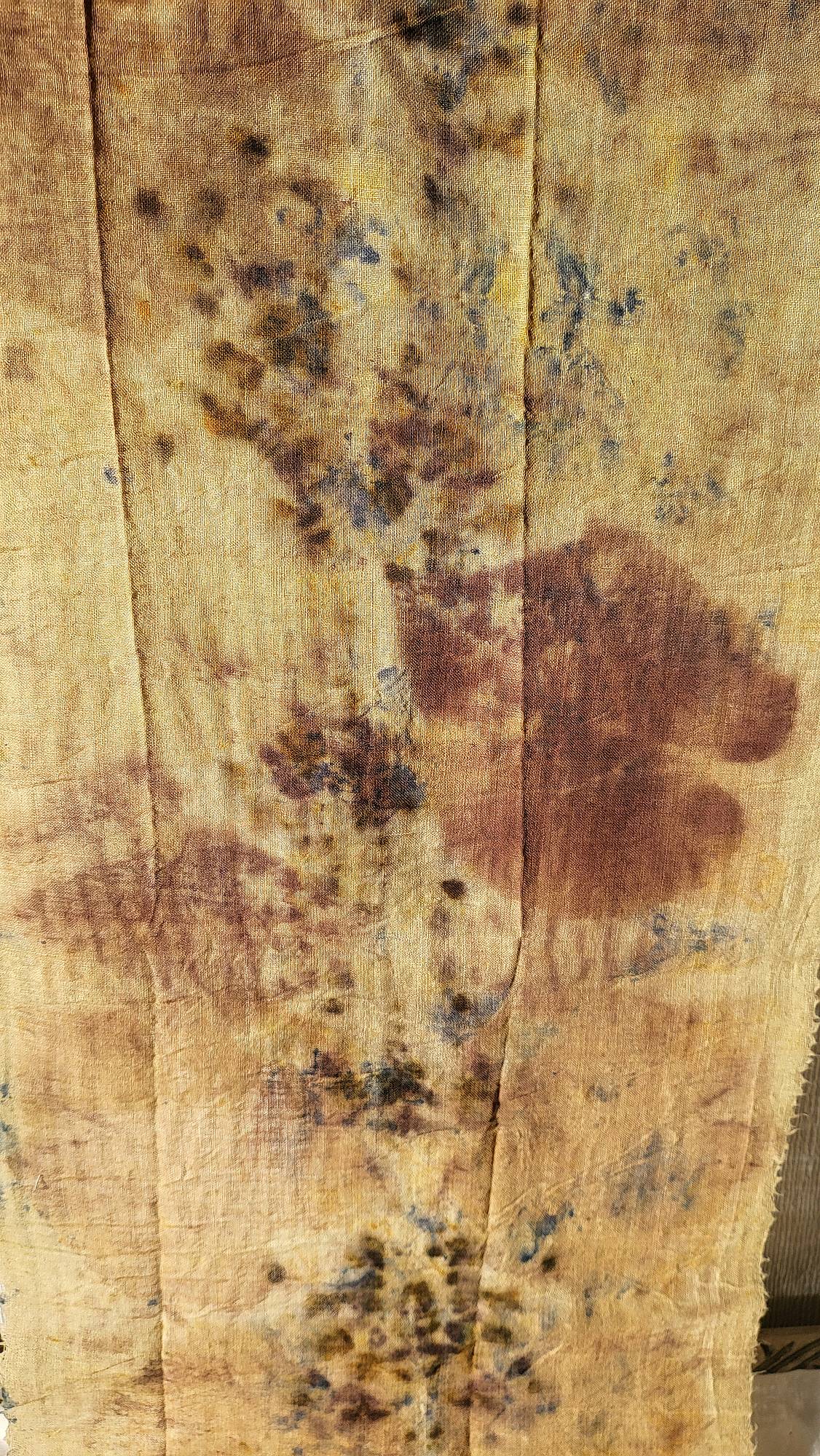
Fine wool scarf eco printed with large Catalpa leaves (deep red-brown)

Addition: Purple Coreopsis flowers (deep violet print), and red Hesperanth flowers which turn blue.

Fringe:  Dartmoor Shetland wool - hand dyed with Scabious Black Knight (grey) and three tones of Amaranth (beige).

Colour in sunlight is yellower than actual, which is dull gold

Crimson Catalpa leaves with Violet centre Coreopsis prints

Eco Print Process:

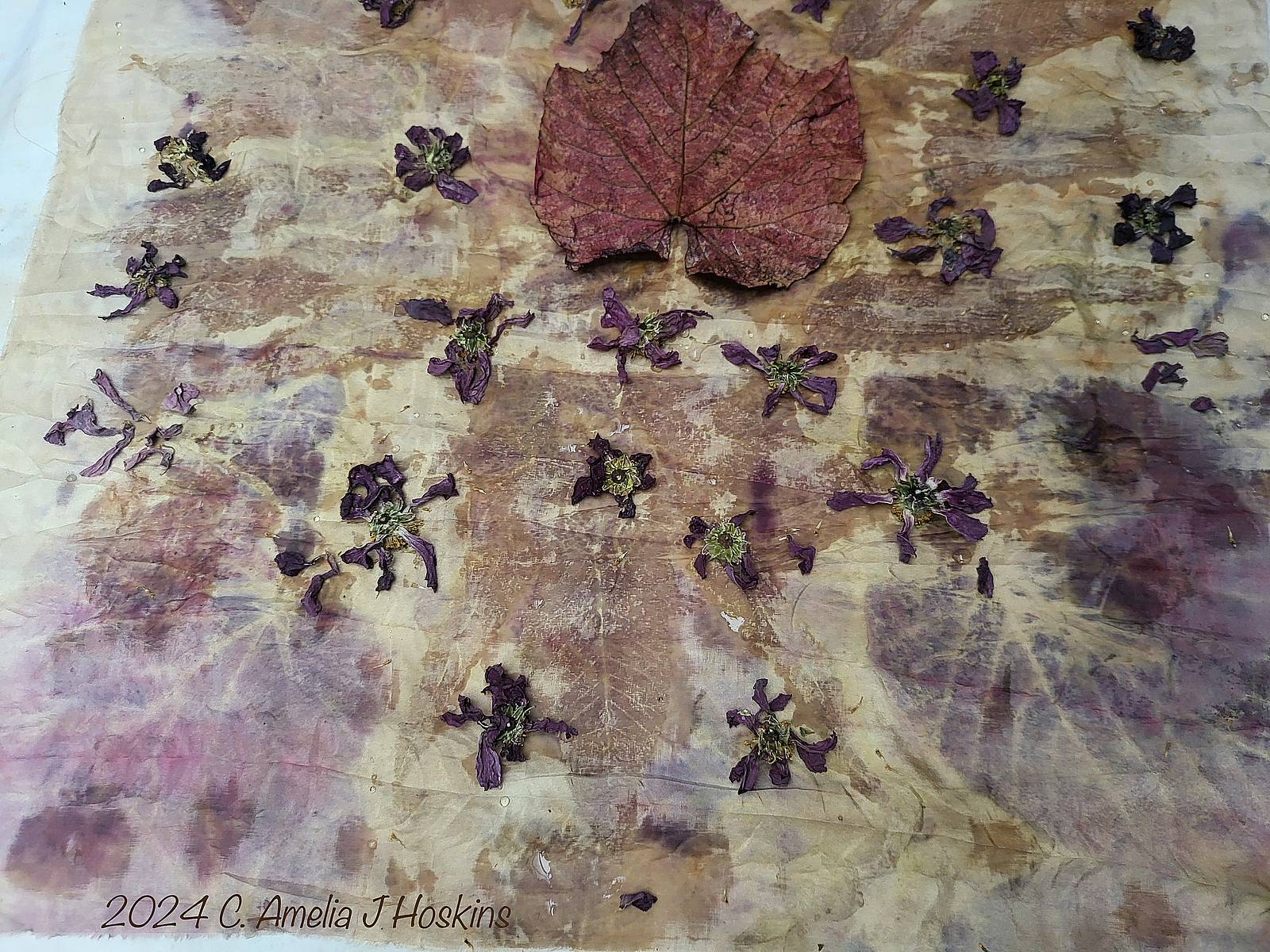
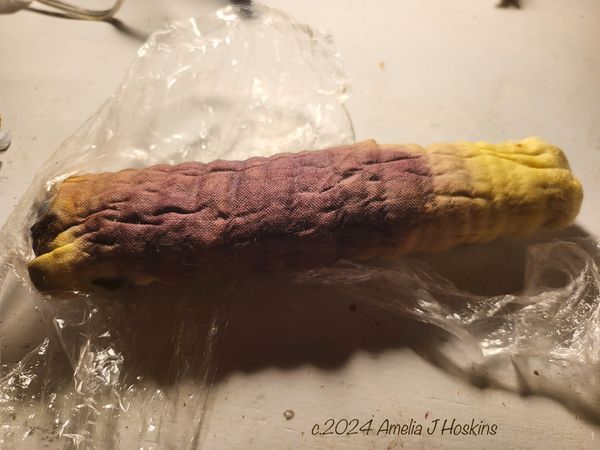
Fine wool was previously dyed with Comfrey or Rosemary giving dull gold background.  Large red leaves of vine tree Catalpa Bignoniodes See post; Secondary bundle dye needed: Catalpa leaves, Purple Coreopsis flowers (making violet) and Hesperanth (red - turns blue) form the scattered prints.  Blue not seen in all photos is now prussian blue.

Preparation of 2nd bundle dye Catalpa leaves and Purple Coreopsis over 1st eco print Catalpa leaves

Dowel of fine wool with leaf print wet

Unrolling the steamed bundle of leaves

01 Dec

Pressed Dried Flowers

Small, medium and large flower presses

Small press, lost screws, now has elastic bands which works well with sugar paper, and other thicker recycled art papers. Quick to use.

Medium press with velcro straps: very useful, extends for many additions, comes with sponge sheets and absorbent blotting paper: I have two.

Large press with long screws. Larger areas to press, comes with card and paper, but takes long time unscrewing and screwing up the long bolts. Easy to lose bolts or washers.


HESPERANTH in pinks and reds make purple eco prints. I picked each head fresh allowing many more to grow. As they dry the scarlet turns to purple, closer to the print colour, but also blue is achievable.


SALVIA deep purple - give a deep blue or purple on silk when bundle dyed


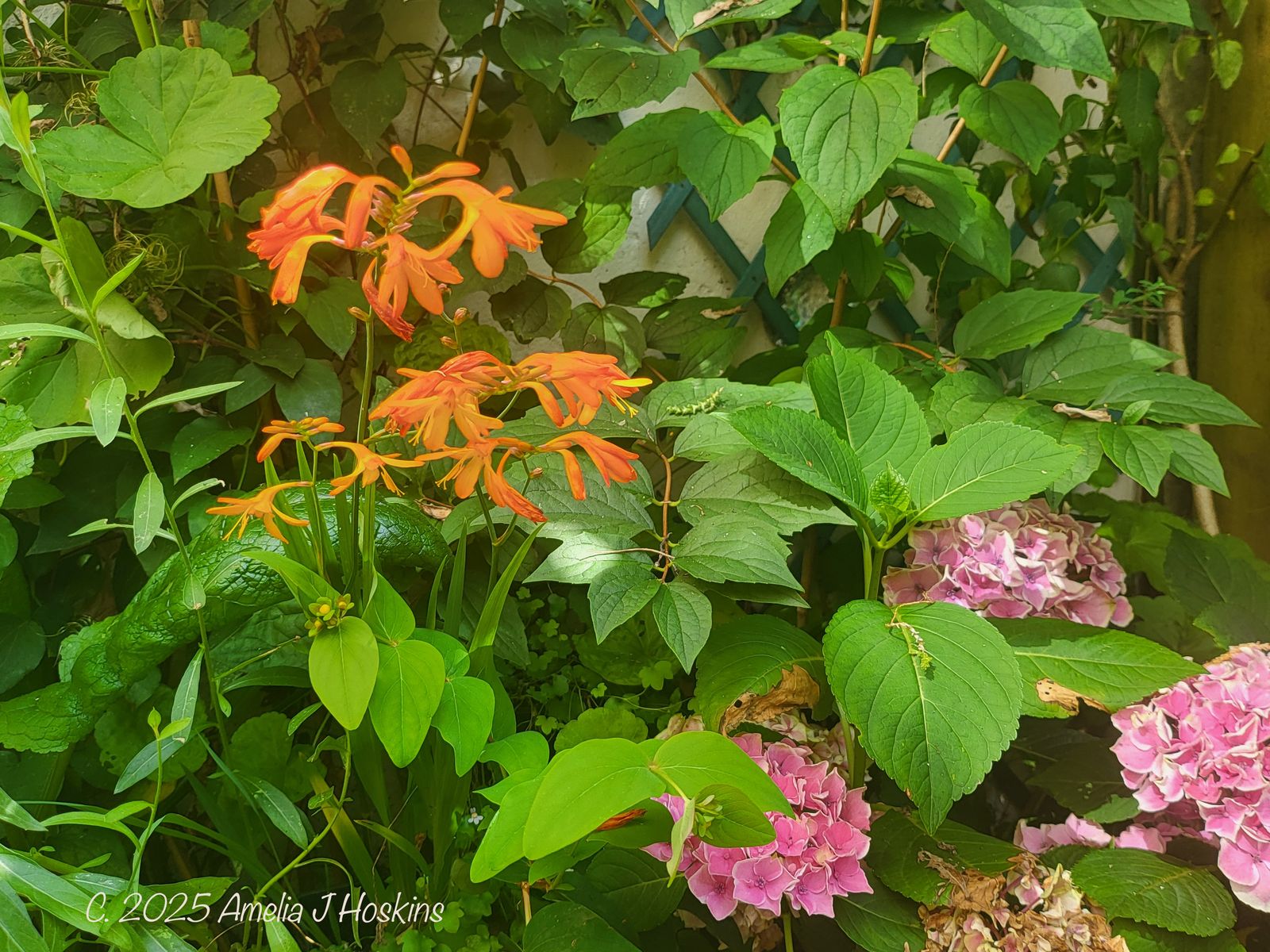
CROCOSMIA orange flowers pressed on black paper which is cheap as a kids' scrap book.


DAHLIA one pressed in small press.  Large press used for more. Tissue paper used both sides for thick damp flowers.


HYDRANGEAS  blue pressed in large flower press before adding to plastic wallet folder.


GERANIUMS red pressed in medium press then added to plastic wallet folder


DYER'S COREOPSIS pressed in large and medium presses, added to wallet file


DAHLIAS many pressed in medium and large press. They have squiggy centres, which I slightly press to flatten and need tissue and blotting paper each side  to soak up the dampness.


When flowers are flat and completely dried, (about a month at least), they can be slid into a plastic wallet and saved in a large folder for easy access for eco printing, or decorative craft.  I also have some dried flowers in the wallet which were never pressed last year. They wont be 'flat' for eco printing but can be used for normal immersion dye bath.

20 Nov

Privet Yellow

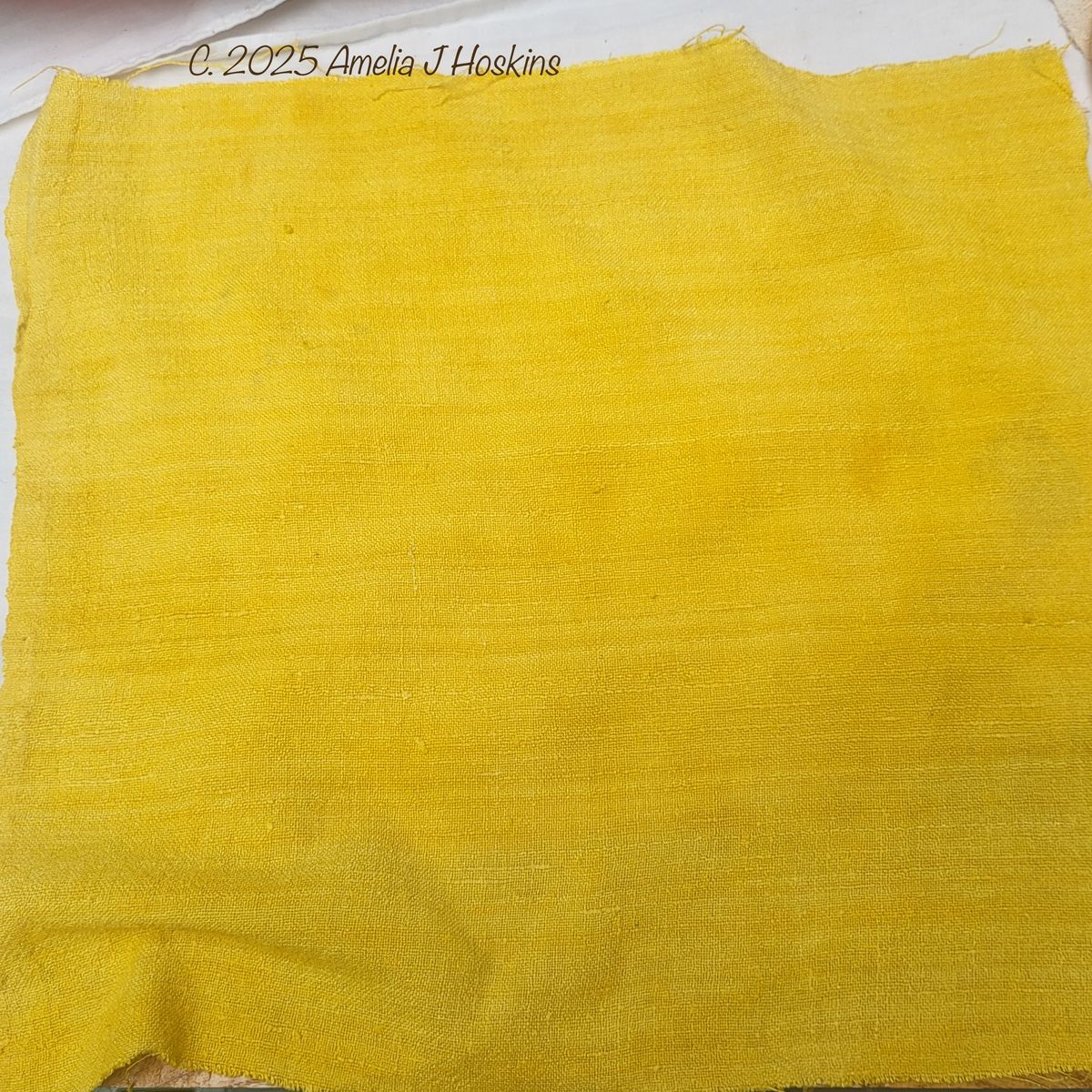
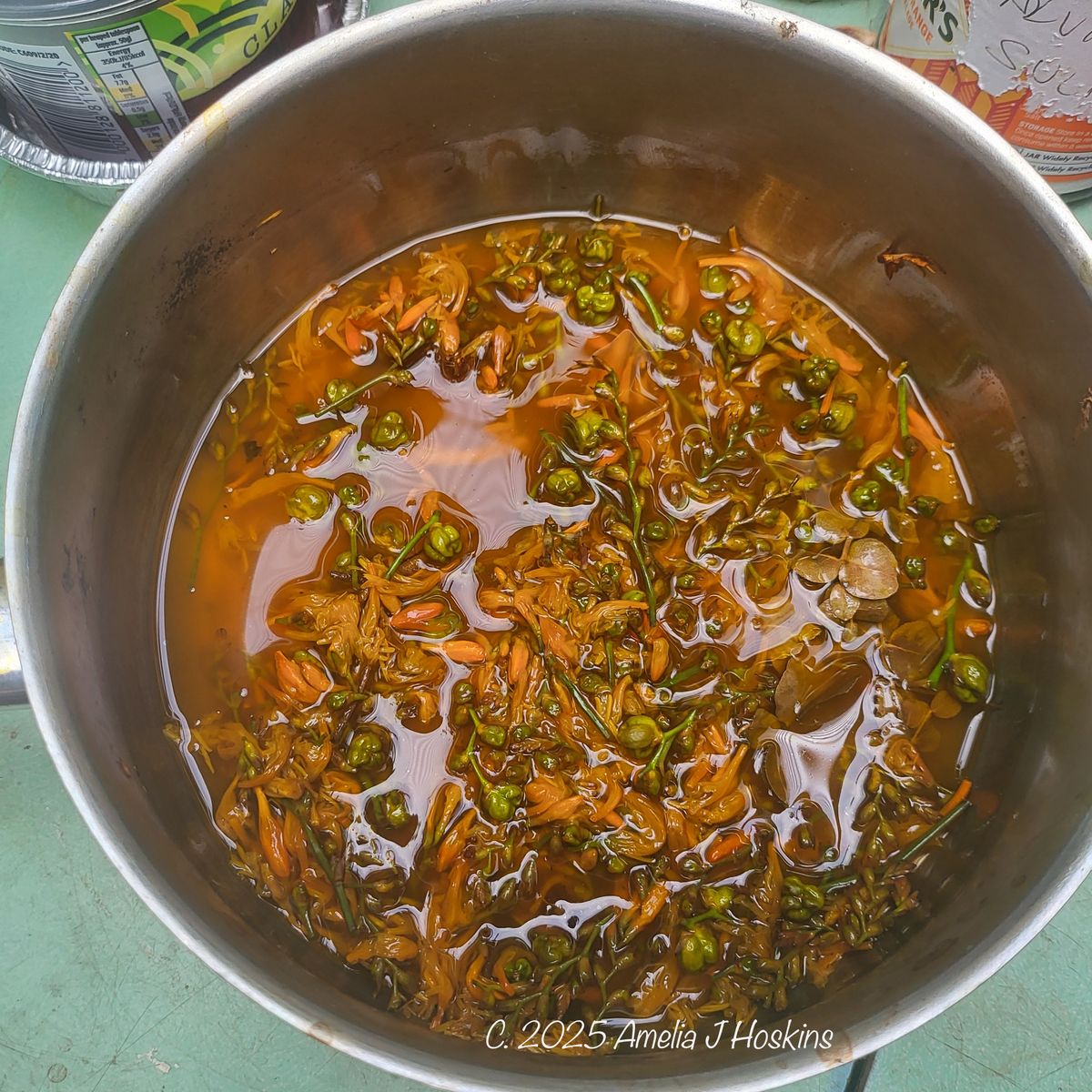
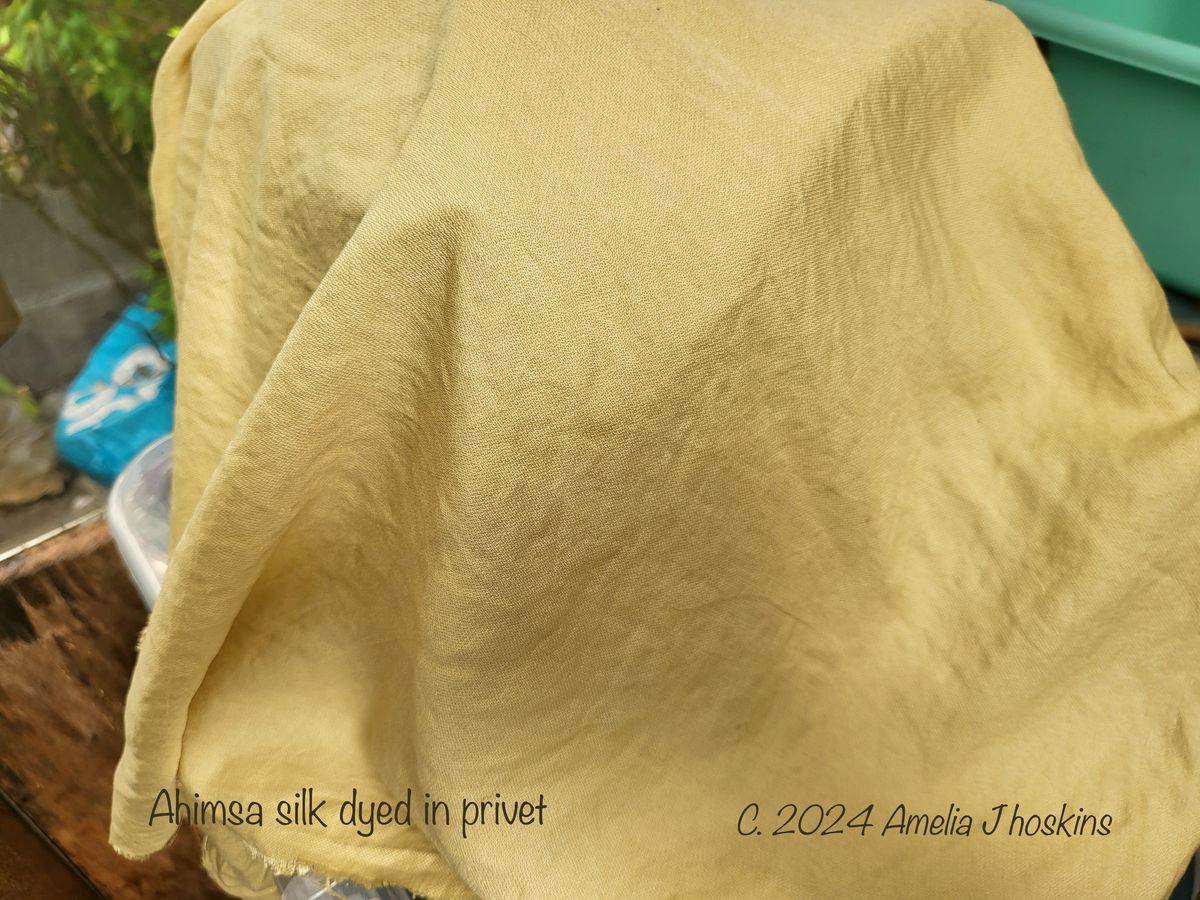
Privet leaves yellow for silks

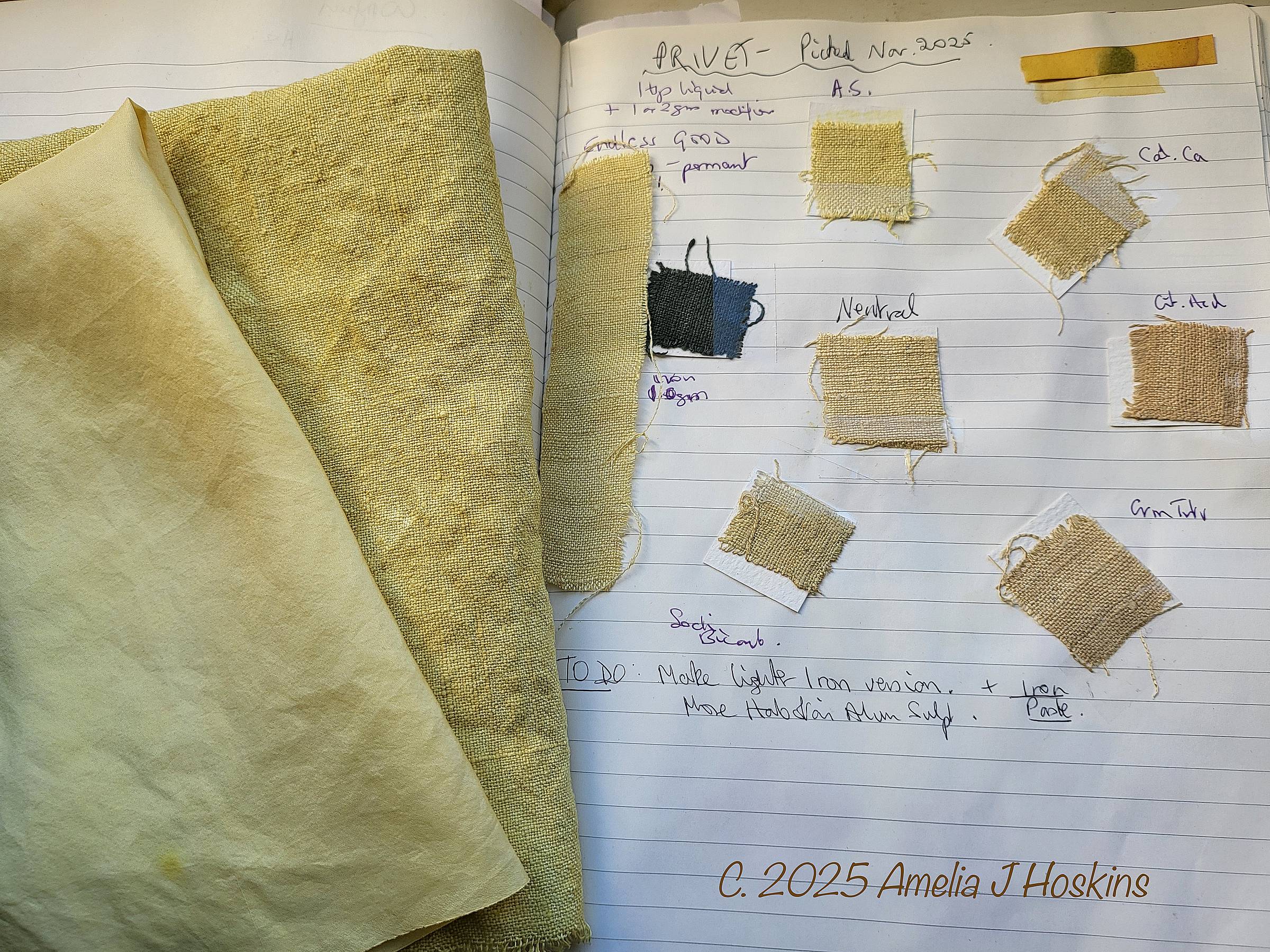
SILKS:  Habotai and Erin

Habotai soaked 24hrs.  Erin soaked 72hrs

Silks premordanted with Alum Sulphate.

Samples modified show more towards gold with citric Acid and Cream of Tartar, and a touch of iron gives green-black.    Iron modifier can be used sparingly to achieve a green.

Privet yellow is similar in to privet dyeing in 2024. Page link


14 Nov

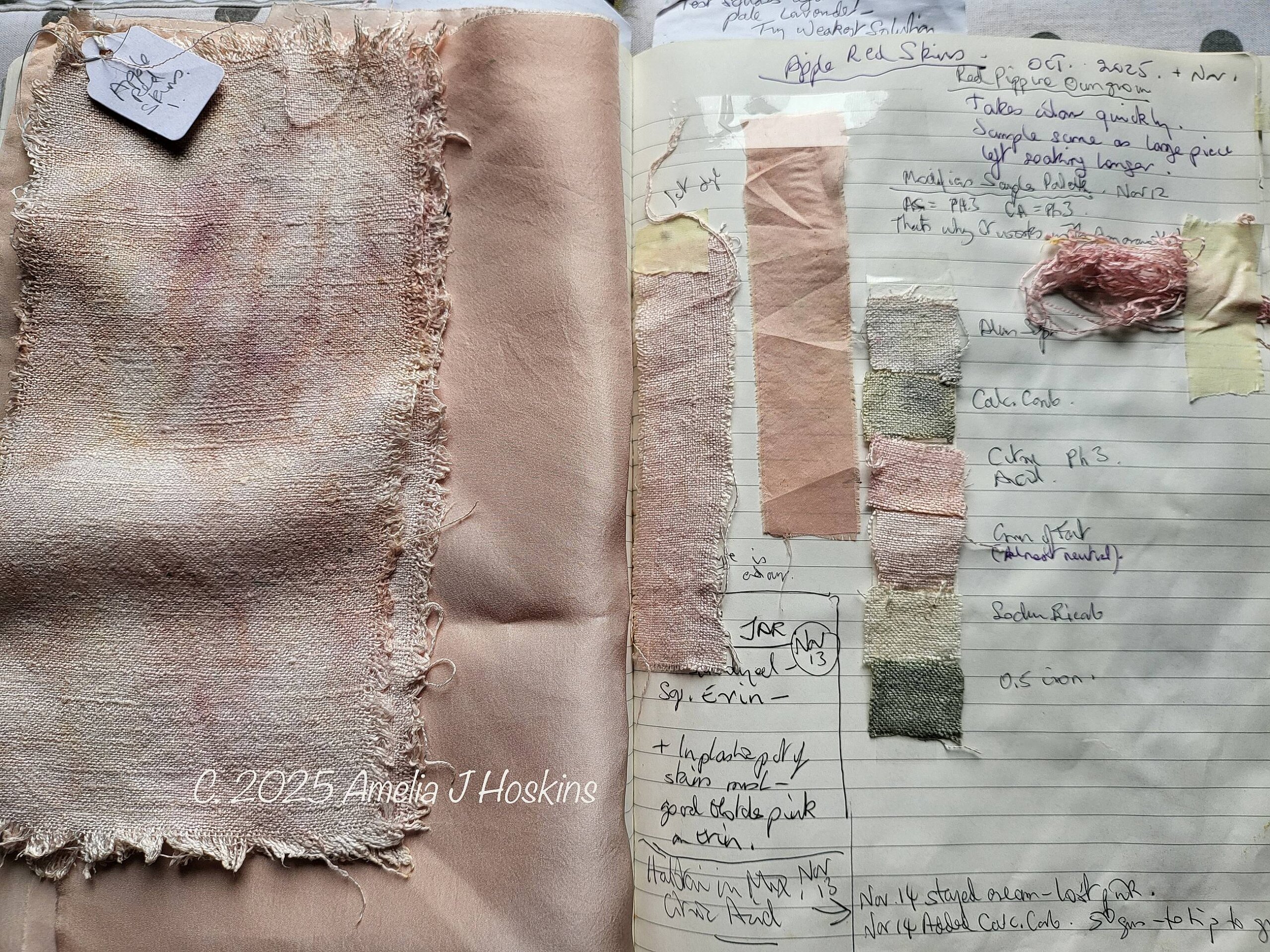
Apple Skins dye

APPLES - 2025 crop - using red skins for dye after apples are processed

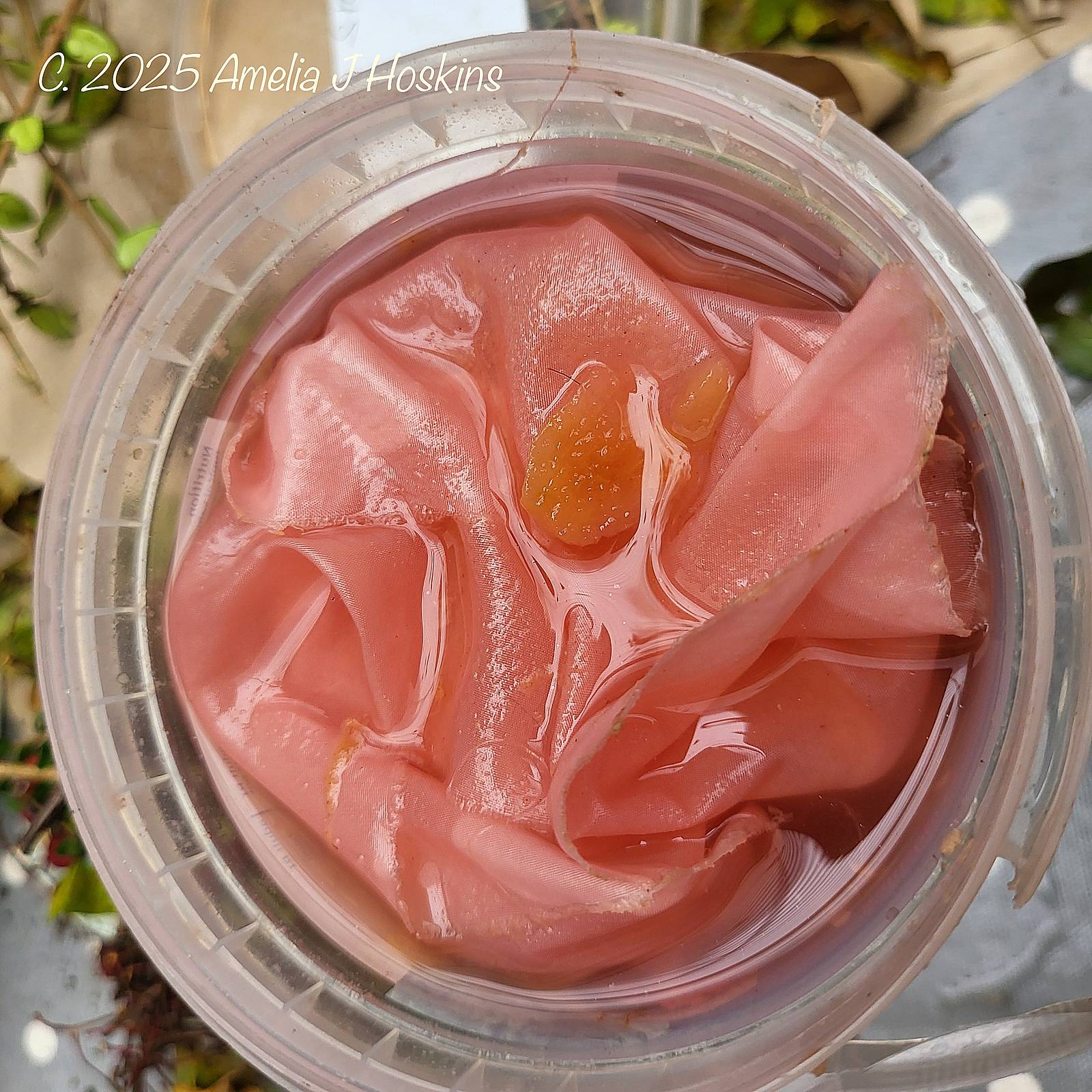
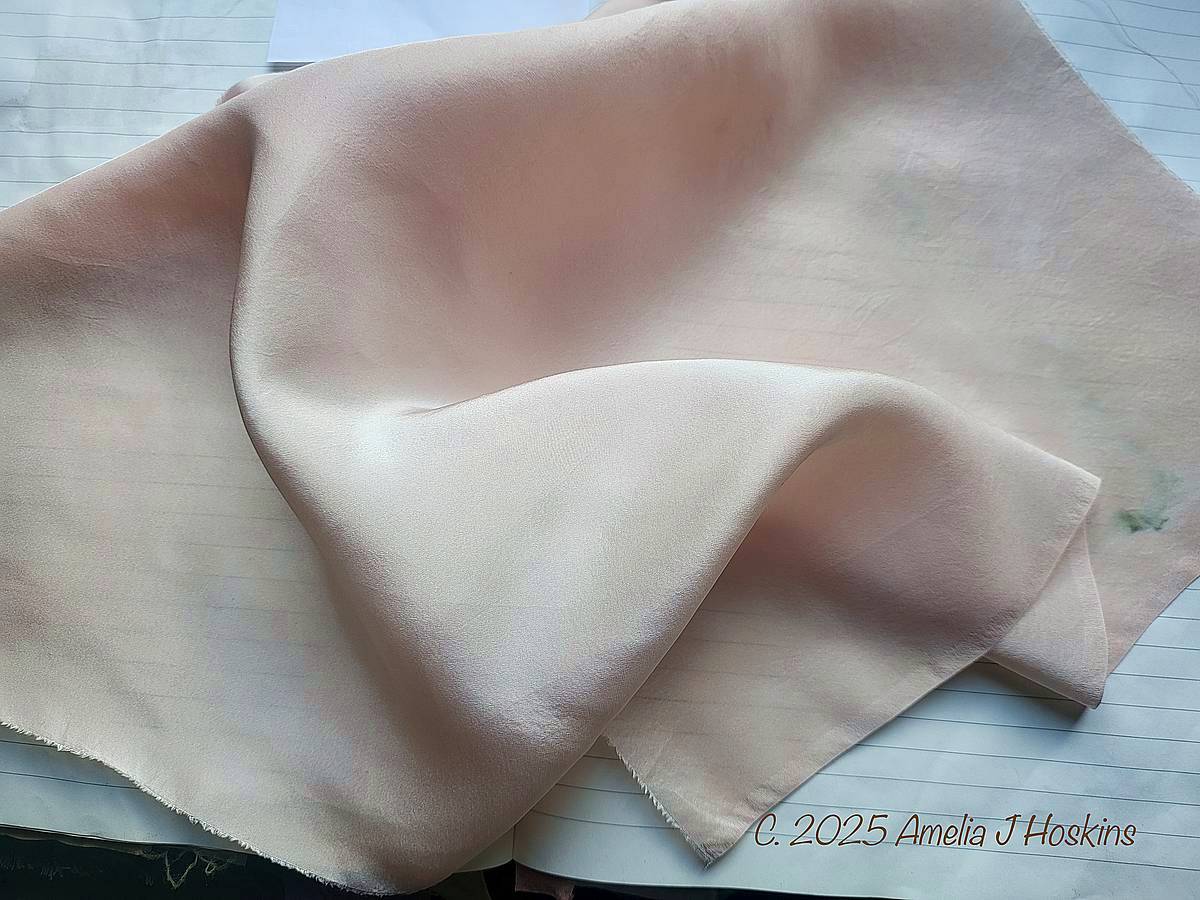
I only found out this year that the red skins when soaked produce a pale pink.  The apple cider vinegar produced is also very helpful in gaining a pink with Amaranth dye  as it gives a Ph3.  A few Amaranth flowers are visible behind the apples.

Habotai silk in pot of apple skin dye

Habotai pale pink result when dry

Silk dyed samples Erin and Habotai

Modified small Erin squares


  • Alum Sulphate -  Pale Grey
  • Calcium Carbonate - Grey
  • Citric Acid - Light Pink
  • Cream of Tartar - Dull light Pink
  • Sodium Bicarbonate - Cream
  • Ferrous Sulphate (iron) - mid Grey

Smallest Erin dyed sample shows marbled effects when silk is scrunched up beneath a small pot of skins.

13 Nov

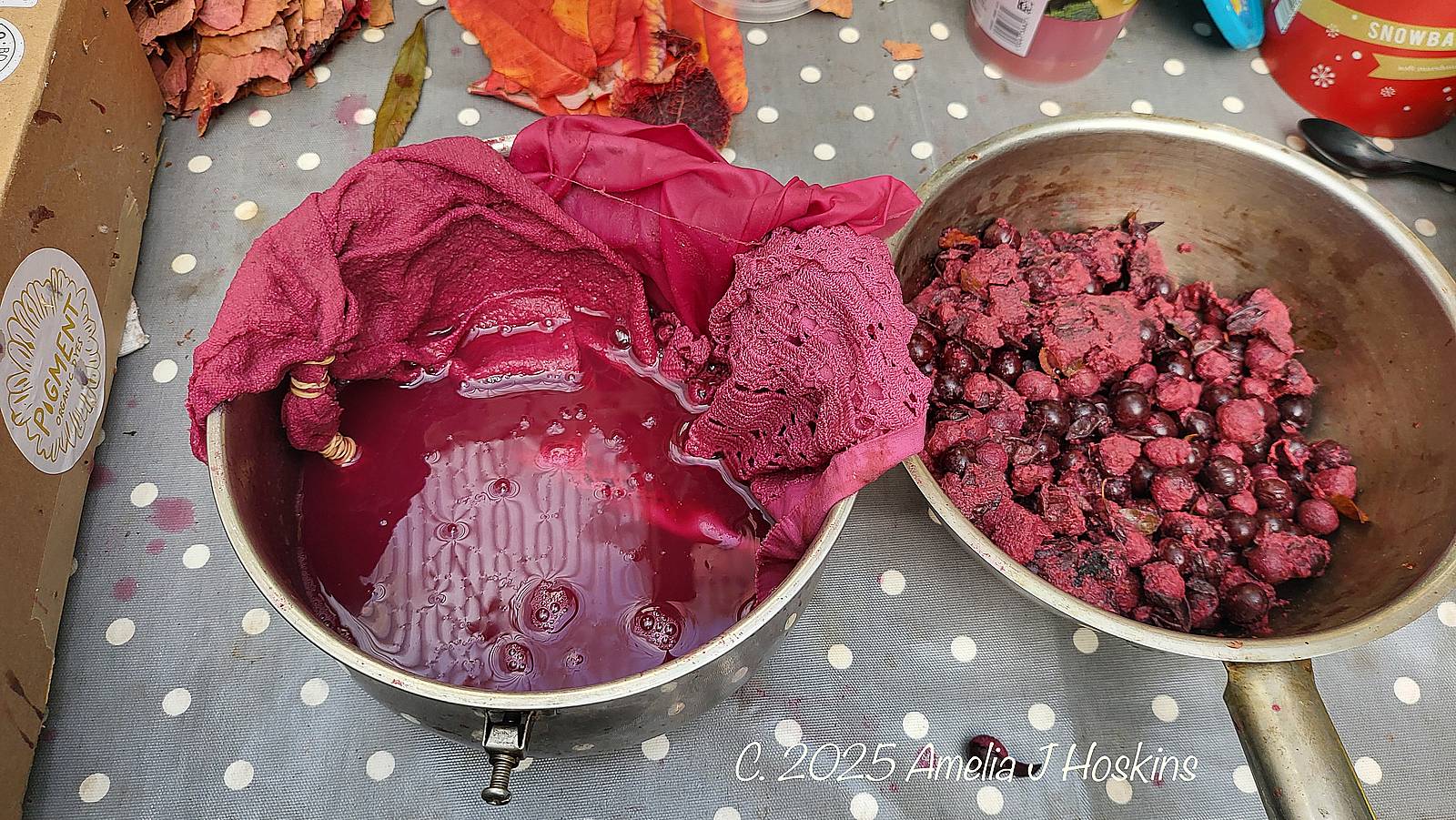
Sloe Berry dyed silks

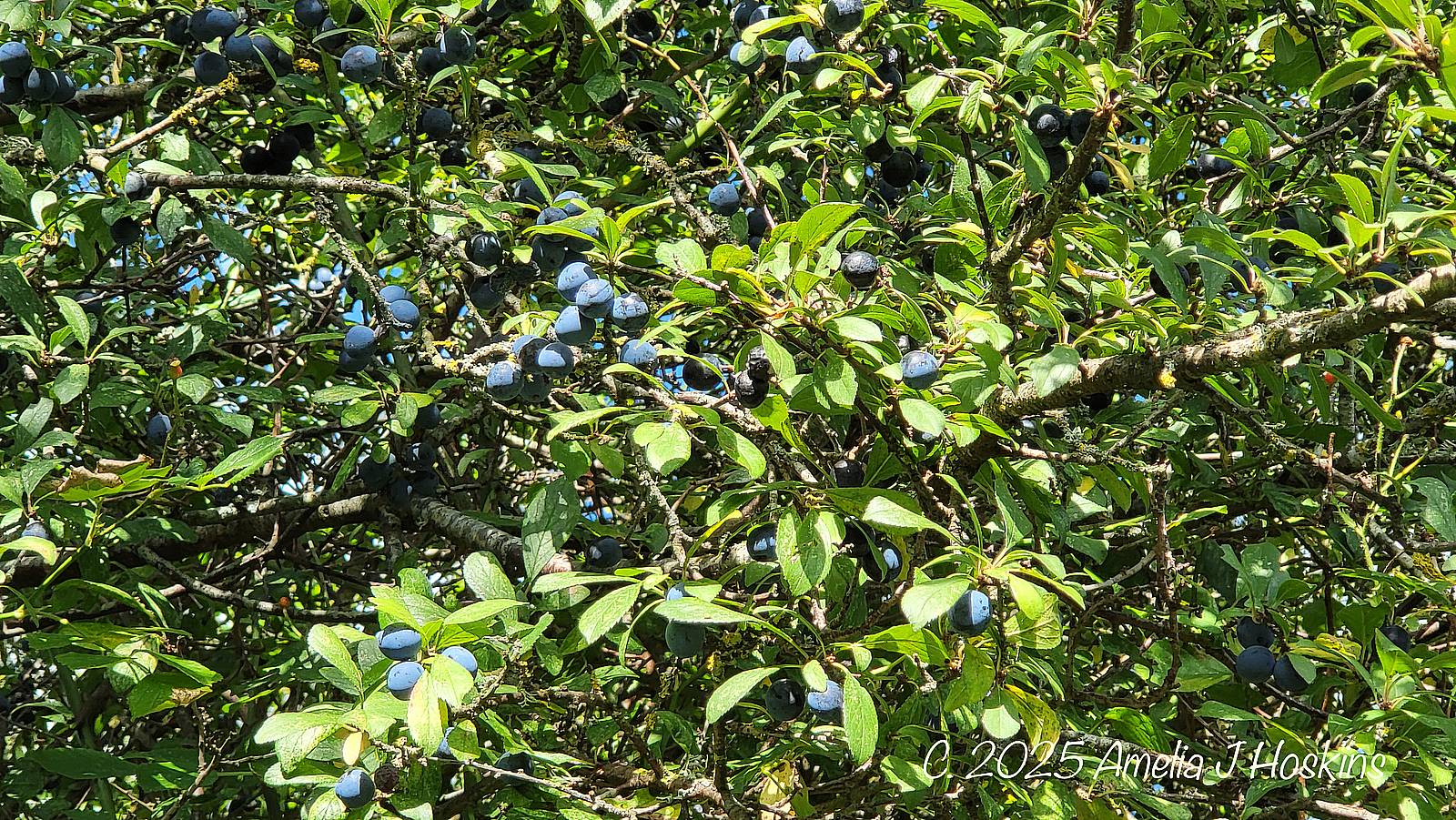
Sloe berries dark blue: first I've ever foraged

Soaked for a few days, boiled and simmered. Left to rest overnight.  Boiled up again and left to cool before straining plant material, and adding silk to the dye bath.

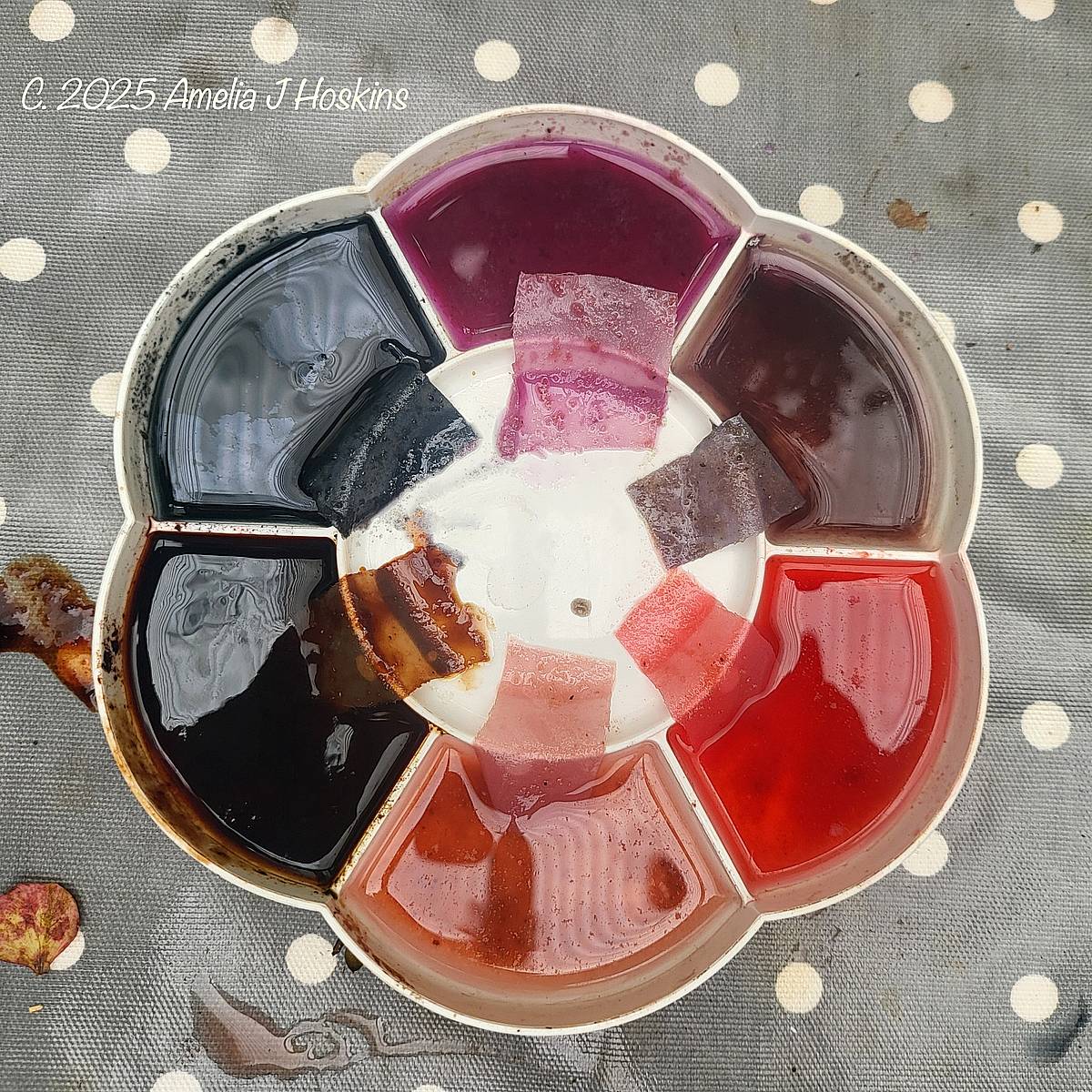
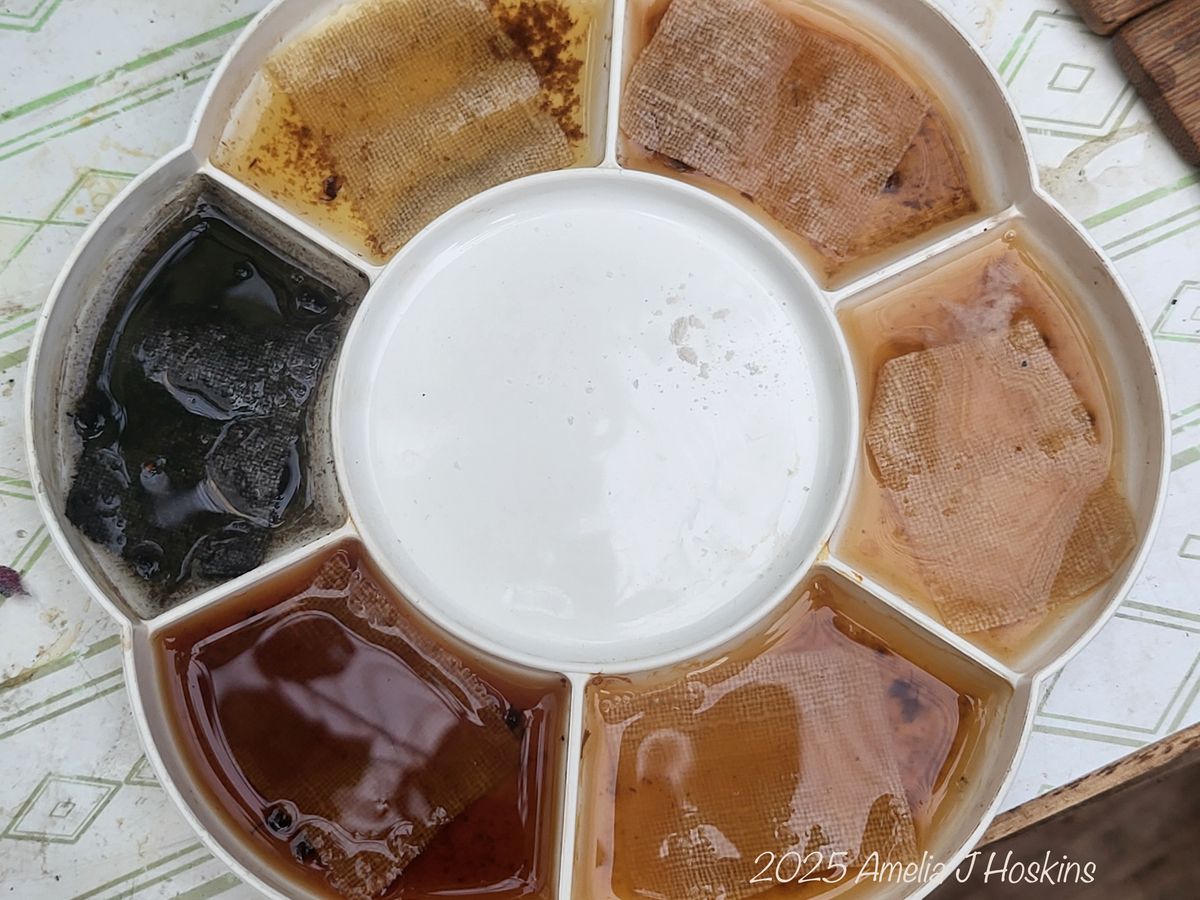
Sloe berry dye silk samples modified.  From these tests, I chose to use aluminium sulphate for Erin and Habotai silk

From TOP clockwise:

  • Aluminium Sulphate     -  Pink
  • Calcium Carbonate       -  Dull Brown
  • Citric Acid                        - Red
  • Cream of Tartar             -  Salmon
  • Sodium Bicarbonate     -  Russet Brown
  • Ferrous Sulphate           -  Charcoal

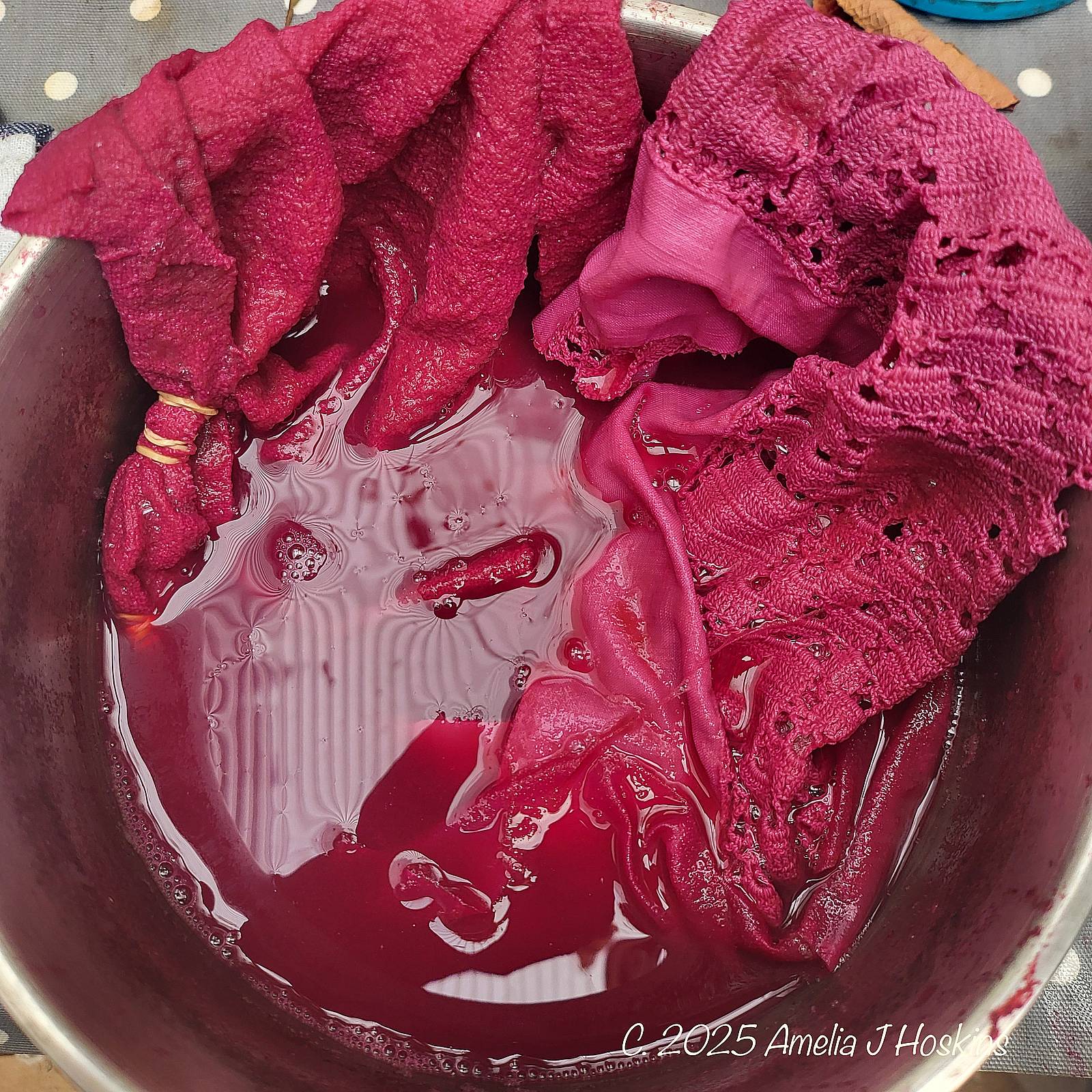
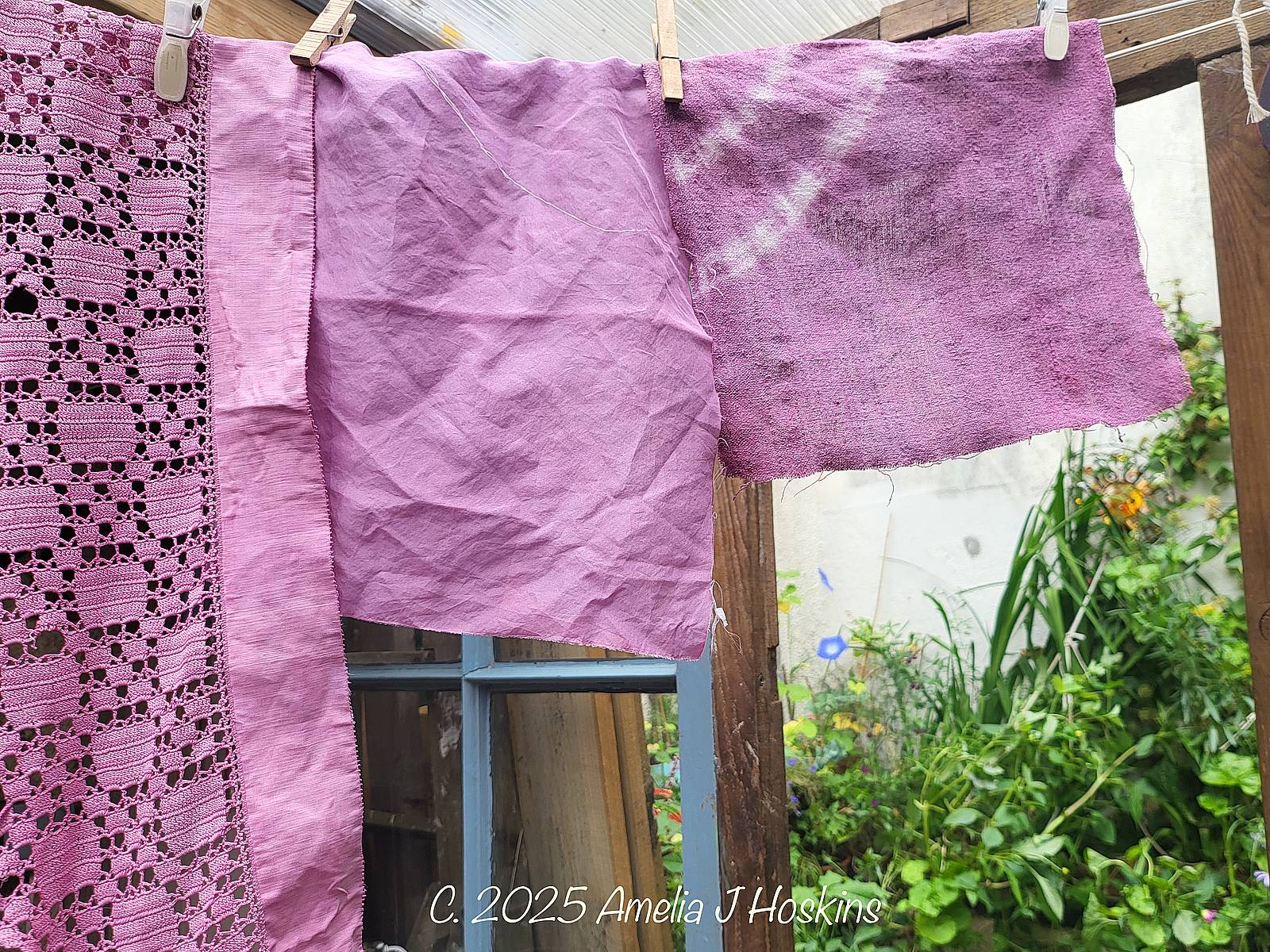
Sloe berries removed - Silk and lace dyed. Cotton lace was mordanted in Alum Acetate

Died results of Sloe dyed silk and cotton

All similar, though silks modified in aluminium sulphate and antique cotton lace modified in aluminium acetate.  Cotton lace is more pinky.  I often make a resist circle by using rubber bands of tying with cotton twine.

10 Nov

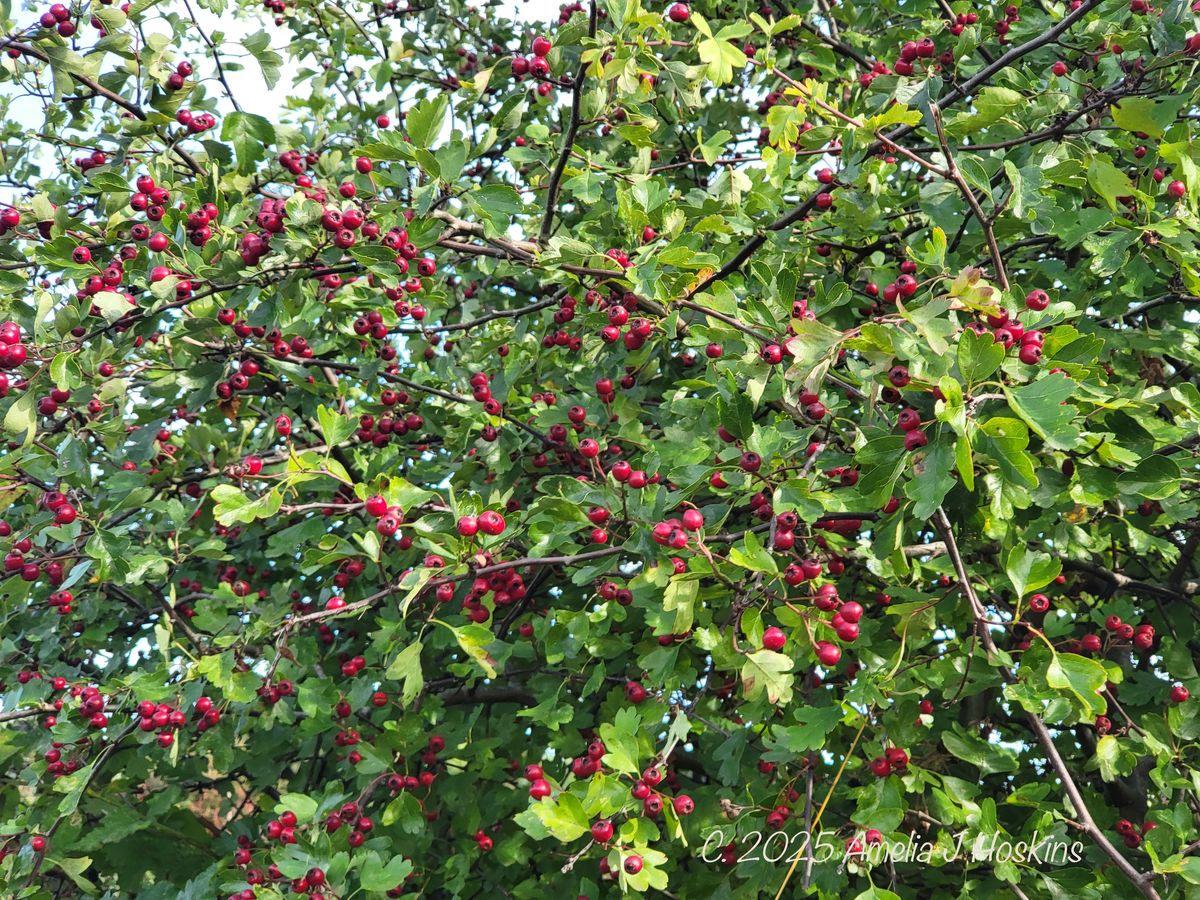
Hawthorn Berries Autumn

Hawthorn Berries - October - November 2025

Two pickings: October Berries picked when bright red, when leaves still on branches, and November, when only the berries are there; easier to see and pick, but they are darker red, which I think leads towards lavender results.

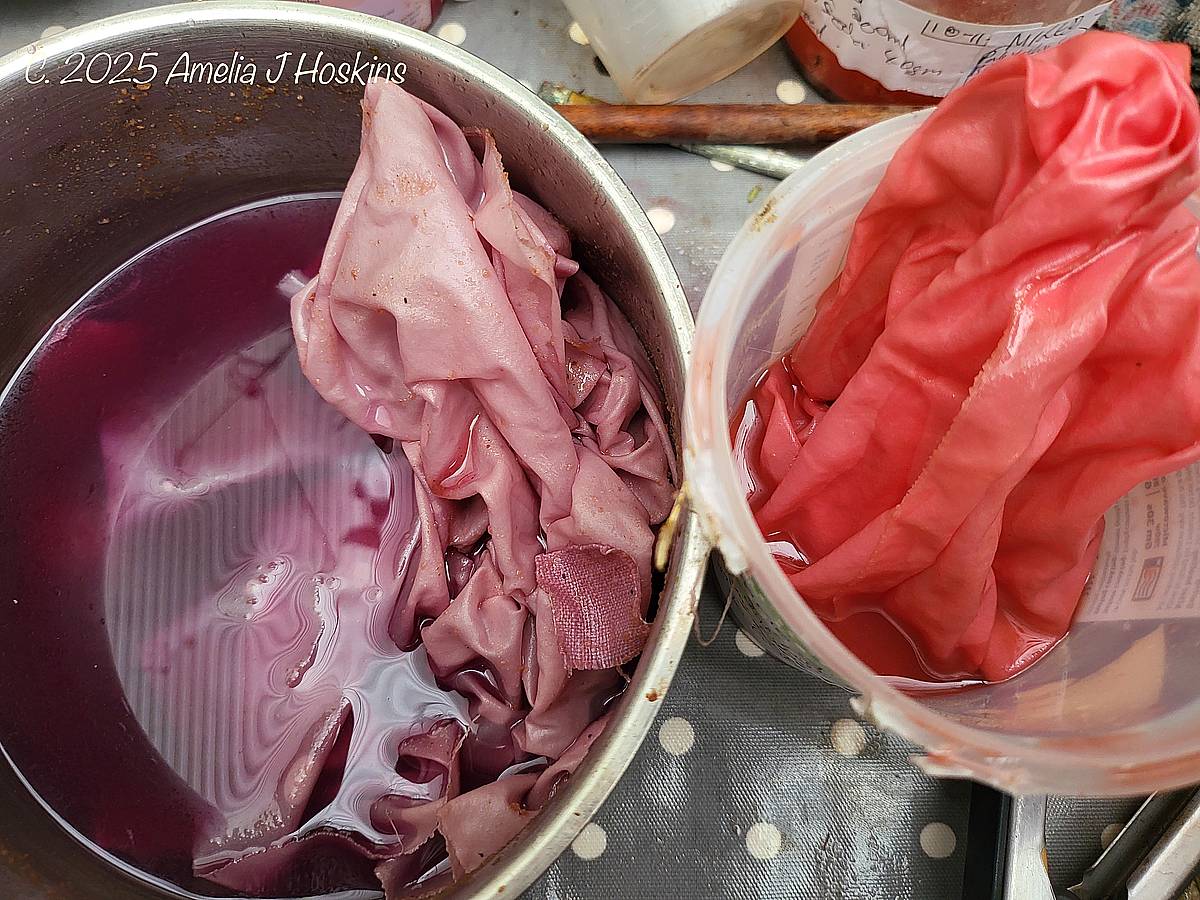
Hawthorn berry dyed silks

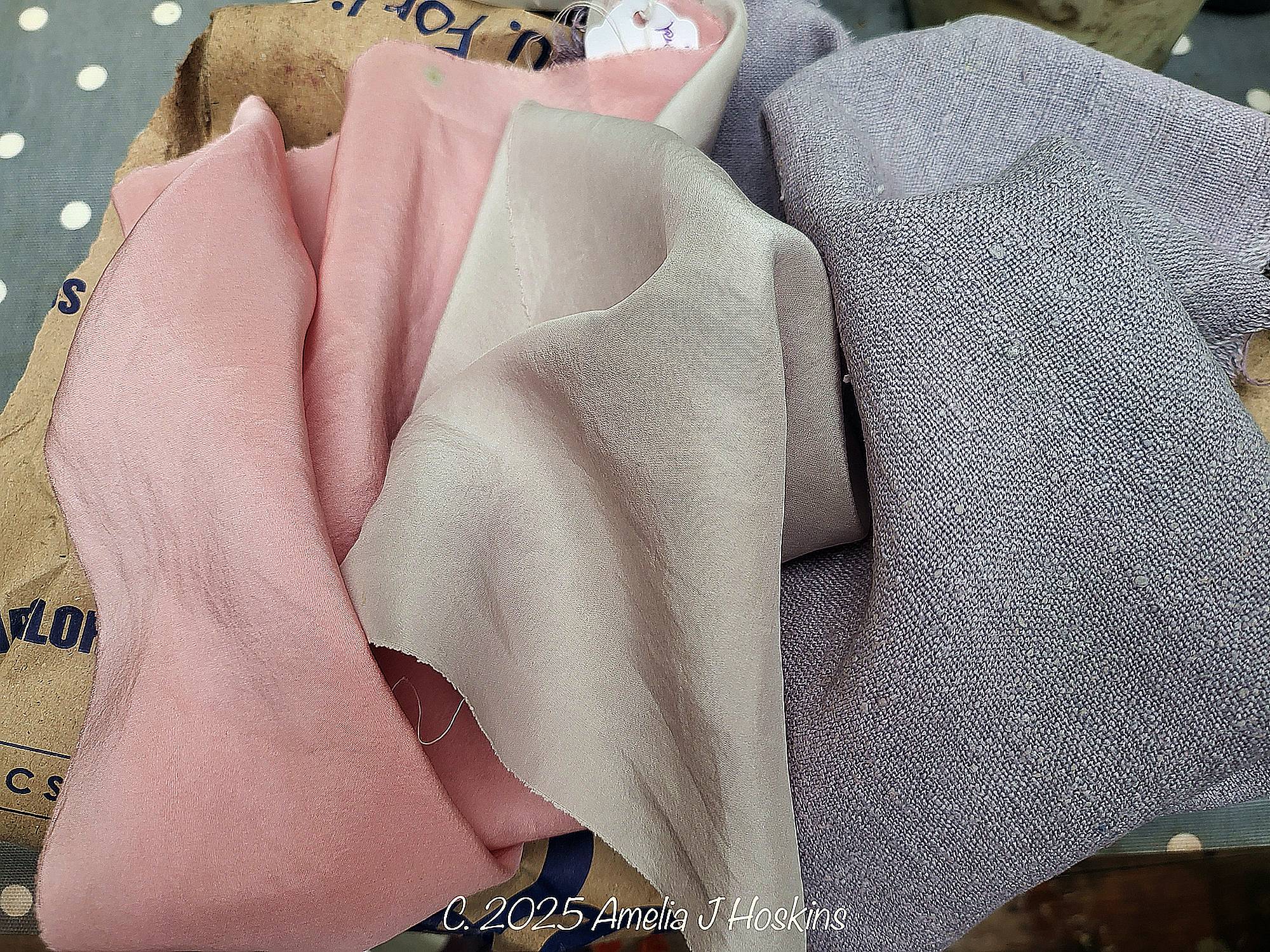
Red habotai silk result is from soaking in hawthorn berry dye bath modified with citric acid (at least 50 grams to 250ml dye liquid).  Weaker lavender silk soaked in non modified dye bath, but pre-mordanted in Alum Sulphate.  Weaker result because the first Erin dyed silk took most of the pigment strength.

Hawthorn dyed Erin silk result Lavender

Erin silk (right) first soak in the dye; result dark lilac on drying. This may fade to more pink.  Middle silk grey result as second soak.  Pink silk is darker (photo didn't catch it)

I chose Erin silk to take up the first strong pigment release, then add subsequent silks for paler colours which became grey.

Erin silk - Citric Acid - pink

Erin silk result after soaking 24hrs in citric acid modified dye bath. (separate dye bath)

Different silks and order of dye bath usage

The first soak in dye bath gives the strongest colour.   Subsequent silk dyes are a shade lighter.  Alum mordanted silks varied in colour tone.  Erin silk (thicker slub) took dye well and result is lavender. However Habotai (thin) turned grey with just a hint of the lavender tone. Modifiers can be painted/printed on such a grey tone to get colours: or it can be bundle dyed for more interest.

Samples October and samples November

Small samples in dye bath can be very dark/bright, absorbing much pigment, such as these small Erin strips almost scarlet.  I normally put samples in with the first silk soaking.  Erin does seem to absorb dye better/quicker than Habotai. [Remembering that I hadn't washed/scoured the second Habotai which turned grey)

09 Nov

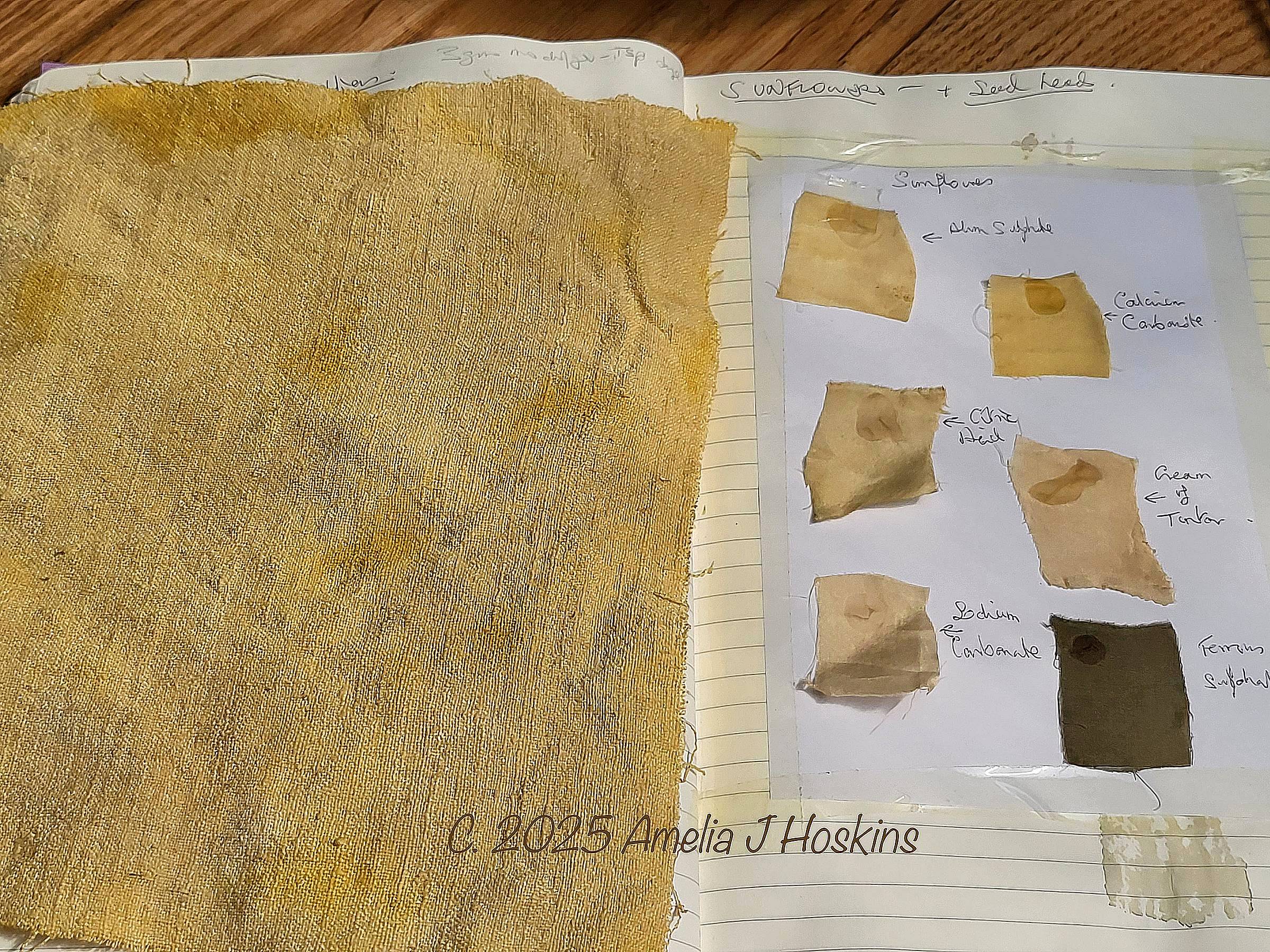
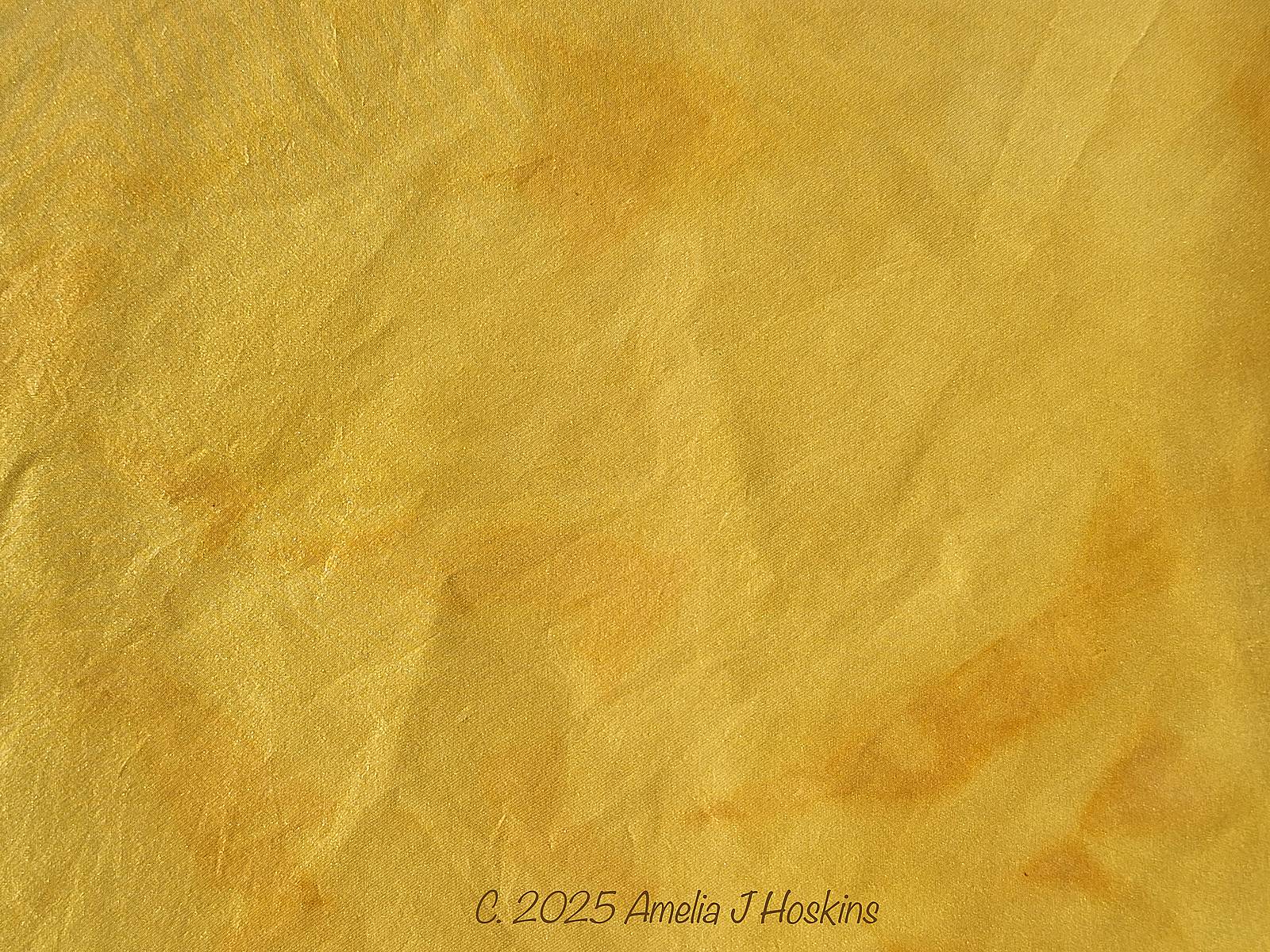
Sunflower Dyed Silk

Brightest Yellow Sunflowers

My son brought me some sunflowers from a girl seller in the street. They weren't large, but they were very bright deep yellow.

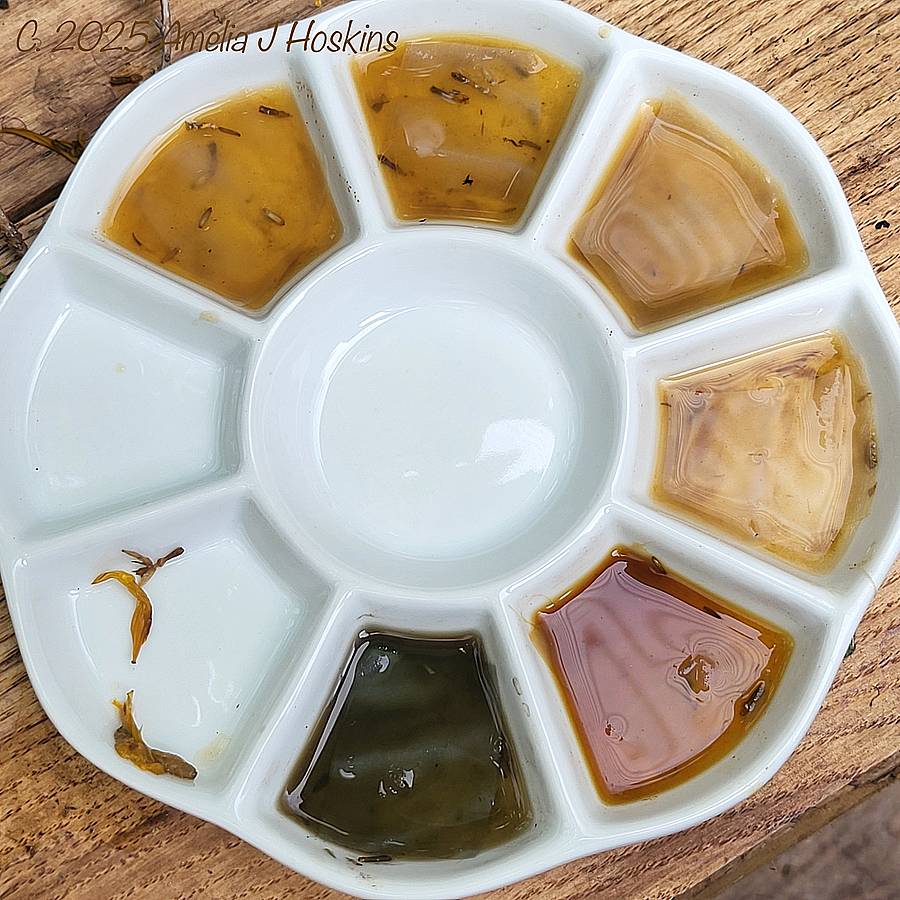
Sunflower Modifier Tests

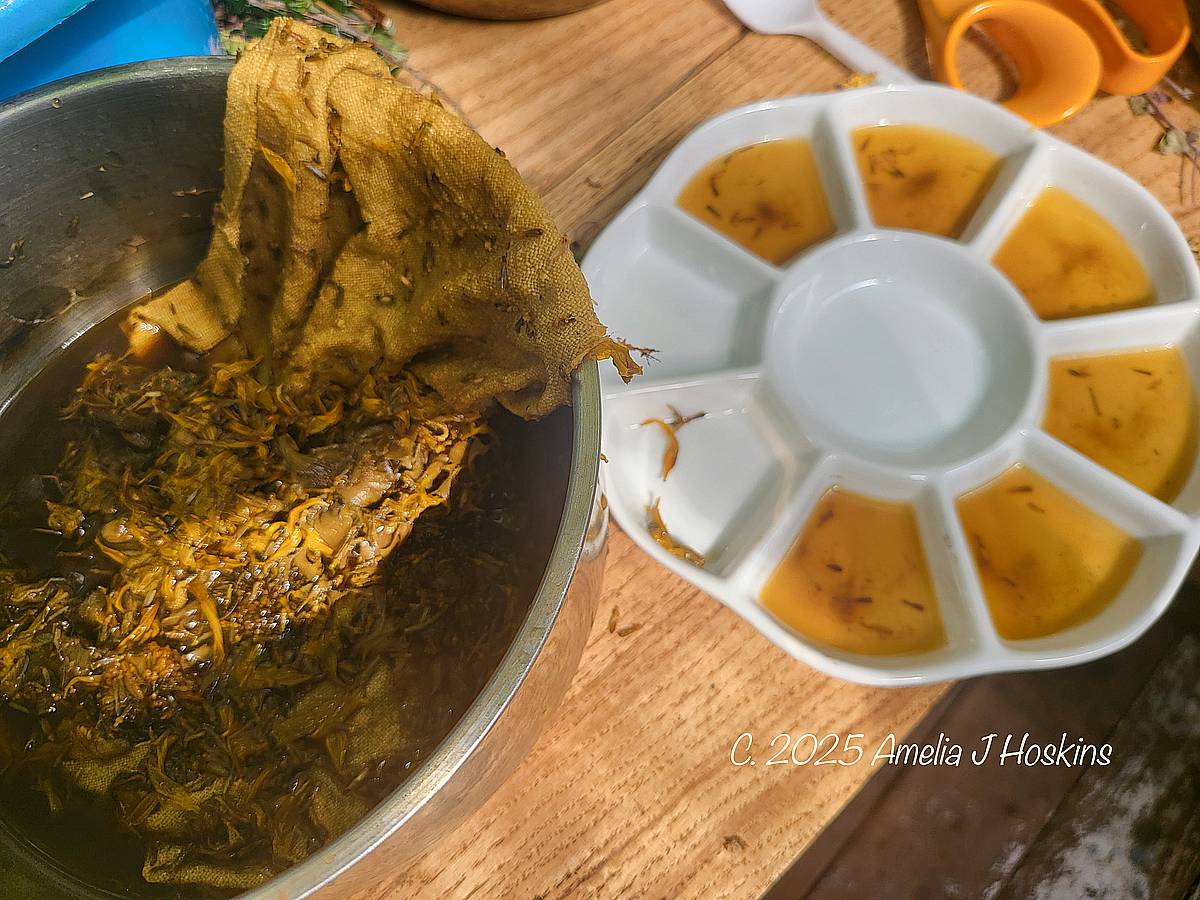
Sunflower dye bath with Erin Silk and palette with dye for modifying

Erin silk dyed with Sunflowers

Sunflower yellow dyed Silk

TO DO...

A dark olive to be made for print paste... TO BE CONTINUED 

04 Nov

Dock Seeds Dye

Dock Seeds Dye - good source of beige

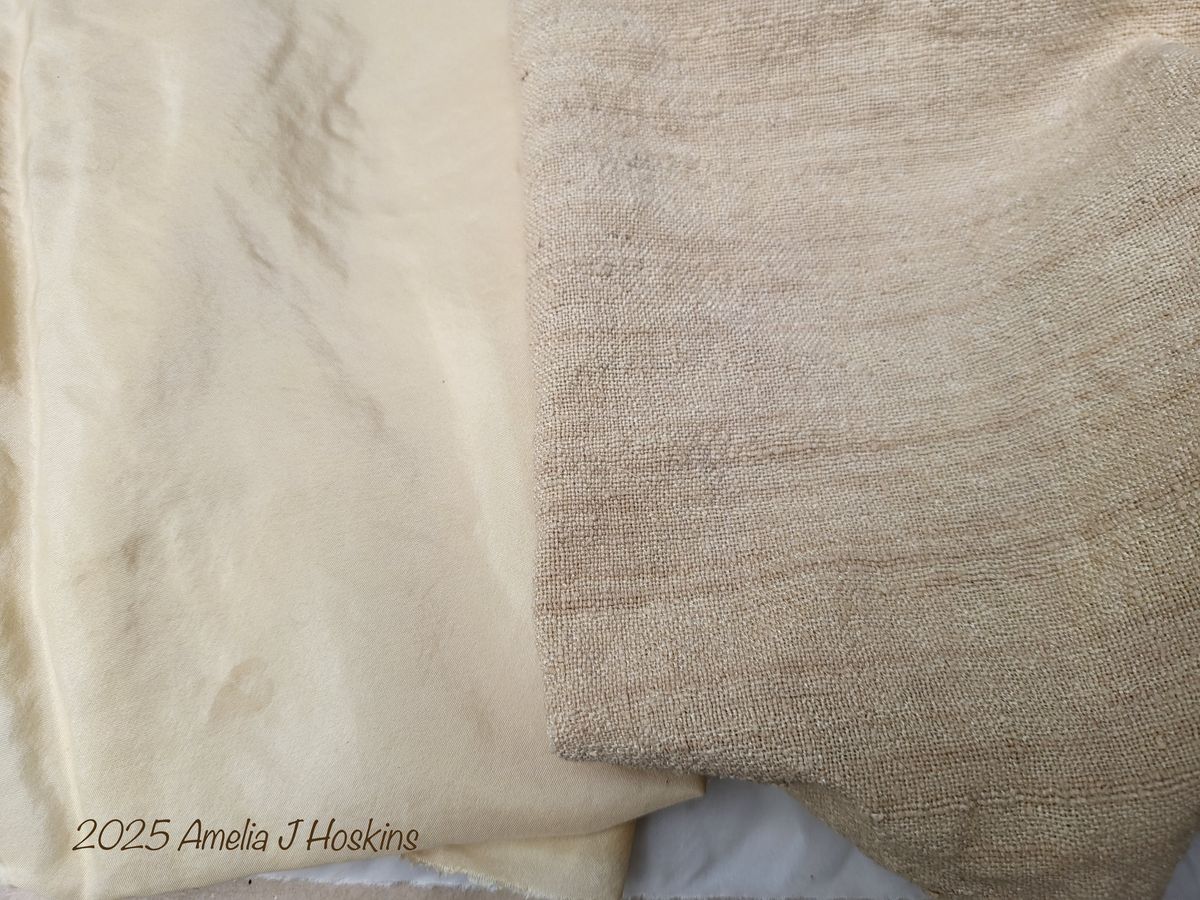
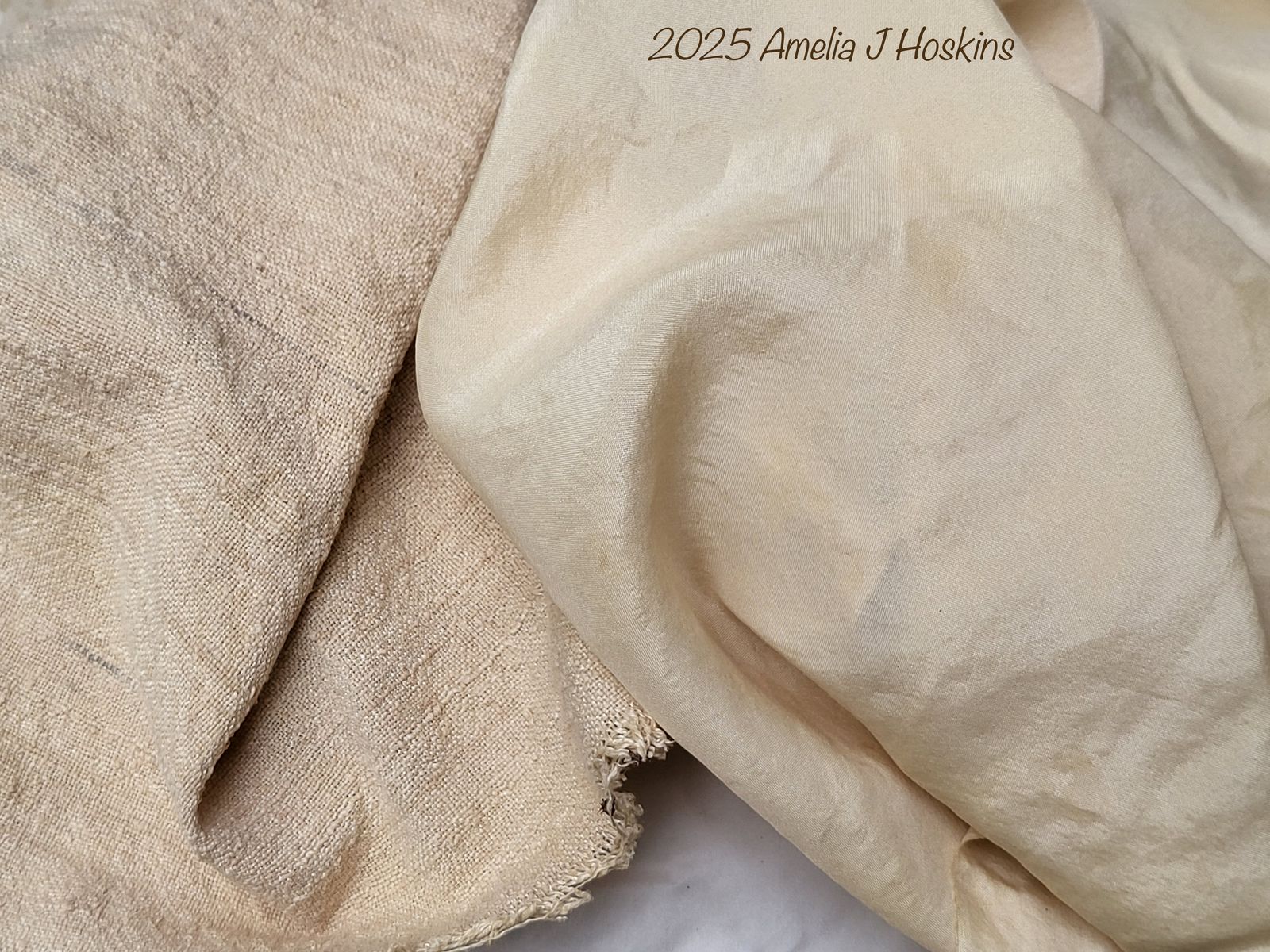
Dock seeds dyed habotai and Erin silk

Dock seed dyed Erin silk and Habotai silk

Russet Red Dock Seeds

Plant seeds collected in October, when crisp and dry red russet.  Quite a big dish full so the dye pan quantity made gave reasonable colour, but also will make weaker dye baths if continually brewed up.  Colours are quite strong, so well worth collecting as much as possible from my allotment plant.

Erin Silk samples in dye palette of variety of modifiers.  Shades can then be chosen for modifying silk piece and for mixing print pastes.  Erin silk, which looks a bit like linen, takes on a stronger or darker colour than the Habotai silk. The dock creamy beige is quite warm with slight variations created by the modifiers.

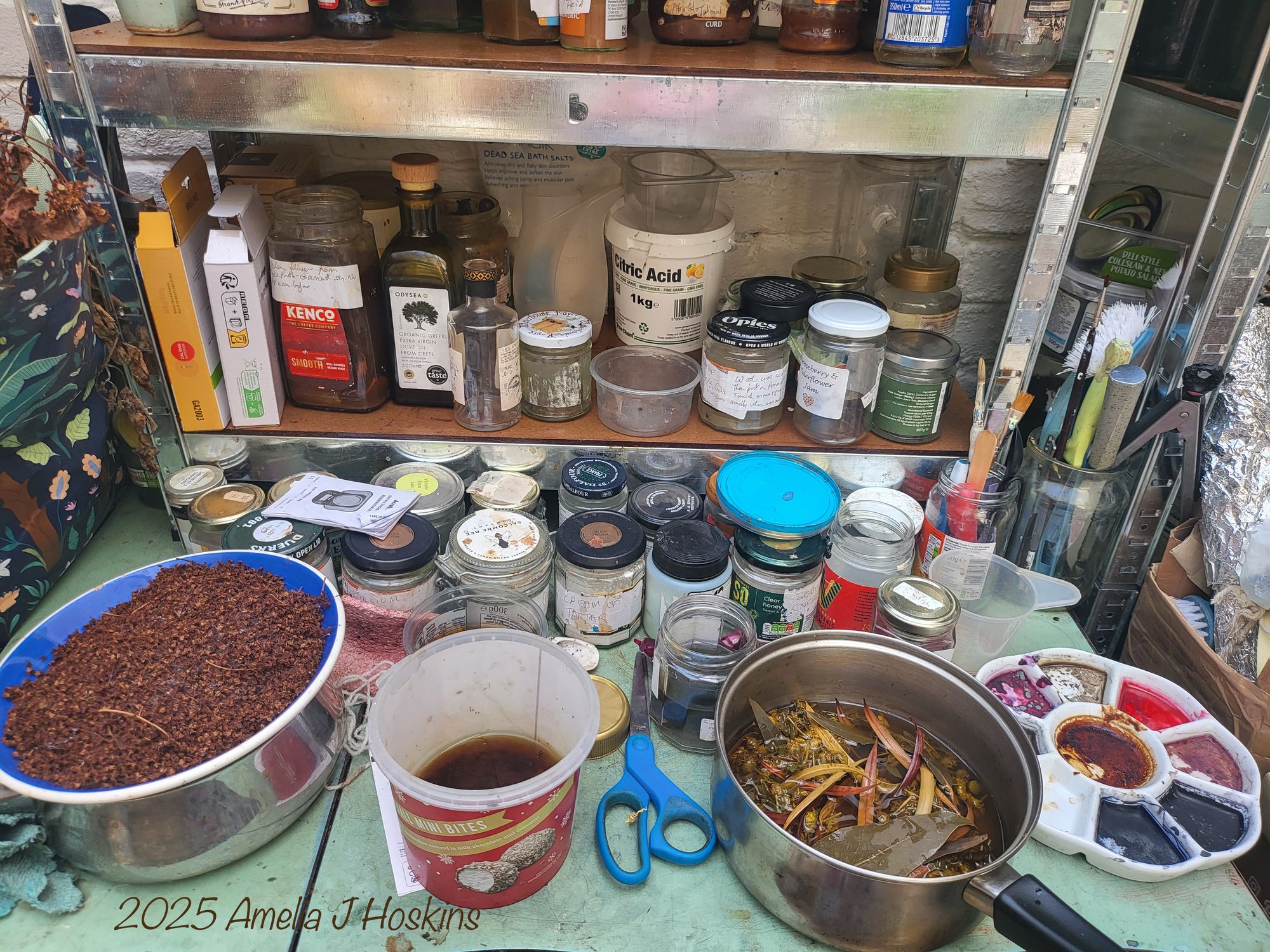
Workshop table has red-brown docks seeds in bowl after boiling up, the dye liquid in a plastic pot and also some eucalyptus leaves soaking in water.

Modifiers Test Palette

Samples are soaked 24hrs in modified dye. 2tsps of dye liquid + 2grms modifier powder. Slight variations are interesting. More larger samples coming....

  1. Top right - Aluminium Sulphate
  2. Centre right - Calcium Carbonate
  3. Bottom right - Citric Acid
  4. Bottom left - Sodium Bicarbonate
  5. Center left - Ferrous Sulphate (iron)

Modifier Silk Sample Results

Results on Erin silk (thicker weave) and Habotai silk (thinner, smoother)

Different silks will take dye differently, I discovered.  Some good colours here with modifiers, which helps me determine which modifiers to use.  I mix them into the final dye bath, after the tests.

Russet Red Dock Seeds

Workshop table has red-brown docks seeds in bowl after boiling up, the dye liquid in a plastic pot and also some eucalyptus leaves soaking in water.

Images copyright Amelia Jane Hoskins Please email for use permission.